Toyota Puts a $2,500 Racing Kart at the Bottom of Its GR Lineup
The ¥385,000 GR KART fits in a Noah minivan, stores upright, and adjusts to fit drivers from kids to adults. Toyota hasn't said a word about selling it outside Japan.
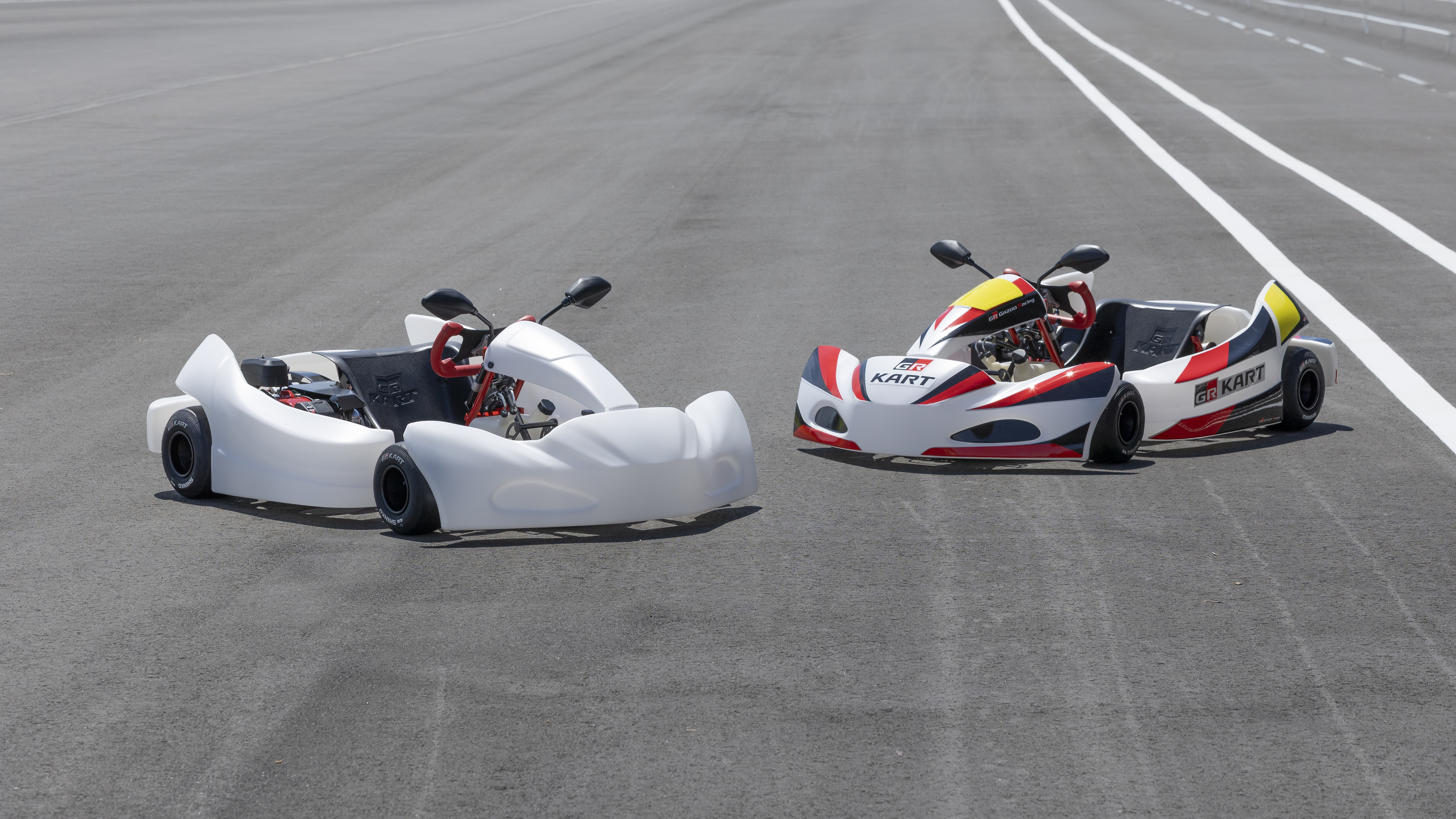
Gazoo Racing has put a price on the bottom rung of its lineup: ¥385,000, or about $2,500 at current exchange rates, for a single-seat racing kart that went on sale across Japan on September 10. That is less than a tenth of a base GR86 in the US, and it makes the GR KART the cheapest vehicle ever to wear the GR badge.
The kart is sold through 36 kart tracks and seven GR Garage performance stores in Japan, with more locations promised. Toyota says it exists because chairman Akio Toyoda wants motorsports to be as easy to take up as baseball or soccer.
The price includes Japan's consumption tax, the kart cannot be registered for public roads, and a footnote in the release states it is not covered by a warranty. Accessories and spare parts are sold through a dedicated store on Rakuten.
Built to live in a minivan
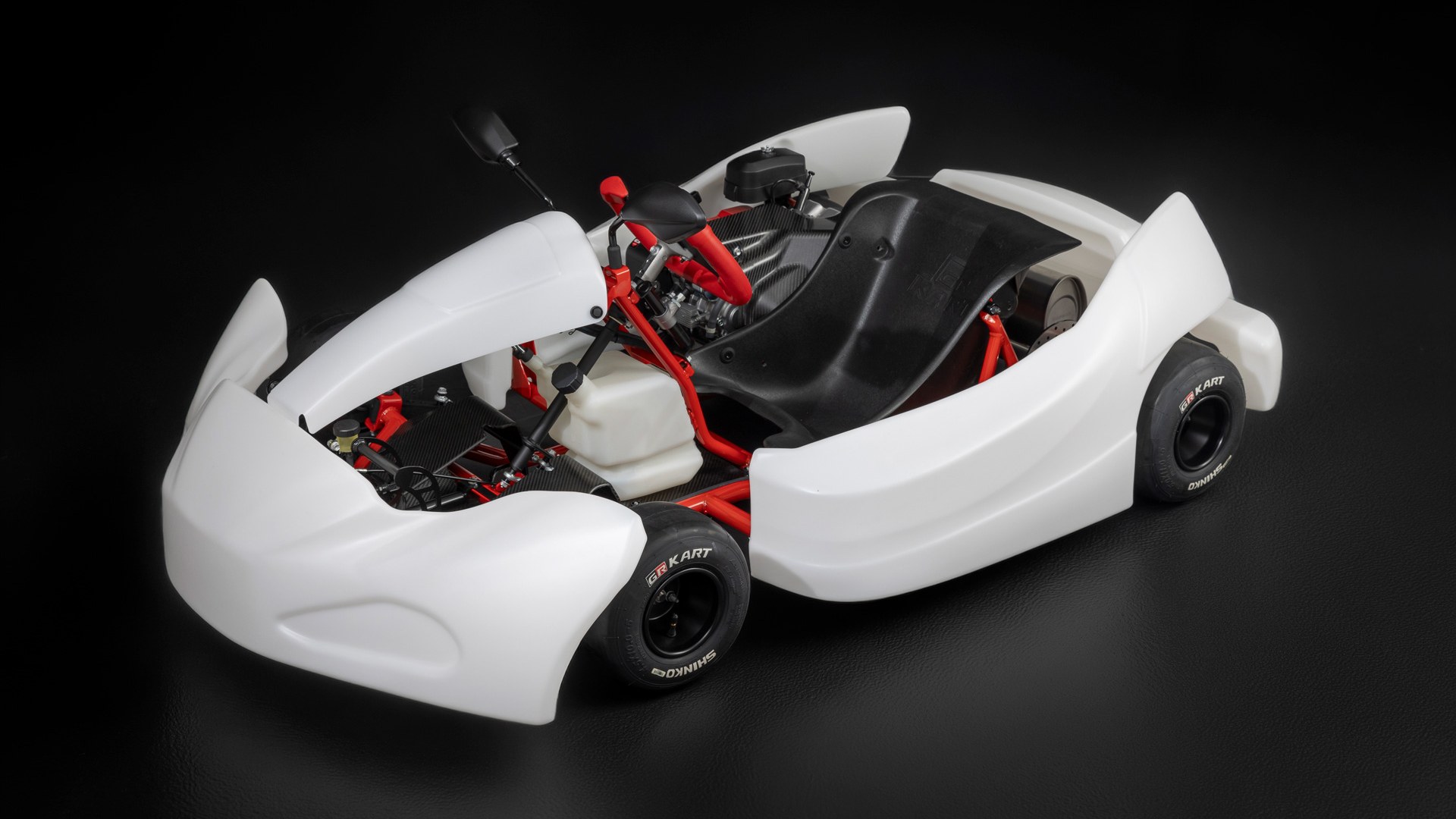
The specification reads like a conventional entry-level racing kart: a 215-cc four-stroke engine, 183 pounds (83 kg) with oil but no fuel, a 41.1-inch wheelbase, and an overall length of 71.7 inches. Toyota hasn't quoted a power output.
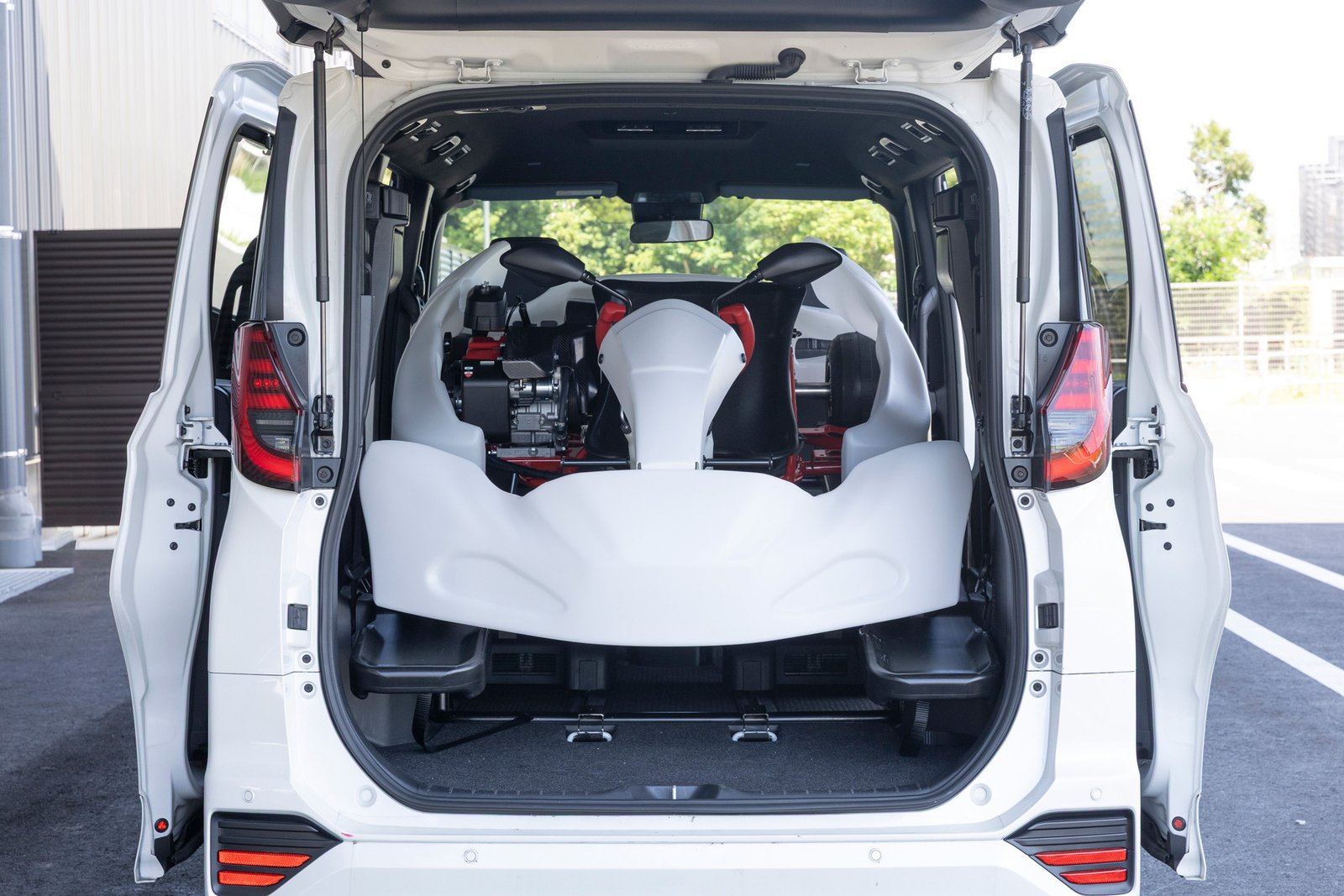
What separates it from a club kart is how much of the engineering targets the logistics of ownership rather than lap times. The GR KART fits into a Toyota Noah or Voxy minivan without disassembly, so a family can haul it to the track in the car they already own instead of a trailer.
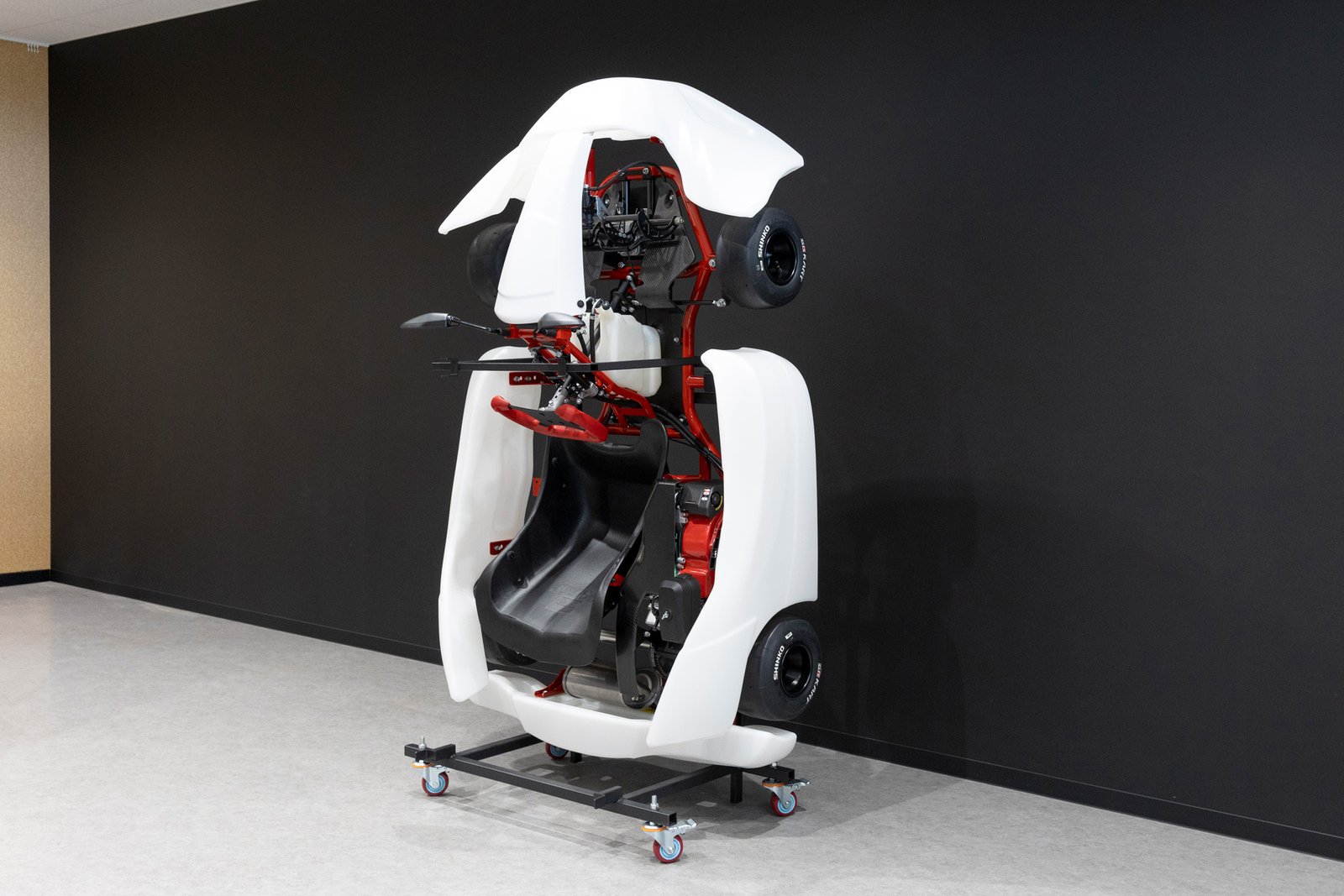
It also stores upright. An oil catch tank that works with the kart standing on its tail, a diaphragm carburetor with no float bowl, and a fuel filler angled to stay sealed mean the owner can park it in a corner without draining the gas and oil first. The storage cart, like the van tie-downs, is sold separately.
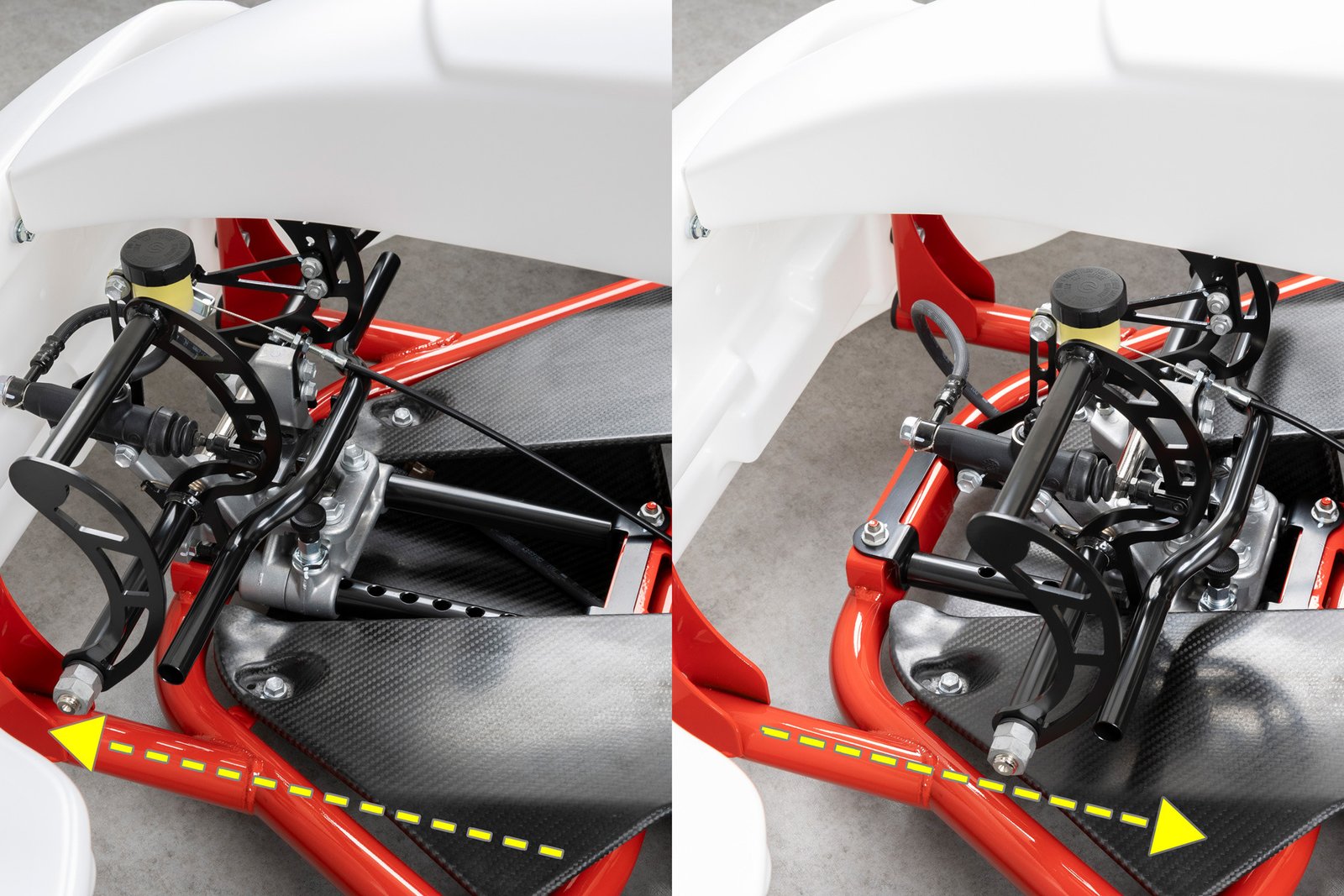
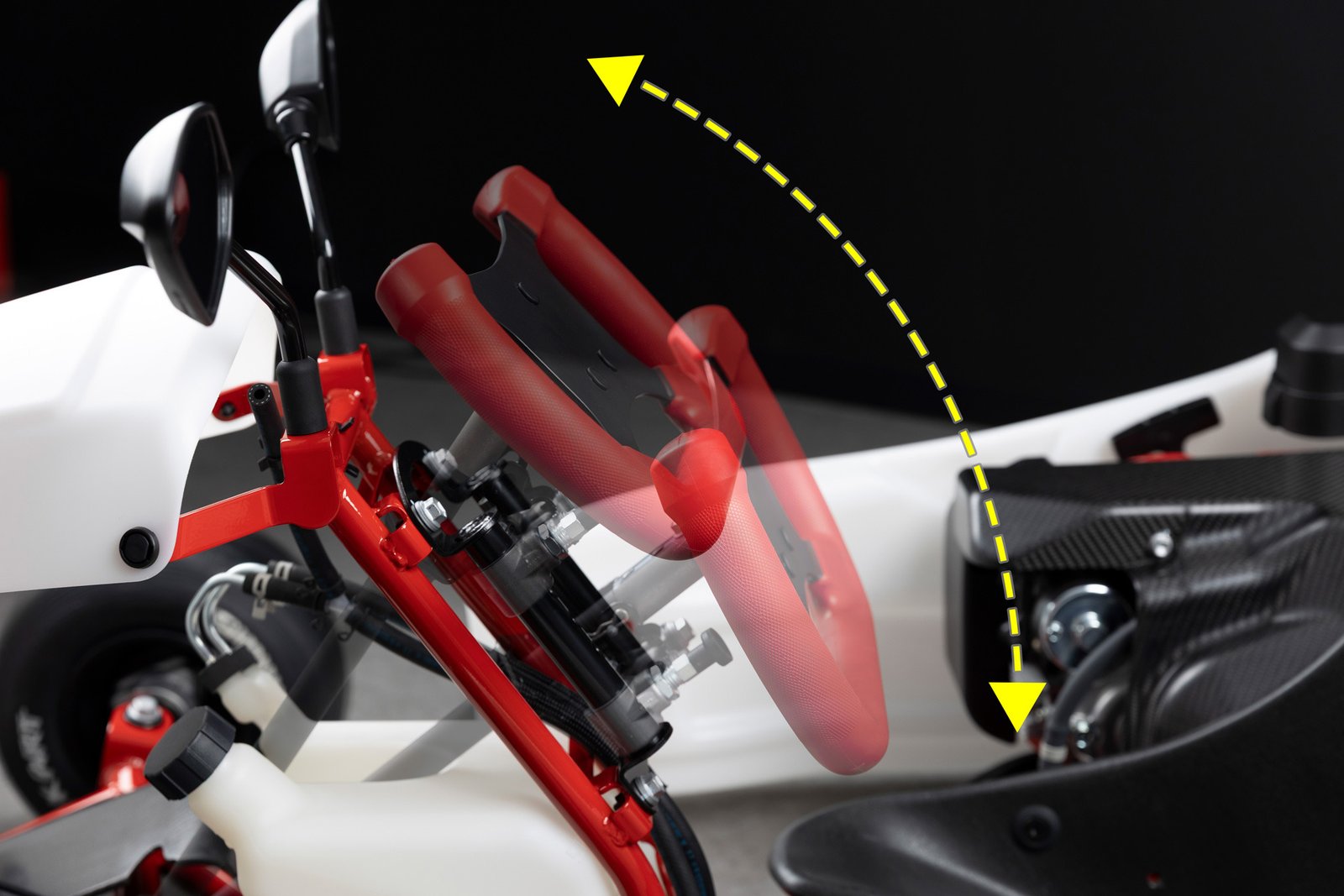
The pedals slide and the steering wheel tilts, each with a one-touch adjustment, and Toyota says the range covers drivers from 4 feet 5 inches to 6 feet 1 inch (135–185 cm). The idea is one kart per household, shared between children and parents.
An optional weight box takes up to 33 pounds (15 kg) of ballast for race classes and has a mount for a timing transponder.
A belt drive with an automatic tensioner replaces the chain, removing the oiling and tension adjustments karters are used to. The engine carries a built-in self-charging battery, so there is nothing separate to mount or charge. The float-free carburetor is meant to keep fueling steady under cornering loads, and a primer pump handles the pre-start routine.
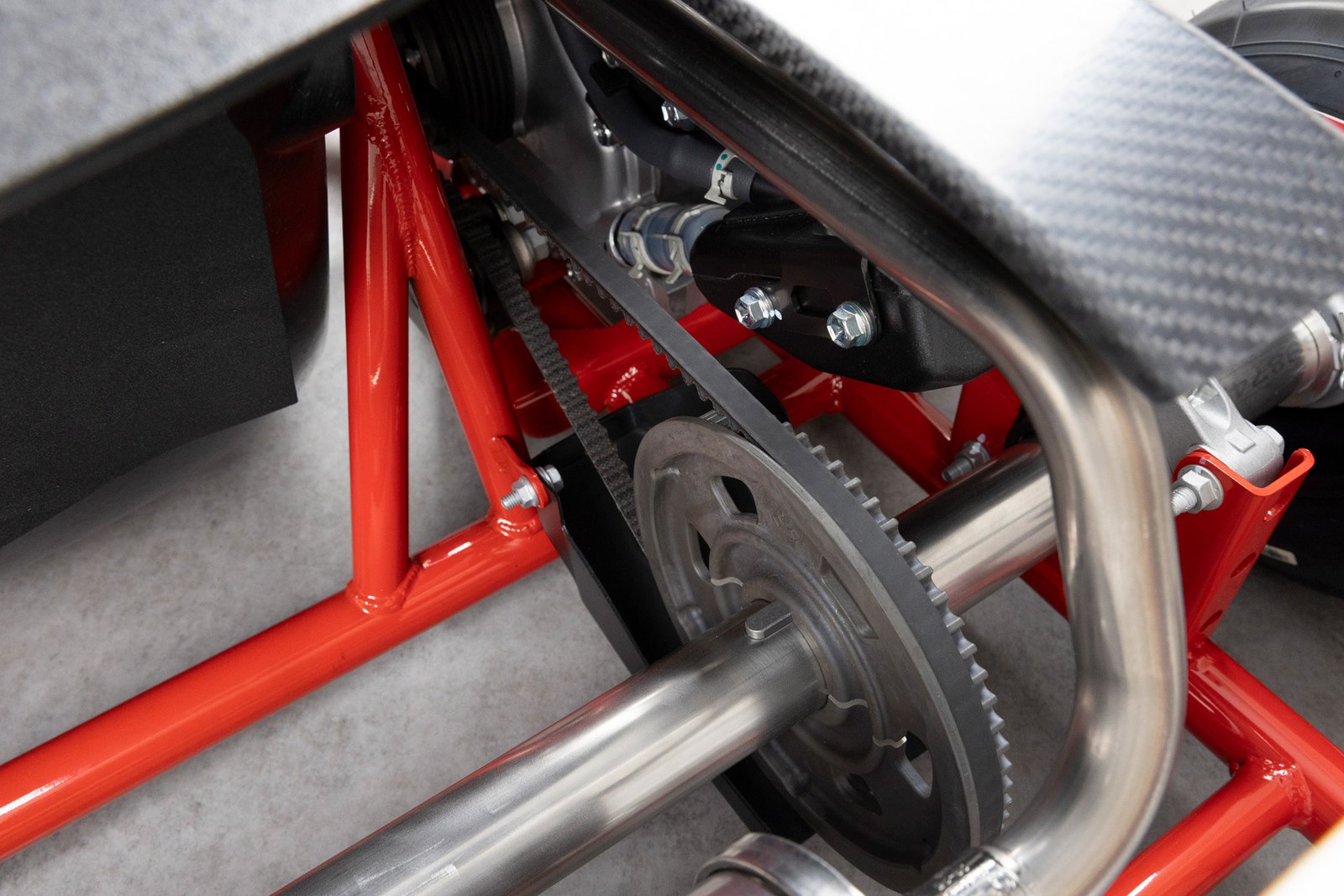
Durability and beginner safety got their own list: a stainless steel rear axle, metal fuel lines inside the tank, a rear bumper shaped so another kart can't ride up over the tire in a collision, stopper pins on the rear hubs, a hand rest on the seat that keeps fingers away from the muffler, and a throttle cable mount designed against sticking open.
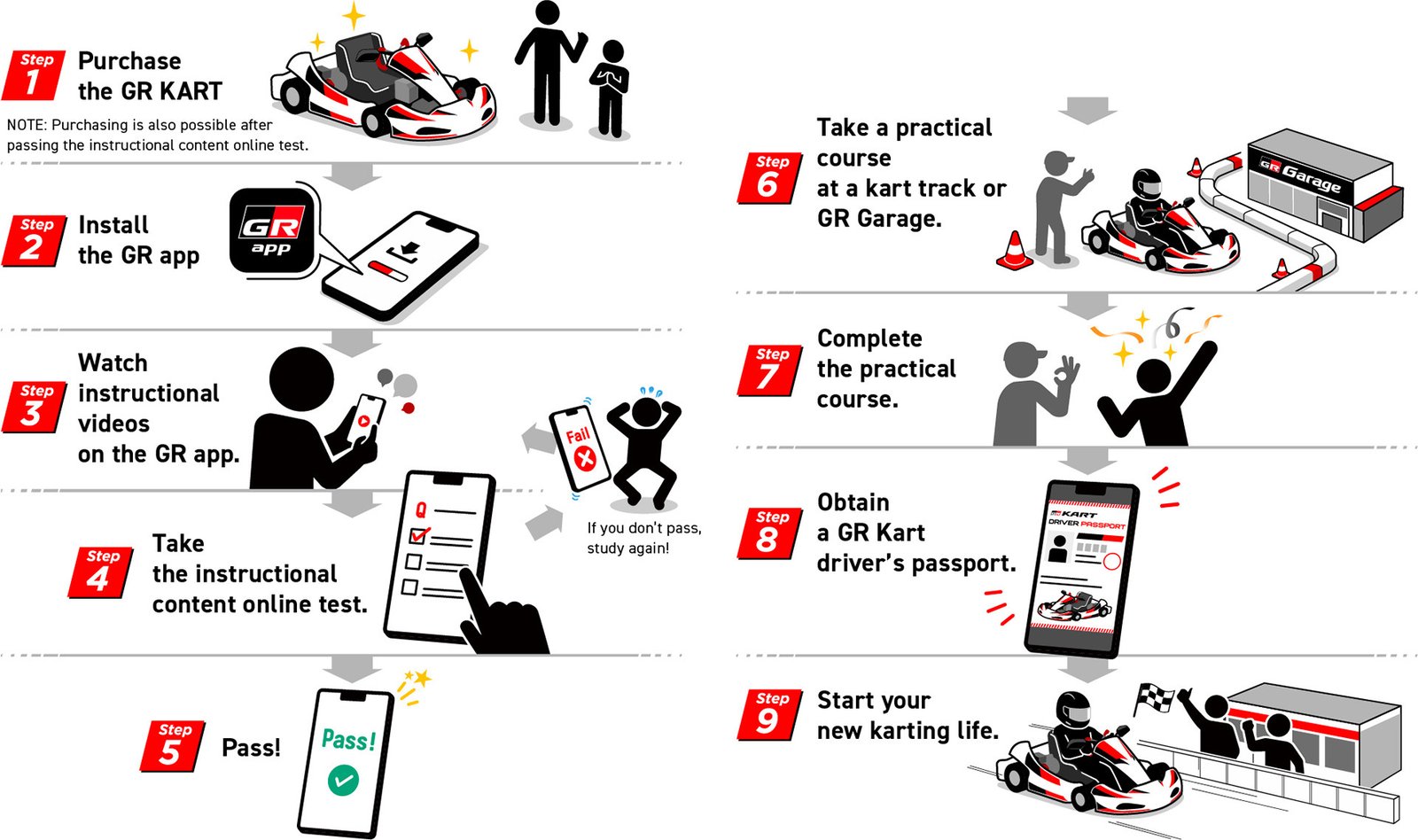
The karts are built at a small workshop in Gamagori, Aichi Prefecture, run on Toyota Production System principles. Buyers use a GR app for instructional videos and an online test; passing it earns a driver's passport valid at participating tracks without a separate track license. Racing in the SL Kart Meeting series still requires its own license.
From ¥385,000 to a V8 supercar
The kart makes more sense as the base of a ladder than as a novelty. In the US, GR starts with the GR86 at $31,500, moves through the GR Corolla at $40,520 and the GR Supra at $58,300 (all before a $1,195 delivery fee), and tops out for now at the $64,360 GRMN Corolla. Above that sits the GR GT, due in 2027 with a twin-turbo 4.0-liter V8 hybrid targeting more than 641 hp (650 PS) and 627 lb-ft (850 Nm). Toyota hasn't priced it, but project manager Takashi Doi told The Drive to use GT3-class cars as the reference, which puts it north of $200,000.
A kart at the bottom of that range is the first GR product a customer can own before they are old enough for a driver's license. The closest American equivalent is the Briggs & Stratton 206 class, built around a sealed 204-cc four-stroke of roughly 8.8 hp. The engine alone sells for about $760, and a new turnkey 206 kart from a US kart shop lists around $5,400 before tires, so Toyota's price is aggressive for a factory-built machine.
Whether Americans get the chance to buy one is the open question. The release says nothing about sales outside Japan, and Toyota hasn't given a timeline for growing the network beyond the initial 43 locations. For now, the entry ticket to the GR ladder is a Japan-only purchase.