Ford Just Recalled 223,526 F-150s — and the Big One Is the Fuel Tank
Three F-150 recalls landed at NHTSA on the same day, but 223,472 of the 223,526 trucks are in for one reason: fuel tank straps that may never have been secured to the frame. Owner letters start September 21.
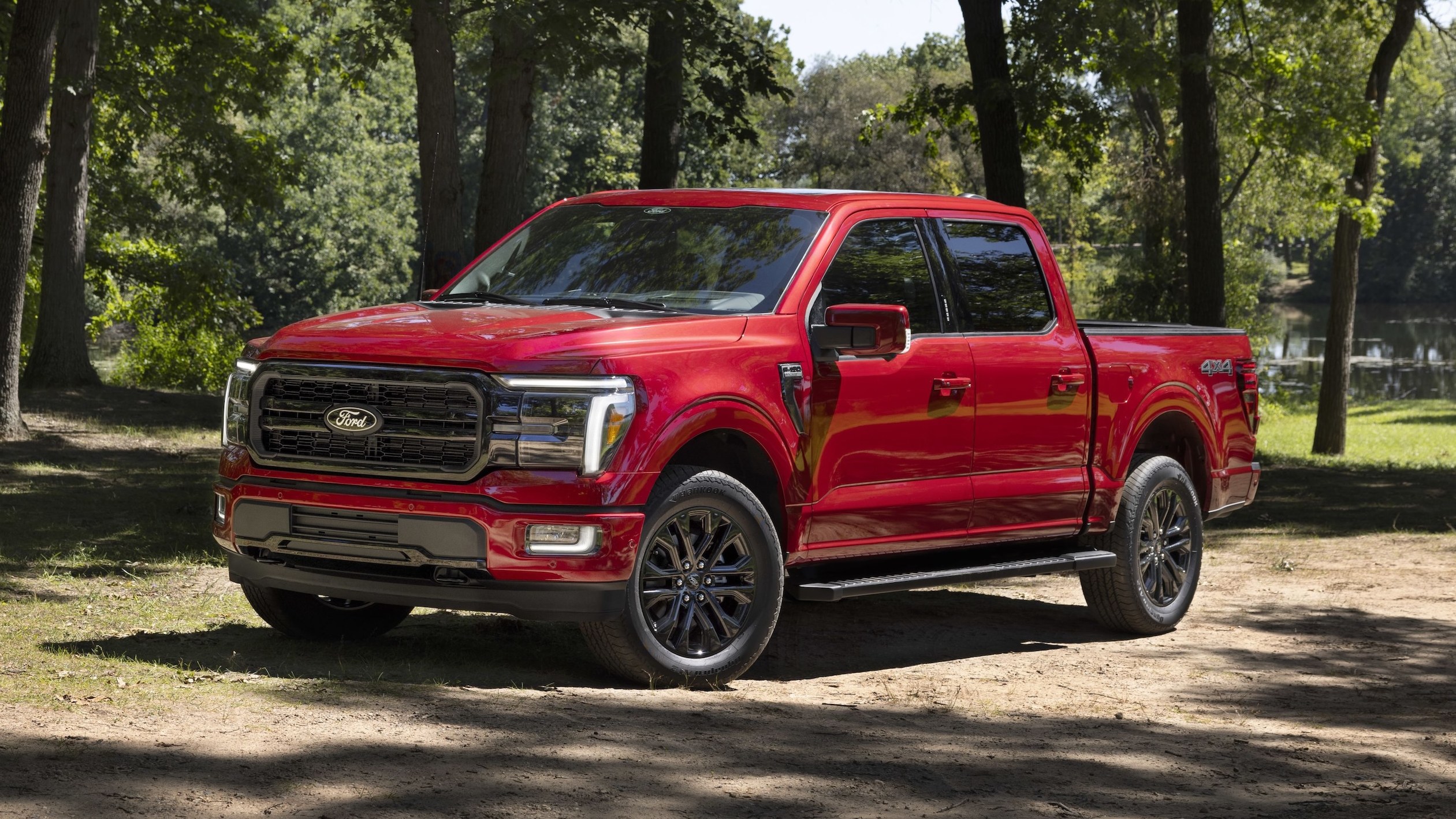
Ford filed three separate F-150 recalls with the National Highway Traffic Safety Administration on September 9, covering 223,526 pickups in the US. Two of them are tiny. The third is not: 223,472 trucks from the 2023 through 2027 model years may have fuel tank straps that were never properly secured to the frame, which means the tank can leak or, in the worst case, drop onto the road.
According to the filing, NHTSA campaign 26V578000 (Ford's internal number 26S69) covers trucks whose fuel tank "may be improperly secured." A tank that comes loose becomes a road hazard for the vehicles behind; a leaking one can stall the engine or raise the risk of a fire. NHTSA's summary does not report any fires, crashes, or injuries tied to the defect.
The fix is an inspection: dealers will check the straps and replace them where needed, at no cost. Ford expects to mail owner letters starting September 21, and affected VINs will become searchable on nhtsa.gov from September 14. Owners can also call Ford at 1-866-436-7332 and quote 26S69.
Why the number is so big
Ford hasn't issued a press release on the campaign, and the detailed Part 573 report wasn't yet public on NHTSA's site at the time of writing. The explanation that has surfaced so far comes from Autoblog, citing Ford: the affected trucks were built between January 2023 and August 2026, during periods when assembly-line cameras that are supposed to verify strap installation weren't monitoring the process. Per the same report, Ford has logged 16 warranty claims worldwide for loose tanks, with no crashes or injuries, and the recall population includes unsold trucks still sitting at dealers.
That build window explains the scale. The F-Series has been America's best-selling truck for 49 straight years, and Ford sold 828,832 of them in 2025 alone, so a defect that can occur at any point across three and a half years of F-150 production was always going to run into six figures. Set against that volume, 223,472 is still a fraction of the trucks built in the period, which is consistent with Ford's account of a monitoring gap rather than a flaw in every truck. Ford hasn't said what share of the recalled trucks it expects to actually need new straps.
The other two F-150 recalls, and one for Transit
The same day's filings include two small campaigns on 2026-model F-150s. Recall 26V576000 covers 37 trucks that may have received the wrong rear axle tail bearings; NHTSA's language is blunt about the consequences, listing rear wheel lock-up, driveshaft separation, and a possible rollaway if the truck is parked without the parking brake set. Dealers will replace the bearing, letters go out September 21, and VINs will be searchable from September 14.
Recall 26V577000 affects 17 trucks whose rear stabilizer rod fasteners may not have been tightened at the factory, allowing the rod to shift and degrade handling. Fasteners will be replaced free of charge, owner letters are expected September 15, and VINs have been searchable since September 10.
A fourth Ford filing from September 9 isn't an F-150 at all: 1,945 Transit vans from the 2026 and 2027 model years have wireless rear seat belt buckles that may fail to register whether the belt is fastened. That one doesn't have a fix yet. Owners will get an interim notice on September 21 and a second letter once the remedy is ready, which Ford expects in December.
A familiar failure, a different cause
Fuel tank straps are not new territory for the F-150. In 2011, Ford recalled 1.1 million 1997–2004 F-150s, plus some F-250s and Lincoln Blackwoods, under NHTSA campaign 11V385 after road salt corroded the straps on trucks registered in cold-weather states, in some cases letting the tank contact the ground. That was a rust problem that took years to develop on old trucks. This one is an assembly issue on trucks as new as the current model year, which is why the population skews toward vehicles with a few months, or zero miles, on them.
What Ford hasn't said yet: whether there is a stop-sale on unsold inventory, how many trucks are affected in Canada and Mexico, and whether the inspection will find defective straps on more than a handful of vehicles. The Part 573 report, once NHTSA posts it, should fill in the build dates and Ford's estimate of the defect rate. Until then, F-150 owners from 2023 onward should plan on a VIN check from September 14 and a dealer visit if the truck comes up.