GM Sold Airbags in 1974, and Buyers Ignored Them — a Century of Safety Firsts
A century of GM firsts — the electric starter, the crash test, the airbag — shares one pattern: safety almost never sold until it became standard.
Every new car sold in the United States carries front airbags because federal law has required them since the 1998 model year. General Motors had them in showrooms in 1974 — and buyers almost universally said no. That gap between inventing a safety feature and getting anyone to accept it runs through the entire history of the automobile, and GM, which marked its Global Safety Week this month with a retrospective of its safety firsts written by product-safety chief Regina Carto, owns a bigger share of that history than any other automaker.
The company's own list runs from the electric starter to seatbelt shift locks, and the archive photos alone justify the exercise. The more revealing story, though, is the pattern underneath: almost every one of these inventions showed up years, sometimes decades, before the market or the law was ready for it.
When starting the car could kill you
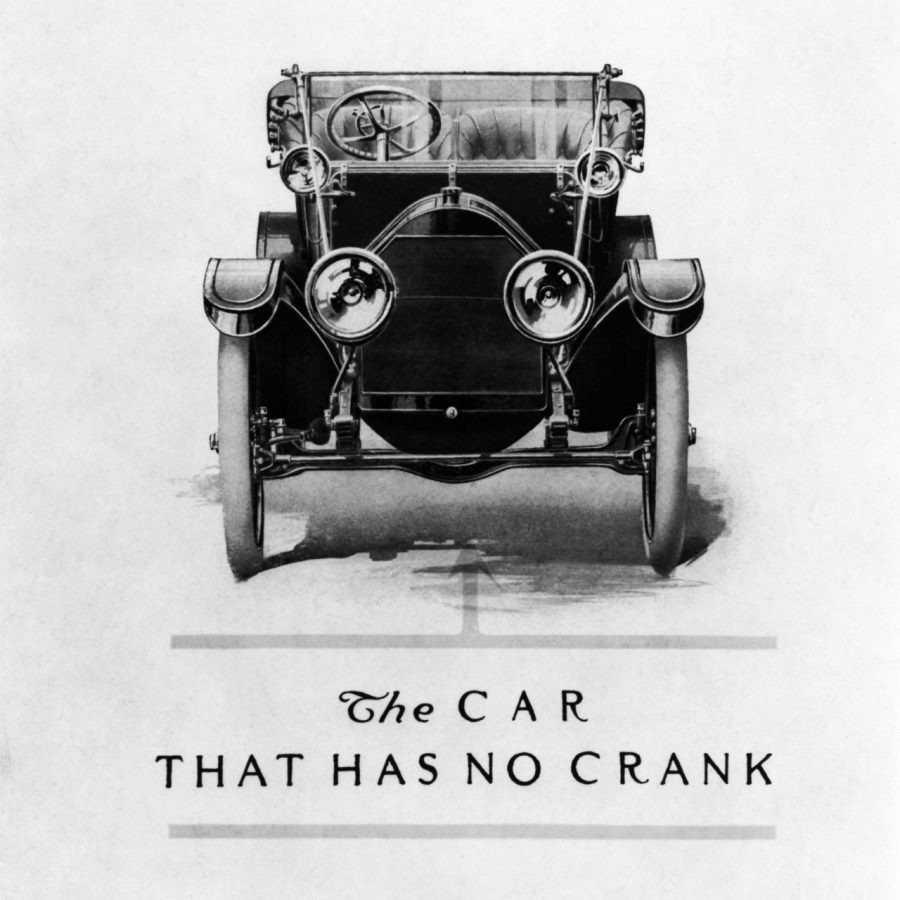
The first item on GM's timeline wasn't conceived as a safety device at all. Starting an early gasoline car meant gripping a heavy crank and spinning the engine by hand; if the engine fired at the wrong moment, the handle could kick back hard enough to break an arm — or worse. The story GM tells is that a motorist helping a stranded driver on Detroit's Belle Isle Bridge was struck by a crank and later died, and that the victim was a friend of Cadillac founder Henry Leland.
Leland turned to inventor Charles Kettering, whose Delco laboratory built a battery-powered starter motor that spun the engine at the push of a button. It debuted on the 1912 Cadillac, helped the brand win Britain's Dewar Trophy, and killed the hand crank within a decade. It also, incidentally, handed gasoline cars the one advantage early electric cars had held over them: effortless starting.
Crashing cars on purpose
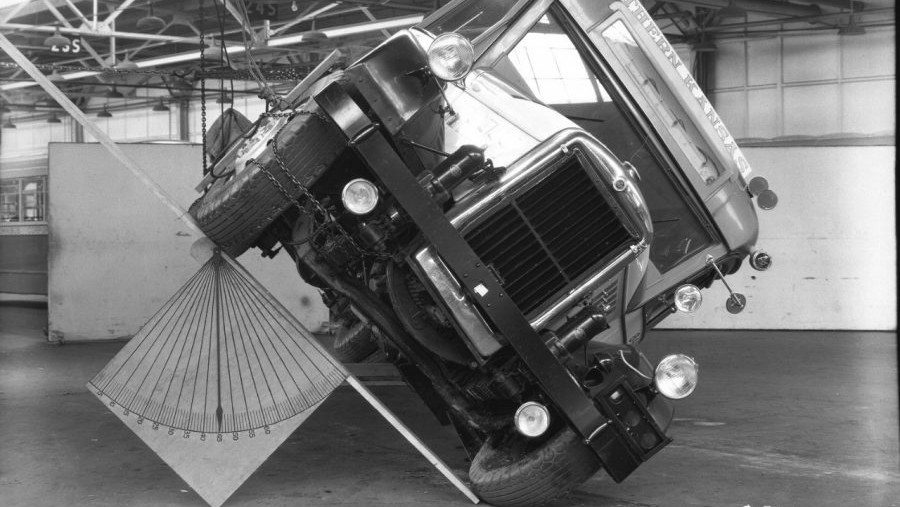
In 1924, GM opened the Milford Proving Ground in Michigan, the first dedicated automotive test facility in the world. Within a decade, engineers there had invented a discipline that didn't exist before: crash testing. The industry's first rollover tests ran at Milford in 1934, and the methods were as crude as the era allowed. Rolling a car meant pushing it off a ramp and down a hill. A barrier test meant an engineer drove the car at a wall and bailed out before impact, then walked over to see what was left. Remote controls, sensors, and high-speed cameras came later.
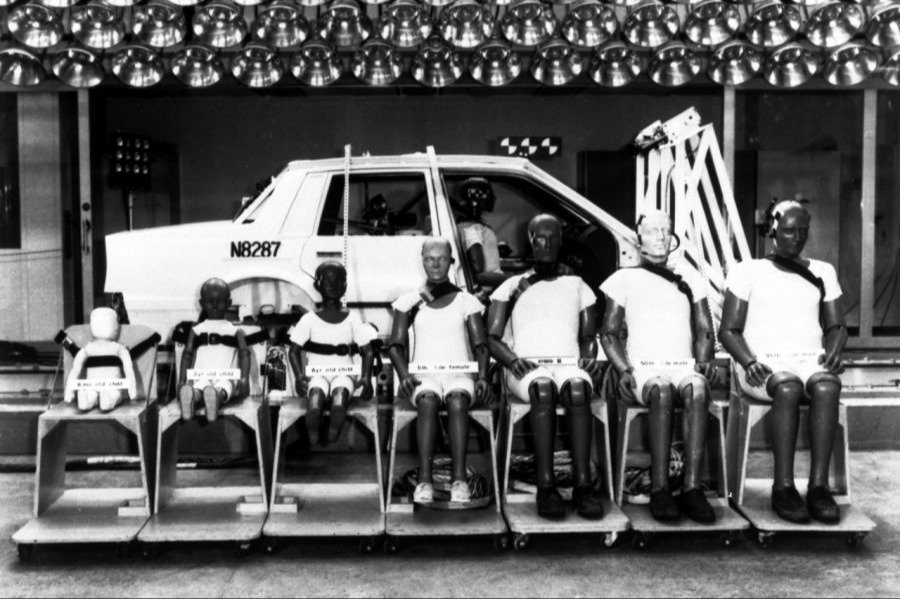
So did a way to measure what crashes do to people. GM built its first crash-test dummy, the Hybrid I, in 1971, after deciding existing models weren't good enough, and by 1977 it had developed the Hybrid III family — a range of sizes from infants to 95th-percentile males. Twenty years later, in 1997, NHTSA certified the Hybrid III as the only dummy accepted for federal compliance testing. It remains the global reference to this day.
The airbag nobody bought
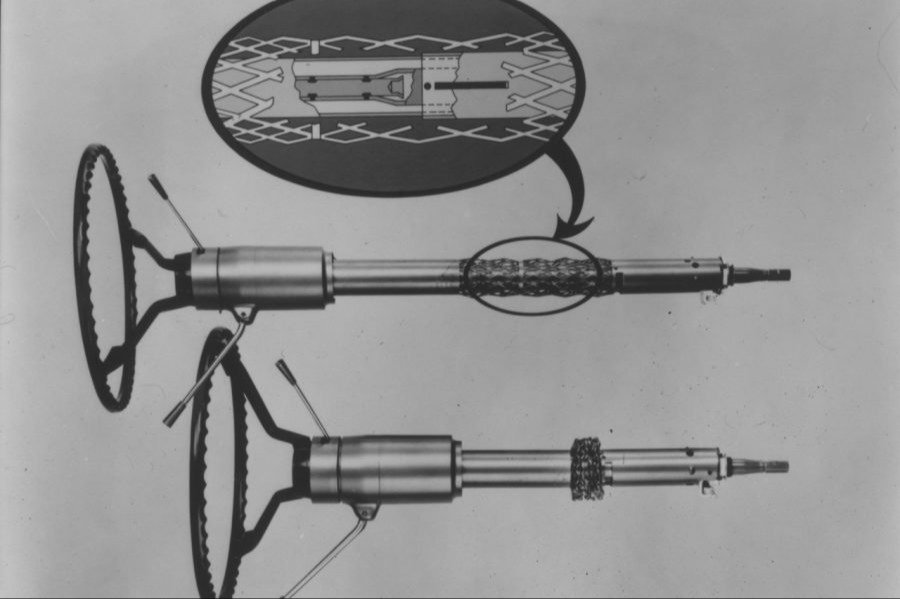
By the 1960s, GM's safety engineers had turned to the most dangerous object inside the car: the steering column, effectively a steel rod aimed at the driver's chest. For 1967, the company made the world's first energy-absorbing column standard across its lineup — a two-piece design with a crushable steel-mesh section that let it collapse up to 8.25 inches in a frontal impact. Chrysler fielded a similar design the same year, Ford followed in 1968, and the Smithsonian keeps a 1967 Chevrolet column in its collection.
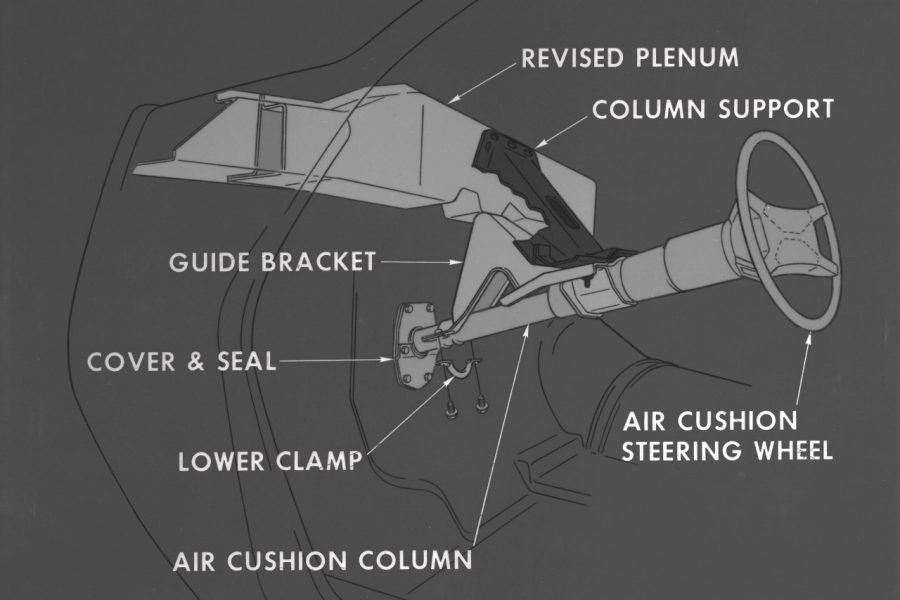
The airbag came next, and it flopped. With Washington debating passive-restraint rules, GM built the Air Cushion Restraint System: dual front airbags fitted first to 1,000 fleet-only 1973 Chevrolet Impalas, then offered as an option on full-size Oldsmobile, Buick, and Cadillac models from 1974. The option cost around $225 at launch, and GM reportedly hoped to move 100,000 cars a year with it. Across three model years, roughly 10,000 buyers checked the box. The company dropped the system after 1976, citing lack of interest.
Regulation needed another two decades to catch up: front airbags became mandatory on new passenger cars with the 1998 model year, and on light trucks a year later. GM kept iterating anyway. In 2013, the Buick Enclave, GMC Acadia, and Chevrolet Traverse introduced the industry's first front center airbag, developed with a supplier after GM's analysis of federal crash data showed far-side impacts accounted for 11 percent of belted front-occupant deaths in non-rollover side crashes. Rival automakers have since adopted the idea across their lineups.
Kids, reminders, and habits
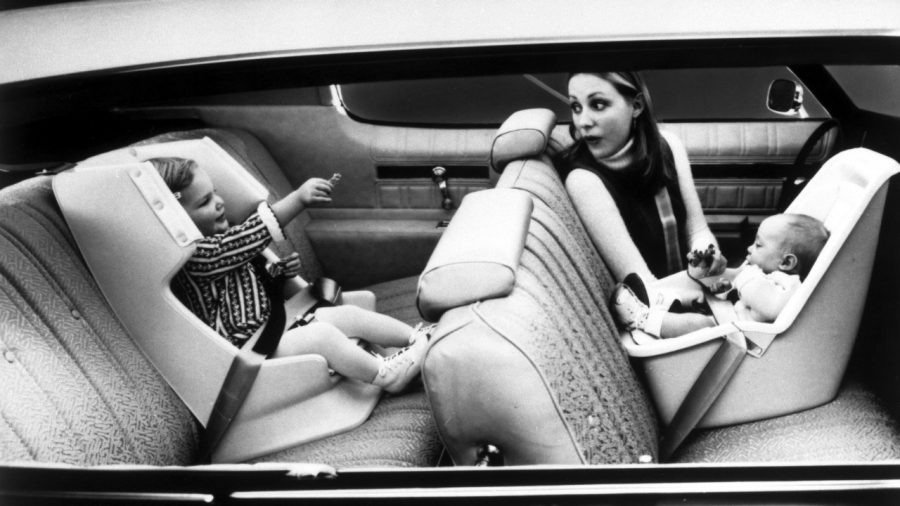
GM also claims the modern child seat. Child seats existed before the company's Love Seats arrived in 1967, but they were designed to keep kids from wandering around the cabin, not to protect them in a crash. GM sold a forward-facing booster first, added a rear-facing infant seat with a dedicated harness in 1969, and distributed both through its AC Delco parts network. Today's seats look different, but the crash-protection mission started here.
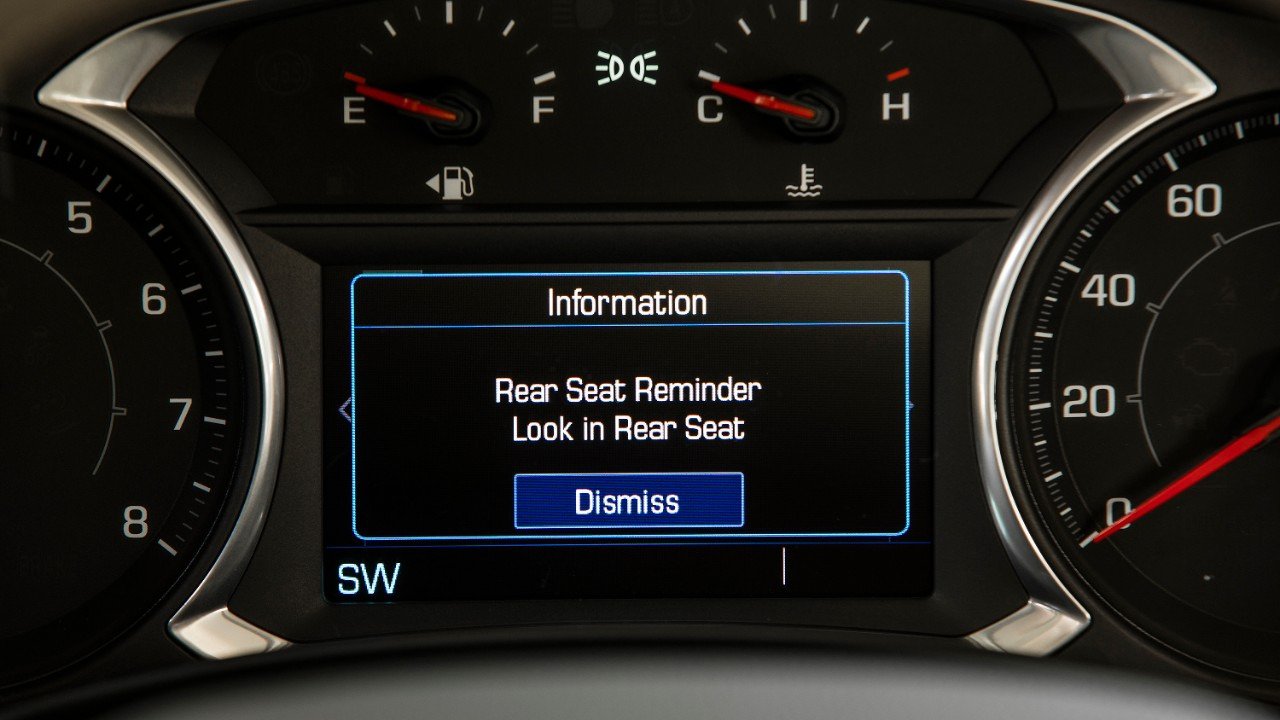
The company's more recent firsts target the driver rather than the hardware. Rear Seat Reminder, launched on the 2017 GMC Acadia and standard across GM's four-door models by 2021, uses simple door logic to prompt a rear-seat check at shutdown — a response to the roughly 37 children who die in hot cars in an average year, per National Safety Council figures GM cites. Buckle to Drive, introduced for 2020, holds the transmission in Park for 20 seconds if front-seat belts are unbuckled. And OnStar, launched on 1997 Cadillacs, made the car itself call for help after an airbag deployment — arguably the first mainstream connected-car feature.
Why the good ideas kept flopping
The through line is uncomfortable for anyone who believes markets reward safety. The collapsible column succeeded because it was standard, invisible, and free. The airbag failed as a $225 option and saved lives at scale only once the law made it universal. GM appears to have absorbed the lesson: for the 2023 model year, it made five active-safety features — automatic emergency braking among them — standard on the vast majority of its U.S. lineup rather than leaving them on the options sheet. A century of history says that's the only version of safety most buyers will ever actually take.