How a Bolt-On Ford V-8 Became F1's Most Successful Engine Ever
Ford is marking 125 years of racing by revisiting the Cosworth DFV: 155 F1 wins, 12 drivers' titles, and a customer-engine model that rewired the sport. The subtext is its new Red Bull partnership.
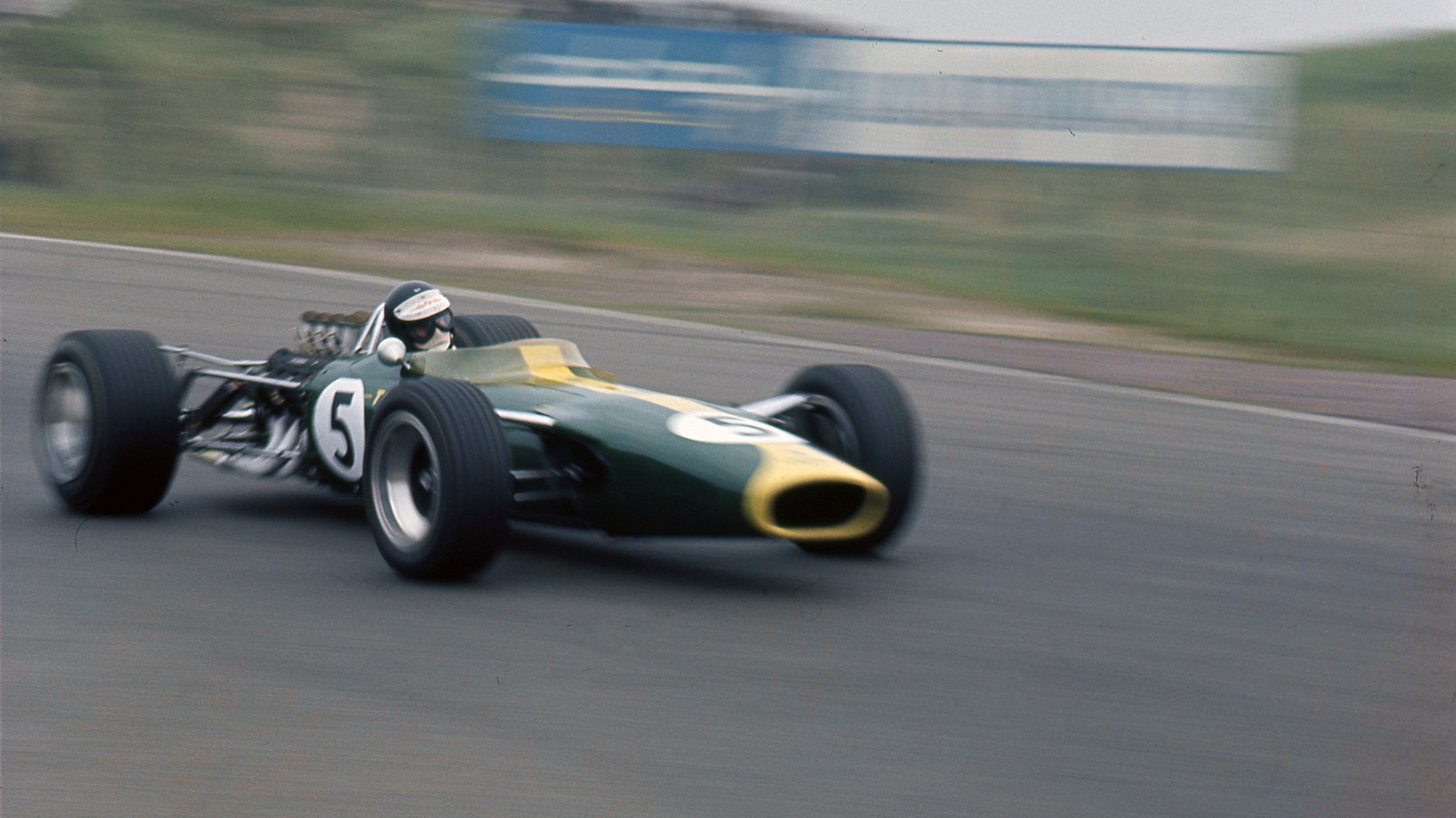
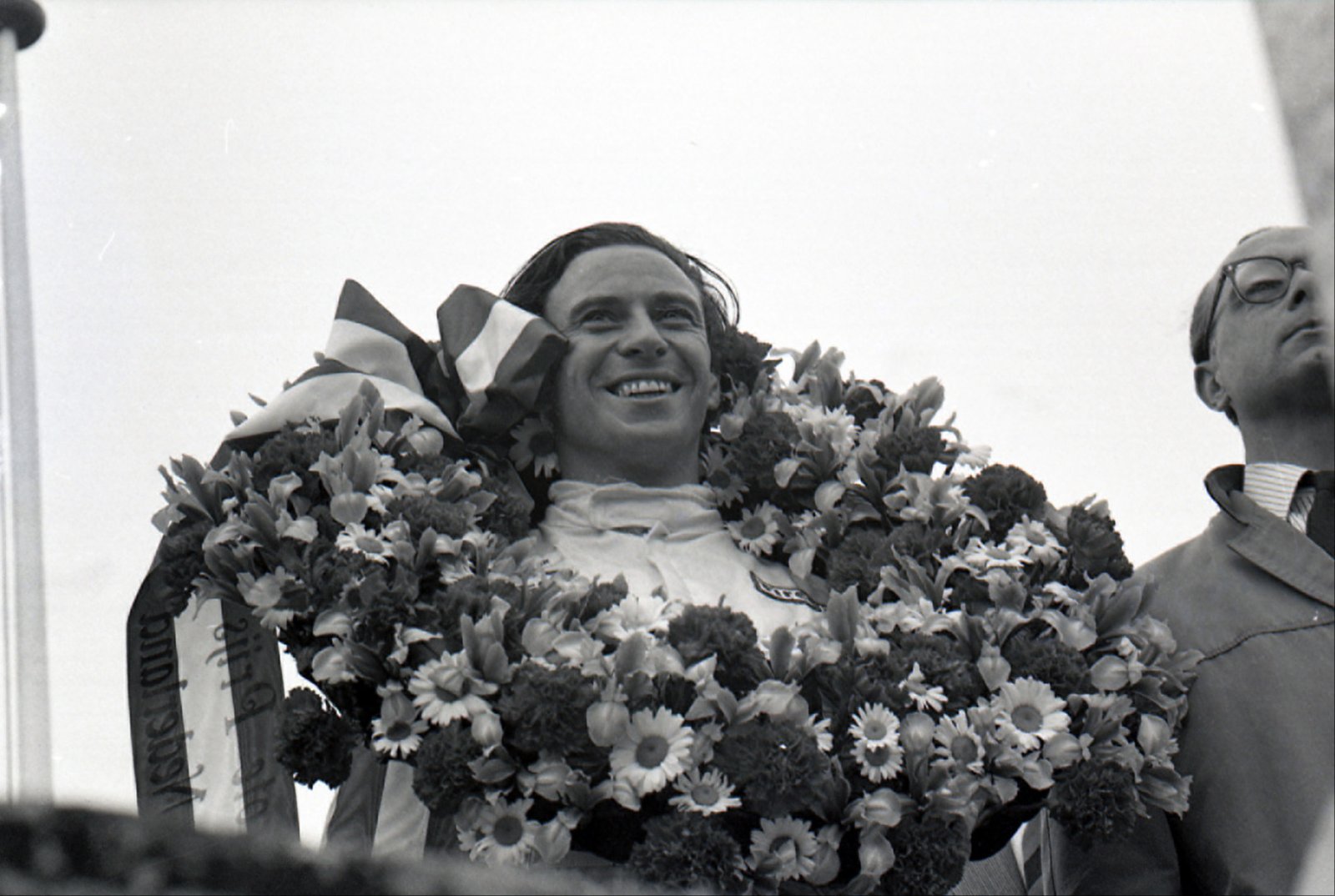
On June 4, 1967, a Lotus 49 with an unproven Ford-badged V-8 bolted to the back of its monocoque won the Dutch Grand Prix at Zandvoort on its first attempt. Jim Clark set the fastest lap, built an 11-second lead by half distance, and gave the Cosworth DFV the first of what would become 155 Formula 1 victories. Ford is retelling the story now because 2026 marks 125 years since Henry Ford's first race win, and because the company is back in F1 as Red Bull's powertrain partner.
The anniversary is a good excuse to revisit what remains the most successful engine in the sport's history, and one of its strangest success stories: a world-beating F1 engine commissioned by a road-car company's PR-minded motorsport chief.
Two engines, one idea
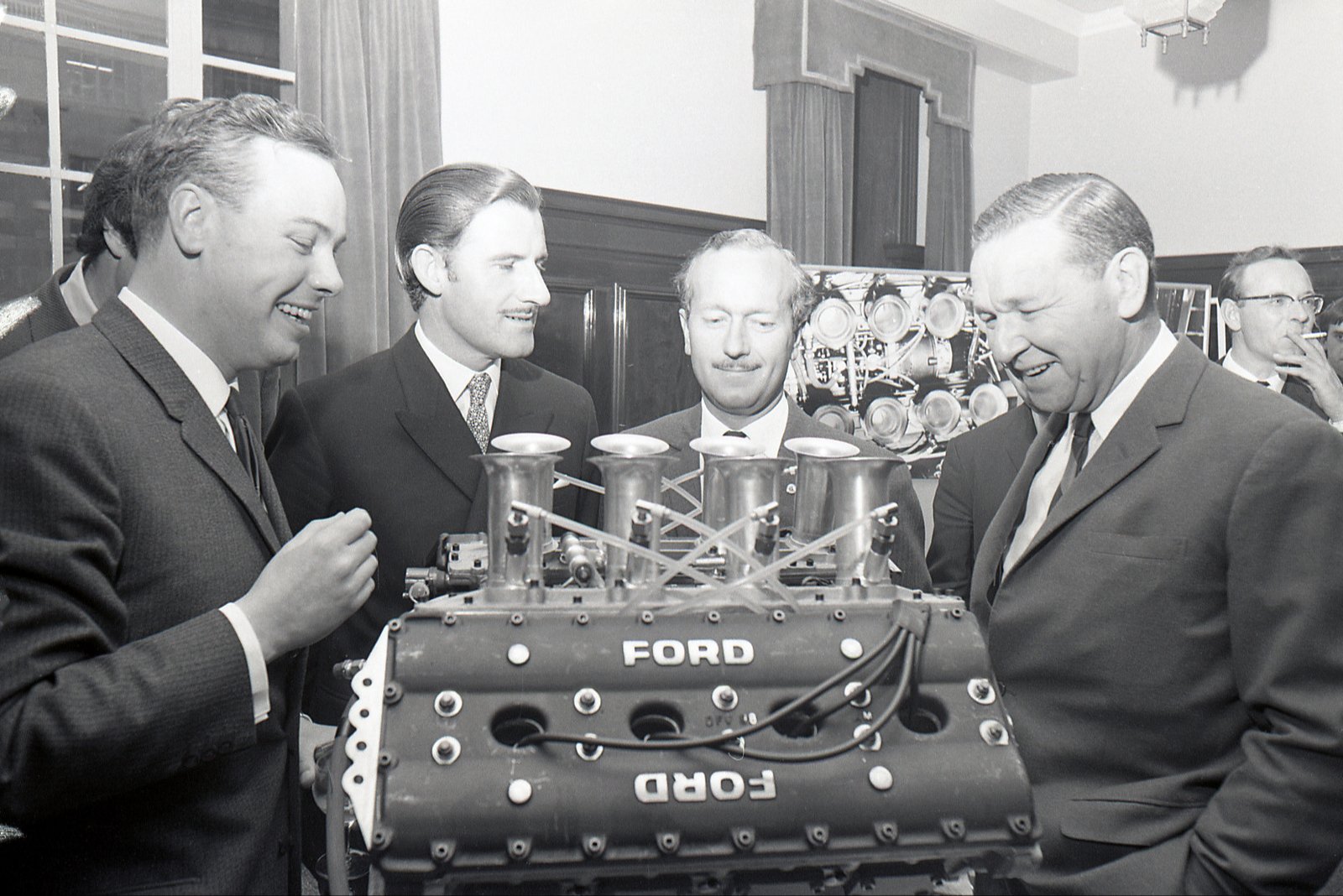
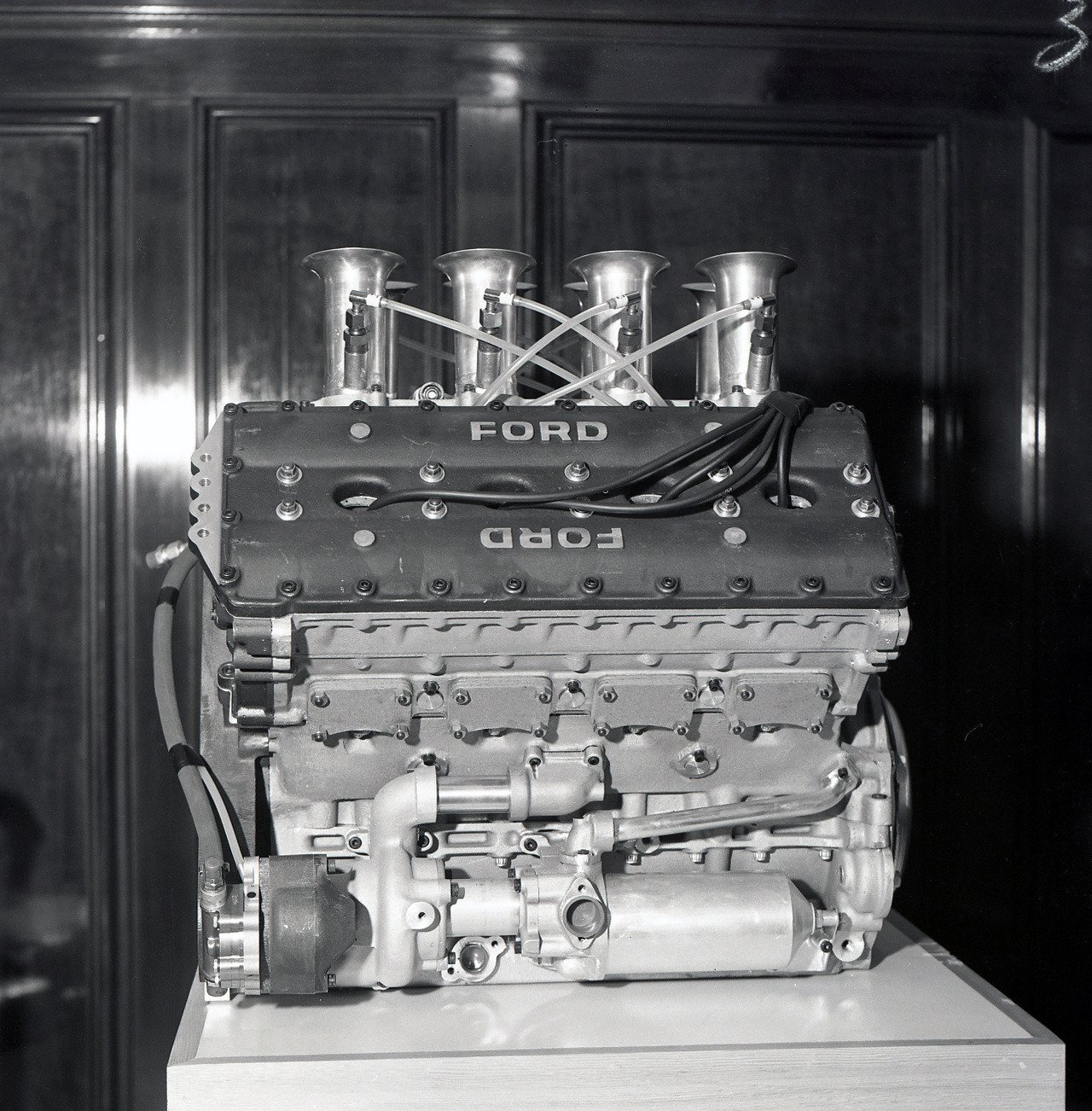
Walter Hayes, Ford of Britain's head of motorsport, hired Keith Duckworth and Mike Costin of Cosworth in 1965 to build two engines: a 1.6-liter four-cylinder for Formula 2, the FVA, and a 3.0-liter V-8 for the new F1 regulations. The V-8 was, in essence, two FVA banks on a common crankcase, which is where the name comes from: Double Four Valve. The four-valve head was the breakthrough. F1 was still running two-valve engines, and the DFV's breathing advantage translated directly into power.
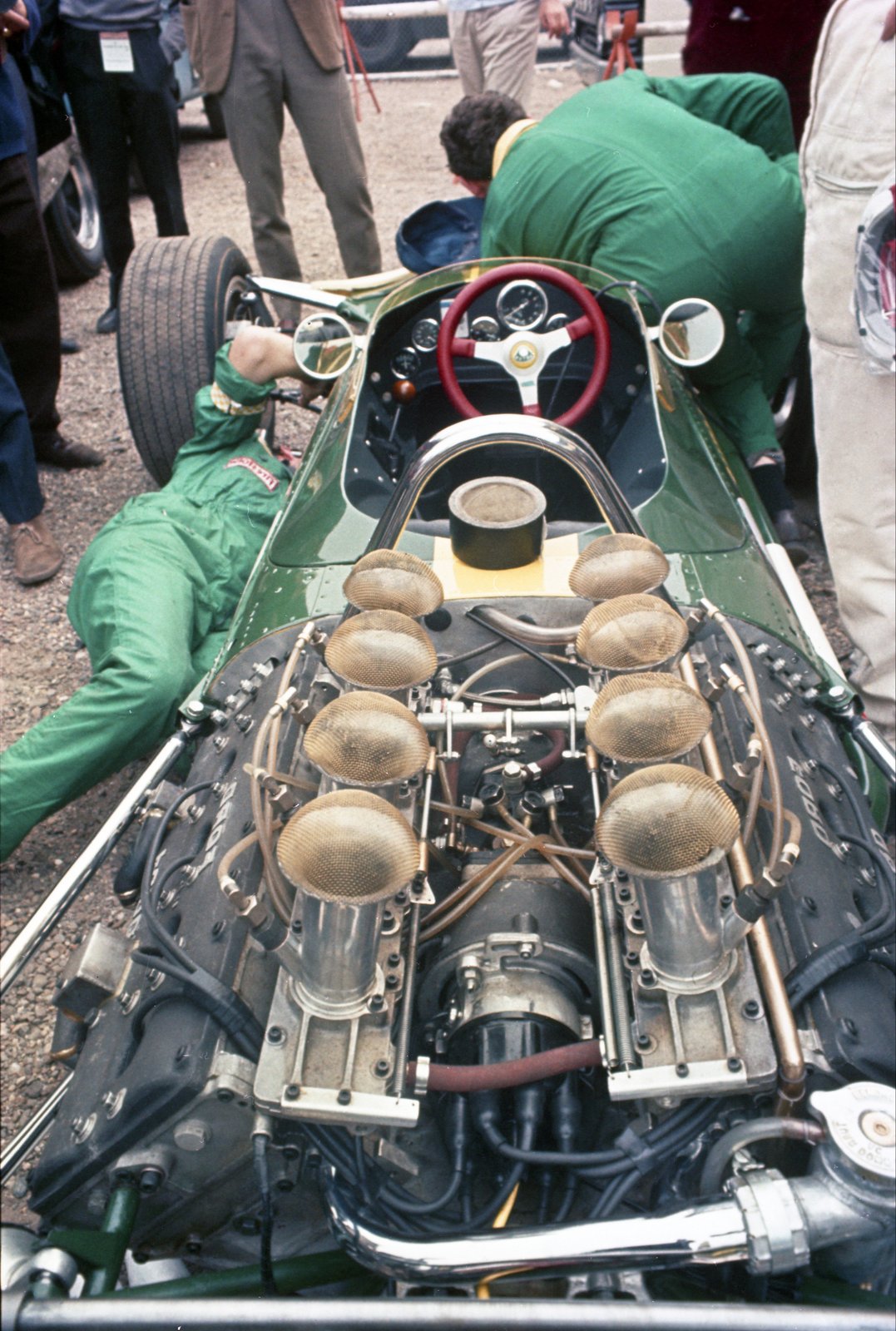
Duckworth also made the engine a structural member: the DFV bolted rigidly to the back of the Lotus 49's tub and carried the rear suspension, a layout so clean that it became the default architecture for open-wheel cars and never really left.
Zandvoort, then everything else
The engine had barely been tested when it arrived in Holland. Graham Hill put the sister Lotus on pole and led early before a camshaft gear failed; Clark won anyway, in a car and engine combination that had barely turned test miles. Ford notes it was the first debut win for an all-new design in 13 years.
What followed had no precedent. Ford and Cosworth sold the DFV to anyone who could pay, and the customer-engine model rewired the sport: Tyrrell, McLaren, Williams, Brabham and a dozen smaller teams could suddenly buy championship-grade power. DFV cars won every single round of the 1969 and 1973 seasons. By the time Michele Alboreto took the engine's 155th and final win at Detroit in 1983, the DFV had powered 12 drivers' world championships and 10 constructors' titles. Its derivatives kept going: the DFV won Le Mans outright in 1975 and 1980, and the turbocharged DFX version won the Indy 500 ten years running from 1978 to 1987, completing motorsport's Triple Crown for the engine family.
The 2026 echo
Ford's interest in the story isn't purely sentimental. The company returned to F1 this season as the powertrain partner of Red Bull Ford Powertrains, supplying Oracle Red Bull Racing and Racing Bulls under the new hybrid engine rules, and it heads to the WEC's Hypercar class and Le Mans in 2027. The parallel Ford is drawing is deliberate: in 1967 it entered F1 with a new engine formula and a technical partner; in 2026 it's doing the same thing with hybrid power units instead of four-valve heads.
Whether the Red Bull partnership produces anything close to the DFV's record is a question for the next decade. The bar, for the record: 155 wins, roughly 375 engines built, and a 16-year winning career that outlasted every rival that tried to kill it.