The First SV: How a 150-Car Miura Run Created Lamborghini's Most Valuable Badge
Fifty-five years after the Miura SV appeared at Geneva, its badge returns on a 1,963-unit hybrid. The original was a 150-car farewell — and it became the most valuable Lamborghini of all.
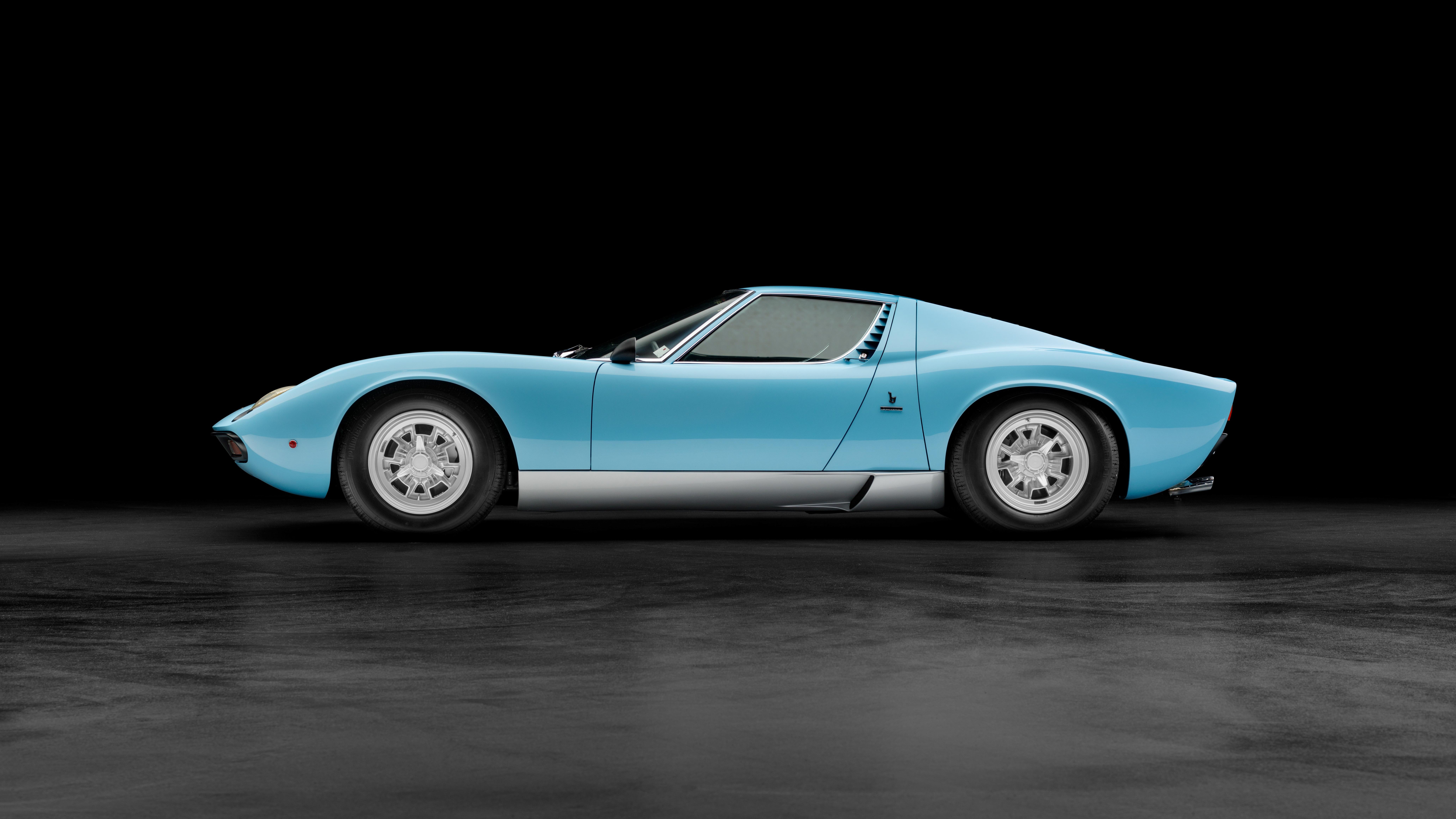
Lamborghini will build 1,963 examples of the Revuelto SV, the hybrid V12 it unveiled at Monterey Car Week in August. The car that invented those two letters got a run of 150 — and it wasn't even meant to be a celebration. The 1971 Miura SV was a send-off for a model Lamborghini had already decided to replace.
With the Miura marking its 60th anniversary this year and the SV badge its 55th, it's worth going back to where the Super Veloce idea came from — and why the original remains the most valuable car Lamborghini has ever produced.
Shown next to its own replacement
The Miura P400 arrived at the Geneva Motor Show in March 1966 with a layout no production road car had used before: a 4.0-liter V12 mounted transversely behind the seats, with the engine and gearbox sharing a single casting to keep the package short. Output was 350 CV, and by Lamborghini's own accounting, the flood of orders surprised both Ferruccio Lamborghini and Nuccio Bertone. The company built 265 of the original P400 through 1968, then 338 of the more powerful 370-CV P400 S between 1969 and 1971.
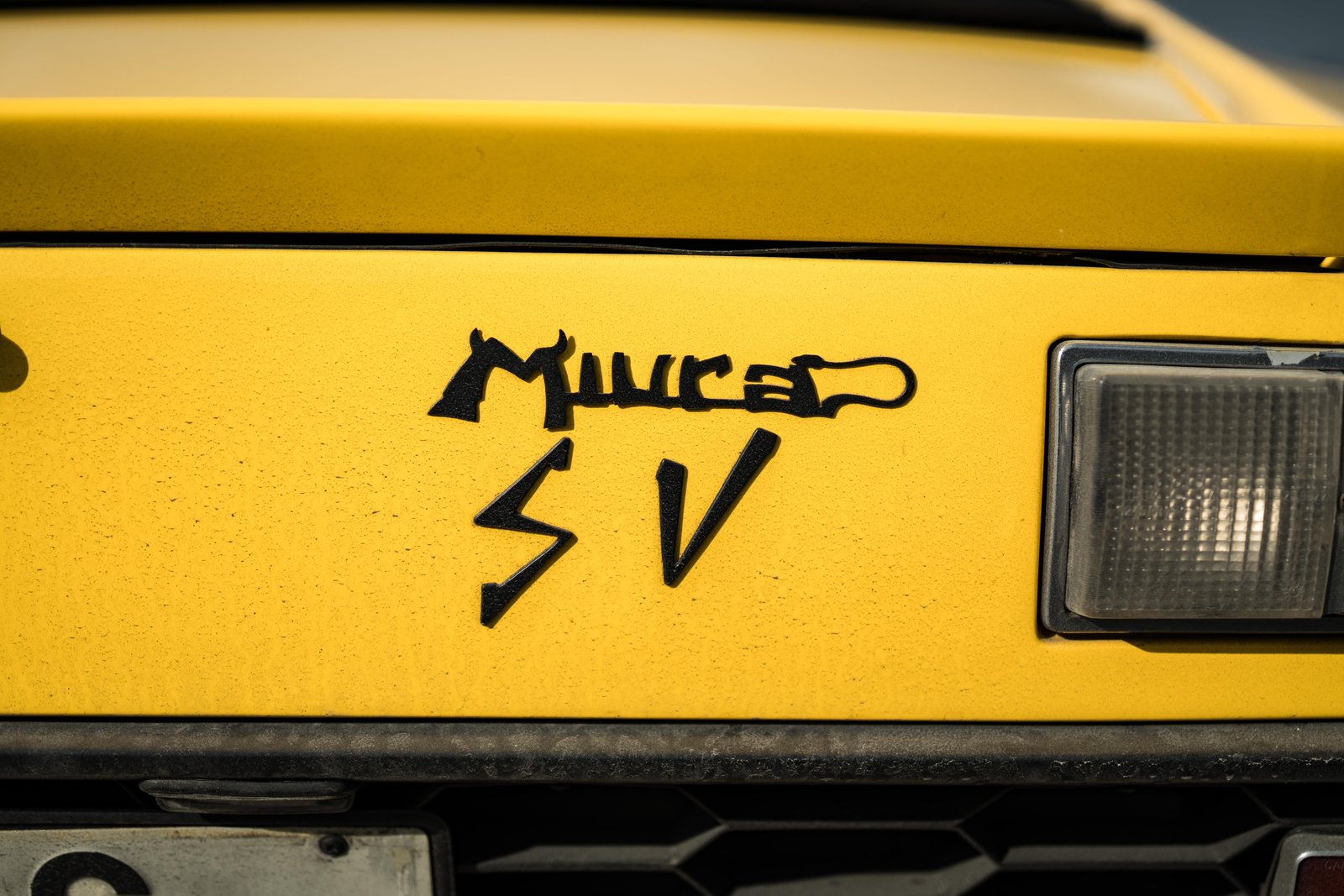
The SV completed the arc — in an oddly poignant setting. At Geneva in March 1971, the pre-production Miura SV, chassis 4846, stood on Bertone's stand. A short walk away, Lamborghini's own stand held the Countach LP500 prototype, the car that would make the Miura obsolete. The sharpest Miura ever built was launched into the world already living on borrowed time.
What Super Veloce actually changed
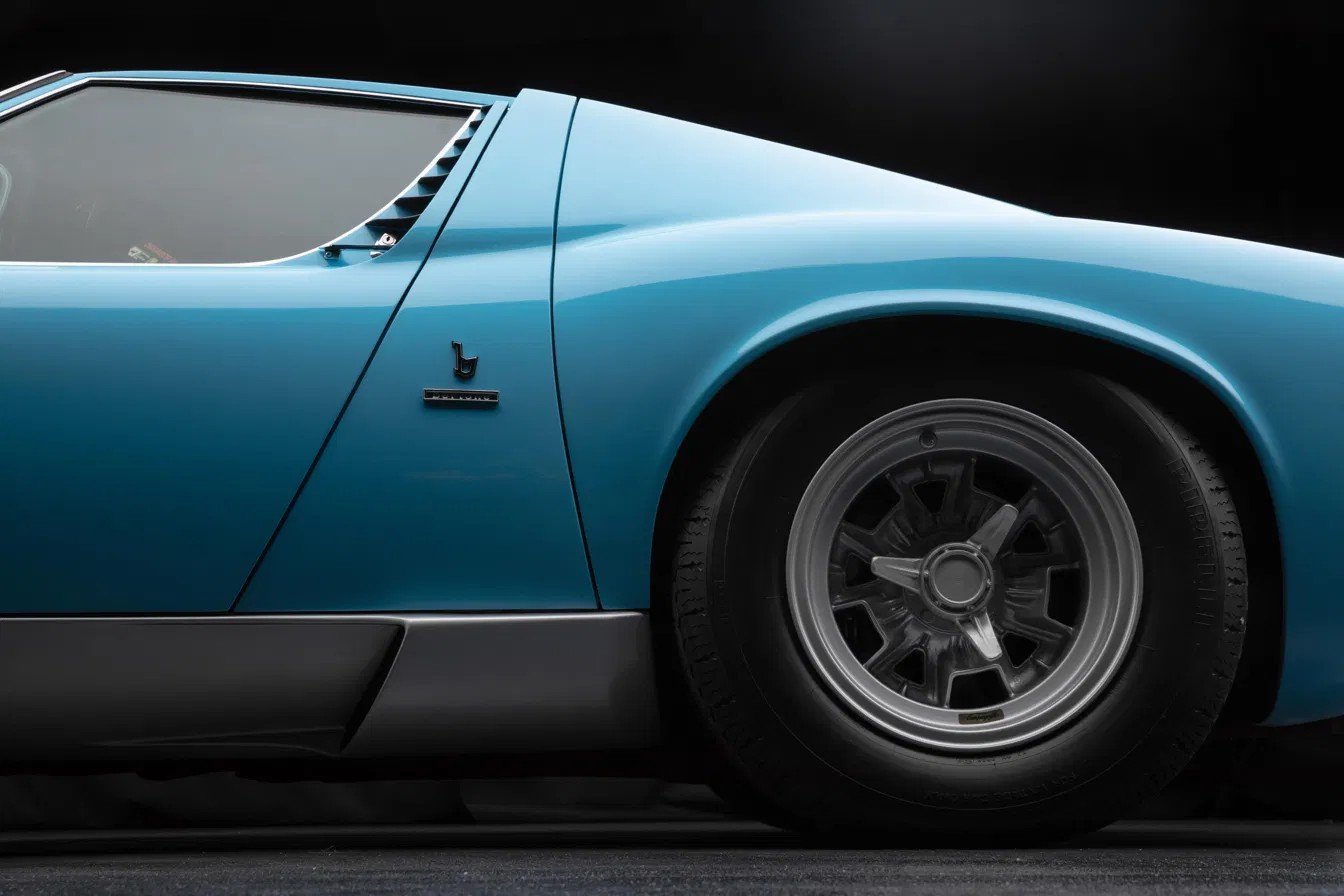
SV stood for Super Veloce — "super fast" — and the changes went well beyond the badge. The 4.0-liter V12 rose to 385 hp at 7,850 rpm. The rear track grew, the rear fenders widened to cover much fatter tires, and the suspension was reworked to deal with the grip. Later SVs added the detail collectors chase hardest today: separate lubrication for the engine and gearbox, replacing the shared-oil arrangement of earlier Miuras.
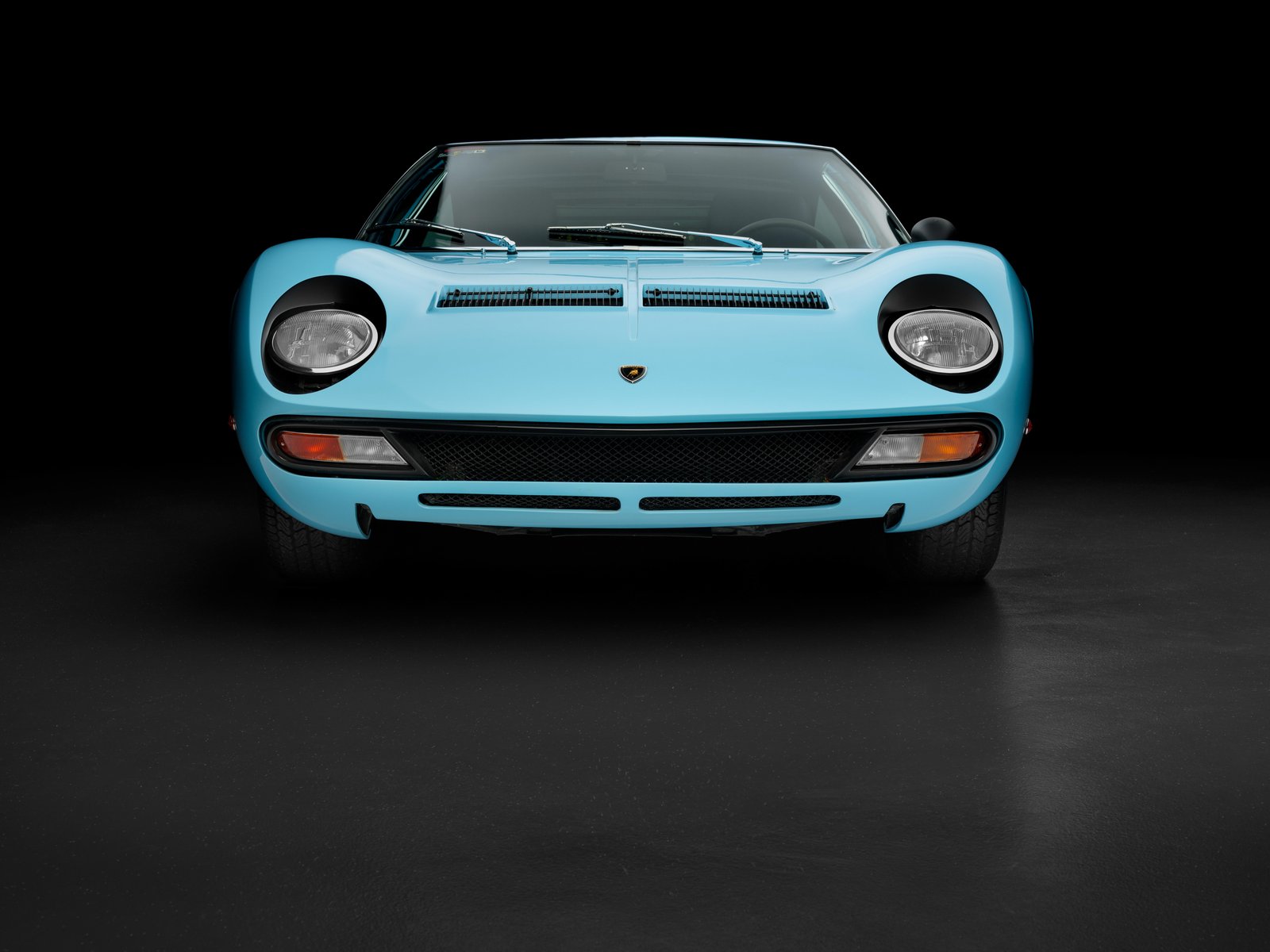
The face changed too. The headlight "eyelashes" that had framed every Miura's lights since 1966 were gone, leaving the SV with a cleaner, harder look that separates it from the P400 and S at a glance.
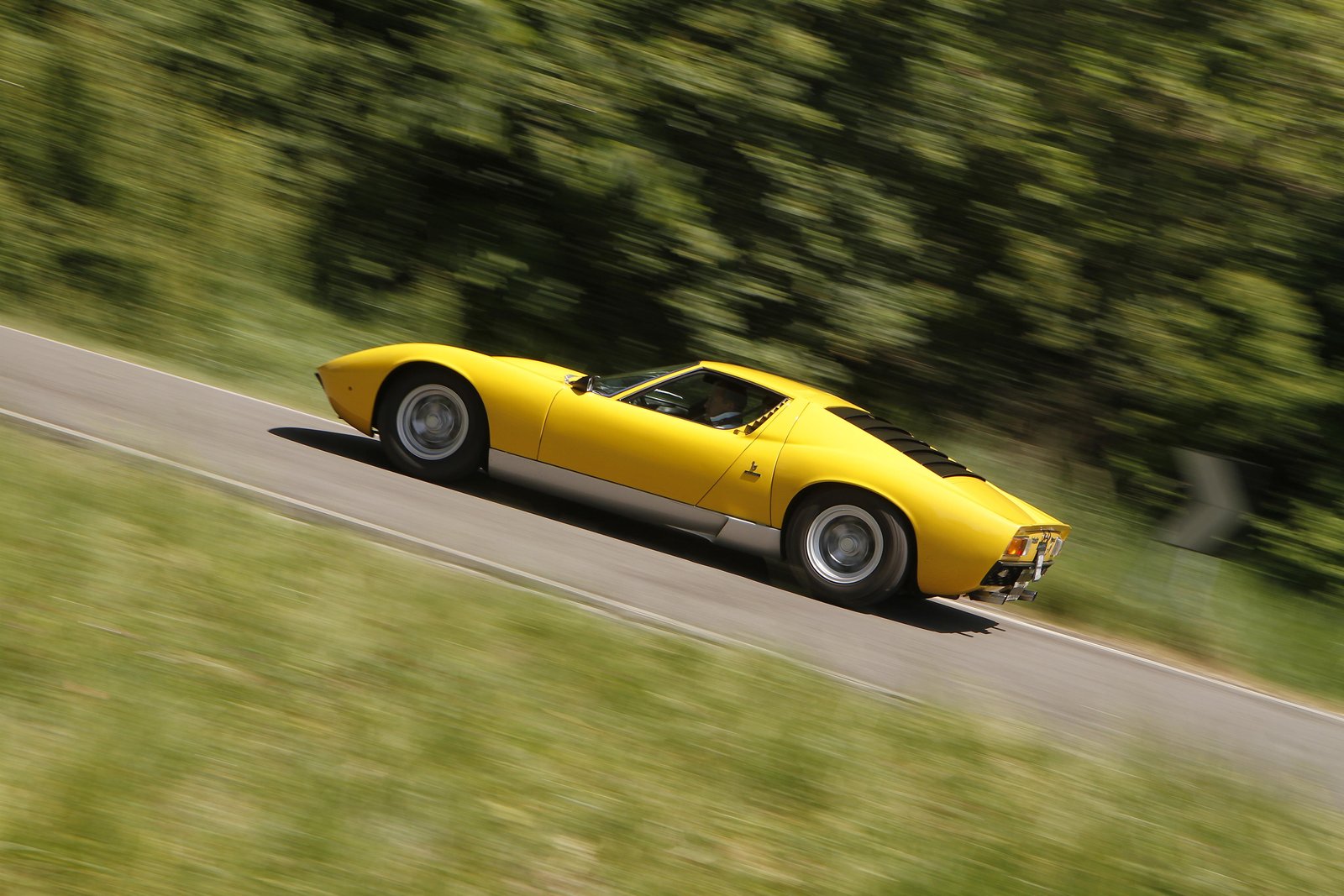
The numbers were serious for 1971: 0–62 mph (0–100 km/h) in about 5.5 seconds and a top speed beyond 180 mph (290 km/h), according to Lamborghini's figures. The company describes the Miura line as the first modern mid-engine supercar, and the SV was its fully developed form — the version where the concept finally had the chassis to match the engine.
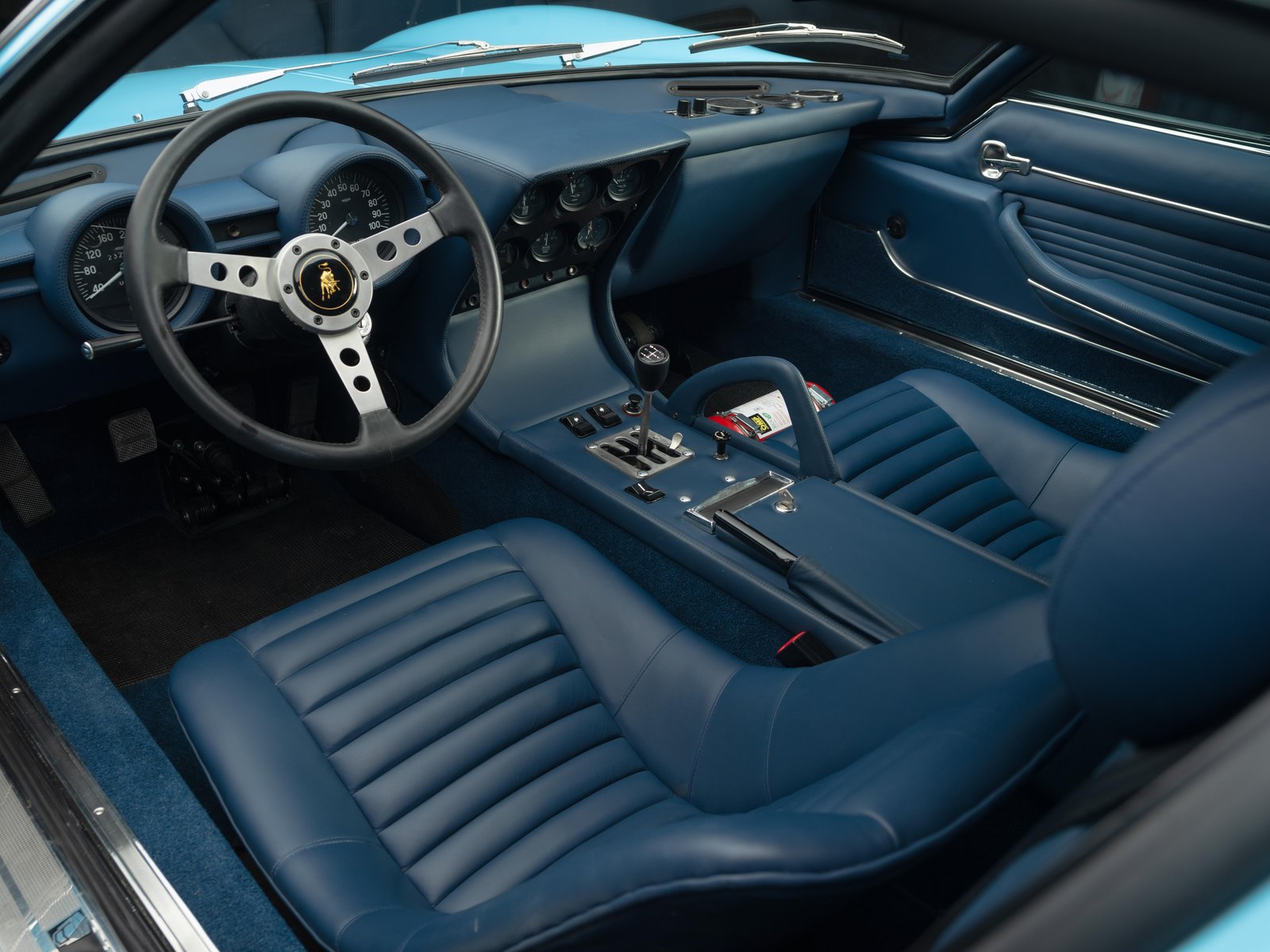
Production ran from 1971 to 1973 and stopped at 150 cars. A handful of specials sat alongside them, including four SVJs derived from the Jota prototype and a single Bertone-built Spyder. All told, Miura production across every series came to roughly 750 cars — a rounding error by modern Lamborghini standards.
Why the SV is the multi-million-dollar Miura
The market has sorted the Miura range into a clean hierarchy: the P400 at the base, the S in the middle, and the SV on top. The gap is not subtle. The record for any Miura at auction belongs to a 1972 SV — a car once owned by Jamiroquai's Jay Kay — which brought $4.9 million at RM Sotheby's in 2024. The results since have stayed in the same territory: another 1971 SV sold for €3.9 million in Milan in May 2025, comfortably above its estimate.
The logic is straightforward. The SV combines the smallest production run of any series Miura with the most developed specification, and the split-sump cars add a further layer of scarcity within those 150. It is also the last of the line — the final expression of the car that started the mid-engine era — which is exactly the kind of story top-tier collectors pay for.
The badge outlived the car
The Miura SV set a template Lamborghini has reused for half a century: take the V12 flagship, add power, widen the footprint, cap the numbers, and time it late in the model's life. The Diablo SV followed in 1995, the Murciélago LP 670-4 SV in 2009, and the Aventador SV in 2015 — each one the hardest-edged version of its generation.
The Revuelto SV carries the letters into the hybrid era with 1,065 CV (about 1,050 hp) and a production run of 1,963 units, a reference to the company's founding year. That is thirteen times the number of Miura SVs ever built, which says less about Lamborghini's restraint than about how much the business has grown around the badge.
It also underlines what makes the original different. Every SV since has been a halo car, planned as the peak of its range. The Miura SV was something rarer: a goodbye, built in small numbers because the company was already looking past it. The 150 cars that resulted have spent five decades proving that the most valuable Lamborghinis are the ones the factory made while thinking about something else.