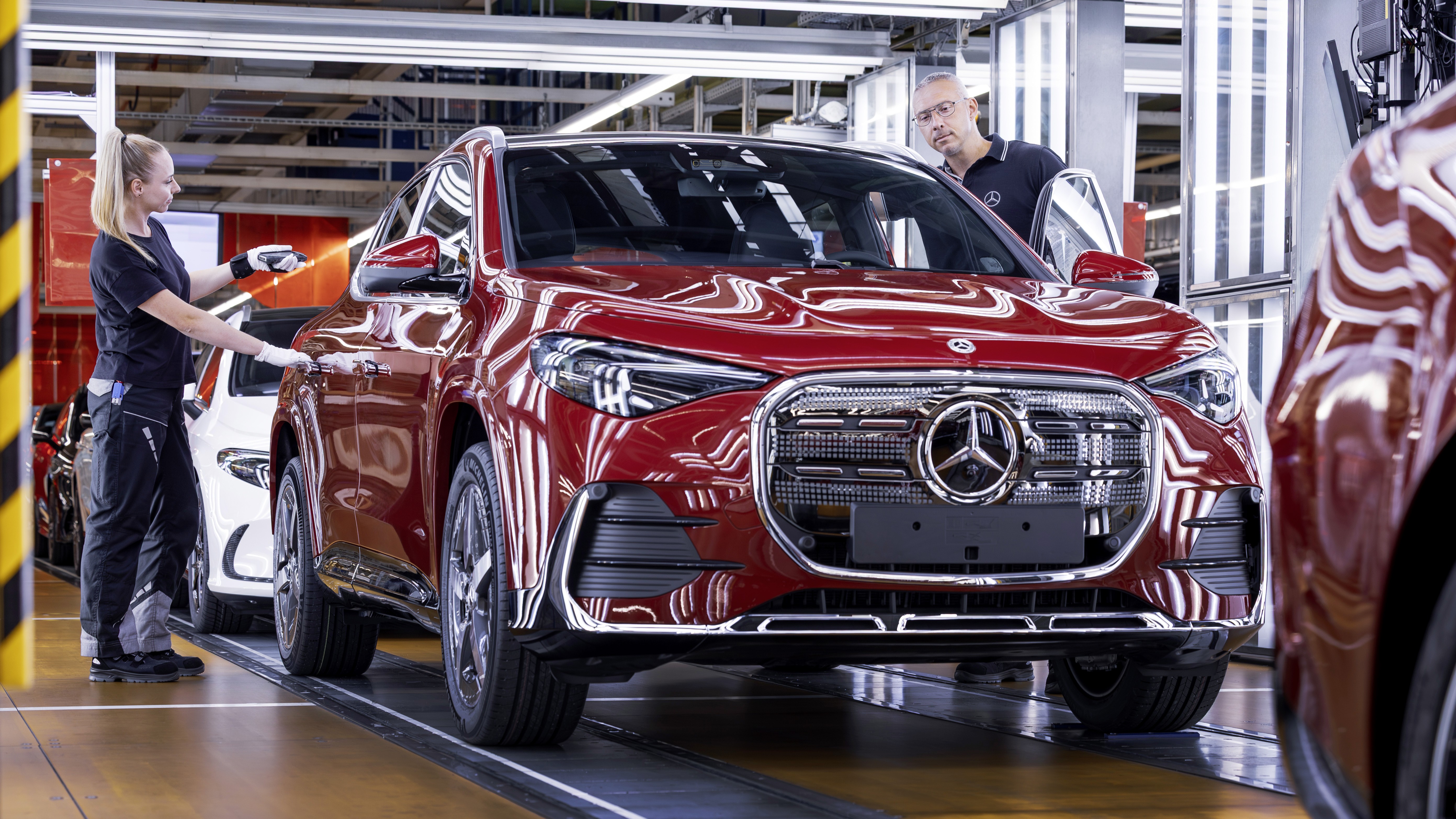
Kia's New PV7 Electric Van Has a 2027 Launch Plan — and the US Isn't in It
The second Kia PBV brings 800-volt charging, up to 283 cubic feet of cargo space, and a roadmap to 23 variants. Korea and Europe get it in 2027; Kia still hasn't named the US.
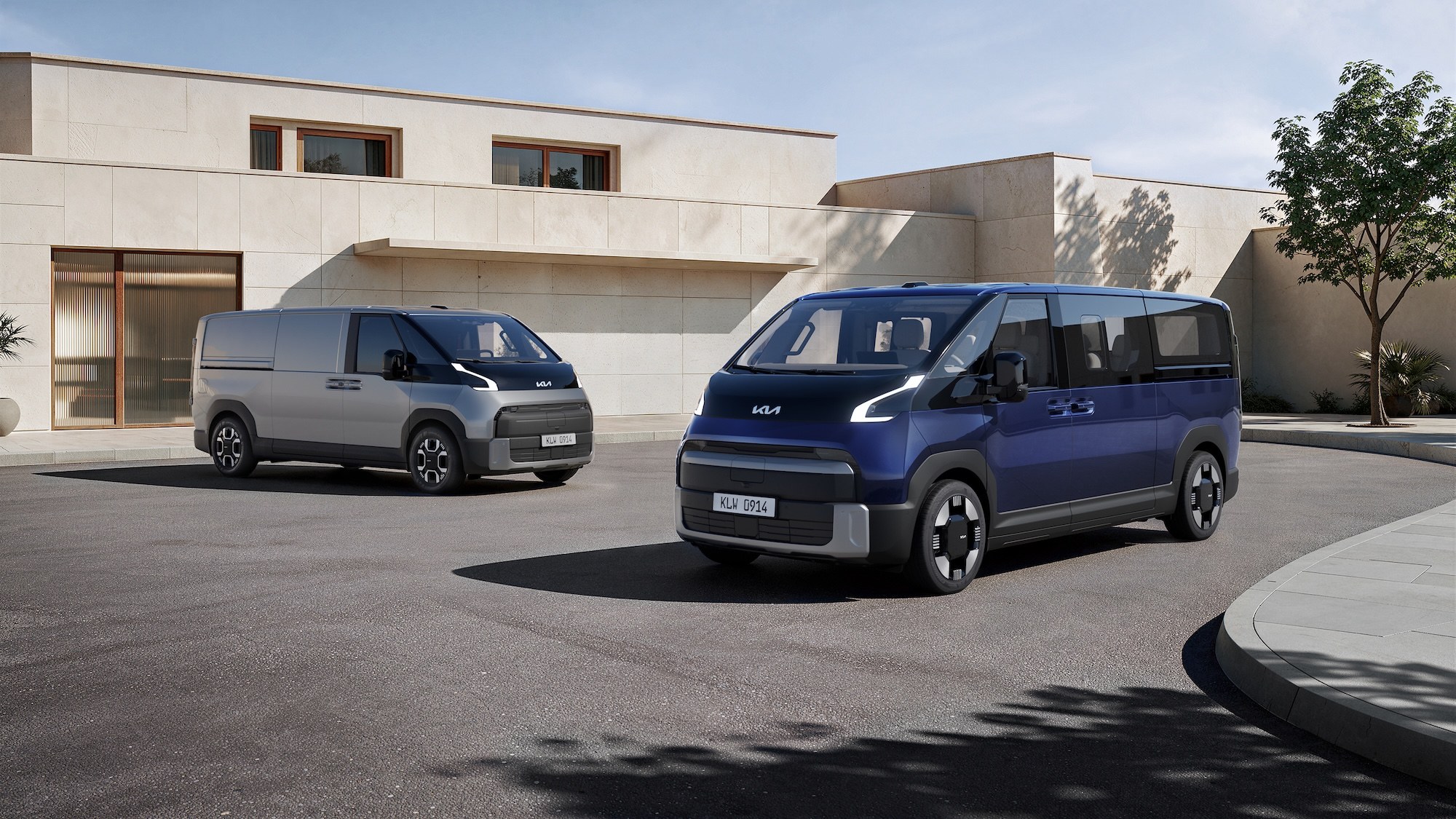
Kia pulled the cover off the PV7 at IAA Transportation in Hannover today, and the launch plan reads exactly like the PV5's before it: Korea and Europe in 2027, then "additional derivatives and markets." The United States is not named. For a brand that sells Americans everything from the Soul to the Telluride, plus a Carnival minivan from $37,490, Kia now has two purpose-built electric vans on the road or on the way — and still no announced plan to sell either of them here.
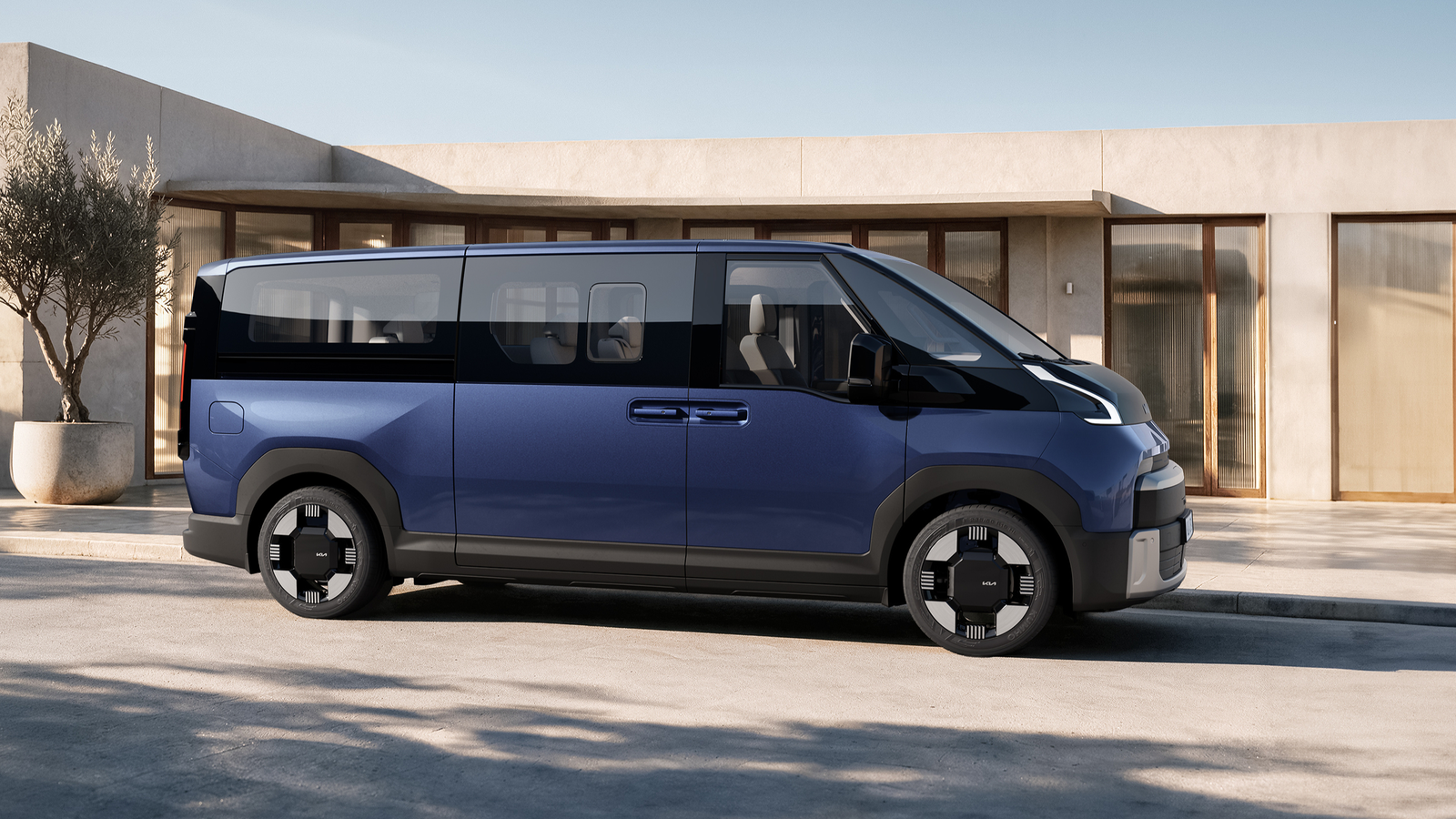
The PV7 is the second model in Kia's Platform Beyond Vehicle (PBV) lineup, and it moves up a size class. Where the PV5 was drawn up for urban delivery runs, the PV7 targets fleets, logistics operators, and shuttle services, with a Passenger version pitched at families as well. It rides on the same commercial-only E-GMP.S platform with a flat floor, but adds something the PV5 lacks: an 800-volt electrical architecture. Kia Corporation's global release stops there — no battery, range, or power figures.
What Kia has said about the hardware, and where
The numbers come from the specifications Kia released for Europe alongside the debut, as reported by electrive, and they should be read as European figures. Two NMC batteries, 71.5 and 96.2 kWh, feed a front motor rated at up to 268 hp (200 kW) and 310 lb-ft (420 Nm); all-wheel drive comes later. With the big pack, Kia quotes the PV7 Cargo at around 460 km — roughly 285 miles — on the WLTP cycle from internal testing, with homologation still pending. An EPA rating, if one is ever needed, would come in lower. A 10-to-80-percent charge takes about 25 minutes on a 350-kW charger, against roughly 30 minutes for the 400-volt PV5.
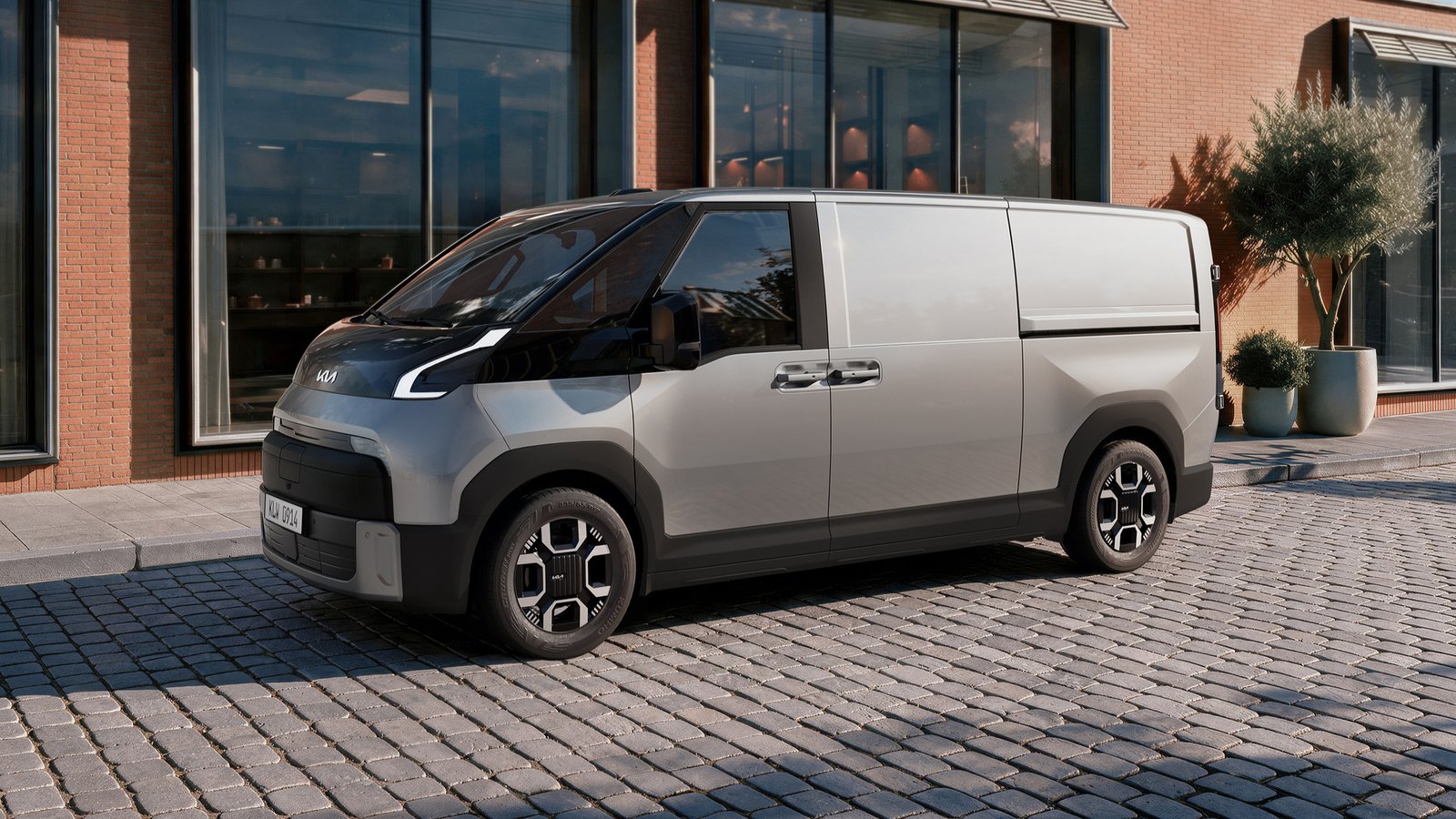
The long-wheelbase Cargo is 210.6 inches long on a 137.8-inch wheelbase. It holds up to 215 cubic feet (6.1 cubic meters) with the standard roof or 283 cubic feet (8.0 cubic meters) with the high roof, and carries a 2,568-pound (1,165 kg) payload — about 50 percent more than the PV5 Cargo's best figure. The Passenger model seats up to nine in Europe. Kia says the family will grow to 23 variants after launch, from three Cargo bodies to a chassis cab and conversions, with the larger PV9 due in 2029. Pricing hasn't been announced for any market.
The van business Kia is building without the US
This is not a side project. At its 2025 investor day Kia set a target of 250,000 PBV sales by 2030, with the PV5, PV7, and PV9 arriving in 2025, 2027, and 2029, and it has held that schedule so far. The PV5 was named 2026 International Van of the Year, Kia has sold more than 39,000 of them in the first eight months of 2026, according to Electrek, and the dedicated Hwaseong EVO plant in Korea can build up to 200,000 vans a year once the larger models join the line.
None of that capacity is pointed at the US. Kia America has not announced the PV5, the PV7, or the PV9, and its only van-shaped vehicle remains the Carnival, a family MPV. The closest a PBV gets to the American market is Canada, where the PV5 Cargo goes on sale in the fourth quarter at C$46,995 (about US$33,000) with a NACS port, per Kia Canada. PV5 prototypes have been photographed testing in Indiana, Michigan, and California, and Kia has neither confirmed nor ruled out a US launch.
The obstacles are familiar. Every PBV is built in Korea, and an imported cargo van runs into the decades-old 25 percent "chicken tax" on light trucks before any newer tariffs are counted. Supply is the other constraint: Kia is rationing PV5 allocations to new markets, and Kia Australia's product planners have said their monthly volume is capped, as Autoblog reported in June. A company that can't fill European and Korean orders has little reason to open the world's largest commercial-van market with an imported product.
Kia's own pitch makes the omission stand out. CEO Ho Sung Song framed the PV7 as going "beyond the vehicle itself to deliver a complete business solution" — the van, a fleet-management portal, connected-data APIs, and uptime services with predictive diagnostics, sold as one package. That describes a product for exactly the last-mile and trades buyers Ford serves with the E-Transit, in a market where Kia currently offers them nothing.
The release says other markets will follow the 2027 launch, without naming them. Until Kia does, the PV7 is a European and Korean story with a US-sized gap in it. The public gets its first look in Hannover through September 20; American fleet buyers get to keep reading about it.