Ramcharger vs. Grand Wagoneer: How Ram Says Its First SUV Will Be Different
Ram's first SUV shares its frame, factory, and 2028 launch window with the Grand Wagoneer. Here is what Ram's CEO says will set the two apart, and what nobody has confirmed yet.
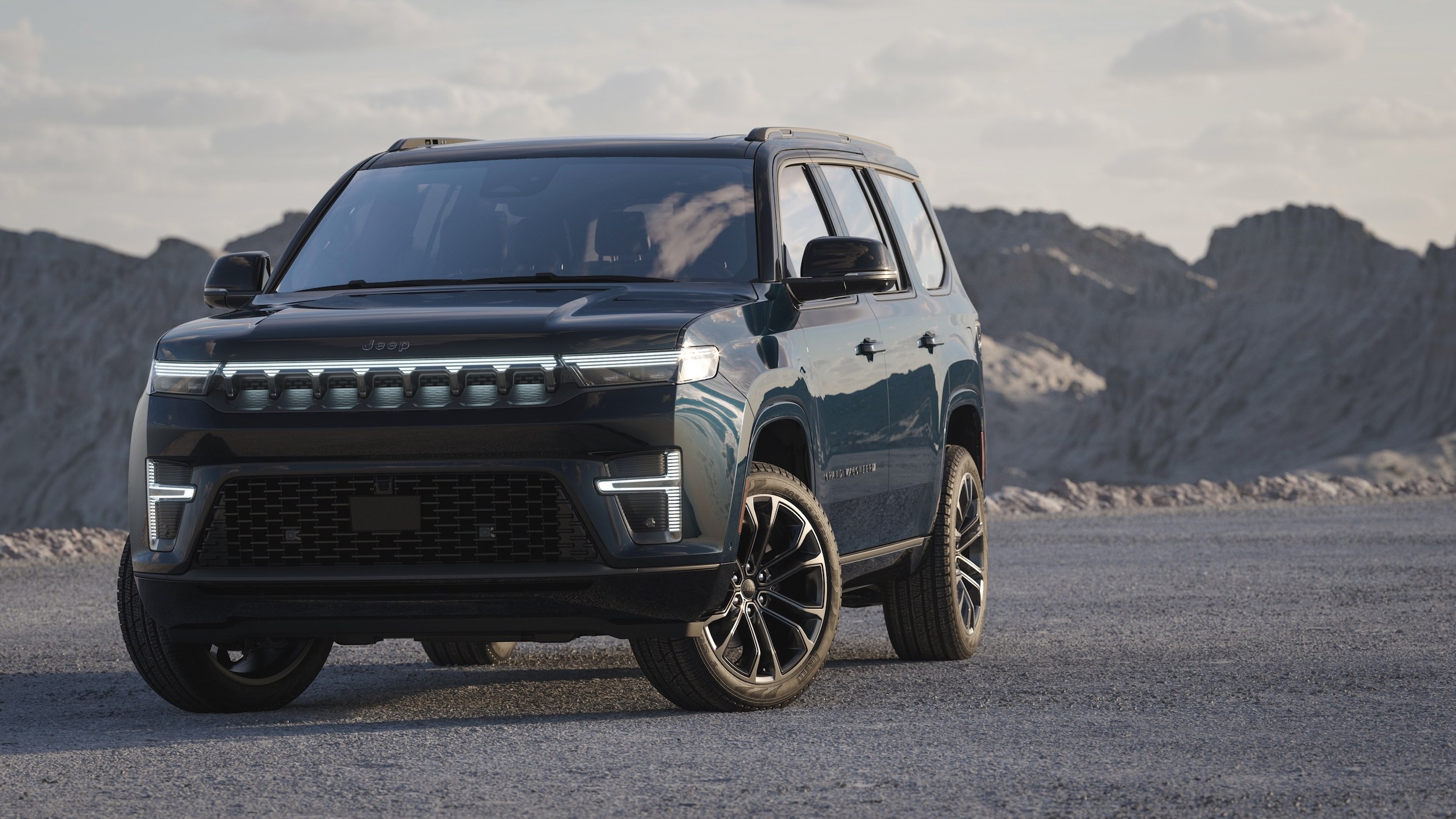
Ram has never sold an SUV. In 2028 it gets one, and the Ramcharger will roll off the same line in Warren, Michigan, as the Jeep Grand Wagoneer, on the same Ram 1500-derived frame. So the question Ram CEO Tim Kuniskis has been fielding all year is the obvious one: if the two share their bones, why build the second?
His answer comes in three parts: engines, looks, and how each one drives. Put that next to the Grand Wagoneer's current spec sheet and you get a real comparison, with one column still mostly "TBA."
What the two will share
Kuniskis confirmed to The Drive in January that the Ram SUV is a DT-platform vehicle, meaning it rides on the modified Ram 1500 truck architecture that already underpins the Grand Wagoneer. That settles the basics: body-on-frame, full-size, three rows, built at Warren Truck Assembly alongside the Jeep. Stellantis has also said the Ram SUV will come with both a gasoline engine and a range-extended electric powertrain, the same two-track approach the Grand Wagoneer takes today.
The complication is the showroom. Kuniskis points out that GM sells the Tahoe, Yukon, and Escalade through three dealer networks, and Ford splits the Expedition and Navigator the same way. Stellantis dealers put Jeep and Ram under one roof. Jeep already tried a two-tier version of this with the Wagoneer and Grand Wagoneer and, in Kuniskis's words, could have been "a little bit tighter" on positioning; the cheaper Wagoneer was folded into the Grand Wagoneer for 2026. The Ramcharger is the second attempt, this time with two brands instead of two badges.
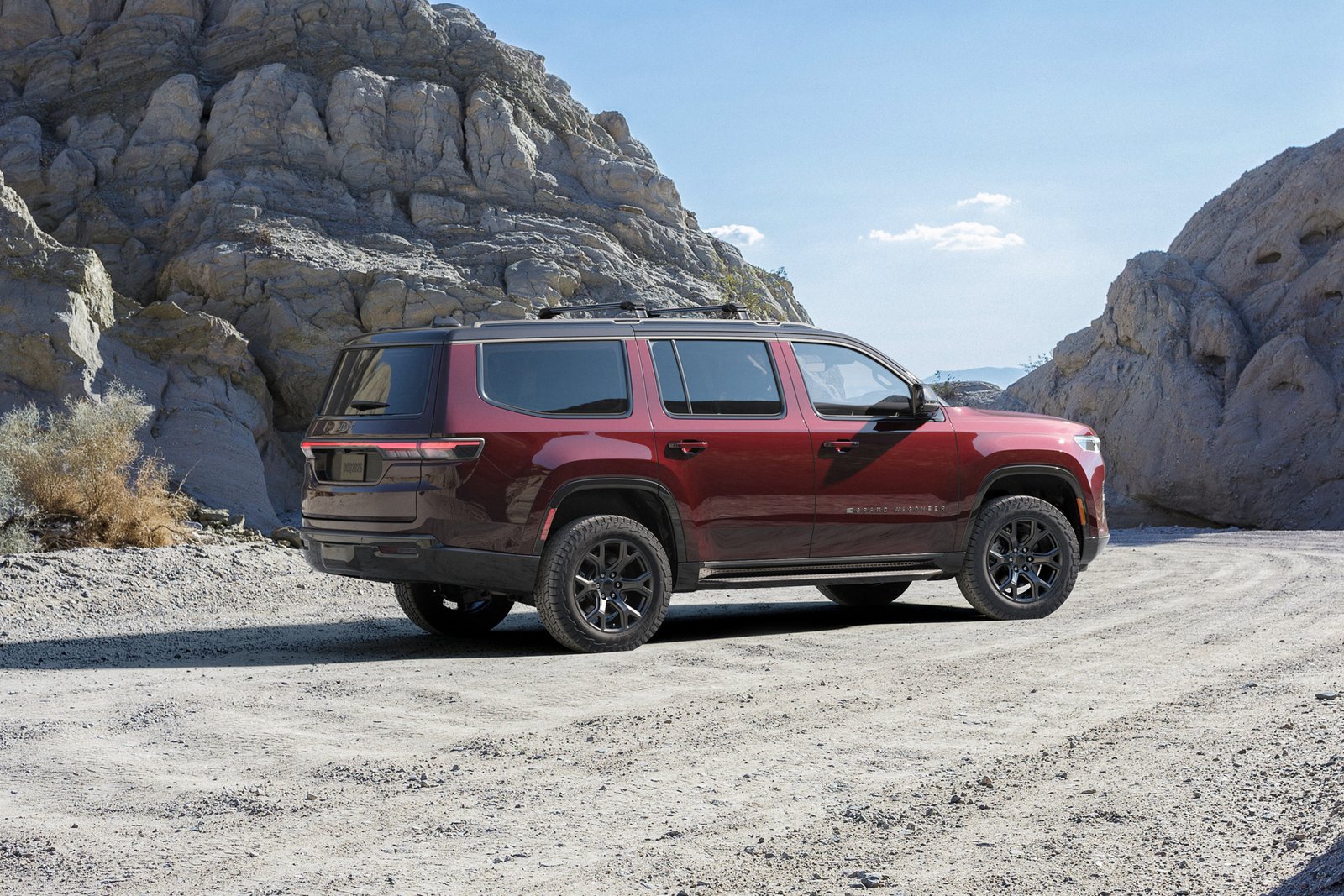
Known vs. TBA: the table
Everything in the Grand Wagoneer column comes from Jeep's 2026 press materials and current U.S. pricing. Everything in the Ramcharger column comes from Kuniskis and Stellantis statements; where they have said nothing, the cell says so.
| Criterion | 2026 Jeep Grand Wagoneer | Ram Ramcharger (2028) |
|---|---|---|
| Platform | Ram 1500-derived body-on-frame (DT) | Same DT platform (Kuniskis, January 2026) |
| Assembly | Warren Truck Assembly, Michigan | Warren Truck Assembly, Michigan |
| Layout | Full-size, three rows; standard and L long-wheelbase bodies | Full-size, three rows; wheelbases TBA |
| Gas engine | 3.0-liter Hurricane twin-turbo inline-six, 420 hp / 468 lb-ft, eight-speed automatic | TBA; "more V8-based" per Kuniskis, no engine named |
| Electrified option | REEV: 92-kWh battery, 3.6-liter V6 generator, est. 647 hp / 620 lb-ft, 0–60 mph in 5.0 s, 500+ miles total range (Jeep estimates); late availability | Range-extended version confirmed by Stellantis; specs and timing TBA |
| Towing | Up to 10,000 lb, properly equipped (Jeep figure) | TBA |
| Performance flagship | Grand Wagoneer SRT on the Investor Day roadmap; powertrain TBA | Ramcharger SRT on the Investor Day roadmap; powertrain TBA |
| Base price | $63,995 plus $2,795 destination ($66,790) | TBA; Kuniskis "wouldn't differentiate on price" |
| Top price | $100,310 (Summit Reserve), plus $3,000 for L body | TBA |
| On sale | Now (Hurricane); REEV pricing and date not published | 2028 (Stellantis); reveal date TBA |
| Official images | Yes | None; a covered silhouette on an Investor Day slide |
Difference 1: V8s on one side, a turbo-six on the other
This is the point Kuniskis has been most explicit about. On The Drive's podcast in May he said the intent is to leave the Jeep's powertrain architecture as it is, while "the architecture of the Ram would be more V8-based." The Grand Wagoneer runs a single gasoline engine today, the Hurricane twin-turbo six at 420 hp, with the 647-hp REEV arriving as the electrified flagship. The Ramcharger is being positioned around the Hemi family Ram put back into the 1500 pickup.
Kuniskis has not named the engines. Because the SUV is DT-based, the 5.7-liter and 6.4-liter Hemi V8s and the supercharged 6.2-liter from the 2027 Ram 1500 SRT TRX all physically fit, as does the Jeep's Hurricane six. Which ones make the cut is Ram's call, and it has not been announced.
Difference 2: The Charger-and-300 playbook
Kuniskis's own comparison is the old Dodge Charger and Chrysler 300: one car, two personalities, two different buyers in the same showroom. He says the two SUVs were deliberately parked side by side during development so they would "look, feel, and act different," and that some buyers will walk straight past one to get to the other. Read that as a Ram-face front end, a more truck-like stance and tuning, and an interior that borrows from the 1500 rather than the Grand Wagoneer's open-pore walnut and McIntosh audio. That is our inference from his framing, not a description; Ram has shown nothing beyond the covered silhouette.
Difference 3: Price won't be the separator
Asked about money, Kuniskis told The Drive he "wouldn't differentiate on price," only on positioning, and that everything in the segment is "fairly expensive." Today's Grand Wagoneer opens at $63,995 plus a $2,795 destination charge, $66,790 delivered, and tops out at $100,310 for a Summit Reserve before the $3,000 long-wheelbase upcharge. A Chevrolet Tahoe and a Ford Expedition sit within a few thousand dollars of that entry point, so it would be surprising to see the Ramcharger land far from it. But that is an expectation, not a figure: Ram has published no price.
The SRT question cuts both ways
The roadmap Stellantis showed at its May 21 Investor Day listed SRT versions of both the Grand Wagoneer and the Ramcharger among the performance models due by 2030. That is easy to picture for the Ram: the supercharged 6.2-liter Hemi already makes 777 hp in the 1500 SRT TRX and drops into the same frame. A YouTube report from TK's Garage claims that 777-hp figure for the Ramcharger SRT specifically; it is unconfirmed. The Grand Wagoneer SRT is the harder puzzle. If the Jeep's architecture stays as-is, its SRT could be a higher-output six, a hotter REEV, or the one V8 exception to Kuniskis's rule, and Stellantis has not said which.
What we don't know
- Any Ramcharger specification: engines and outputs, dimensions, towing, seating, wheelbases.
- Pricing and trims, including whether Ram carries its truck names (Big Horn, Laramie, Limited, Tungsten) onto the SUV.
- The reveal and on-sale dates. "2028" is the only official timing, and no debut has been scheduled.
- Whether the Ramcharger's range-extended version launches alongside the gas models or trails them, as the Grand Wagoneer REEV has.
- What powers the Grand Wagoneer SRT, and whether the Jeep gets a V8 at all.
- Grand Wagoneer REEV pricing and its exact on-sale date. Automotive News has reported a November production start based on a supplier memo; Jeep has published neither a price nor a date.
Which one should you wait for?
If you want a full-size Stellantis SUV in the next twelve months, the choice is already made. The Grand Wagoneer is the only one you can buy, the Hurricane version is on dealer lots now, and the REEV is months out. The Ramcharger is two model years away with no photo, no engine list, and no price.
If you can wait, the split is the powertrain. Buyers who want a V8 in a three-row body-on-frame SUV from this company will get one only from Ram; its CEO has drawn that line himself, SRT caveat aside. Buyers who want the range-extended setup can have it from Jeep first, and the Ramcharger version may lag. And if the Charger-and-300 analogy holds, the Ram will be the louder, more truck-flavored one and the Jeep the plusher one, which is a matter of taste rather than spec.
Our read: the Grand Wagoneer is the safer buy because it exists, and the Ramcharger is the more interesting wait because Ram is promising something the segment has mostly abandoned, a Hemi V8 family hauler. We will update this page as Ram fills in the blanks. For the running list of what is confirmed versus rumored, see our Ramcharger tracker.