VW's Record-Setting Concept Uses the Cheap Parts From a Car America Can't Buy
The Mission Efficiency coupe posted a 0.158 drag coefficient and 6.89 kWh/100 km on a 794-mile drive using the ID. Polo's motor and battery. None of it is headed to the U.S. — yet.
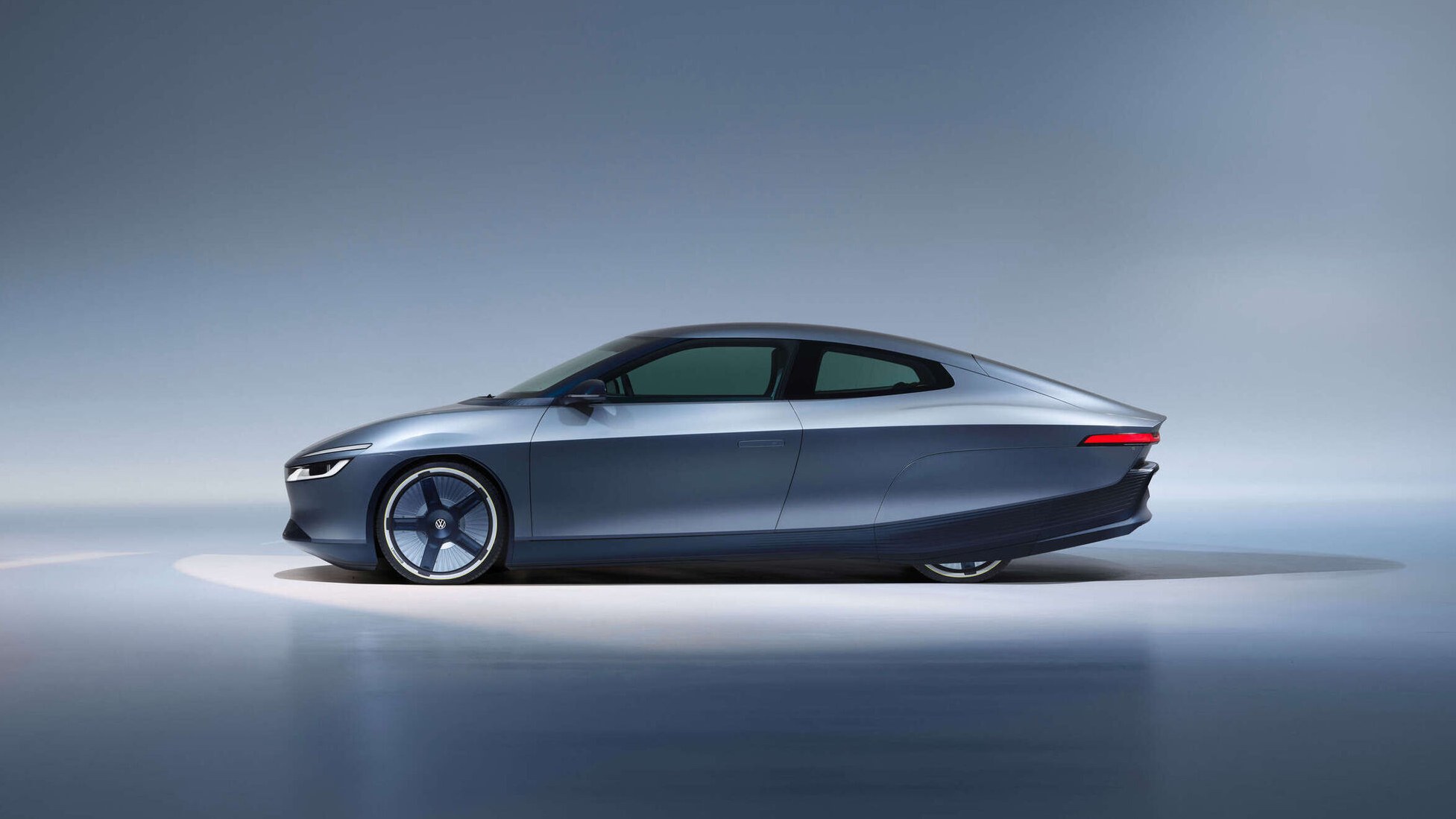
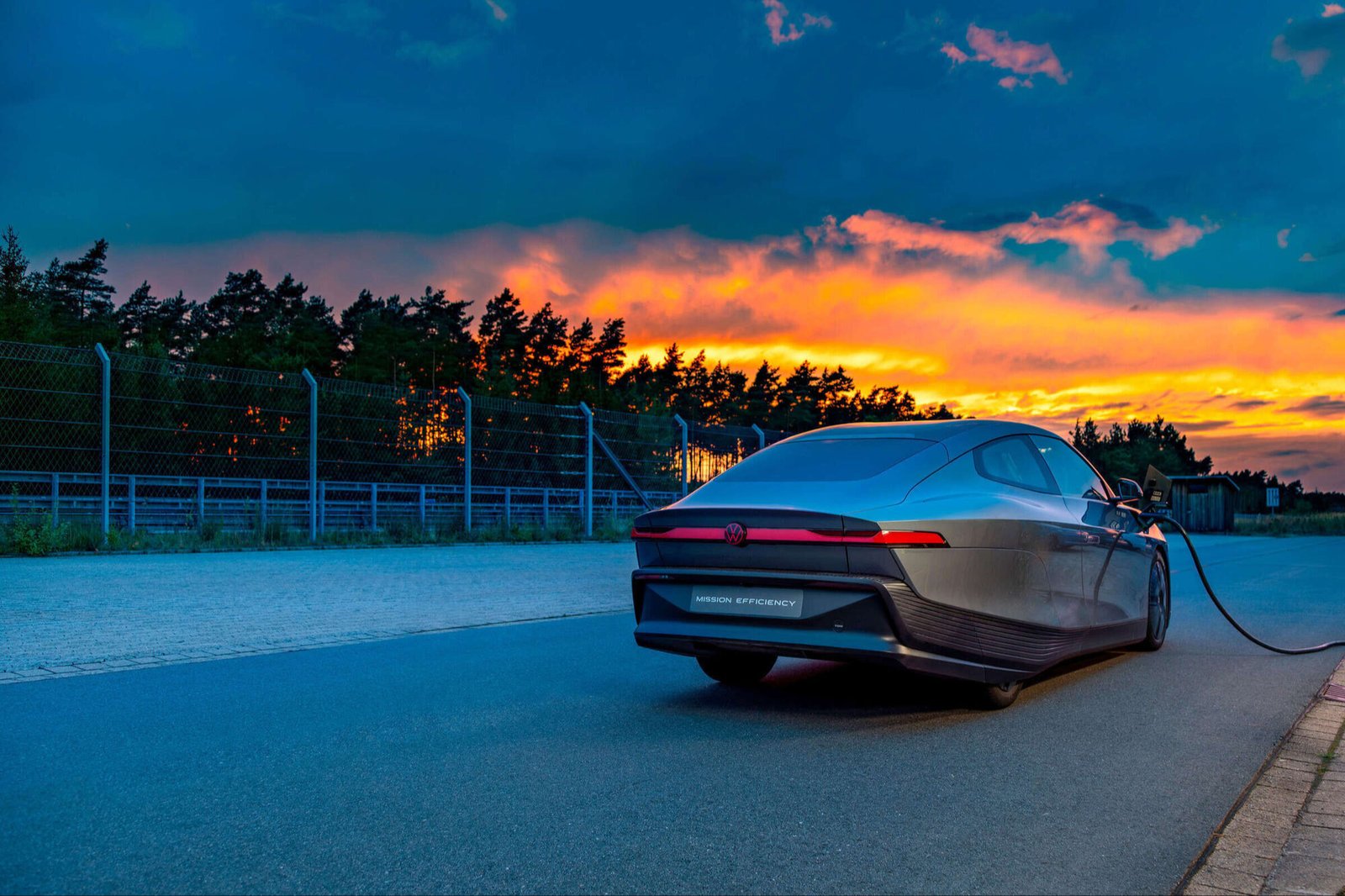
Volkswagen has built a two-door electric coupe that just set three efficiency records, and the records aren't the interesting part. The parts list is: a 133-hp front motor and a 54.9-kWh battery lifted straight from the ID. Polo, a hatchback that starts under €25,000 in Germany and that VW says it has no plans to sell in the United States.
The car is called Mission Efficiency, and VW captions every press photo "Concept vehicle. Not for sale." Read past the stamp and it's a demonstration of what the MEB+ platform can do when nothing else gets in the way — the same architecture VW is evolving for whatever EV it eventually builds for Americans.
Three records, three different numbers
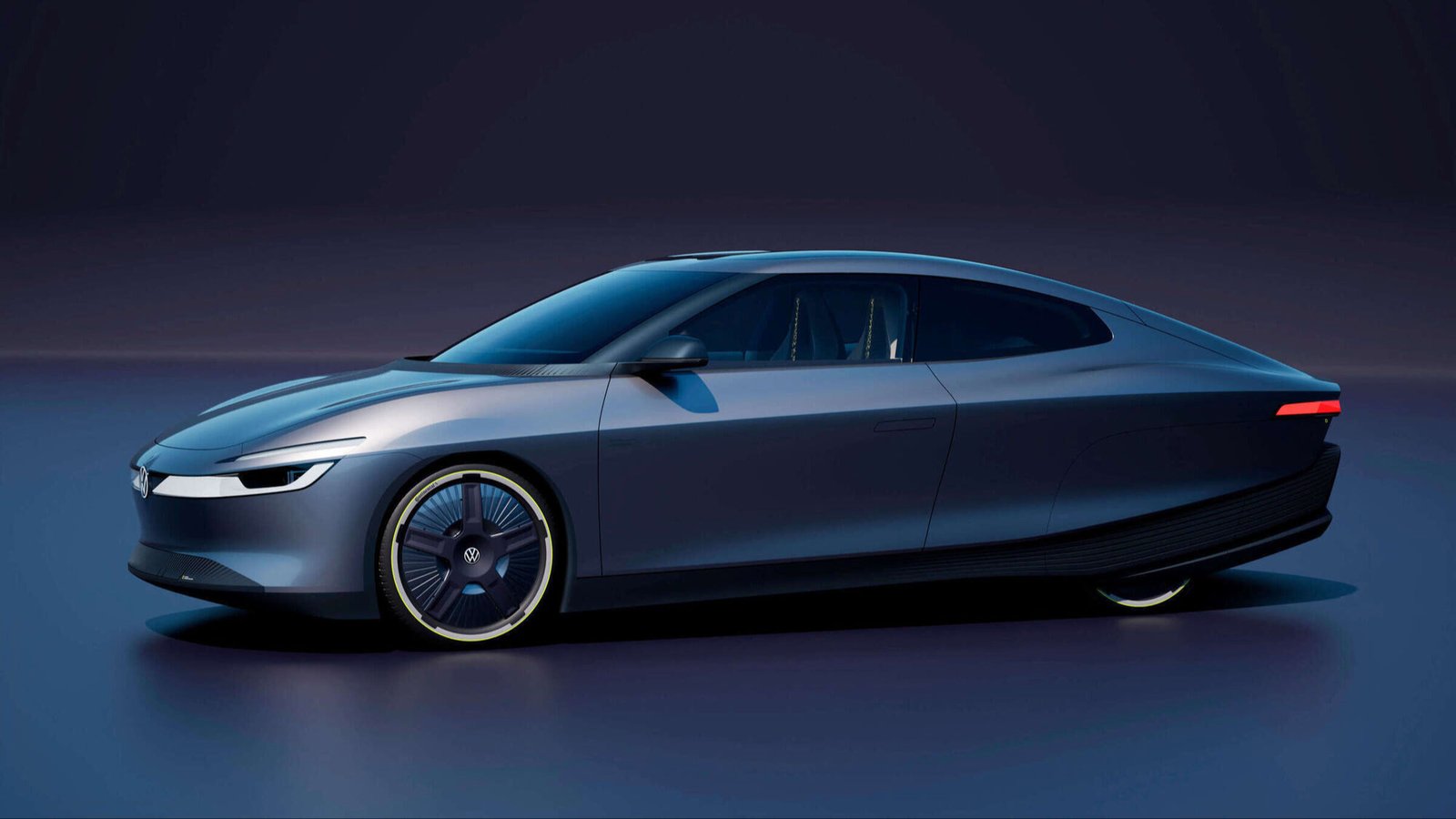
The headline figure is a drag coefficient of 0.158, which VW claims as a record for road-legal cars. That claim is about Cd alone. With a frontal area of 2.08 square meters (22.4 sq ft), the car's total drag area is about 16% larger than VW's own XL1 from 2013, which had a worse Cd of 0.189 but a far smaller 1.50 m² frontal area.
The consumption records need untangling, because three numbers are circulating and they mean different things:
- 6.48 kWh/100 km (about 9.6 miles per kWh) — an "ideal drive" on VW's Ehra-Lessien test track: a constant 42 mph (68 km/h), no hills, climate control off.
- 6.89 kWh/100 km (about 9.0 mi/kWh) — a real 794-mile (1,278.36 km) road trip from Wolfsburg through Poland and Czechia to Vienna, measured at the battery.
- 7.51 kWh/100 km (about 8.3 mi/kWh) — the same trip including charging losses, the number a wall outlet would actually bill you for.
The trip averaged 42 mph (67.72 km/h), peaked at 86 mph (138 km/h), and needed one charging stop; the car reached Vienna with 102 miles (164 km) of range left. VW's spec sheet also lists 8.4 kWh/100 km on the WLTP cycle, but no WLTP range. For scale, the EPA's most efficient production EV, the Lucid Air Pure, is rated at 23 kWh per 100 miles (146 MPGe); VW's plug-to-wheel road figure works out to roughly 12 — a slower, non-regulatory test, so not a direct comparison, but it shows the gap between a record run and a rated cycle.
What's actually production hardware
The powertrain is the ID. Polo's, nearly untouched. The APP290 permanent-magnet motor weighs about 165 pounds (75 kg) and makes 133 hp (99 kW/135 PS) and 195 lb-ft (264 Nm), driving the front wheels through a single-speed gearbox with a longer final drive. The 54.9-kWh NMC cell-to-pack battery is the production unit with an extra 2.9 kWh of usable capacity unlocked by software; it charges at 11 kW AC and up to 105 kW DC. Top speed is 99 mph (160 km/h), and 0–62 mph (0–100 km/h) takes 9.0 seconds. The front brakes are ID. Polo hydraulics; the rear brake is a new electromechanical unit developed with supplier AUMOVIO, a first for VW.
Everything else is where the effort went. The teardrop body is 188 inches (4,775 mm) long but only 54.8 inches (1,392 mm) tall, with enclosed rear wheels, a flat underbody, three active grille shutters, and patented deflectors inside every wheel to stop air tumbling through the spokes. Continental built a bespoke tire on its EcoContact 7 with rolling resistance of 4.9 kg per ton, which VW says is about 25% below the EU's best label class. VW says the aero pays off above 50 mph (80 km/h), where the concept uses more than 30% less energy than a standard ID. Polo.
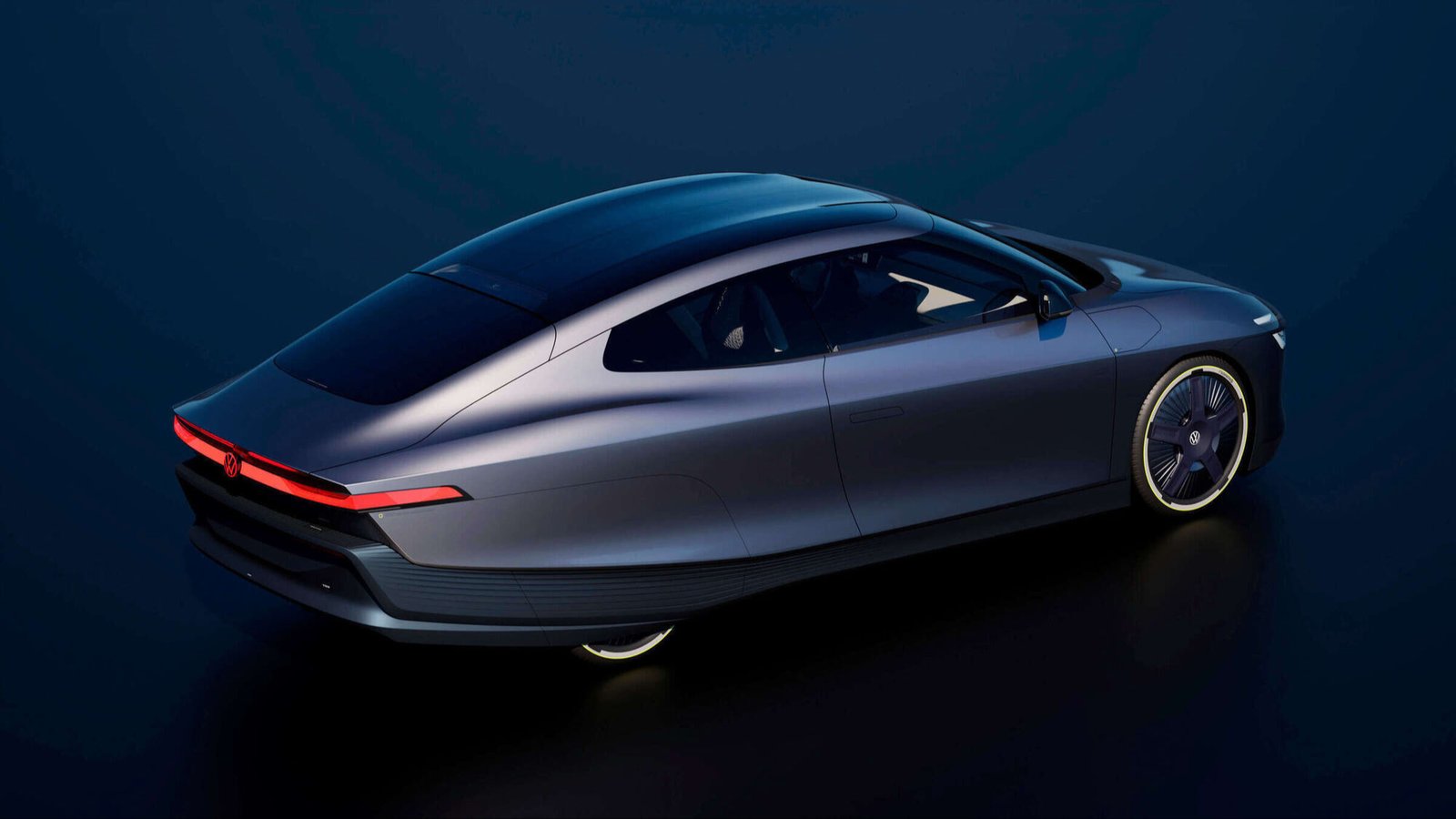
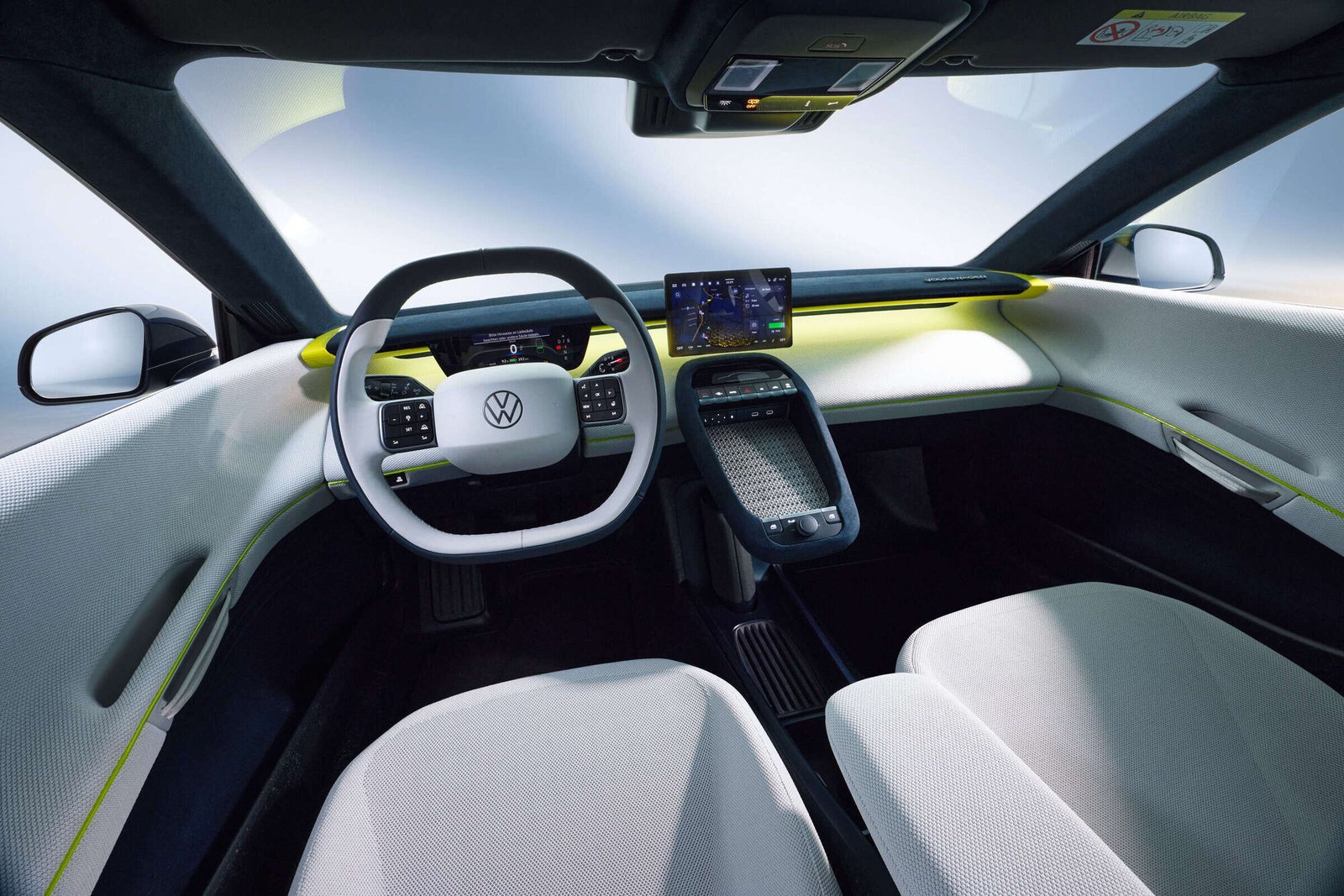
There are no camera mirrors — VW says the wind-tunnel gain didn't justify the cost and power draw — and no central touchscreen; a phone or tablet on a mechanical rail does that job.
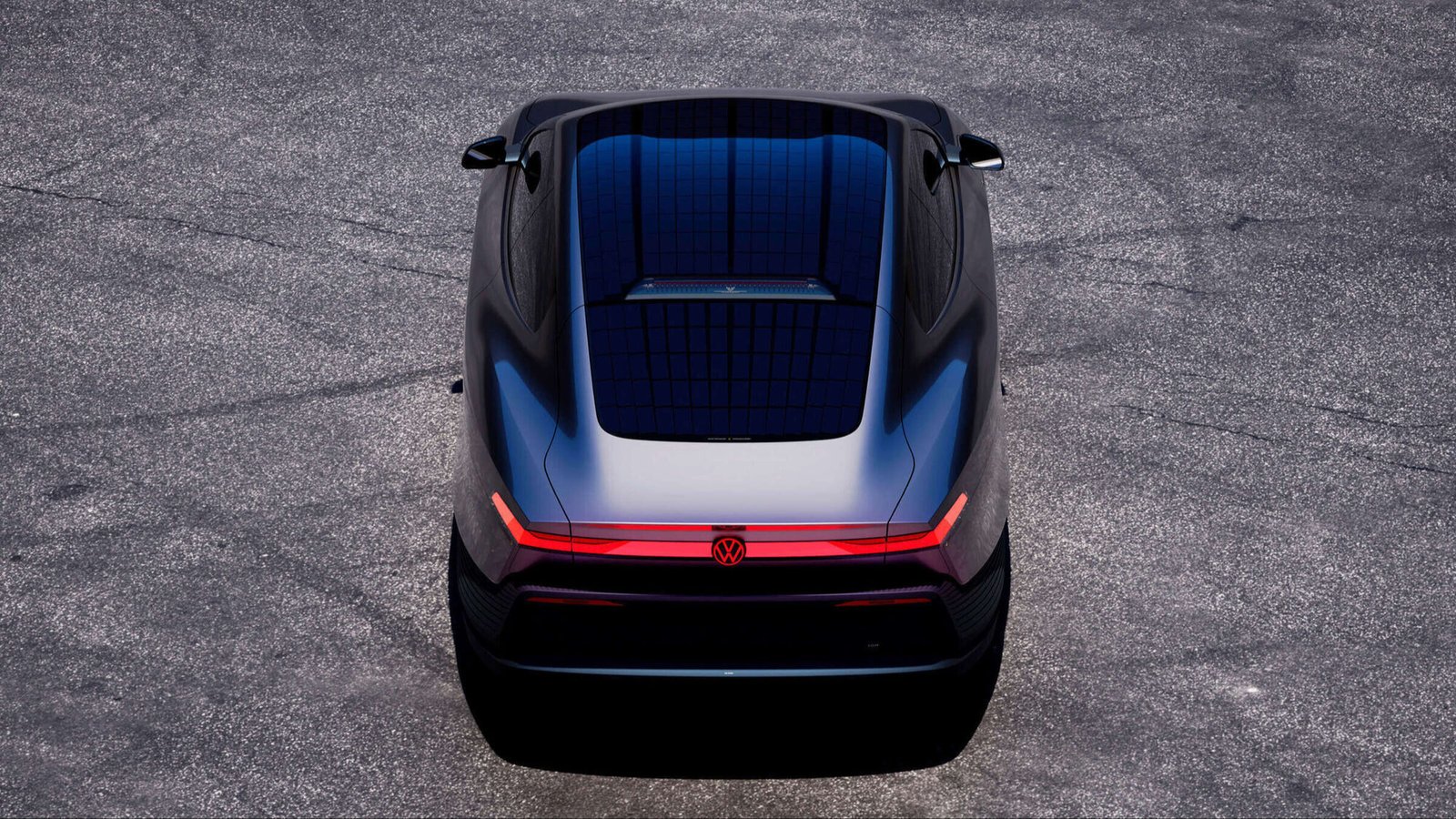
A 370-watt solar panel in the roof and tailgate runs the accessories, worth up to 19 miles (30 km) of range per day by VW's estimate, weather permitting. The prototype has EU road approval, seats rear passengers up to about 5 ft 3 in (1.60 m), and holds 17 cubic feet (481 liters) of cargo. VW hasn't published a curb weight.
The U.S. question
None of this is coming to a U.S. dealership in this form, and VW hasn't said any of it is coming at all. The ID. Polo isn't planned for America. VW stopped building the ID.4 in Chattanooga in April, the ID. Buzz is skipping the 2026 model year, and the one thing the company has committed to is a future North American ID.4, details unannounced.
That's where the concept matters. VW confirmed at last year's IAA that the cell-to-pack battery approach behind front-drive MEB+ will extend to larger rear- and all-wheel-drive models. The pieces most likely to travel are the ones that don't care about drive layout: the wheel deflectors, the active shutters, the electromechanical rear brake, and a battery-software approach that squeezes more usable energy from the same cells.
Whether any of that reaches a U.S.-market VW is our reading, not VW's promise. The company hasn't announced production plans for any Mission Efficiency technology, and it hasn't said who verified the "officially documented" records. What it has said, through brand CEO Thomas Schäfer, is the point: the records were set with affordable production parts rather than specialist hardware — "technology for the masses – not just for the few."