Chengdu 2026 Just Outgunned Every Western Auto Show. Here's What That Means
Our photographers worked the halls of the 29th Chengdu show: 1,600 cars from some 120 brands — while the West's marquee shows shrink, rebrand, or disappear.
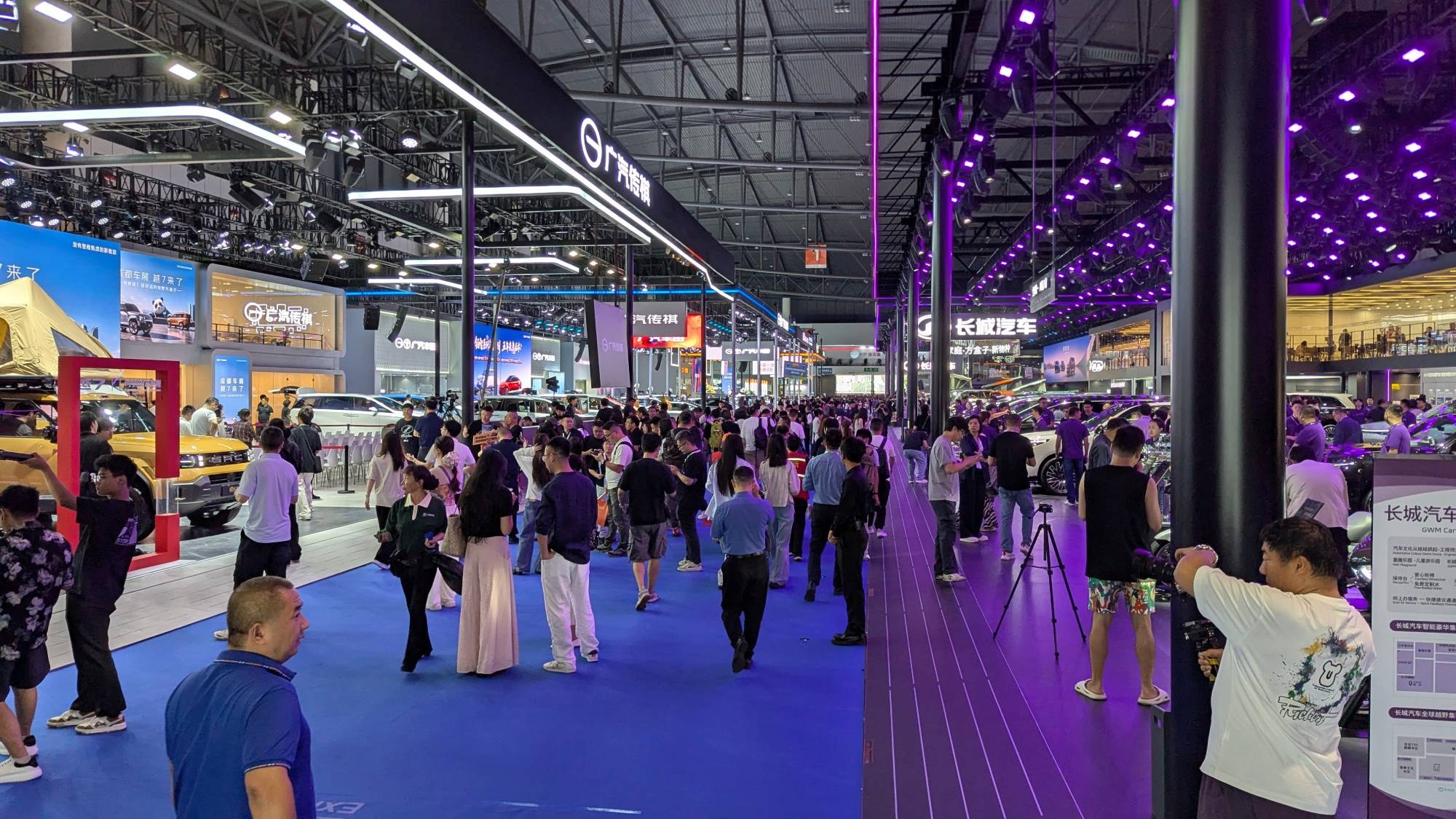
The 29th Chengdu International Automobile Exhibition opened on August 21 with around 1,600 vehicles from nearly 120 Chinese and international brands, spread across 220,000 square meters of the Western China International Expo City. It runs through August 30. Our photographers worked the halls from media day onward, and I have spent much of this week going through their cards. What strikes me is not any single car. It is that a show the industry still files under "regional" now operates at a scale no Western auto show can match.
Chengdu is one of China's five A-level auto shows and the first of the second half of the year, a slot that makes it a barometer of demand in the country's southwest just before the fall sales season. The format still looks like an auto show in the classic sense: August 21 was reserved for media, August 22 and 23 for trade visitors, and the doors opened to the general public on August 24. New this year is a dedicated zone for Chengdu's intelligent connected vehicle industry chain — batteries, motors, electronic controls, and smart-driving tech — which doubles as a matchmaking hub between exhibitors and international buyers.
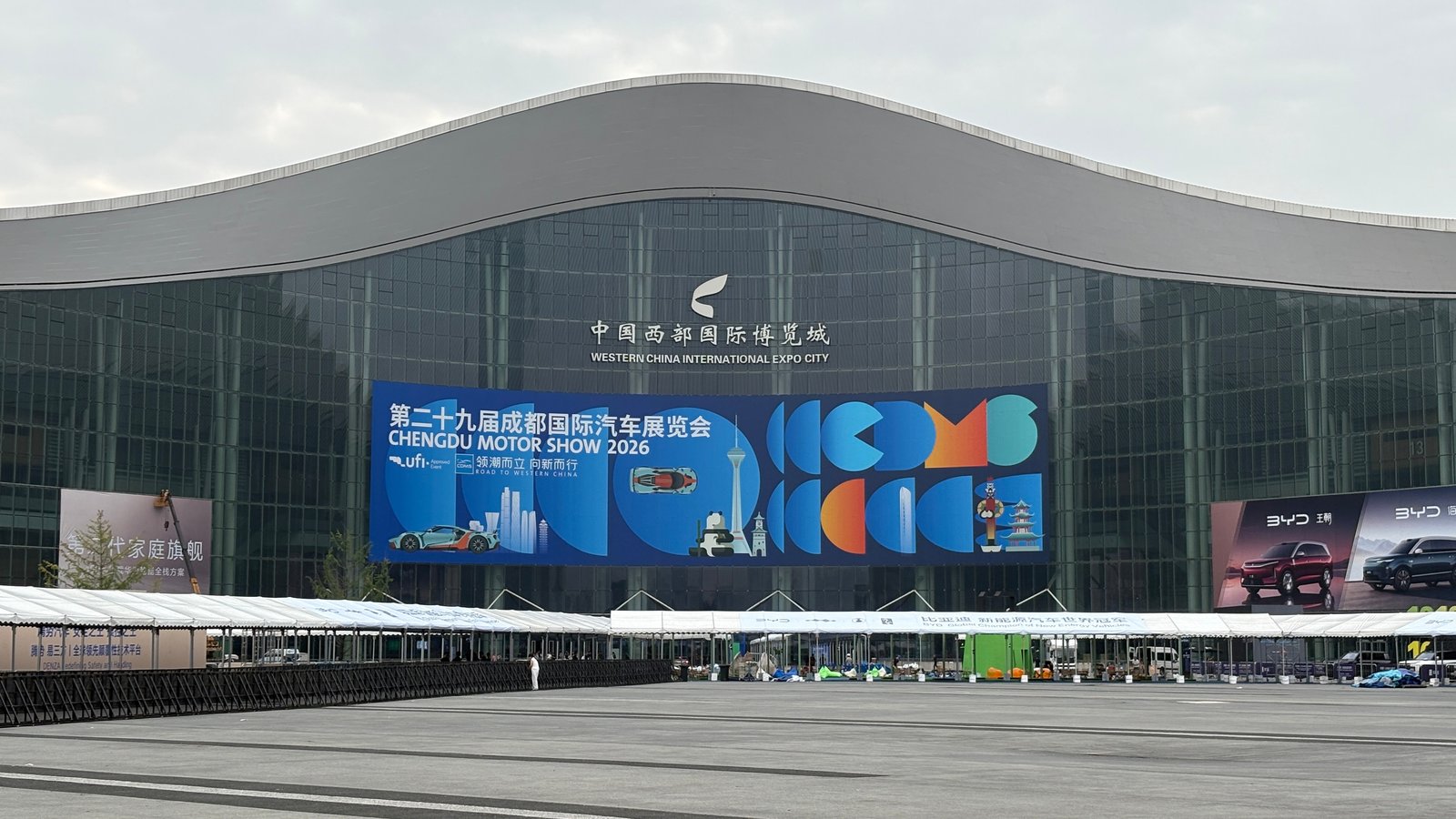
The scale problem
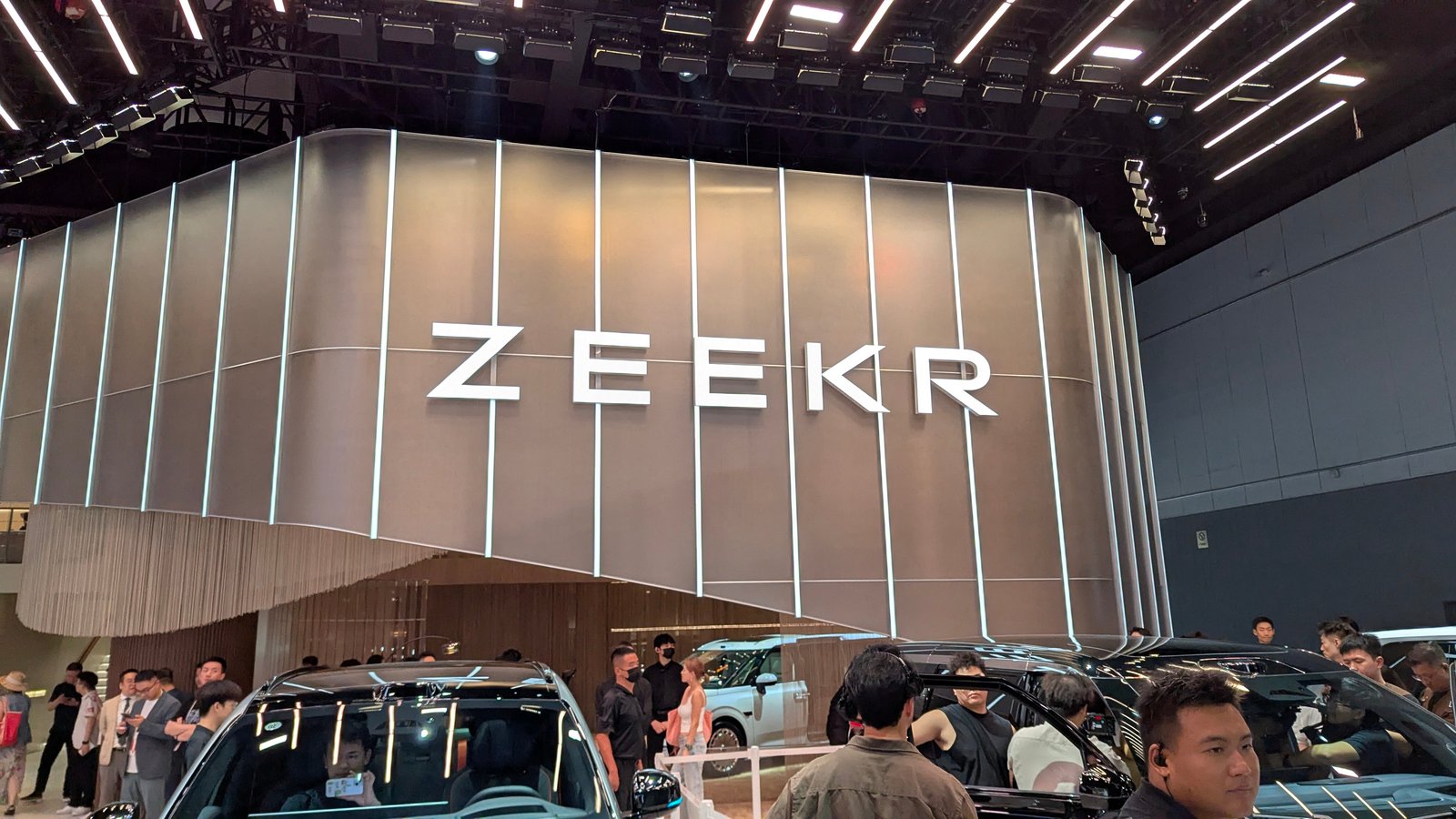
The raw numbers deserve a moment. Roughly 1,600 vehicles is, I'd wager, more sheet metal than any Western show of the past decade has come close to fielding. The 220,000 square meters span 12 halls, several of them effectively owned by one automaker: BYD took a dedicated group pavilion in Hall 9, where its Dynasty-line flagship sedan, the Da Han, made its global debut on media day, with Denza, Fangchengbao, and Yangwang arranged around it. Huawei's HIMA alliance brought all five of its brands. Xiaomi, Xpeng, Nio, the full Chery group, and Great Wall's brand family filled halls of their own.
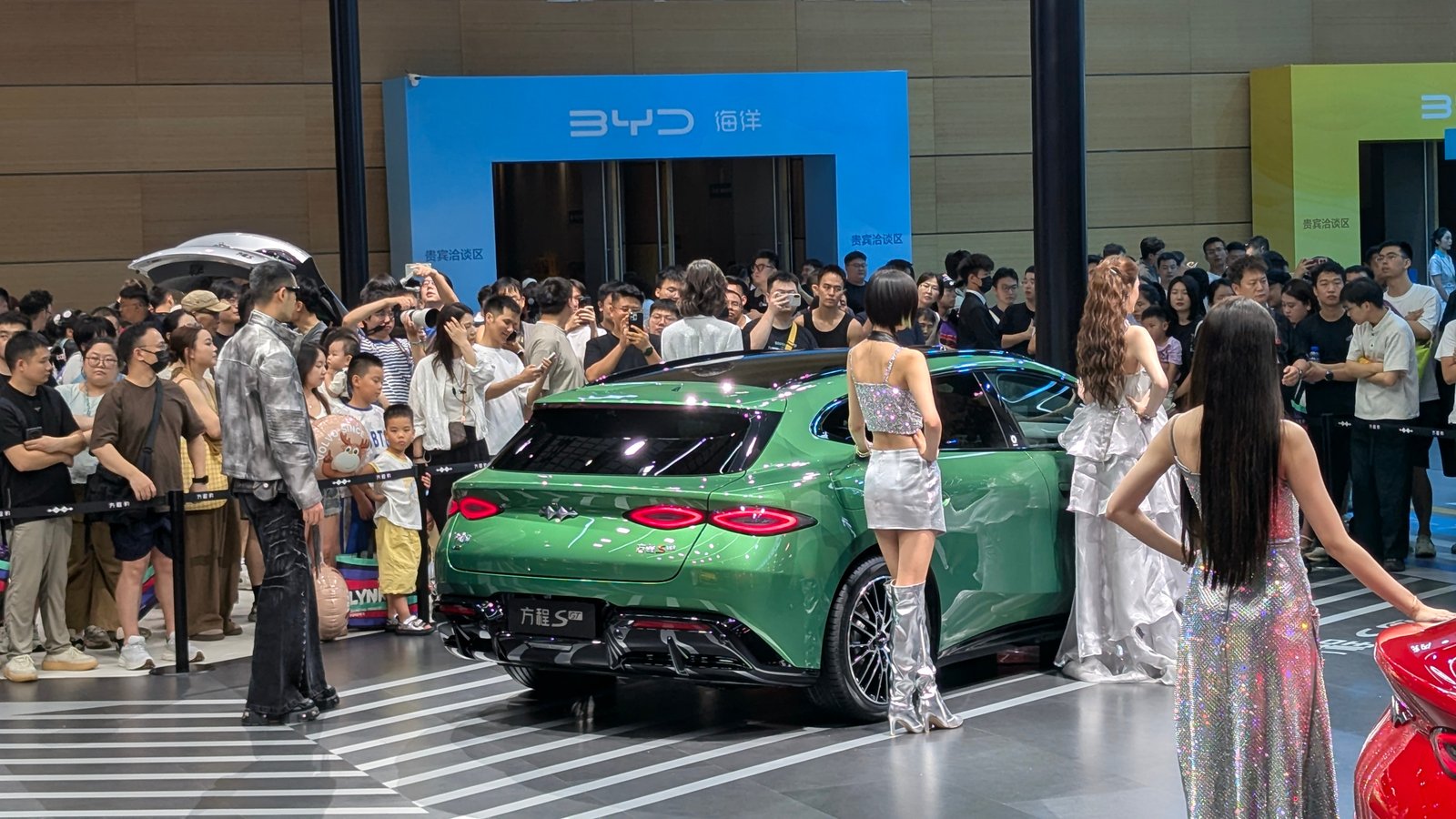
Numbers on a press release are one thing; the floor is another. Our frames from the BYD pavilion show visitors packed several rows deep around the Fangchengbao Formula S, most of them filming on phones, with working photographers wedged in at the barriers. That is what a car launch looked like in Geneva in 2005. In 2026, I'd argue, Chengdu is the place where that scene still happens at full volume.
What the West dismantled
Now the other side of the ledger. The Geneva International Motor Show, first held in 1905 and for decades the most prestigious stage in the business, was canceled permanently in 2024 after its comeback edition drew only a handful of automakers; the organizers cited a lack of manufacturer interest and kept only their Qatar spin-off alive. Detroit's NAIAS has spent a decade searching for a format — it moved from January to summer to escape the shadow of CES, then moved back to January from 2025, smaller each time, with debuts increasingly replaced by dealer-style displays.
Frankfurt's IAA, once Europe's giant, relocated to Munich in 2021 and rebranded as IAA Mobility — by its own description no longer a traditional car show but a "mobility platform," built around a conference program, an open-air city festival, and e-bikes sharing billing with cars. It works as an event; nearly half a million people attended in 2023. But it is a different product, and the manufacturers treat it accordingly.
I don't think the Western organizers were foolish. The economics turned against them: by trade-press estimates, a full display and press conference at a US show could cost a manufacturer $5 million or more, at a time when a livestream reaches more buyers than a convention hall. The point is not that the West made an inexplicable mistake. It is that China's calendar kept the old model running — and kept it profitable enough that roughly 120 brands still show up.
The Western brands did not get the memo about "regional"
Here is the detail I keep returning to: the companies that abandoned Geneva and Detroit did not abandon auto shows. They moved their premieres to China. Mercedes-Benz chose Chengdu for the global debut of the long-wheelbase GLE and opened it to public test drives on site. BMW used the show to start pre-sales of the long-wheelbase Neue Klasse iX3. The AUDI brand brought new versions of the E5 Sportback and E7X, while FAW Audi showed both combustion and electric lines. Buick brought its new Zhijing L7 EV, and Beijing Hyundai opened pre-sales of the Ioniq V.
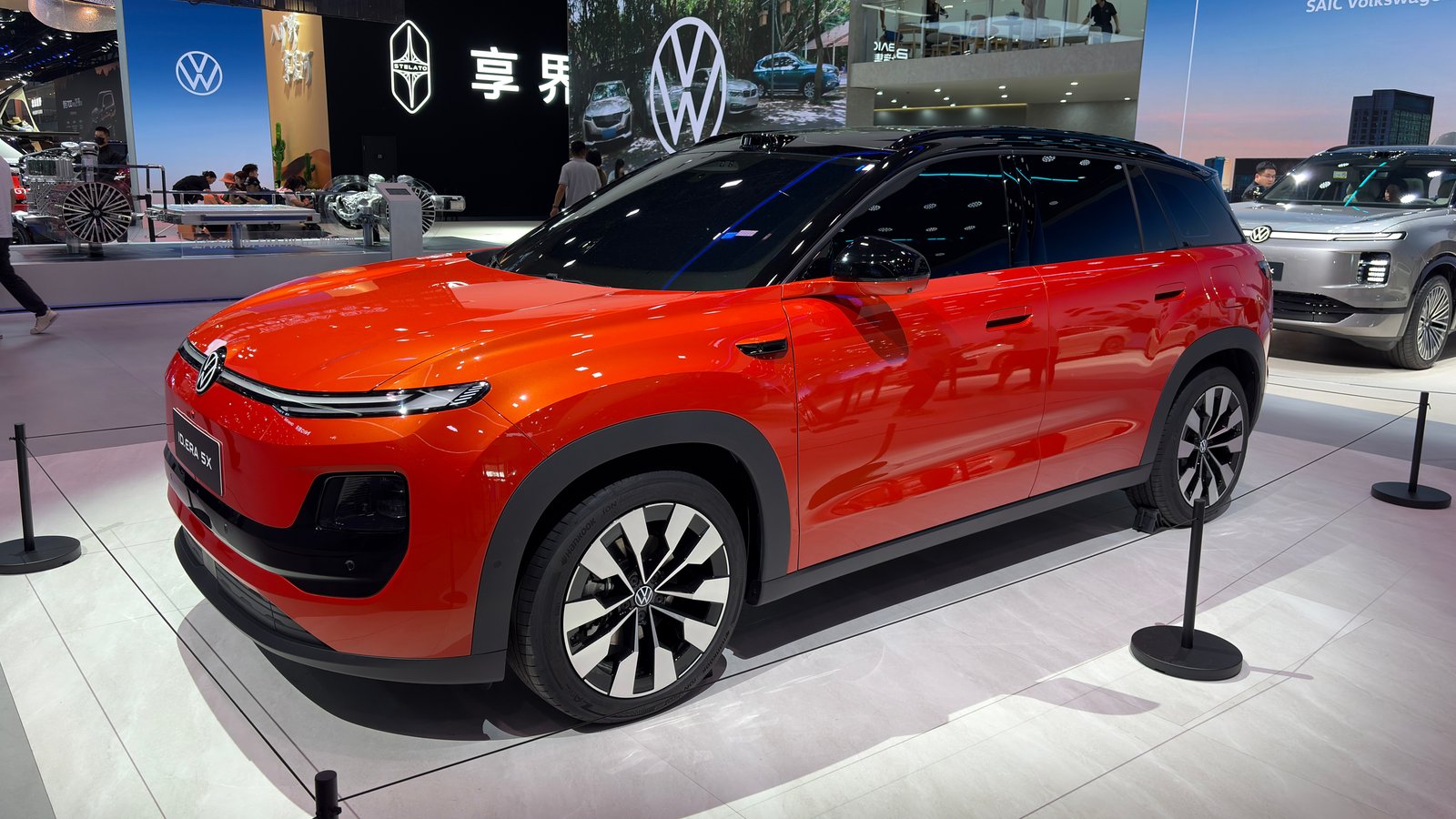
SAIC Volkswagen staged global debuts of the ID.ERA 8X and 5X and launched the ID.ERA 5S, which the joint venture bills as the first Volkswagen worldwide with urban navigation-assisted driving. One of our frames sums up the new geography better than any press release: the ID.ERA 5X in the foreground, and behind it, in the same hall, the VW roundel next to the logo of Stelato — a Huawei-alliance brand that did not exist five years ago. That adjacency is the show.
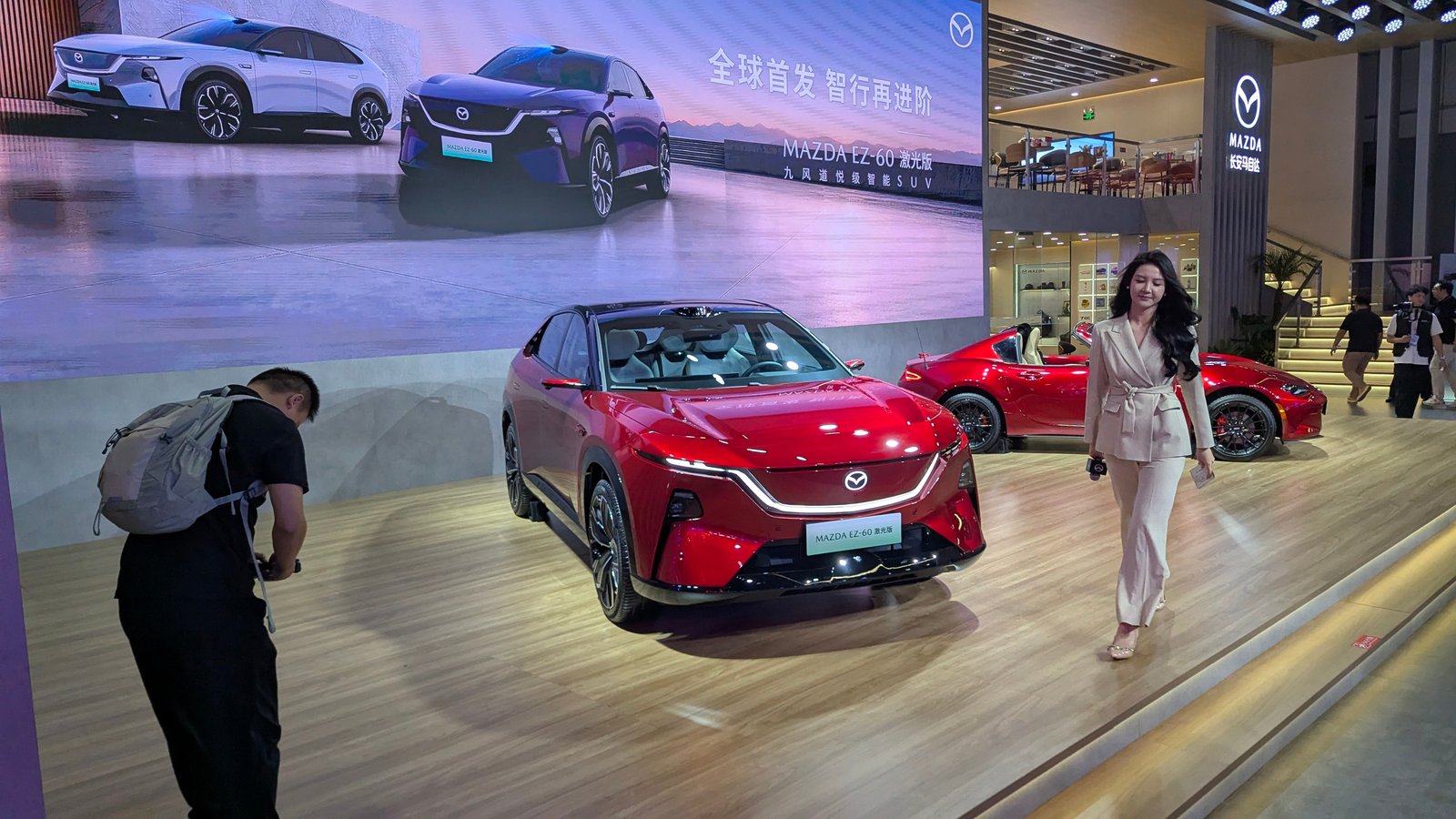
Even the media day looked like the old days. Our photographers found colleagues working world-premiere banners at multiple stands — Mazda staged one for a new EZ-60 version — and camera tripods lined the aisles of the GWM and GAC halls. Freelander, the new Chery and Jaguar Land Rover joint brand, picked Chengdu for its first show appearance with the Freelander 8. When a "regional" show collects global debuts from Stuttgart, Munich, Wolfsburg, Detroit, and Hiroshima, in my view the label has stopped describing anything real.
What we don't know yet
Two honest gaps, because the show is still running as this is published. First, the official results — attendance and vehicle orders — will only be announced after the closing on August 30. For a sense of scale, the year's other A-level event, June's Shenzhen show, closed at 810,000 visits and 39,253 vehicle orders; whether Chengdu lands above or below that is genuinely open. Second, almost none of the China-market models shown here have confirmed plans for Western markets. The long-wheelbase GLE and iX3 are built around Chinese customers first, and most of the domestic debuts may never leave the country. Anyone reading Chengdu as a preview of next year's US or European showrooms is reading too much into it.
Where that leaves the old shows
I am not going to declare Western auto shows dead — that would outrun the facts, and Munich's festival format clearly has an audience. But my bet is that the center of gravity has already moved and will not move back. The auto show as our industry understood it for a century — halls full of world premieres, crowds around the metal, manufacturers competing on stand size — did not disappear. It relocated to cities like Chengdu, and the Western brands quietly followed it there. The question worth asking is no longer whether a Chinese "regional" show matters more than Detroit. This August answered it. The question is what it means that the answer surprised nobody in the halls.