GM's New Truck Interface Puts Apple CarPlay in a Window Next to Its Own Apps
GM's next-generation interface launches on the 2027 Silverado and Sierra with a split-screen home view, trailering-first software — and Apple CarPlay running in a card beside GM's own apps.
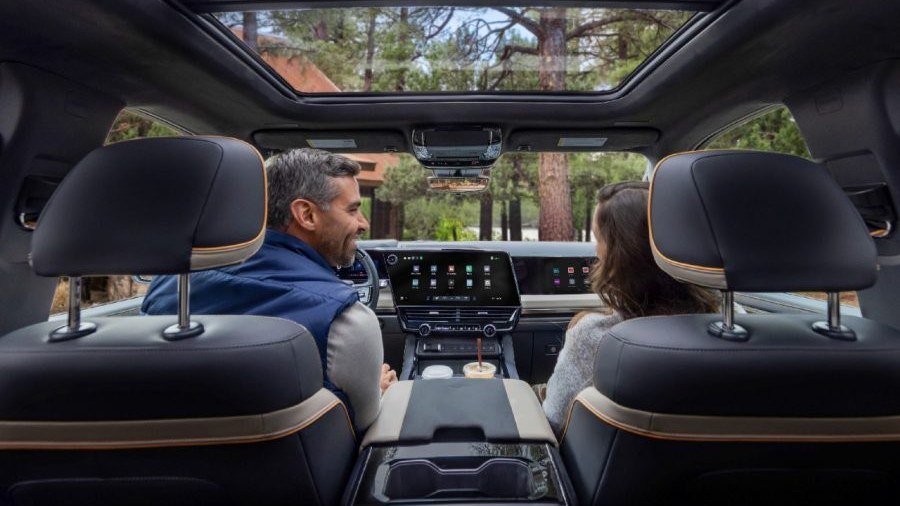
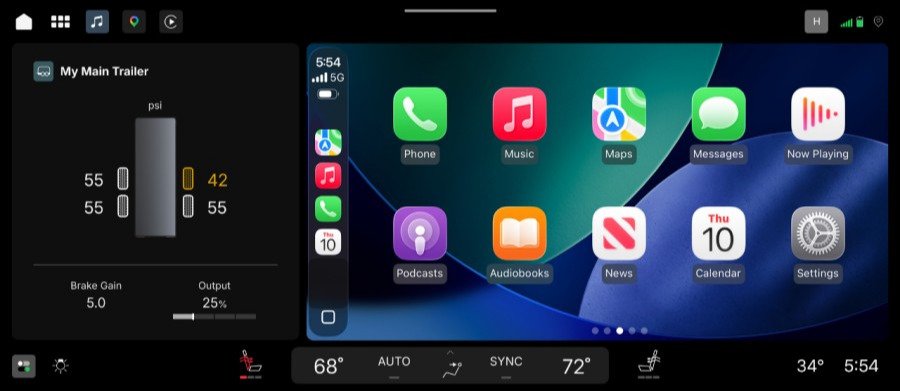
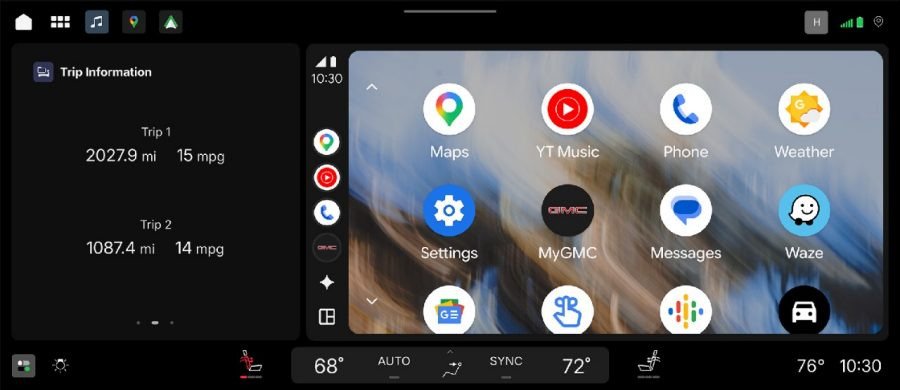
General Motors has laid out the software side of its next-generation pickups, and the headline is what didn't get cut: the new interface debuting on the 2027 Chevrolet Silverado and GMC Sierra runs Apple CarPlay and Android Auto inside a large card window, right alongside GM's own apps. After two years of speculation about phone projection disappearing from GM vehicles, the company's highest-volume trucks are getting a system built to run both.
The interface is a single software platform that GM says will scale across gas, diesel, and electric models, starting with the light-duty trucks before spreading through the rest of the lineup. The default home screen is a split view: a large interactive map on one side, with cards for towing data, fuel economy, or media on the other, so browsing audio or checking trailer status doesn't push navigation off the screen.
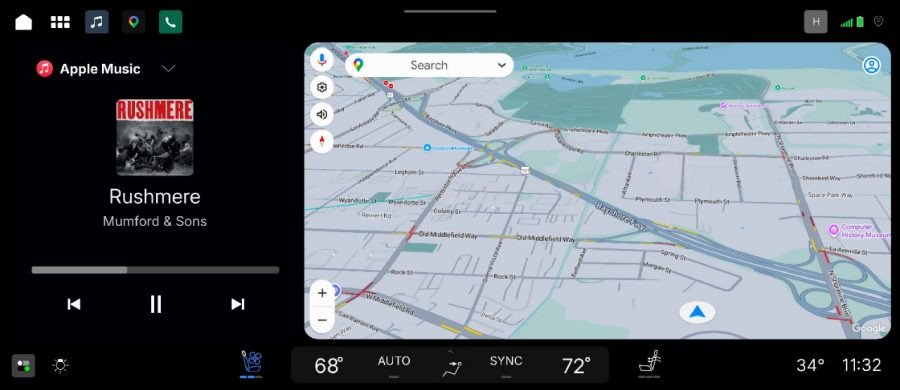
Phone projection lives in that same layout. A CarPlay or Android Auto session occupies one card while native truck functions — trailering metrics, vehicle status — sit next to it, and drivers can move between the two without leaving projection entirely. Incoming calls no longer take over the display either; a small timer sits at the top of the screen while navigation stays put.
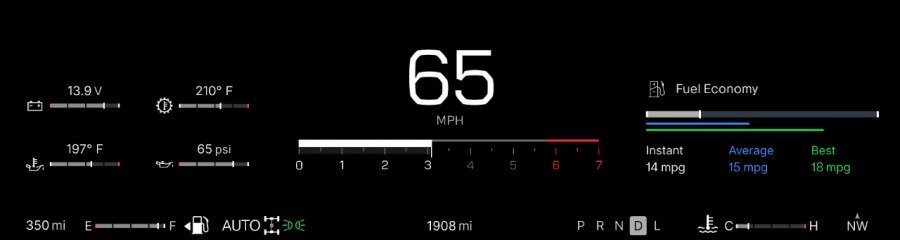
The instrument cluster changes with the task at hand, switching layouts for trailering, off-road driving, and Super Cruise. A new 3D visualization renders surrounding traffic, lane markings, and road objects in real time when the hands-free system is active, and both Adaptive Cruise Control and Super Cruise now engage with a single button press.
Towing runs through the whole system
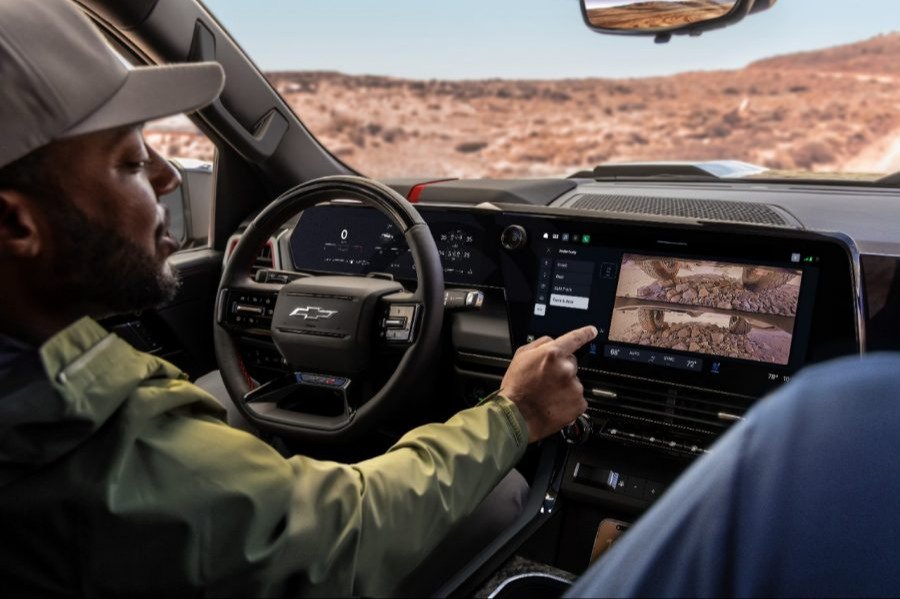
Hook up a trailer and the interface reconfigures itself: a dedicated trailering view appears in the cluster, and a towing card lands on the center screen. A Hitch View camera helps line up the coupler without a spotter, underbody cameras cover obstacles off-road, and drivers can run a full trailer light check — brakes, turn signals, reverse, and running lights — from the mobile app instead of walking back and forth. GM also says it remains the only automaker offering hands-free trailering, through Super Cruise.
The CarPlay question, answered for now
The projection integration is notable given GM's recent history. The company removed CarPlay and Android Auto from its EVs in 2023, and last October CEO Mary Barra told The Verge that gas models would eventually follow as GM moves to a centralized computing platform built around Google Gemini. GM then clarified that gas-powered vehicles would keep both systems for the foreseeable future — and the new trucks make that coexistence part of the design rather than a holdover.
The native side still gets the full Google treatment: Gemini, Google Maps, and Google Play apps are built in, alongside truck-specific OnStar features. An optional front passenger screen streams Disney+, Hulu, YouTube, Tubi, and other services, with a polarized panel that keeps video invisible from the driver's seat while the truck is moving.
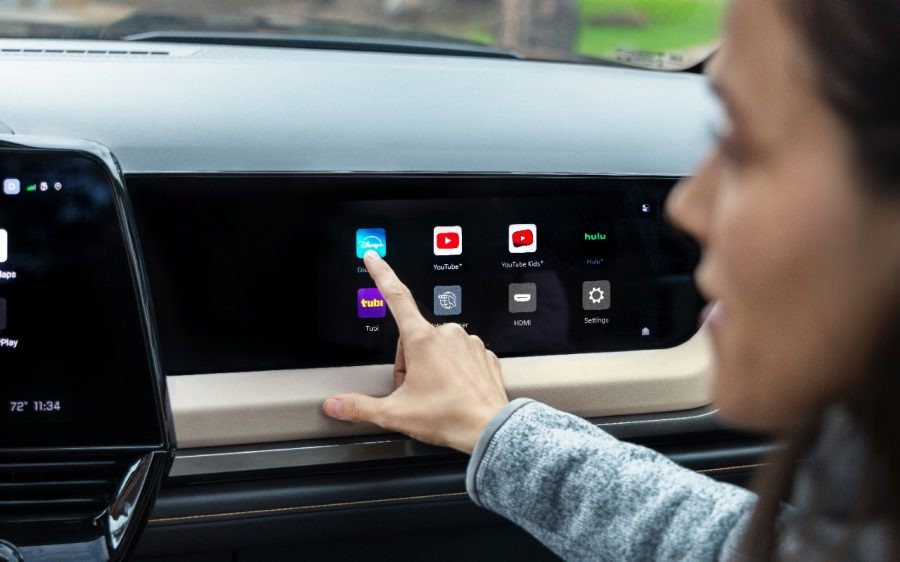
The software runs on the hardware GM showed in June: a 16.3-inch center touchscreen, a 12.2-inch digital cluster, and the available 11.5-inch passenger display. The 2027 Silverado and Sierra are due at dealers late this year, with pricing still unannounced, and GM says the interface will keep evolving through over-the-air updates after launch.