As Ioniq Sales Slide, Hyundai's R&D Chief Says No Single Powertrain Will Win
At Germany's Aachen Colloquium, Manfred Harrer laid out a four-track plan spanning EVs, hybrids, range extenders, and fuel cells, months before the Santa Fe EREV arrives.
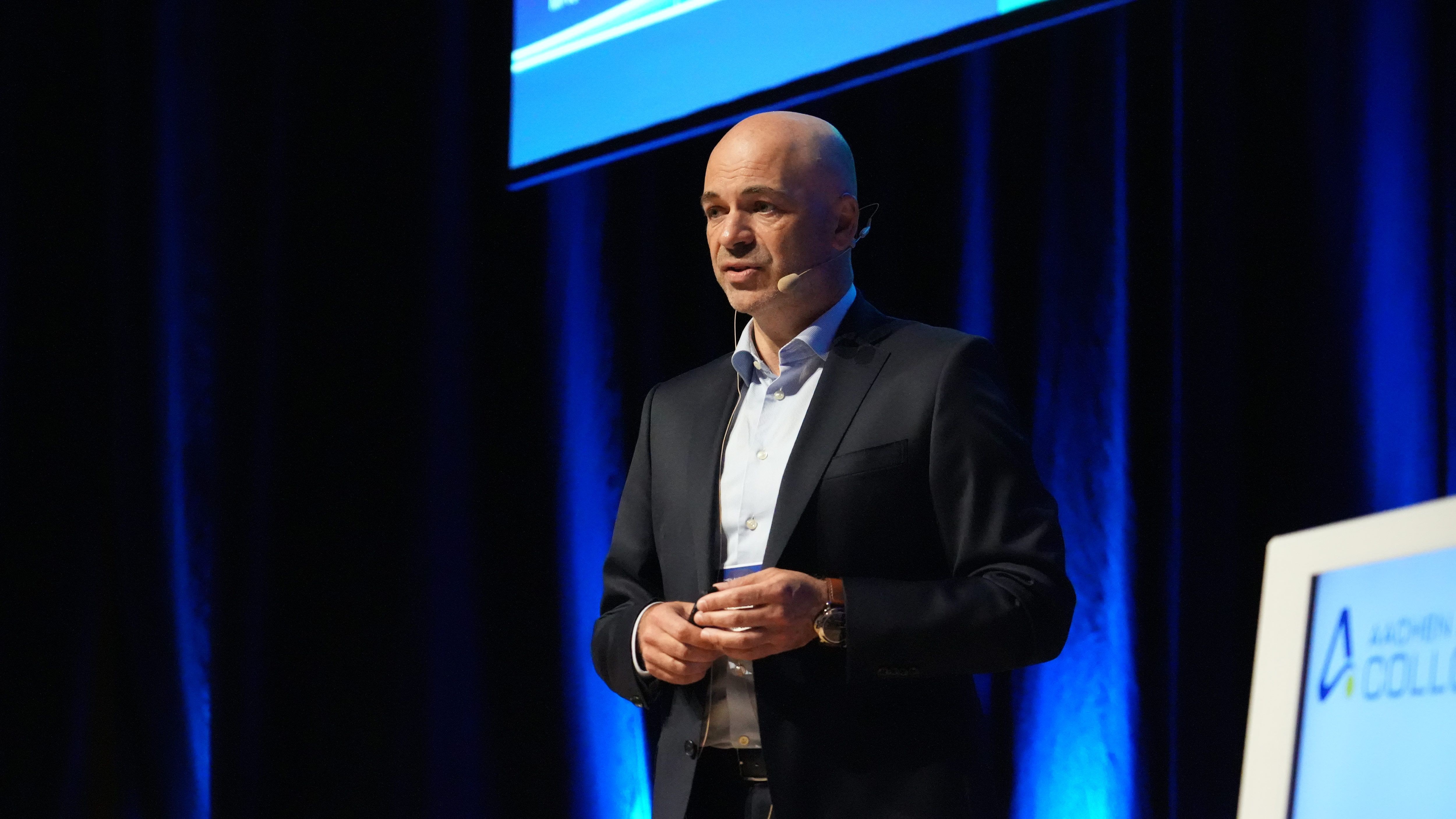
Hyundai's US electric-vehicle sales just took a hard hit, and the company's research chief used a stage in Germany to argue that Hyundai was never betting on EVs alone. Speaking at the Aachen Automotive Colloquium on October 6, Manfred Harrer, president and head of R&D at Hyundai Motor Group, framed battery EVs, hybrids, extended-range EVs, and hydrogen fuel cell cars as four tracks the group will keep developing in parallel, each aimed at different markets and buyers.
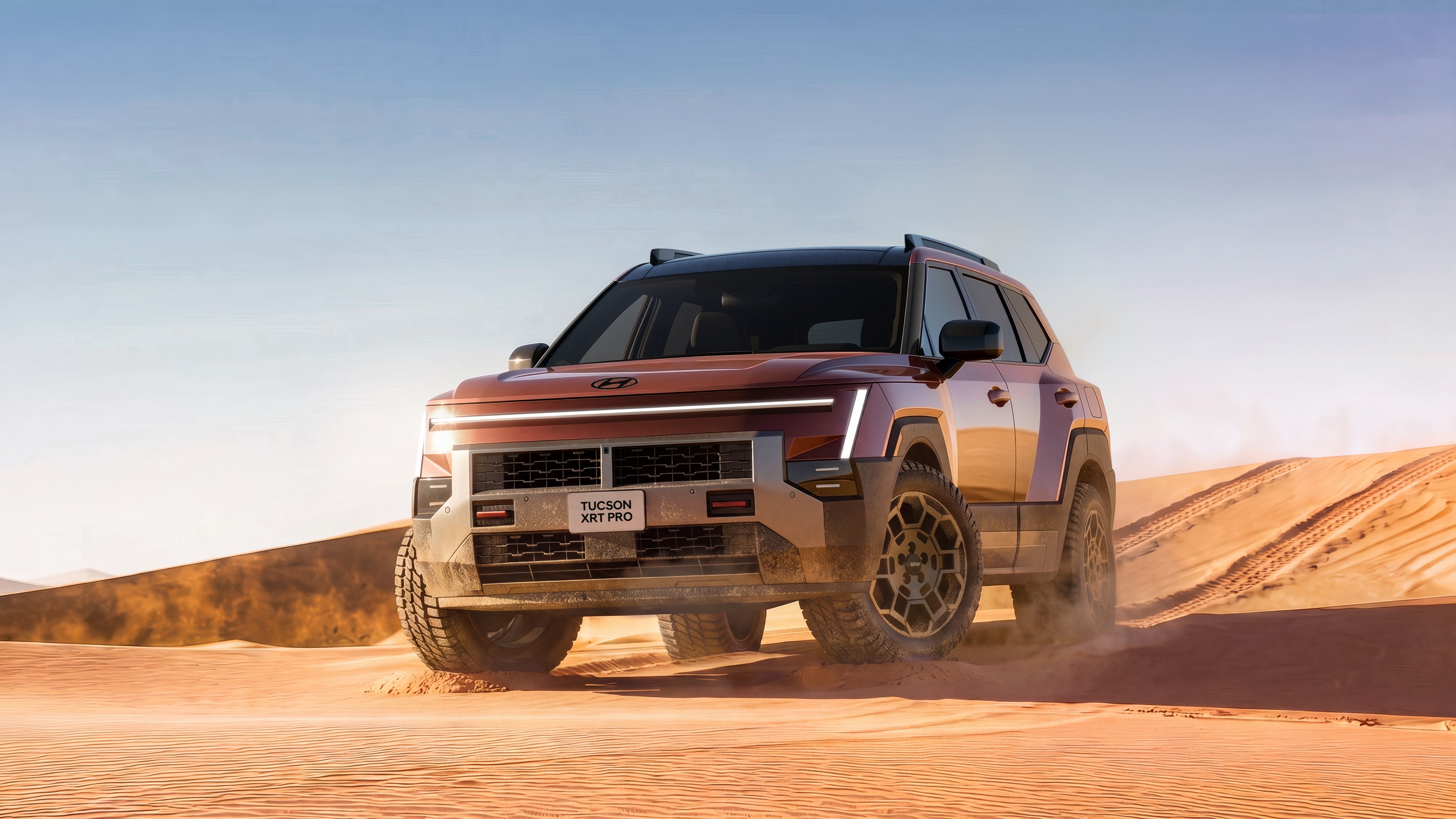
The timing is hard to miss. Hyundai just posted its best third quarter ever in the US, but Ioniq sales fell by more than half while the outgoing Tucson did the heavy lifting.
What Hyundai brought to Aachen
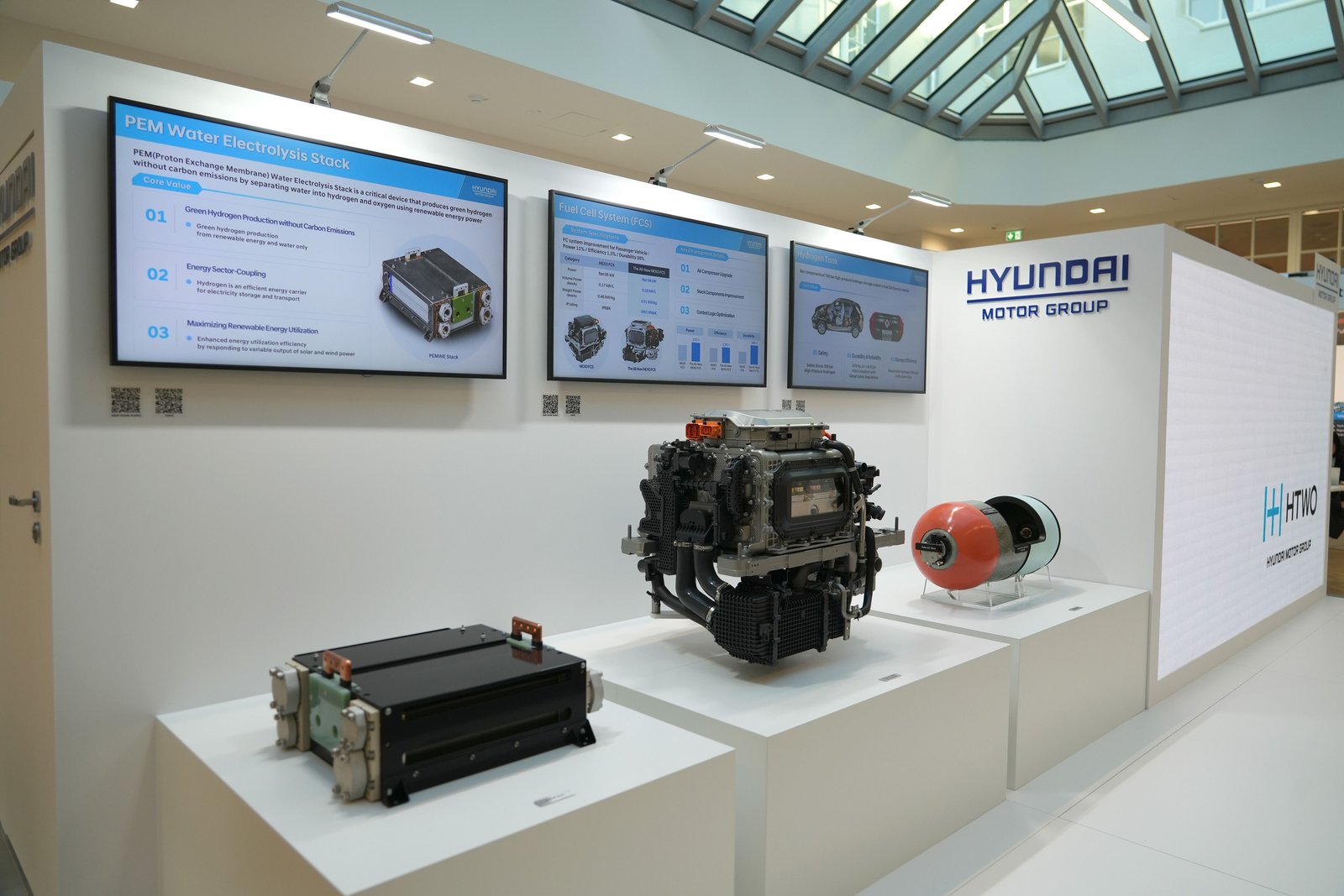
The colloquium is an engineers' event, attended by automakers, suppliers, and university researchers rather than car buyers, so Hyundai showed hardware instead of new models. The hydrogen side of its stand included a PEM electrolysis stack for producing hydrogen, a storage tank, and the fuel cell system from the new Nexo. The electrification side covered a battery pack and cell, a two-stage electric motor, power modules, and the TMED-II hybrid transmission.
Three of the group's engineering vice presidents present on October 7. Their talks cover where fuel cells still make sense despite cost and infrastructure hurdles, how Hyundai plans to scale its power-conversion hardware, and its next-generation battery systems. Attendees can also drive the Nexo and the Genesis GV60 Magma, rated at up to 641 hp, on a loop of about 7 miles (11–12 km) near the venue.
Harrer also returned to the software half of the plan: a "Data Flywheel" that feeds vehicle and customer data back into development, supported by digital twins and virtual validation. Hyundai had already tied the data flywheel to its self-driving roadmap in September.
.jpg)
"The future of mobility will not be defined by a single technology," Harrer said.
Where the strategy turns into products
The range-extender track is the closest to showrooms. At its CEO Investor Day in August, Hyundai Motor confirmed the Santa Fe EREV for the first half of 2027. It will be built in Alabama and is targeting more than 600 miles of combined range. Genesis plans its own EREV SUV for early 2027, aiming for more than 640 miles. Hyundai expects electrified vehicles to account for 60% of its sales by 2030, up from 23% in 2025.
Hydrogen remains the long shot. Hyundai is now the only active supplier of Class 8 fuel cell trucks in North America. For passenger cars, retail hydrogen stations are still largely confined to California.
Hyundai didn't share new specs or pricing in Aachen. Battery size and US pricing for the Santa Fe EREV remain unannounced, and the October 7 technical sessions are the next chance for harder numbers.