Tesla Semi Heads to Hannover: 5 Questions Tesla Must Answer at IAA
Tesla put European Semi numbers on the record on September 11: Standard Range only, up to 550 km at 40 tonnes, deliveries from 2027. Price, production site and charging plan are still blank going into Hannover.
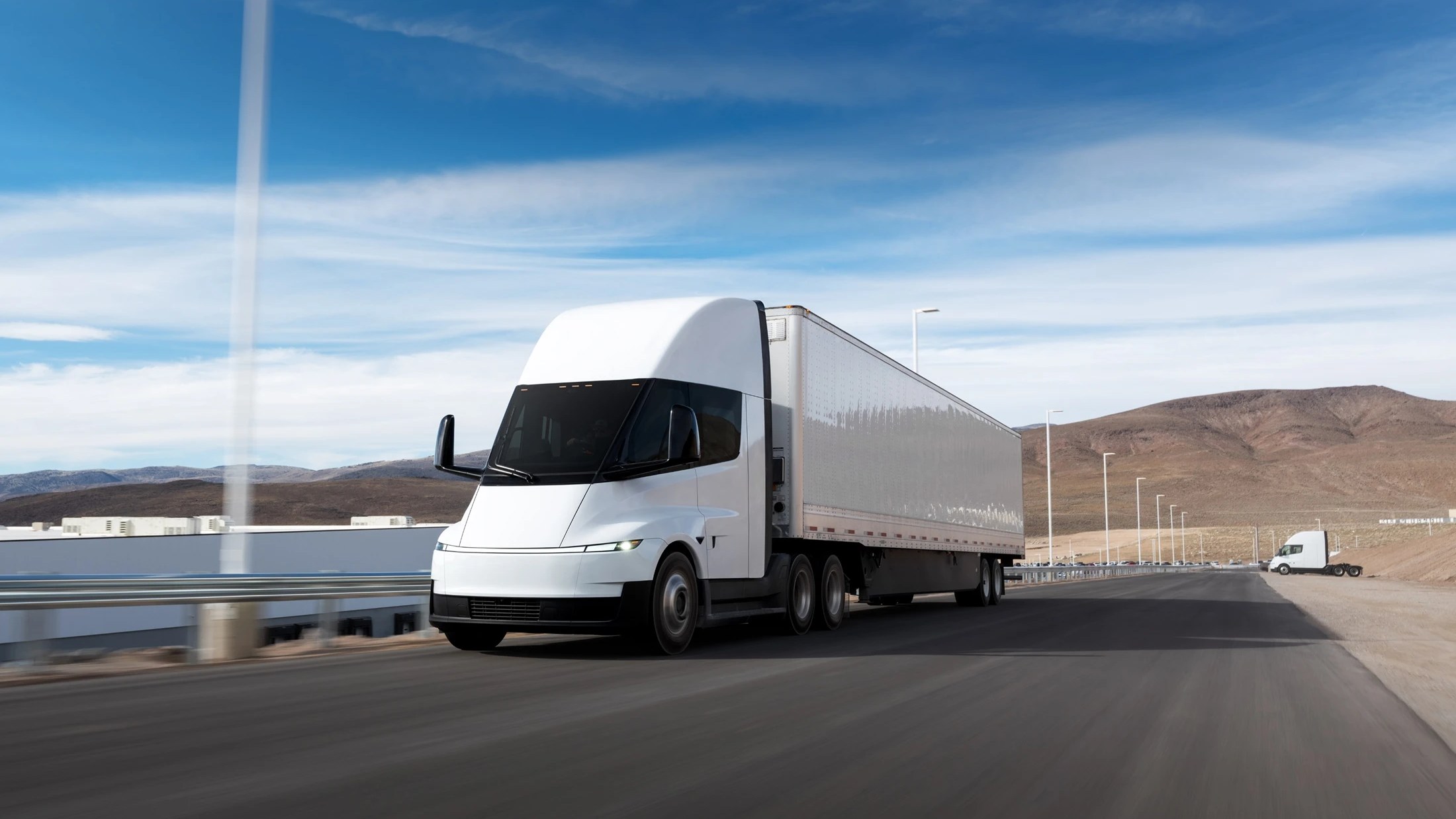
Tesla has spent nine years telling the world the Semi is coming. On September 11, three days before its Hannover press day, it answered part of that on its own: European Semi pages went live with a 550-km Standard Range truck and deliveries from 2027. Press day added the other half of the charging story — Semi Charging for Business went on sale in five European countries — but Tesla still hasn't said what the truck costs, where European ones will be built, or when fleets can order.
The setup is simple. IAA Transportation, Europe's largest commercial-vehicle show, runs September 15–20 at the Hannover fairgrounds, with press day on September 14. On August 20 the Tesla Semi account on X said that "specs & launch details for Semi in Europe" would be unveiled there. The show's own newsroom confirms the rest: a Semi in the halls, plus a spot in the IAA Test Drives program, where Tesla is one of 17 exhibitors putting a record 84 vehicles on the tarmac.
Tesla brought a Semi to the same show in 2024 and said almost nothing about selling it. This time it has framed Hannover as the launch venue. Here are the five questions it needs to answer on press day.
1. What does a Semi cost in euros?
In the US, Tesla has been quoting roughly $260,000 for the Standard Range and $290,000 for the Long Range, per its February 2026 reveal as reported by Electrek, which calls it the lowest-priced battery-electric Class 8 tractor on that market. A straight currency conversion tells you nothing useful. Shipping, import duties, homologation, and a service network that doesn't yet exist for heavy trucks all land on the European sticker.
The benchmark is the Mercedes-Benz eActros 600, the long-haul electric truck already running in 15 European countries. Daimler doesn't publish a list price for it, so a public euro figure from Tesla would be a competitive statement in itself. If the Standard Range Semi lands visibly below what European fleets are paying for the eActros, the price question becomes the headline of the show. If it comes in at parity, the truck has to win on range and charging instead.
2. Is 550 km the real number, and does the Long Range come at all?
Tesla answered most of this one on September 11. Tesla Europe posted the figures on X and switched on national Semi pages across the region: approximately 550 km (342 miles) at a 40-tonne (88,185-pound) gross combination weight, 1.0 kWh per kilometer, a 9,100 kg (20,062-pound) curb weight, an ePTO rated up to 25 kW, and up to 800 kW (1,072 hp) of drive power. The range is still marked "est.", but the small print now says what the estimate assumes: 40 tonnes gross, 80 km/h, 20 degrees Celsius, a flat road, an aero kit and a California-spec dry van trailer. Tesla adds that tyre choice, roof fairing and trailer configuration move the consumption figure significantly — a polite way of saying a European fleet pulling standard trailers should not plan around 550 km. The other half of the question has an answer too: Europe is getting the Standard Range truck only, and Tesla has said nothing about whether the 500-mile Long Range follows.
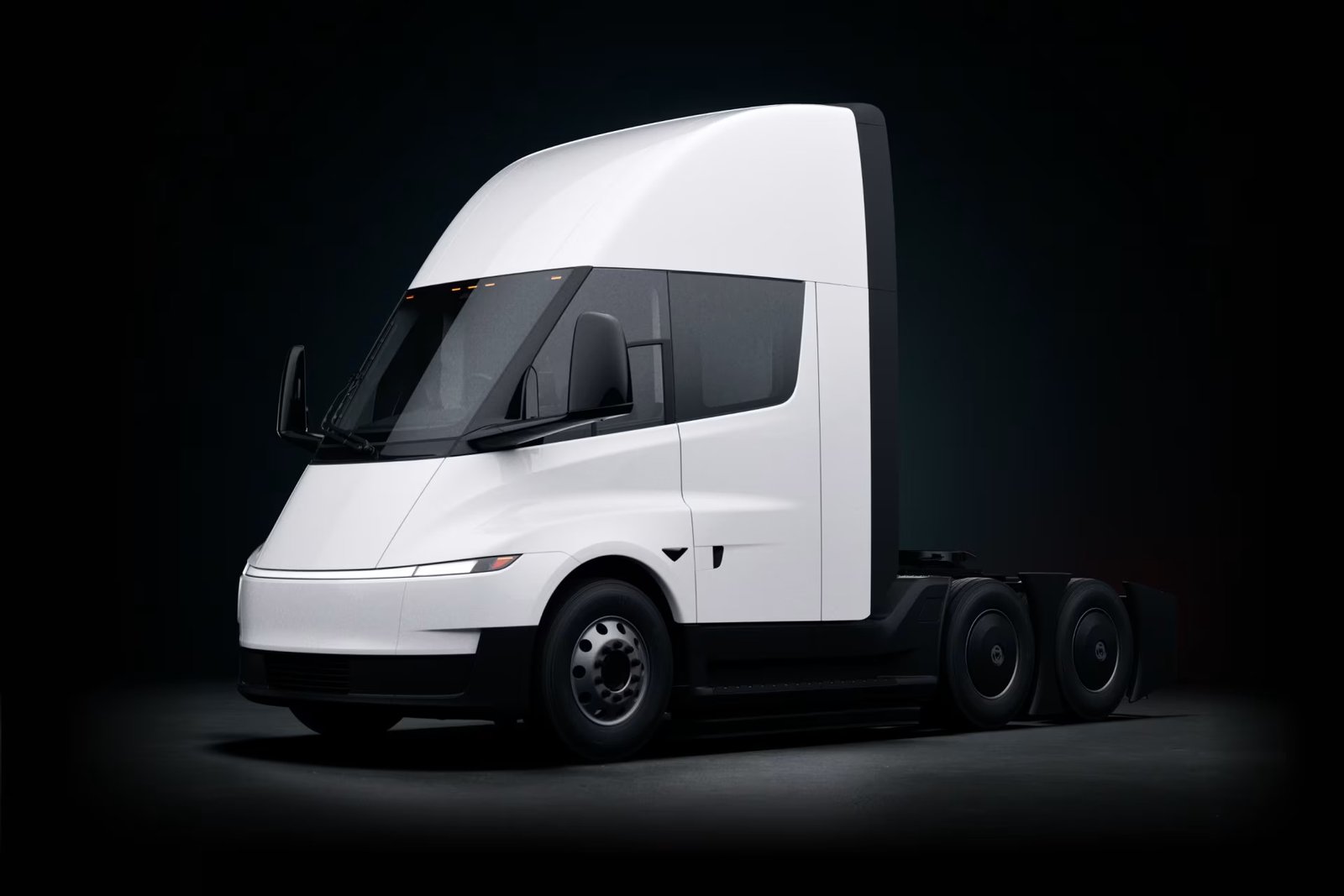
That figure needs explaining. In the US the Standard Range is rated at 325 miles (523 km) at 82,000 pounds, per Tesla's February 2026 reveal. Europe's 40-tonne limit is heavier, yet the estimated range is longer. Lower truck speed limits, a different test assumption, a different battery? Europe has no single mandated range test for heavy trucks the way WLTP works for cars, so fleets will want to know what "estimated" means. The bigger question is what isn't on that page: the 500-mile (800 km) Long Range is absent. Is it coming to Europe later, or not at all?
3. Where will European trucks be built?
Every Semi so far comes from one place. Tesla rolled the first truck off its high-volume line at Gigafactory Nevada in April; the dedicated 1.7-million-square-foot plant is designed for 50,000 trucks a year. Europe gets either exports from that line or local assembly down the road, and Tesla hasn't said which.
The answer matters beyond logistics. Exporting from Nevada means duties and shipping on every truck and puts European deliveries in line behind US fleet orders, including the 500-truck Einride deployment announced in August for North America. Localizing means a timeline measured in years. Hannover should also tell us whether the European truck is physically different: at IAA 2024, Semi program director Dan Priestley described a shorter prototype built around European dimension rules and trailer couplings, according to trans.info.
4. Where will it charge?
In the US, the Semi's pitch leans on the Megacharger: up to 1.2 MW through the MCS 3.2 connector, recovering up to 60 percent of range in 30 minutes. Europe's figure landed lower on September 11: up to 800 kW, for the same claimed 60 percent in half an hour. (One coincidence worth flagging: 800 kW is also the truck's drive power. The two numbers are unrelated.) Whether the cap reflects Europe's megawatt-charging rollout or the truck itself is a question for Hannover. Tesla opened its first customer-facing Megacharger site in Ontario, California, in March, with 66 US locations planned and a partnership with truck-stop operator Pilot.
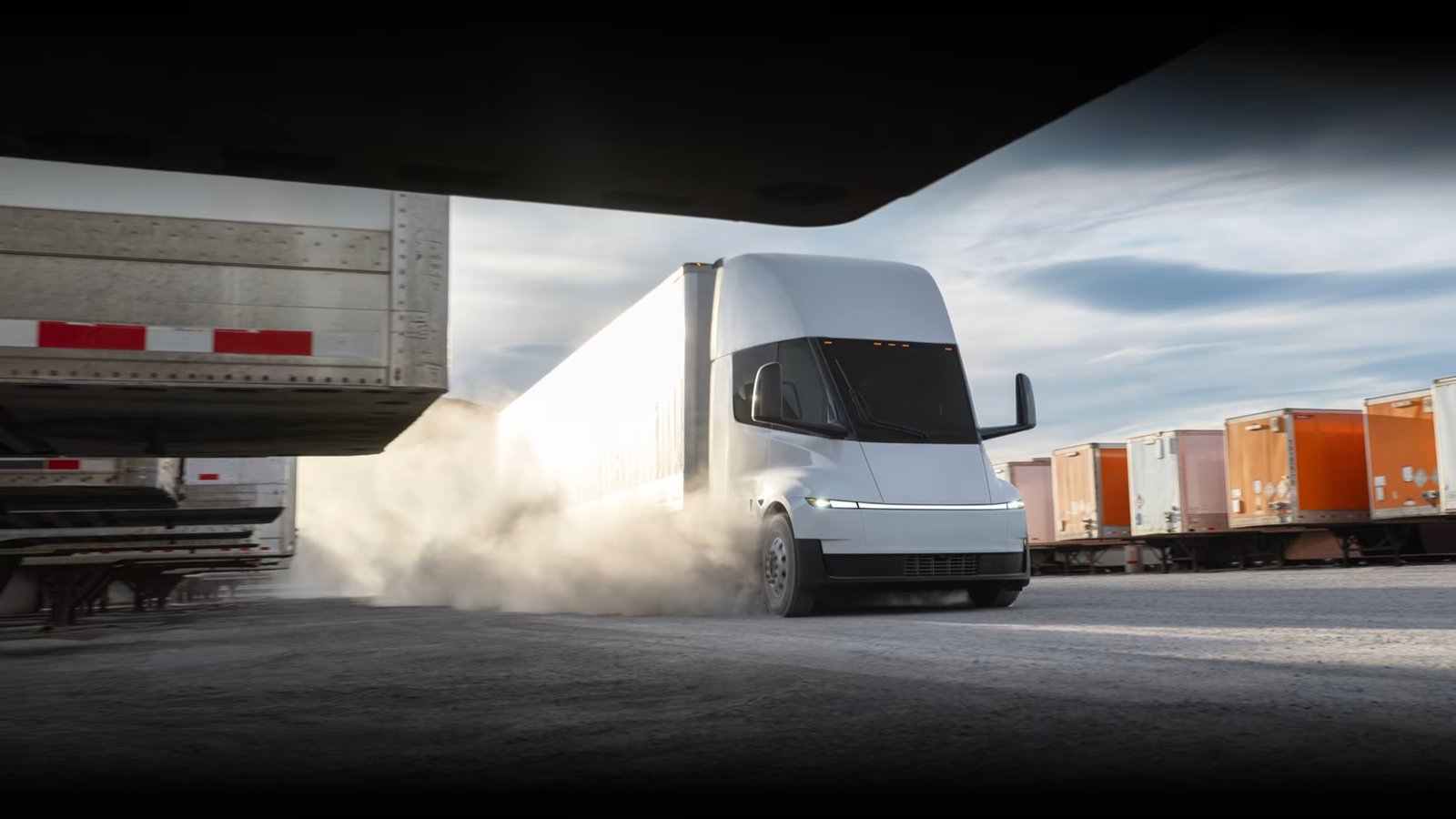
Press day answered part of this, from the depot end rather than the highway. On September 14 the Tesla Charging account said Semi Charging for Business is live in Germany, the Netherlands, Belgium, France and the United Kingdom, with country pages offering two products: the Megacharger for quick stops and the Basecharger for depots and overnight stays. What Tesla still hasn't announced is a single public European Megacharger site — what went live is fleets buying and installing hardware at their own yards. Note the mismatch, too: the Megacharger cabinet is a 1.2 MW product, while the European truck arriving first tops out at 800 kW.
The saving grace is that MCS is an open standard other operators are already deploying on the continent, and the Semi's UK spec sheet lists MCS 3.2 as its charge type. So the real question is strategic: does Tesla build its own European network as it did with Superchargers, or plug into third-party megawatt chargers and compete on the truck alone?
5. When, and which countries first?
Tesla put a date on it on September 11 — the first one it has attached to European sales: customer deliveries from 2027. That is as specific as it gets. Tesla says it will deliver to fleets across Europe without naming which markets come first, and says support will run through Semi Service Centres and licensed workshops. There is still no order book, no price and no list of launch markets for the truck. Press day did produce a first five-country map of Tesla's commercial push, though: Germany, the Netherlands, Belgium, France and the United Kingdom, the markets where Semi charging hardware went on sale. That is where the chargers are sold rather than a confirmed sales list for the tractor, but it is the first European geography Tesla has put on paper.
The range of outcomes is wide. At one end, order books open on press day with first deliveries in 2027 and a named list of launch markets. At the other, Tesla shows a European-spec truck, publishes prices and specs, and leaves ordering for later. In between sits the question of where it starts, and whether the UK, where Tesla already runs a Semi page but which sits outside the EU's type-approval regime, is on the first list.
What Hannover answered, and what it didn't
Two of the five arrived early: a range figure with its test conditions attached, and a delivery window of 2027. That leaves the three that decide whether a fleet can act — a price in euros, a production source, and a European charging plan.
Press day answered one of those three, and only halfway. The charging plan now has a shape: five countries where fleets can buy Megachargers and Basechargers for their own depots, and still no public Tesla site on a European motorway. The price in euros, the production source and the order book all went unanswered on September 14. The halls open to visitors on September 15, and we'll update this story if Tesla puts those numbers on the board.