VW's Electric Camper Van Is Real — Here's When the U.S. Actually Gets One
The ID. California Cruise debuted in Düsseldorf at €60,761, but Americans are getting the ID. Buzz Tourer 4Motion instead. Here's how the two compare and what VW still hasn't said.
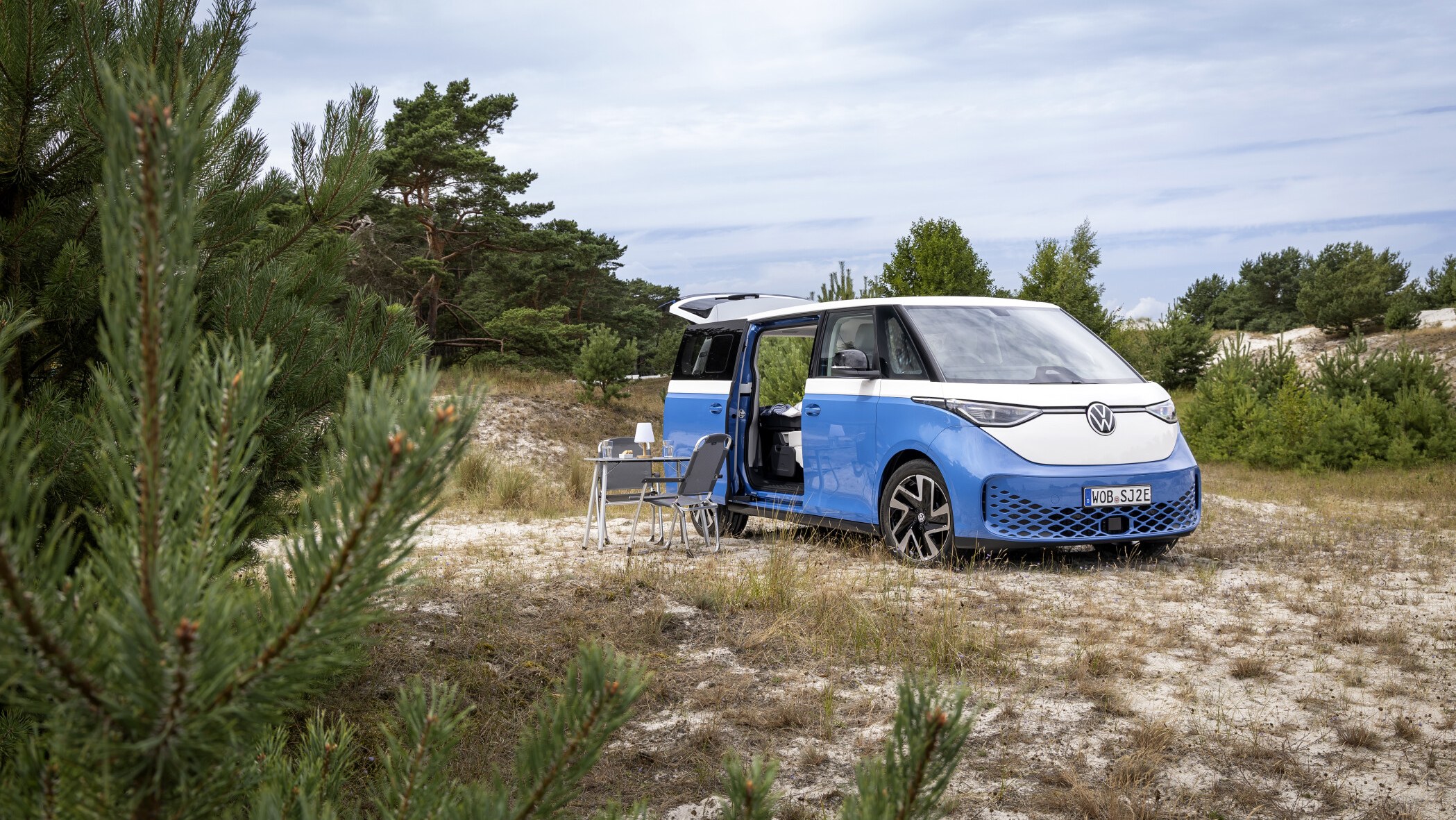
Volkswagen has finally built the electric camper van people have been asking for since the ID. Buzz was a concept. It's called the ID. California Cruise, it debuted at the Caravan Salon in Düsseldorf on August 28, and it goes on sale in Germany from €60,761 with first deliveries in early 2027. The catch for American readers: that exact van is not on Volkswagen of America's published plan. What the U.S. is getting instead is the 2027 ID. Buzz Tourer 4Motion, a camping-equipped trim built from the same European parts bin, due in showrooms this fall at a price VW has not announced.
This page tracks both vans, what separates them, and what Volkswagen still hasn't said. We'll update it as the blanks get filled in.
Two camper vans, one platform
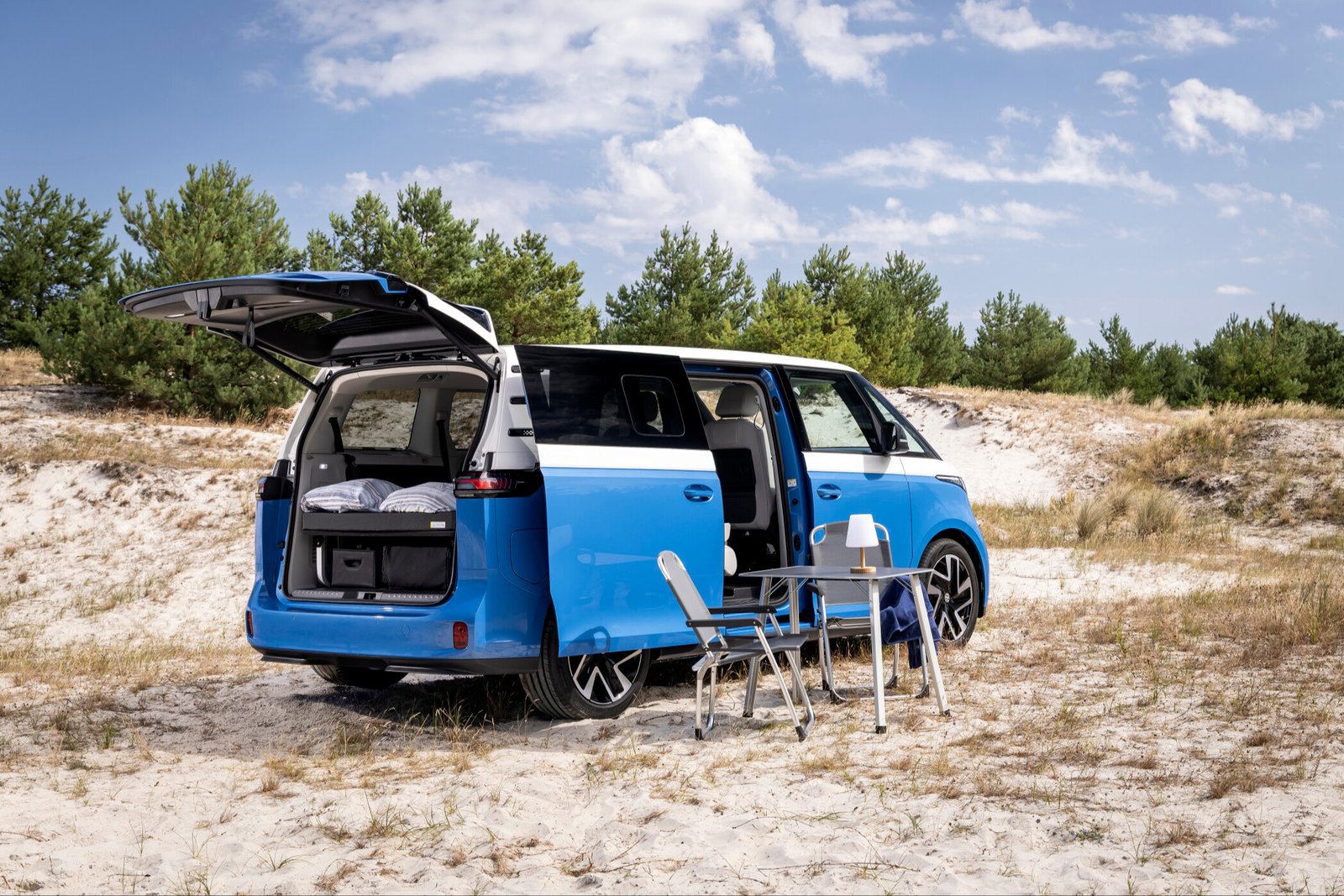
The ID. California Cruise comes from Volkswagen Commercial Vehicles, the Hanover division that has built California campers since 1988. It starts with the rear-wheel-drive ID. Buzz Pro in either short- or long-wheelbase form and adds a factory sleeping setup, blackout blinds, ventilation grilles, a table with two chairs, a dedicated California Mode for overnight power management, and a vehicle-to-load outlet. Outside, it's marked by California lettering on the tailgate and "Cruise" decals on the flanks. VW calls it the first member of a new all-electric California family, with more models promised by 2028, according to the Volkswagen Commercial Vehicles press release.
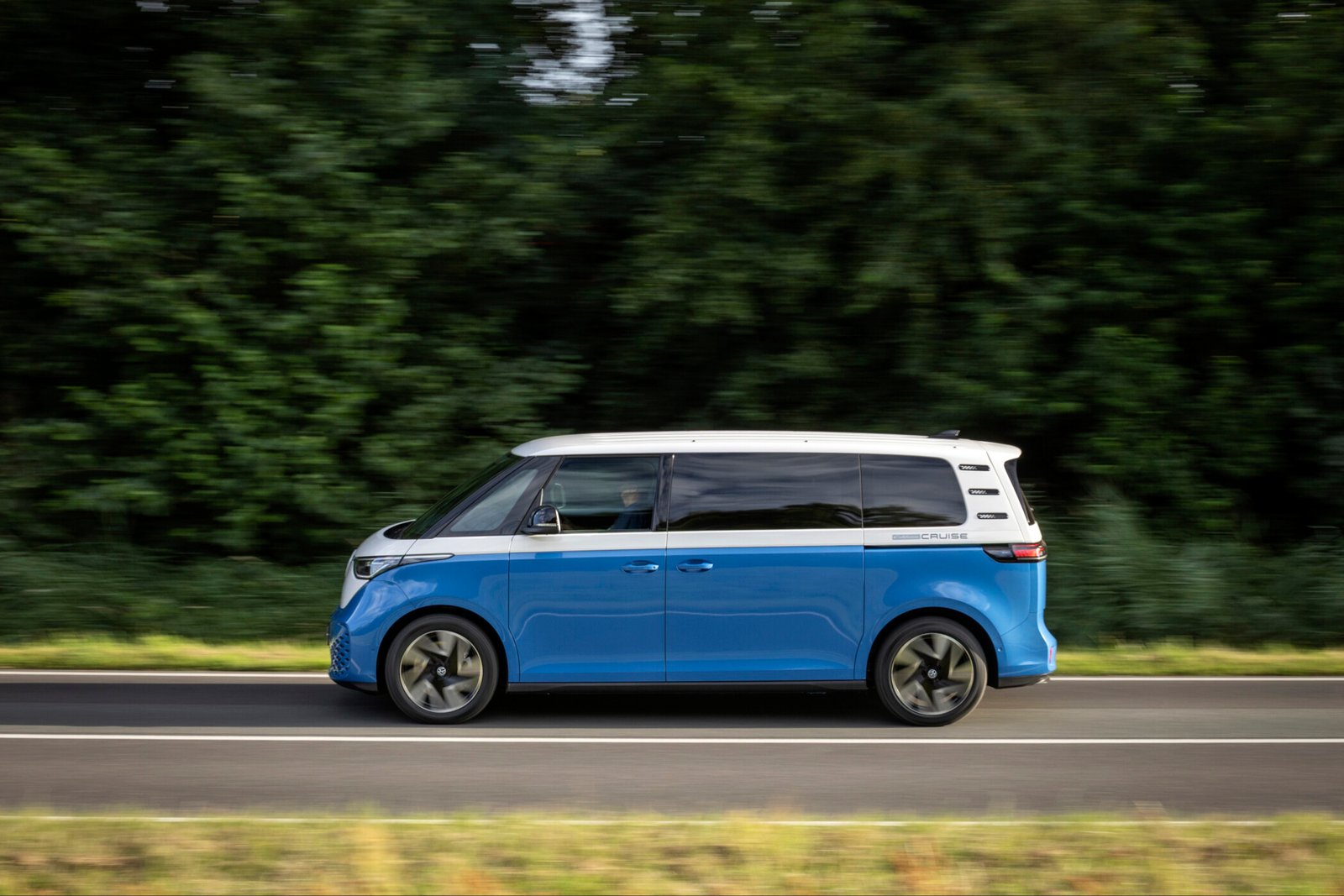
The 2027 ID. Buzz Tourer 4Motion is Volkswagen of America's version of the same idea. Announced in VW's May 14 lineup release, it's built on the all-wheel-drive Pro S 4Motion and carries over the core of Europe's Good Night Package: a fold-out mattress on its own platform, window blinds, front-window ventilation panels, an exterior table and chairs, and an Overnight Mode that reconfigures the van's software for sleeping in it. Because it sits on the Pro S 4Motion, it also inherits that trim's retractable tow hitch, second-row captain's chairs, electrochromic glass roof, and 20-inch wheels.
The camping equipment overlaps heavily. The names, drivetrains, and wheelbases do not.
ID. California Cruise vs. ID. Buzz Tourer 4Motion
| ID. California Cruise | 2027 ID. Buzz Tourer 4Motion | |
|---|---|---|
| Market | Germany first, Europe | United States |
| Built by | Volkswagen Commercial Vehicles | Volkswagen of America |
| Base vehicle | ID. Buzz Pro (RWD) | ID. Buzz Pro S 4Motion (AWD) |
| Wheelbase | Short or long | Long only |
| Power | 282 hp (210 kW), rear motor | TBA; 2025 4Motion was 335 hp, dual motor |
| Battery | 79 kWh (SWB) or 86 kWh (LWB) | TBA; 2025 U.S. pack was 91 kWh gross |
| Range | Not yet published for the Cruise; standard ID. Buzz Pro is rated 460–498 km (286–309 miles) WLTP, and an EPA figure would be lower | TBA; 2025 4Motion was 231 miles EPA |
| Bed | 80 × 47 in (2.03 × 1.20 m), 3.5-in (9 cm) folding mattress | Fold-out mattress on platform; U.S. dimensions TBA (European Good Night bed is 79 × 47 in) |
| Blinds and vents | Blackout on all windows, front-window grilles | Window blinds, front-window ventilation panels |
| Outdoor furniture | Table and two chairs | Table and chairs |
| Overnight software | California Mode, up to 48 hours of climate control | Overnight Mode; duration TBA |
| Vehicle-to-load | 2 kW continuous, 3.6 kW peak | TBA (not announced) |
| Glass roof | Optional, with blackout | Electrochromic roof standard |
| Charging port | CCS2 | CCS1 with NACS adapter included |
| Price | €60,761 (SWB, Germany); LWB TBA | TBA |
| Availability | Deliveries from early 2027 | On sale fall 2026 |
When does the U.S. get one?
This fall. A Volkswagen spokesperson told Cars.com in May that the 2027 ID. Buzz goes on sale in the fall, without naming a month. VW's own lineup release only says that select 2027 models begin reaching dealers in August, with the rest launching through early 2027, and it doesn't specify which models are in the first wave.
As of publication, vw.com still lists the 2025 ID. Buzz as the current model. The practical reading: expect 2027 vans in showrooms sometime between now and December, but don't assume the Tourer ships alongside the base trims. If it slips into the "early 2027" group, VW hasn't said so.
What will it cost?
Volkswagen hasn't priced any 2027 ID. Buzz trim. The reference points are the 2025 numbers: $61,545 for the rear-drive Pro S including destination, and $69,545 for the Pro S Plus 4Motion. VW lists the Tourer between the Pro S 4Motion and the Pro S Plus 4Motion, so it will land somewhere above the base van, and probably closer to the top of the range than the bottom.
Two things worth keeping straight. First, Europe's Good Night Package costs €2,600 as an option on a standard ID. Buzz, so the camping hardware itself is cheap; the Tourer's premium over a base RWD van will mostly reflect the Pro S 4Motion drivetrain and equipment underneath it. Second, the Cruise's €60,761 is a German price for a short-wheelbase, rear-drive van the U.S. doesn't sell, with German taxes built in. It tells you nothing about what a Tourer will cost in dollars.
Range and charging
Cars.com reports that the van's electrical architecture carries over unchanged for 2027, so the 2025 ratings are the best guide: 234 miles EPA for rear-drive, 231 for 4Motion. Real-world camping cuts into that. VW says California Mode can keep the Cruise heated or cooled for up to 48 hours, depending on state of charge and outside temperature; the driver sets a run time and an Eco or Normal climate profile from the center screen. VW hasn't published an equivalent figure for the U.S. Tourer's Overnight Mode.
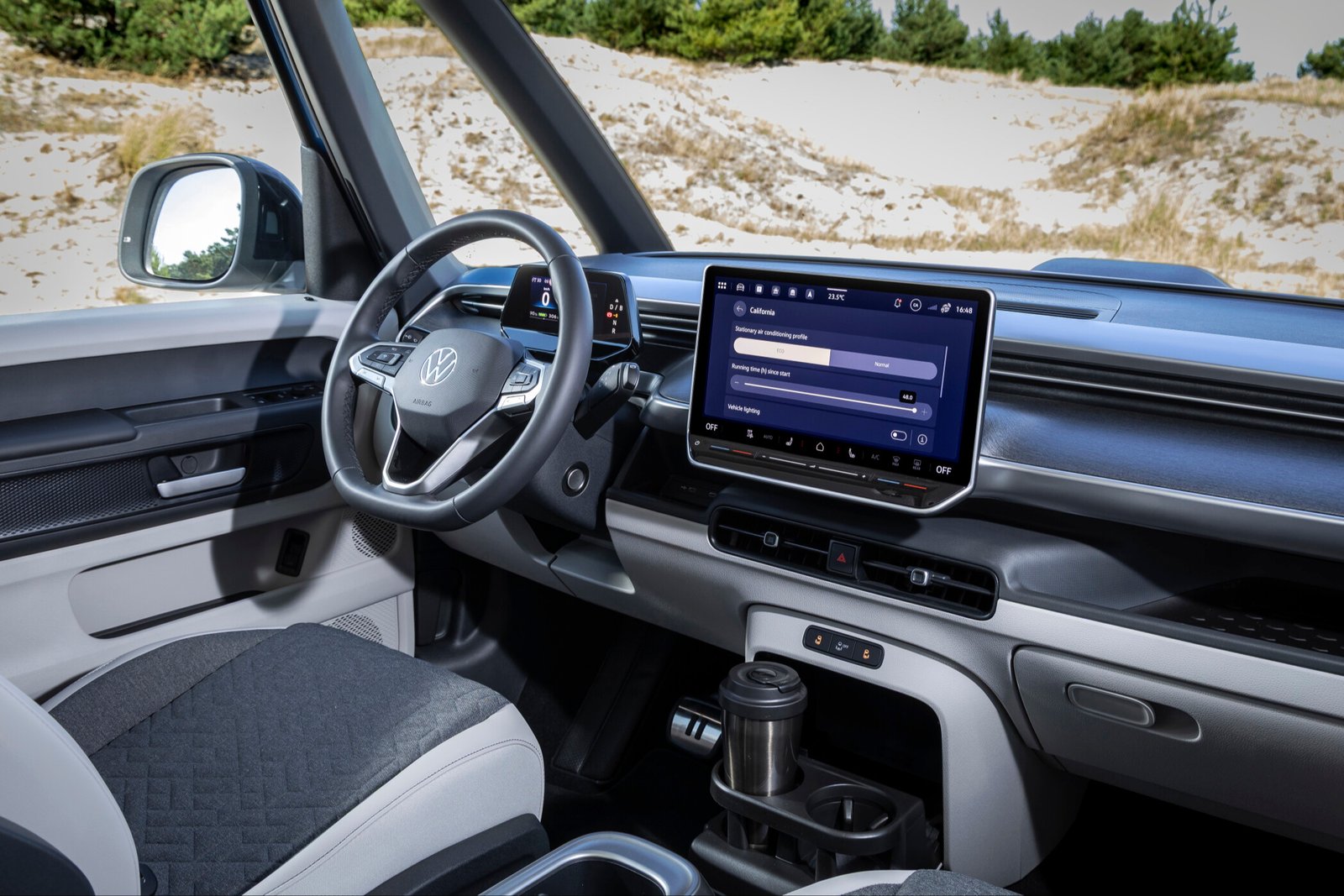
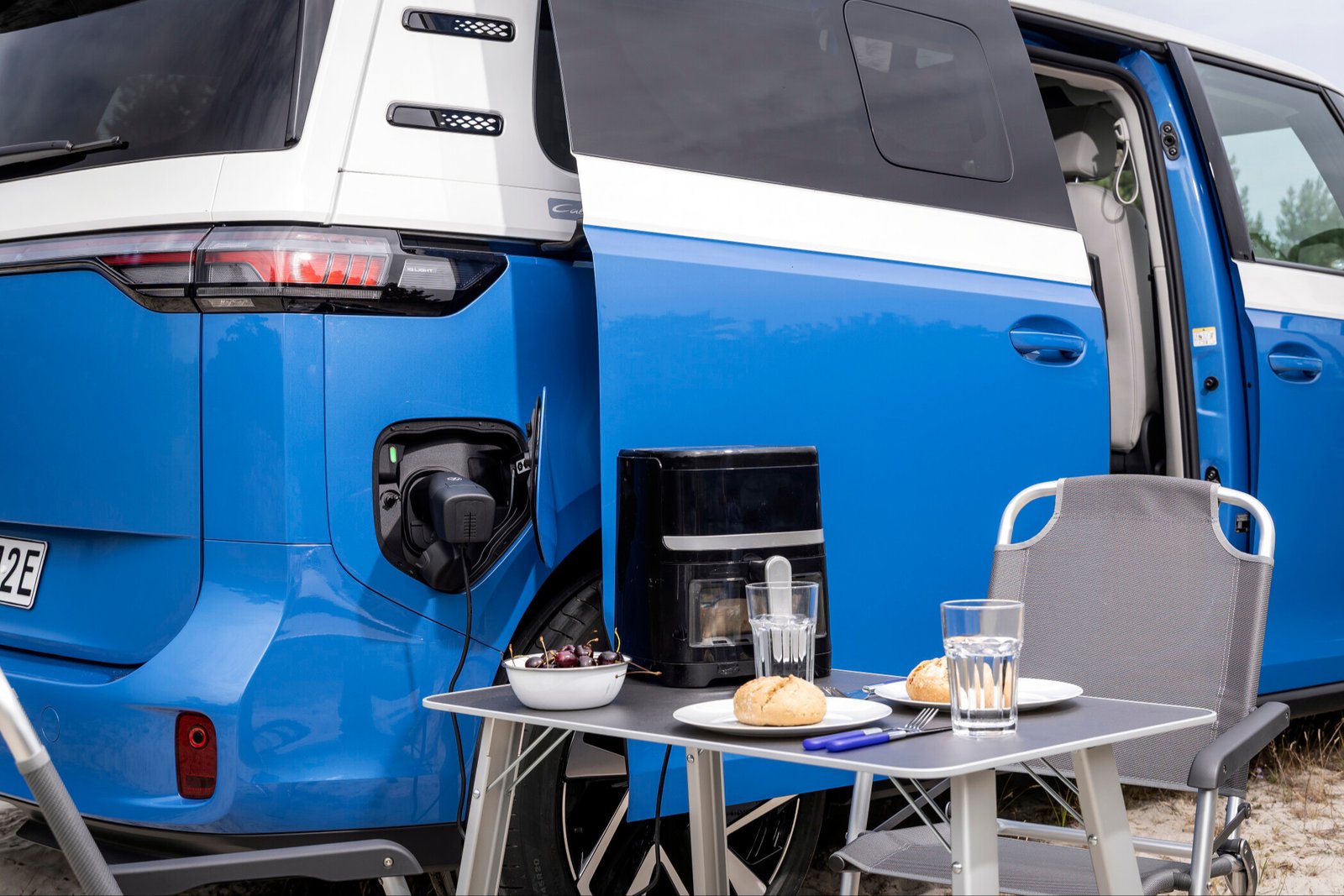
On charging, the 2027 U.S. van keeps its CCS1 port and ships with a NACS adapter for Tesla Superchargers. The Cruise adds a PowerSocket adapter that plugs into the charge port for vehicle-to-load, good for 2 kW continuous and 3.6 kW peak, enough for a small oven, a kettle, or a fridge. Volkswagen has not said whether the U.S. Tourer gets vehicle-to-load at all.
What you actually get inside
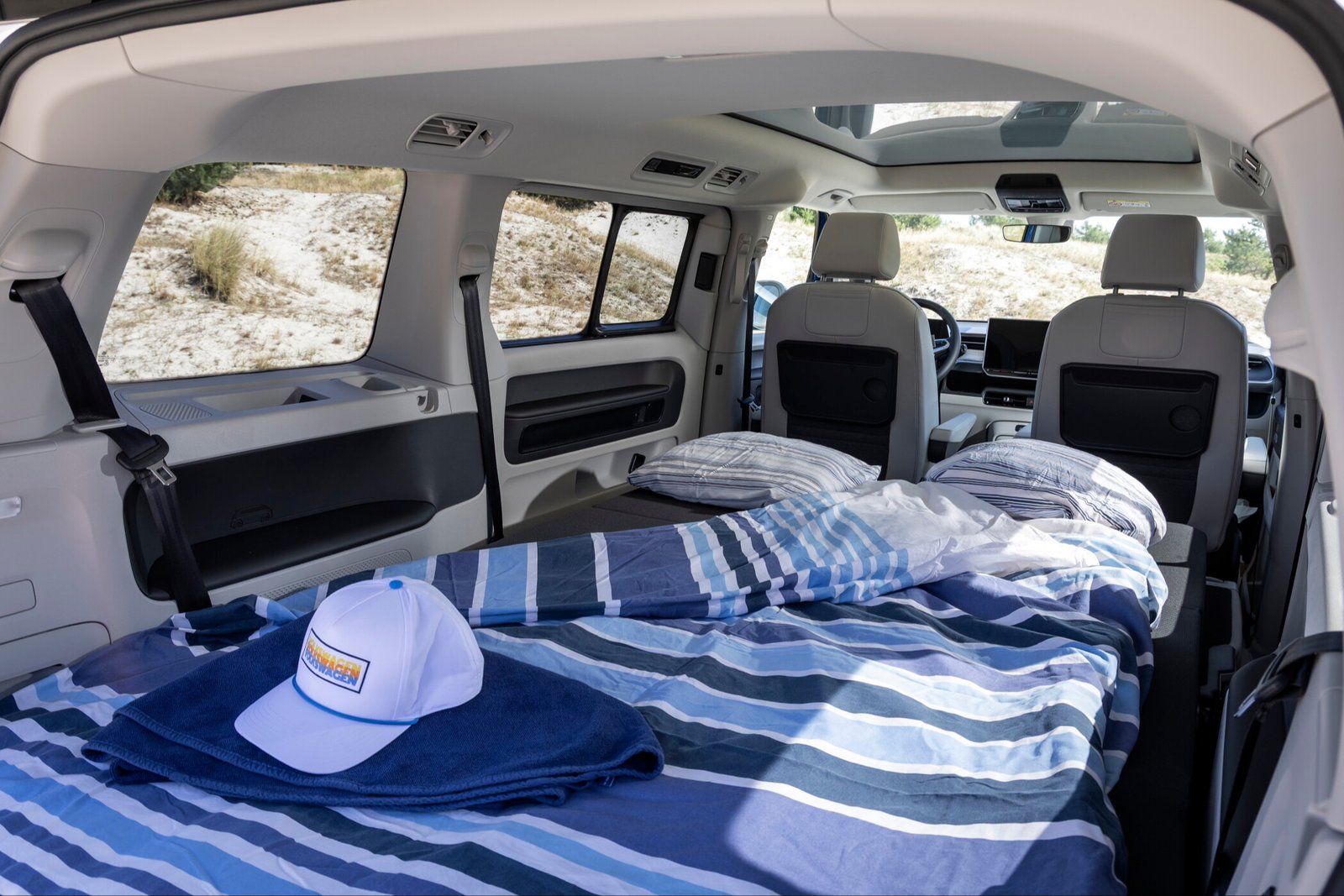
Both vans are two-sleeper conversions, not motorhomes. In the Cruise, the rear seats fold to support an 80-by-47-inch bed with a purpose-built 3.5-inch folding mattress that runs the full width of the cabin. The Tourer's list reads the same: fold-out mattress and platform, blinds, front ventilation panels, table and chairs. VW hasn't published U.S. bed dimensions, but the European Good Night bed it's based on measures 79 by 47 inches.
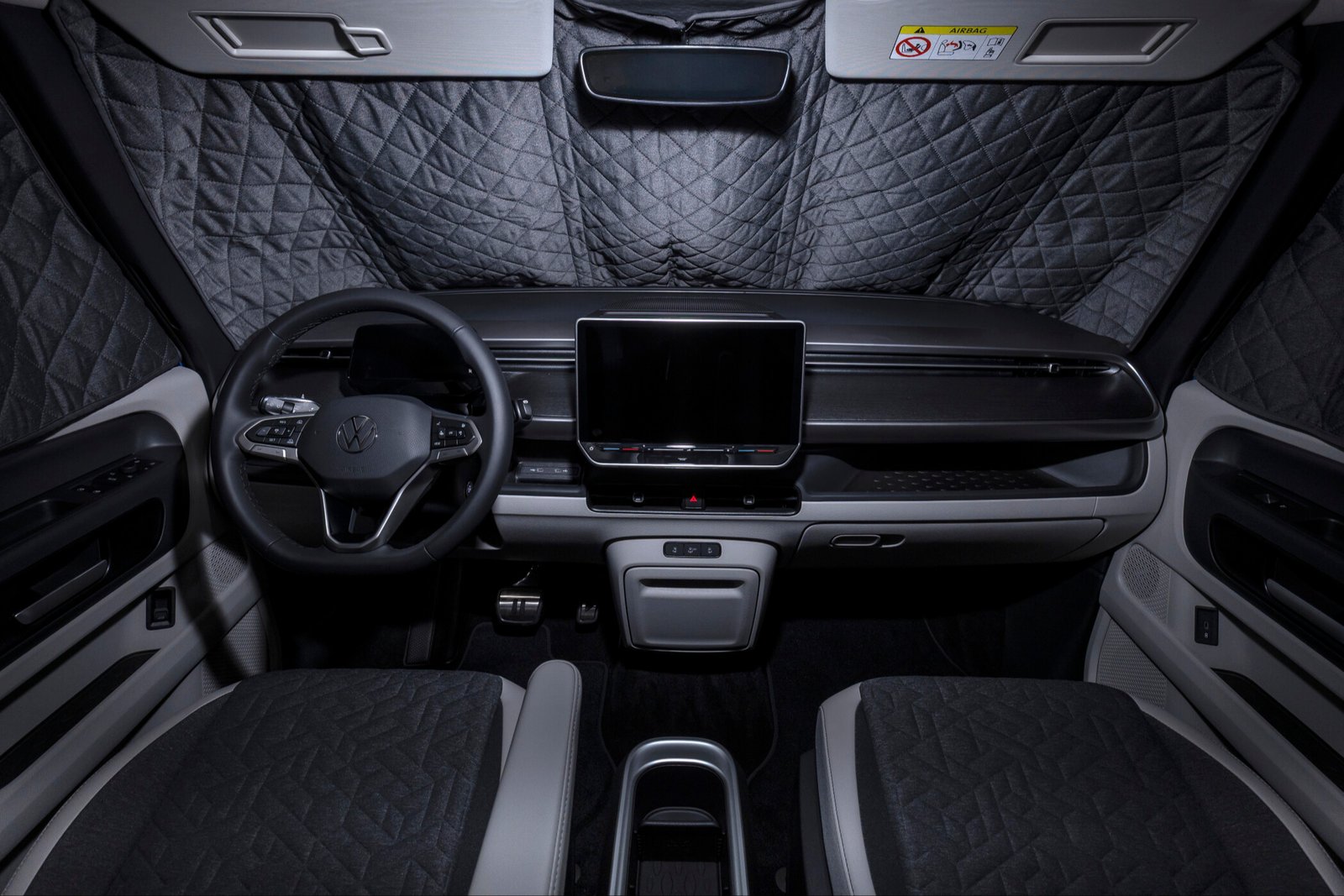
Privacy comes from quilted blackout panels that cover every window in the Cruise, including the windshield, while the front side windows take mesh ventilation grilles so the cabin can breathe with the doors locked. The Tourer gets blinds and front ventilation panels; VW hasn't shown whether they're the same parts.
What neither van has: a pop-top roof, a second bed, a kitchen, or plumbing. The Cruise's table and chairs stow in soft cases under the bed platform, which is where the cargo space goes once the bed is set up. Anything more ambitious is the territory of the additional California models VW says are coming by 2028, and possibly of aftermarket upfitters in the meantime.
Will the California Cruise itself come to the U.S.?
Volkswagen of America hasn't said yes or no. The short-wheelbase van the Cruise launched on isn't sold in the U.S. in any form, VW hasn't even priced the long-wheelbase Cruise in Europe yet, and the Tourer already covers the same equipment for American buyers. For now, the Tourer is the U.S. answer. If VW changes that, this page will change with it.
What we don't know yet
- U.S. pricing for any 2027 ID. Buzz trim, including the Tourer 4Motion
- The exact on-sale date, and whether the Tourer arrives in the first wave or early 2027
- Whether the ID. California Cruise will ever be offered in the U.S.
- Whether the U.S. Tourer gets vehicle-to-load
- The price of the long-wheelbase Cruise in Europe
- Range and curb weight for the Cruise, which VW has not published
What's next
- Caravan Salon runs through September 6; long-wheelbase Cruise pricing, range, or weight figures could surface before it closes
- Volkswagen of America pricing and an on-sale date for the 2027 ID. Buzz, expected this fall
- More electric California models, which VW says will follow by 2028