Audi Revives the A2 as Its Most Efficient EV Ever — and Leaves America Off the Map
The reborn A2 claims 12.8 kWh/100 km on the WLTP cycle and up to 646 km of range from €38,200 in Germany. Audi calls it a car built for Europe — and never mentions North America.
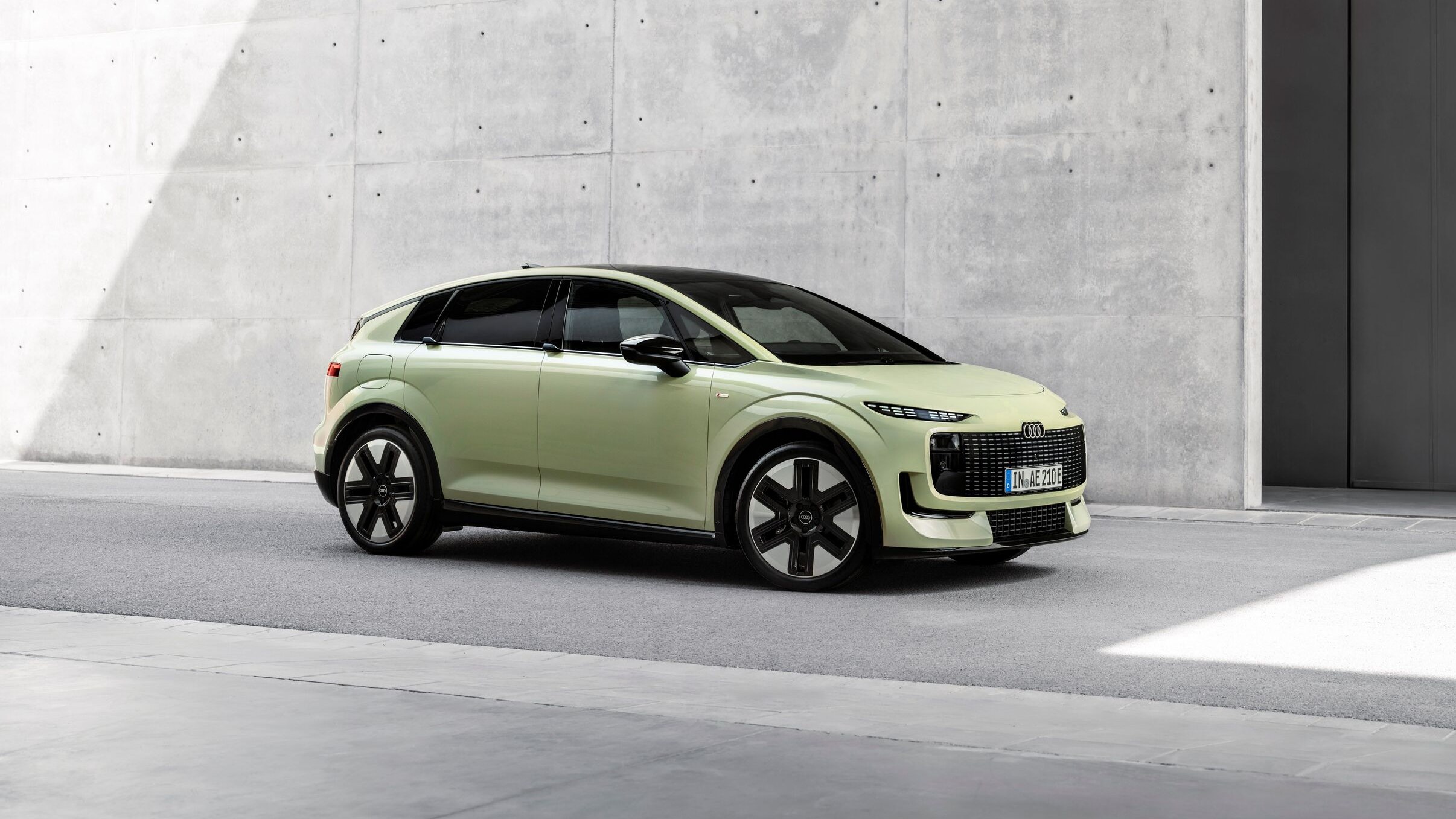
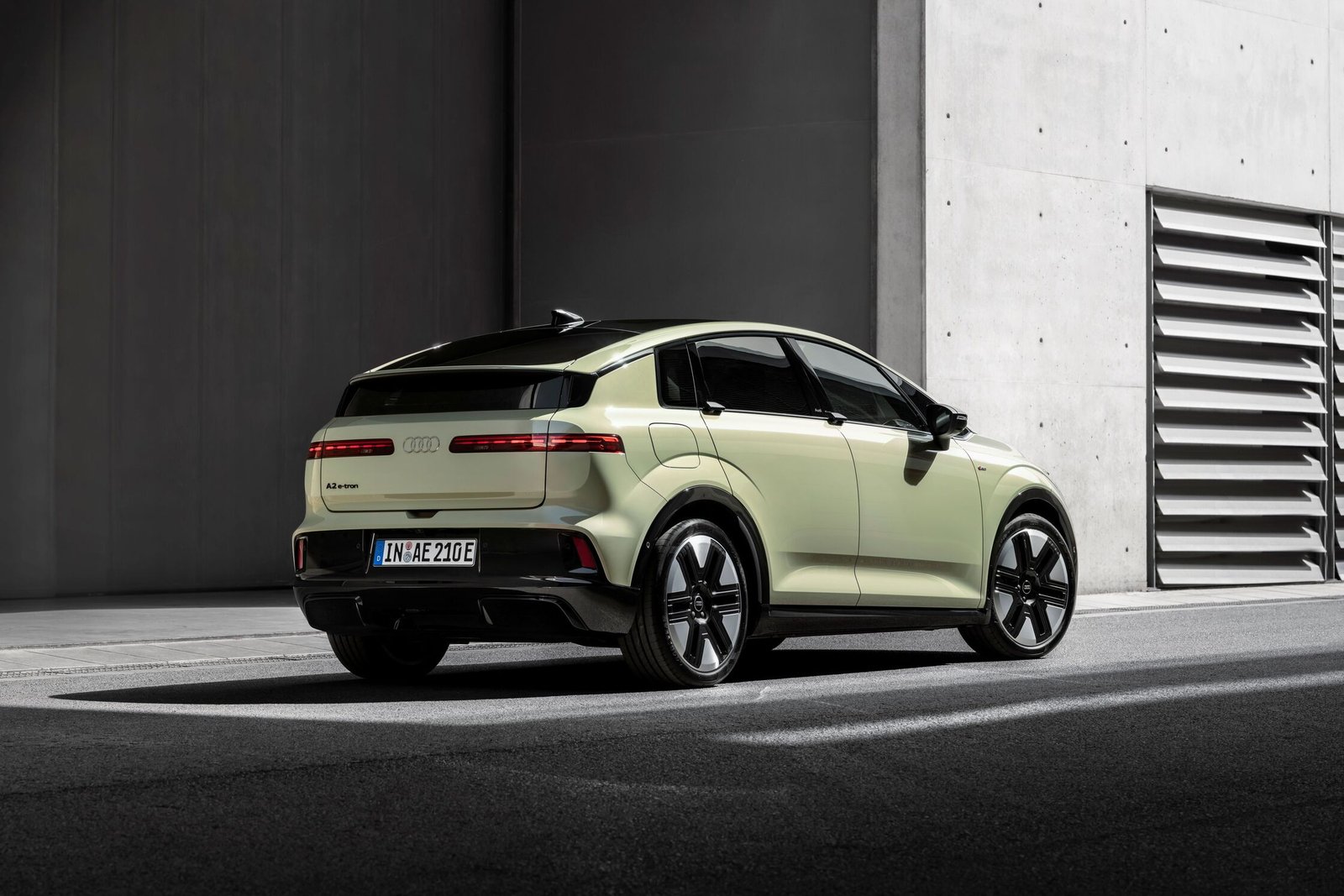
Audi has brought back the A2 name on a compact electric hatchback that it says uses less energy than any production car in the brand's history. The most efficient version is rated at 12.8 kWh/100 km on the WLTP cycle, the longest-range version reaches 646 km (401 miles), and German prices start at €38,200 — about $44,300 at current exchange rates.
The press release is datelined Ingolstadt and describes a car "tailored to the needs of European customers." North America isn't mentioned once. Motor1 and Autoblog both read that as a car that won't be sold in the U.S., and nothing Audi has said contradicts them. What makes it worth a U.S. reader's attention is the engineering underneath, because it shows where Audi's next EVs are going.
Four versions, three batteries, all rear-wheel drive
Every A2 e-tron uses a single permanent-magnet synchronous motor driving the rear wheels; there is no all-wheel-drive option. The lineup breaks down like this:
- 125 kW (168 hp), 52-kWh battery: up to 423 km (263 miles), 0–100 km/h in 8.8 seconds, €38,200
- 140 kW (188 hp), 61-kWh battery: up to 515 km (320 miles), 7.9 seconds, €41,900
- 170 kW (228 hp), 84-kWh battery: up to 646 km (401 miles), 7.0 seconds, €48,900
- 240 kW (322 hp), 84-kWh battery: up to 630 km (391 miles), 5.7 seconds, €51,200 (about $59,400)
Torque is 350 Nm (258 lb-ft) on the first three and 545 Nm (402 lb-ft) on the top car, which is also the only one allowed to run 200 km/h (124 mph) instead of 160 km/h (99 mph). Order books open in Germany on September 10, and Audi expects the first cars at dealers in December.
Where the 12.8 kWh comes from
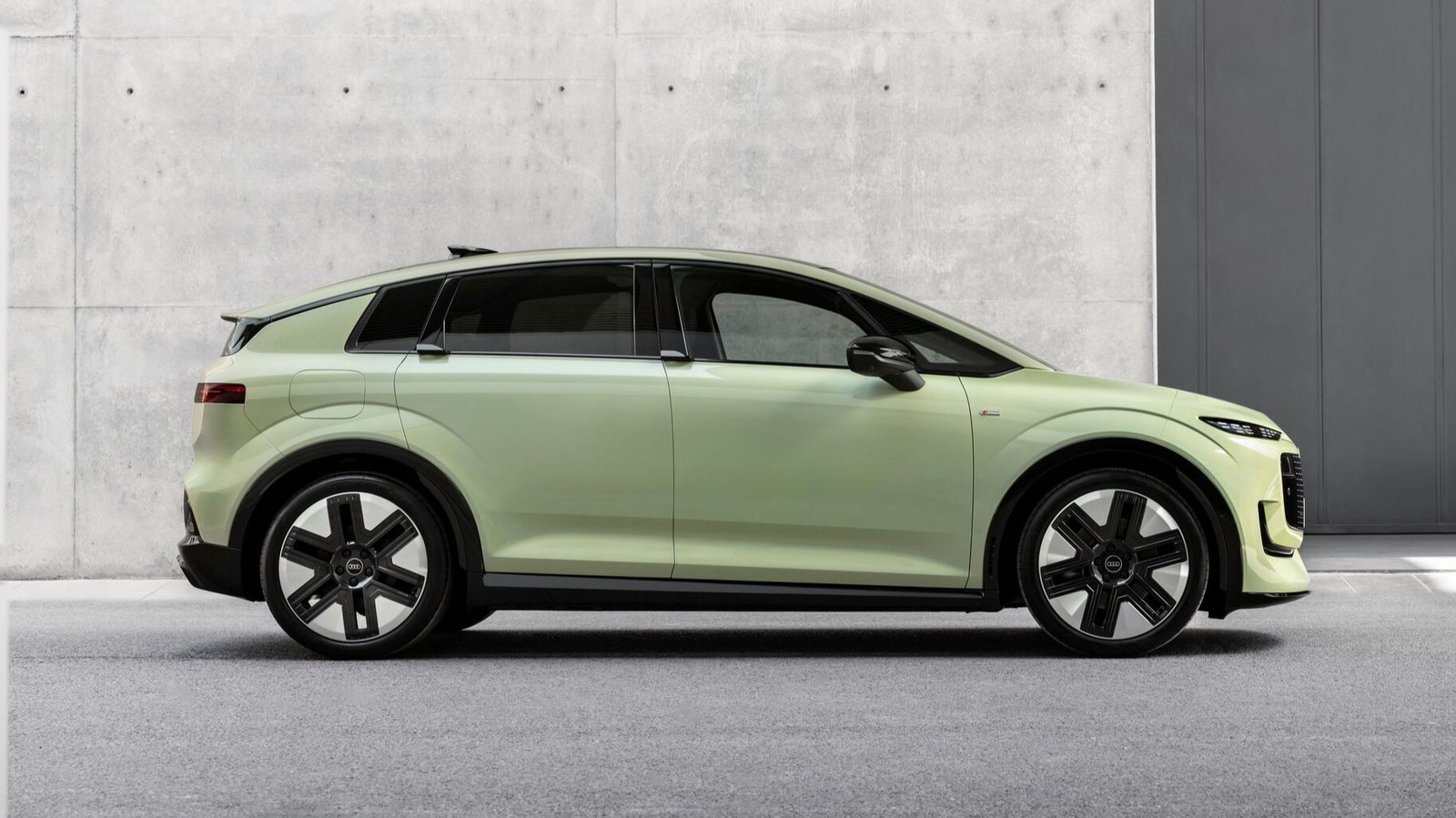
The headline consumption figure belongs to the 140-kW car fitted with an optional efficiency package that includes 19-inch aero wheels and a low-rolling-resistance tire. The rest of the range is rated at 13.7 (125 kW), 13.9 (170 kW), and 14.2 kWh/100 km (240 kW) — still low, but not the record.
Audi credits a drag coefficient of 0.24, which it calls the best in its compact lineup: a mostly closed underbody, a cooling intake that stays shut at highway speeds, "gap reducers" in the wheel-arch liners that narrow the space between tire and body, flush electric door handles, and silicon-carbide power electronics to cut conversion losses.
The more interesting decision is in the battery bay. The 52- and 61-kWh packs use lithium iron phosphate (LFP) cells in a cell-to-pack layout, bonded directly into the housing with no intermediate modules. Only the 84-kWh pack keeps a conventional modular nickel-manganese-cobalt design. Audi says the LFP packs hold their performance at low states of charge and in cold weather — the two traditional knocks on the chemistry — and that the denser packaging lowers the floor enough to improve rear legroom. Peak DC charging is 100, 105, and 183 kW respectively; the 84-kWh car goes from 10 to 80 percent in 29 minutes.
How it stacks up against a Model 3
Tesla's own European figures put the entry Model 3 Rear-Wheel Drive at 13.0 kWh/100 km on the WLTP cycle and the Premium Long Range RWD at 13.6. In its one efficiency-package configuration, the A2 beats the cheapest Model 3 by 0.2 kWh; the other three versions land slightly above it. That's a tie more than a win — but it comes from a tall hatchback on a 2.77-m (109-inch) wheelbase with a 396-liter (14.0-cubic-foot) trunk, not from a low sedan.
None of these are EPA numbers. The U.S. cycle is tougher, and the gap between WLTP and EPA varies from car to car, so 12.8 kWh/100 km — roughly 20.6 kWh per 100 miles — is not something to line up against the 25 kWh/100 miles and 131 MPGe the EPA gives a 2025 Model 3 Long Range RWD. Audi hasn't published an EPA rating because there is no U.S. car to certify.
Why Europe gets it — and what the U.S. gets instead
The A2 e-tron is the clearest product yet of a strategy CEO Gernot Döllner has been spelling out all year. In Audi's first-quarter report he argued that the "world car" business model is becoming less viable and that market-specific models are now a necessity. Audi's half-year results listed U.S. tariffs among the pressures on the business. The North American end of the same logic is the Q9 full-size SUV shown in New York at the end of July, plus the plug-in hybrids Döllner told U.S. media are coming to the lineup. A €38,200 hatchback shipped from Ingolstadt is not part of that plan, and Audi has given no sign it will become one.
What can cross the Atlantic is the engineering. Cell-to-pack LFP batteries in a premium car, the SiC power electronics, the wheel-arch aero treatment, a 25-watt dual-phone Qi 2.2 charging tray, and a column-mounted shifter that frees up the center console are all things Audi presents as decisions rather than one-offs. So is the process: the company says it brought the A2 to market 21 months faster than comparable earlier programs, building it on the same Ingolstadt lines as the A3 with roughly 250 robots and more than 1,200 production assets reused from other models. Audi hasn't said which of those pieces reach its U.S. models, or when.
What else is in the car
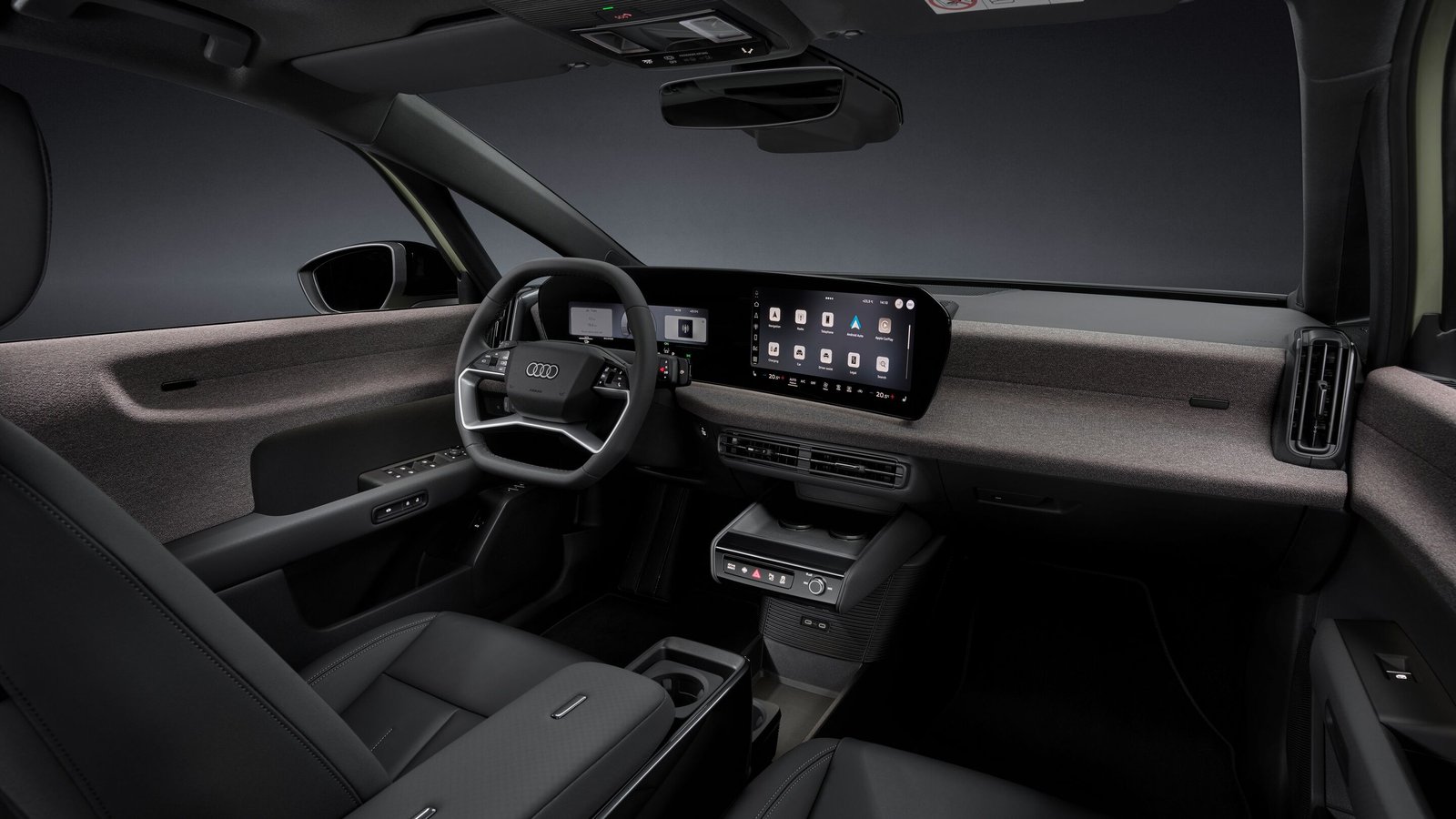
The cabin gets the same MMI panoramic display as Audi's larger models as standard — an 11.9-inch cluster and a curved 12.8-inch touchscreen — and Audi says it is the first premium brand to fit the magnetic Fidlock mounting system as standard, with three adapters in the console for cup holders, cable bags, and other accessories. The trunk grows from 396 to 1,336 liters (47.2 cubic feet) with the seats folded, and the 170- and 240-kW cars add a 13-liter frunk. Adaptive cruise control, emergency braking, swerve assist, and a rearview camera are standard. Bidirectional charging is an option: vehicle-to-load through a socket in the trunk or the charge port, and vehicle-to-home in Germany, Austria, and Switzerland with a compatible DC wallbox.
Audi hasn't named the platform; Autocar reported earlier this year that it sits on Volkswagen Group's MEB architecture. Pricing outside Germany arrives with the order books on Thursday. On North America, the company's silence is the only official word.