Bentley Turns a 1924 Roadside Duel Into a 12-Car Continental GT Collection
The Olympia Collection by Mulliner celebrates the 6½ Litre's centenary with an ombré paint job that spans every shade of British Racing Green, plus a numbered Brooklands watch.
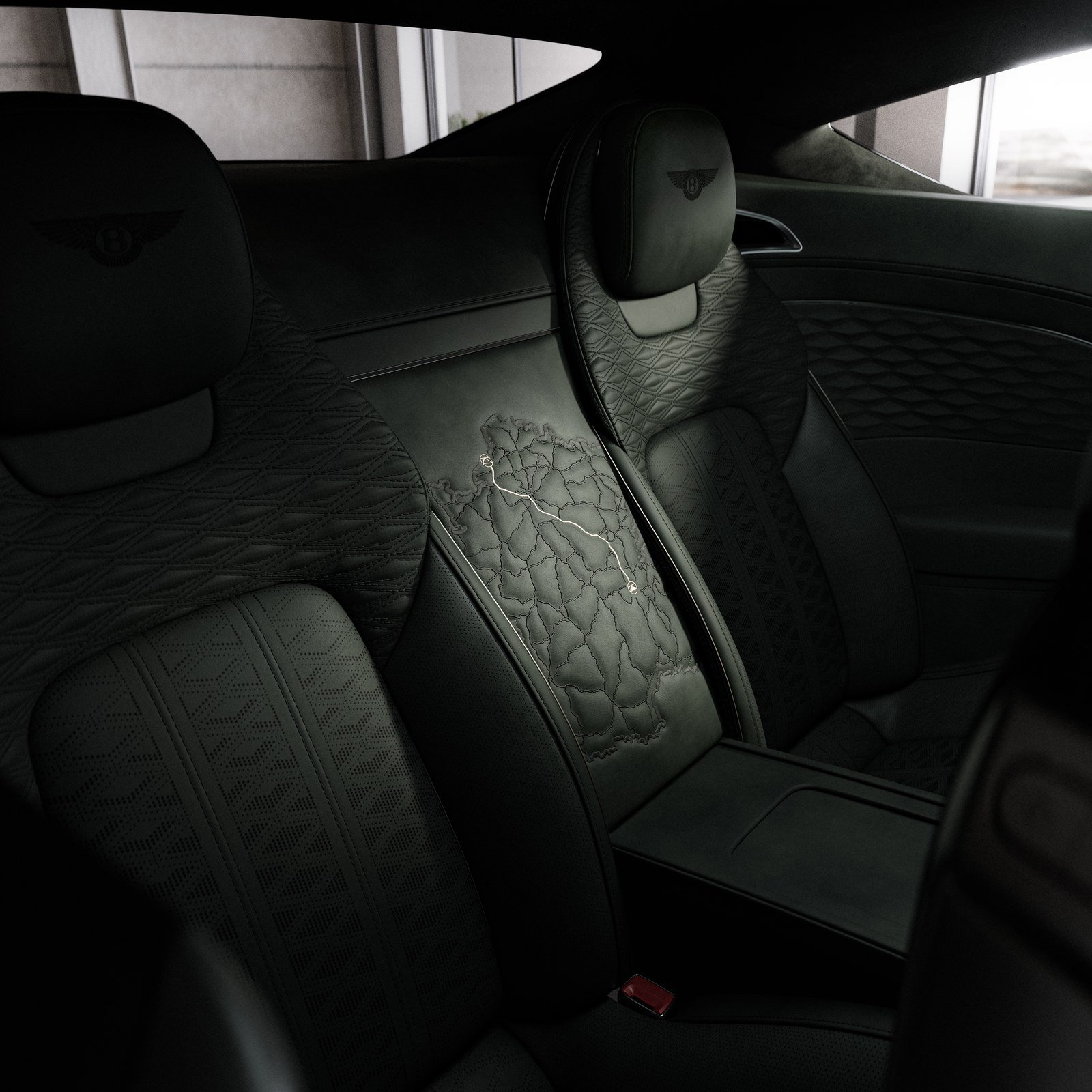
In 1924, W.O. Bentley and three colleagues were driving a disguised six-cylinder prototype from the European Grand Prix in Lyon to Dieppe when they met a rival manufacturer's test car at a fork in the road. The two crews recognized each other and raced side by side at more than 80 mph down a tree-lined Route Nationale. A century later, that duel is stitched into the back seat of 12 new Bentleys.
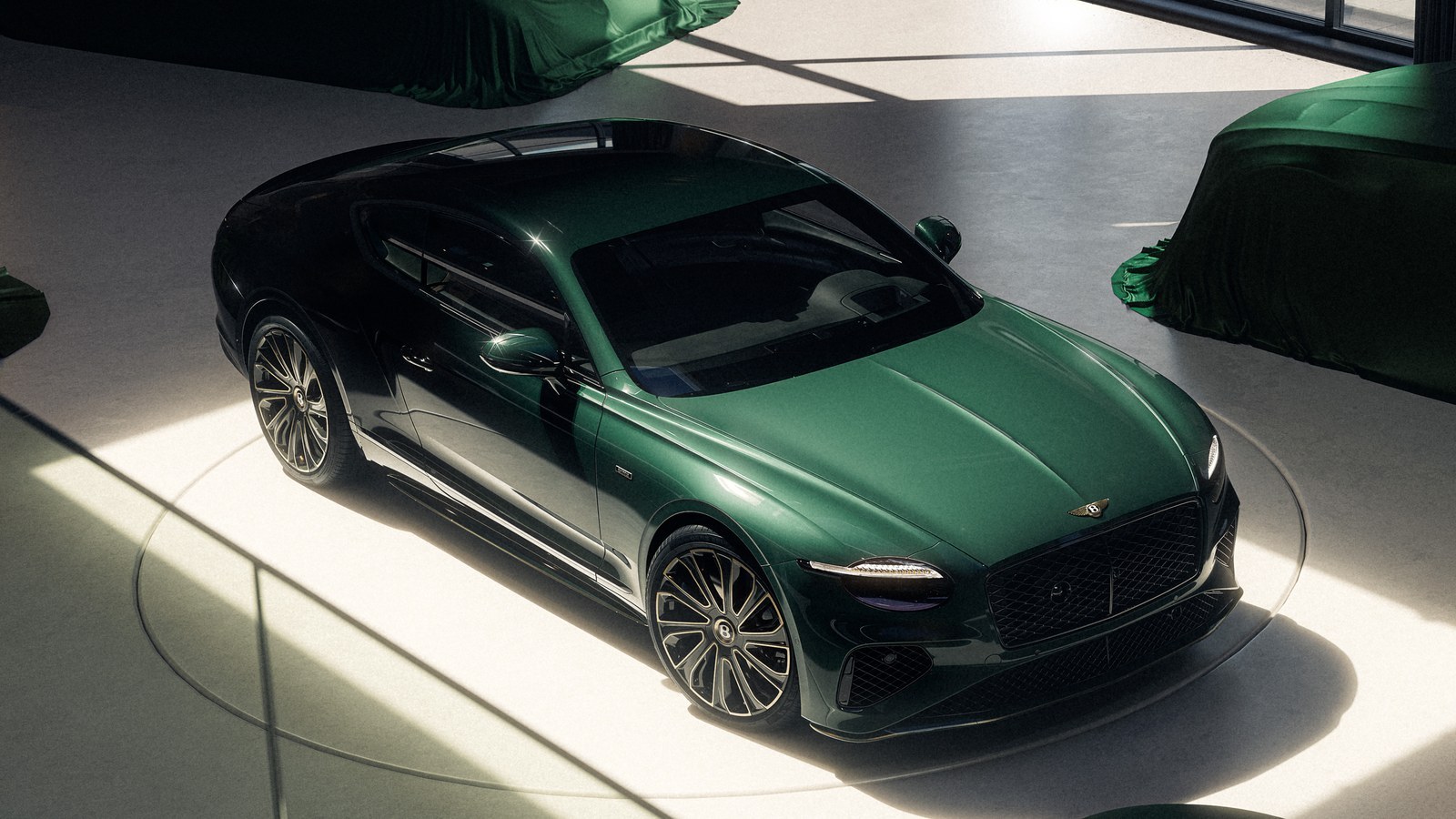
The Olympia Collection by Mulliner is a run of 12 individually numbered Continental GT coupes marking 100 years since Bentley showed the production 6½ Litre at the 1926 Olympia Motor Show in London. It follows the three-car Copernicus Collection Mulliner built for Poland earlier this fall, though this one is tied to the company's own history rather than to a single market.
The race that made the 6½ Litre
Bentley's account of the roadside race is notable for what it leaves out: the press release calls the other car a prototype from "Bentley's closest competitor" and never names it. Vintage Bentley specialists describe it as a Rolls-Royce driven by a Rolls-Royce test driver. Seven years later, in 1931, Rolls-Royce bought Bentley.
The Bentley crew won the race, but W.O. was unhappy with how narrow the margin was. Back in England, he enlarged the six-cylinder engine from 4.5 to 6.5 liters, later writing that the goal was "to stay two steps ahead." The production 6½ Litre was Bentley's second model line, following the 1921 3 Litre. In its later Speed Six form, it won Le Mans in 1929 and 1930.
Every shade of British Racing Green
Mulliner's designers first chose British Racing Green as the obvious color, then ran into a problem: there was never one standard shade. In the 1920s, paint makers mixed many versions of it, and the copper in finishes of that era degrades under UV light. Bentley says no RAL standard matches the color.
Instead of choosing one green, Mulliner painted a gradient. Its Ombré finish fades from Verdant to Midnight Emerald, which Bentley says spans every plausible version of the color. Each car takes 56 hours of paintwork.
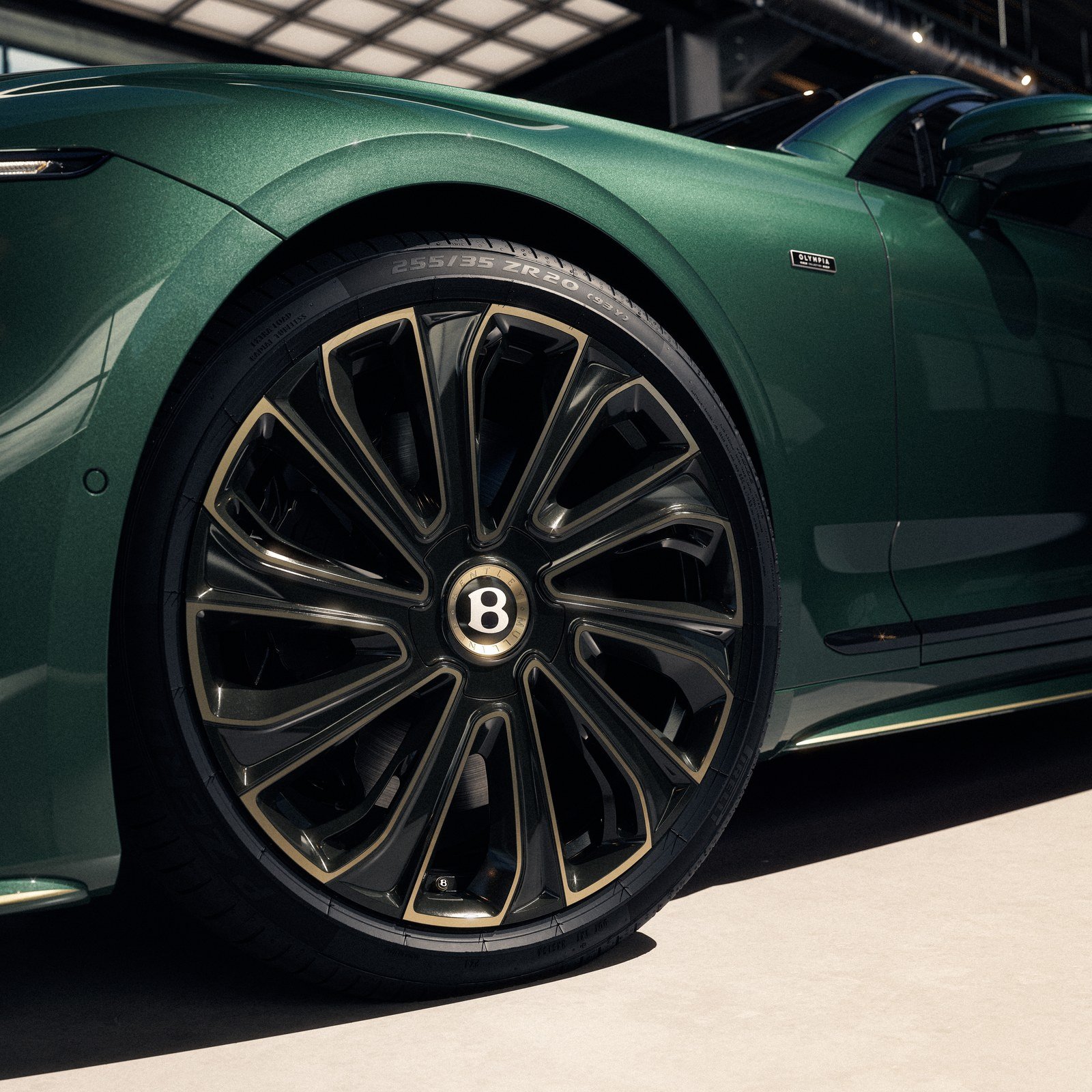
The bright trim is Champagne Gold rather than chrome. It appears on the badges and a lower-body pinstripe, matching the nickel silver once used for radiator shells. The rest of the exterior brightwork is blacked out. The 22-inch Mulliner wheels are black with gold accents meant to suggest the spoked wheels of the period.
Inside, the main hide is a Coach Green with a heritage patina, paired with Cumbrian Green and black-stained open-pore walnut. The steering wheel has Champagne Gold box stitching that recalls the rope-wrapped wheels of the 1920s. The rear ski hatch carries an embroidered map of the Lyon–Dieppe route, and the puddle lamps project an animation of the drive onto the ground when the doors open.
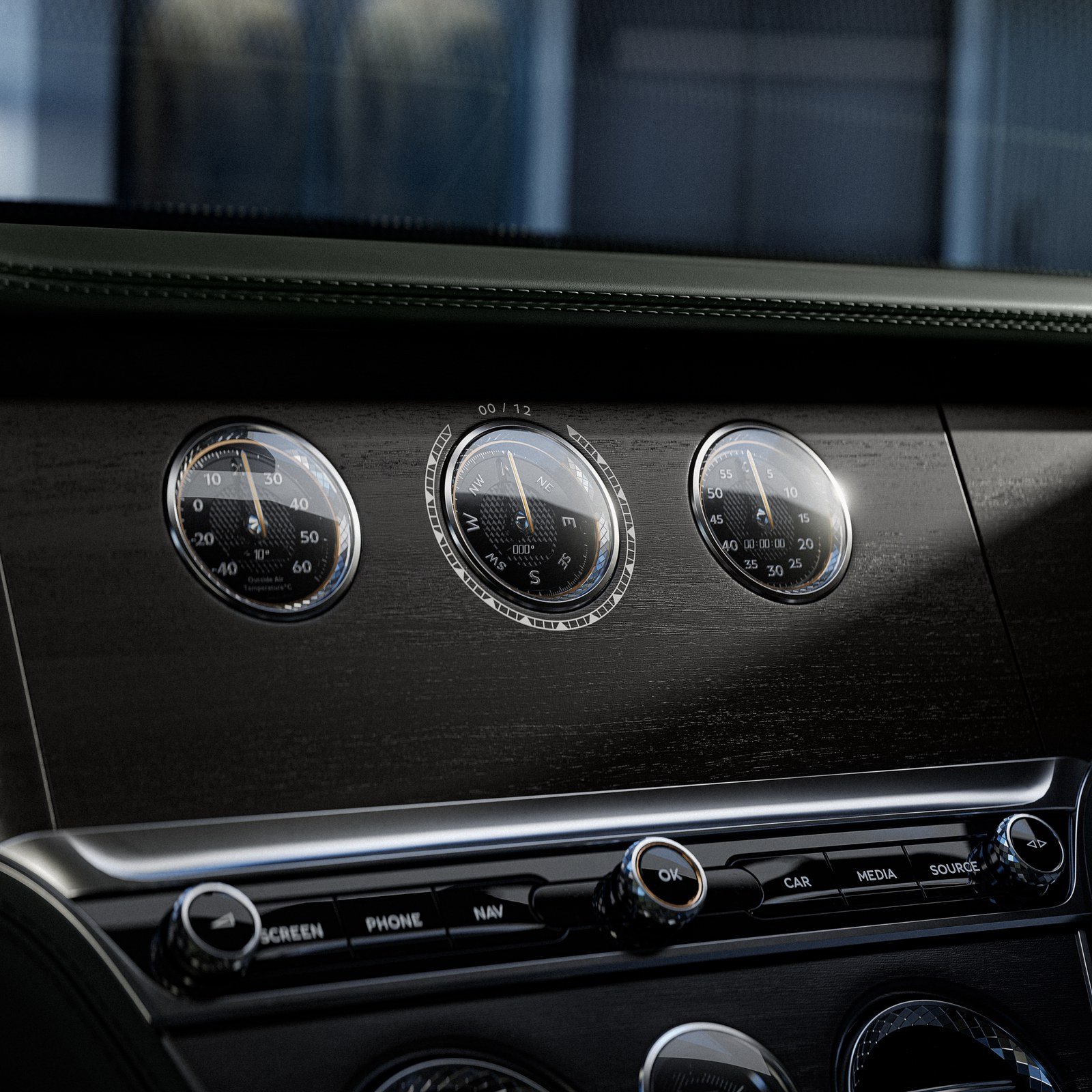
The Rotating Display's three analog dials are styled after those of the 1926 car and carry each car's number out of 12.
Each buyer also gets a fitted car cover, a book, a presentation box, and a Brooklands Watch Co. chronograph numbered to match the car. Its strap is cut from the same Coach Green leather as the interior, and two interchangeable bezels are calibrated for Brooklands' Outer Circuit and Double Twelve layouts.
What Bentley hasn't said
Bentley hasn't disclosed pricing, which Continental GT powertrain the cars use, or where they will be sold. For reference, the Continental GT S starts at $288,750 in the US including destination and uses a 671-hp plug-in-hybrid V8. Bentley hasn't said how much the Mulliner work, the paint, and the collectibles add on top of that.
Rolls-Royce has been mining its own past, too: it recently brought its first 100-mph car back on show, marking 120 years of the Silver Ghost, while Bentley's other recent heritage project, the electric Blower Jnr, has just reached its first owners.