Gas Is $1.26 a Gallon Pricier Than Last Fall. Here’s the Bill for Your Truck, Sedan, or Hybrid
AAA’s national average is $4.33, up $1.26 a gallon on last October. We ran the bill for six real vehicles and the EIA’s quarter-by-quarter forecast through March.
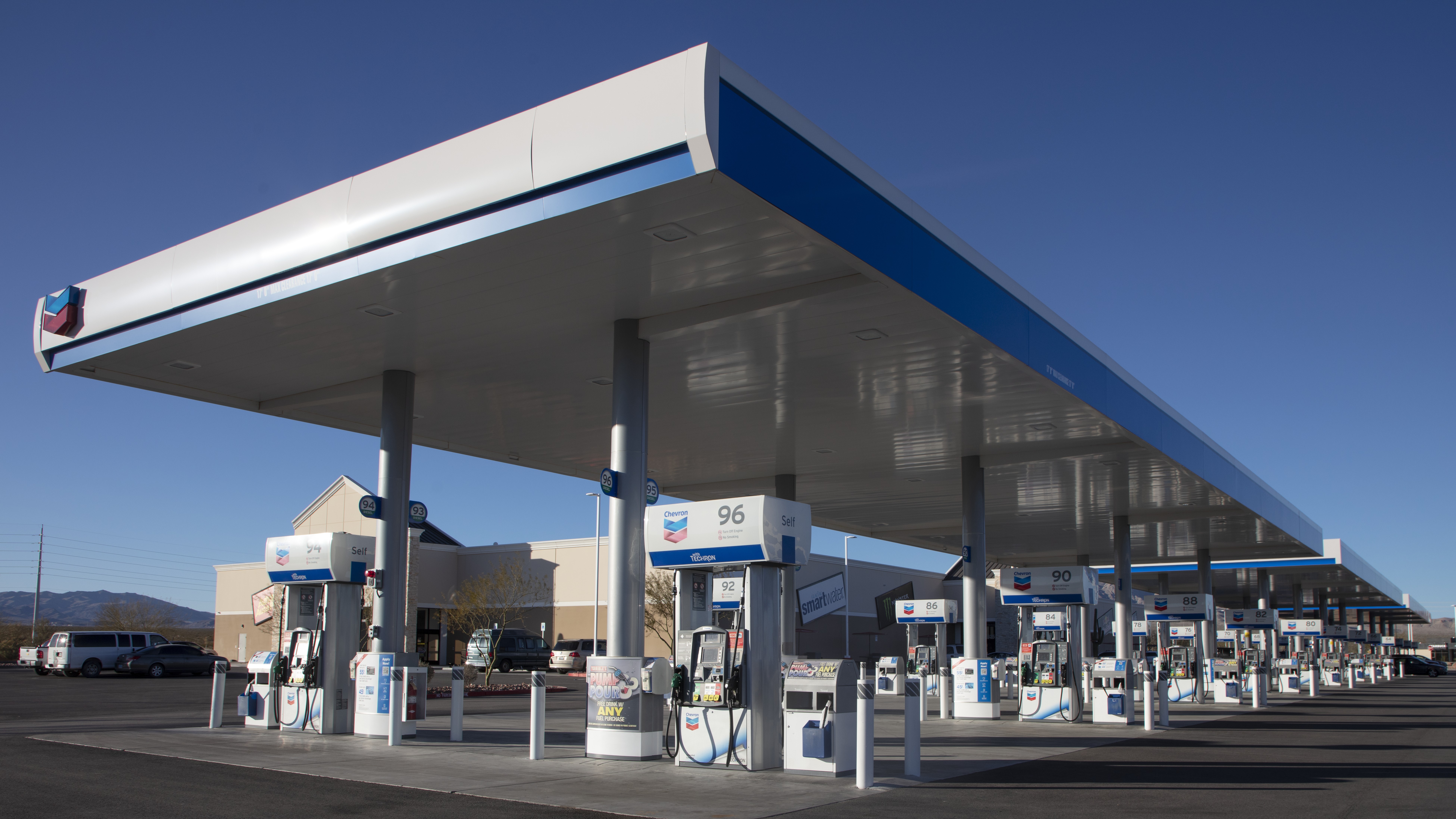
The national average for regular gasoline was $4.33 a gallon on October 14, according to AAA. A year ago it was $3.08. That 41% jump is not a summer spike that has already faded: AAA's October 8 summary notes this is the first October on record with a national average above $4, and gas has now spent more days of the year above that line than it did in 2022, by GasBuddy's count. The math below runs that against the vehicles most Americans drive, then uses the government's own forecast to show where it goes by spring.
The short version: a midsize pickup owner is paying about $900 more a year than last fall, a hybrid crossover owner about $450, and the Energy Information Administration does not expect regular to average below $4 again until the first quarter of 2027. The diesel side is worse, which is why we already ran the gas-versus-diesel math for heavy-duty trucks separately.
Where prices stand right now
AAA's live national averages on October 14 put regular at $4.33, mid-grade at $4.86, premium at $5.25, and diesel at $6.30. Every grade is down a cent or two from a week earlier, and regular has slipped five days in a row from a fall peak of about $4.37. That is a drift, not a drop. Diesel, at $6.30 against $3.66 a year ago, sits only 23 cents below the all-time high AAA logged on September 22.
The regular-gas record is still 2022's $5.02, set on June 14 of that year. What makes this fall different is duration. In 2022 the average crossed $4 in early March and fell back under it by August 11. This year it crossed in the spring and has stayed there through the summer driving season and into October, the month when prices normally ease as refiners switch to cheaper winter-blend fuel.
One caveat on the "158 days above $4" figure circulating this week: it comes from GasBuddy's Patrick De Haan, not from AAA, which publishes no day count of its own. Treat it as an analyst's tally; the underlying point, that 2026 has outlasted 2022, is not in dispute.
What a year of $4.33 gas costs you
The figures below assume 15,000 miles a year, the EPA combined ratings we have already verified in our own comparisons, and AAA's national averages for October 14, 2026 ($4.33) and the same date in 2025 ($3.08). The gap works out to about $1.26 a gallon, so the more fuel your vehicle burns, the bigger the hit.
- Midsize pickup, four-cylinder 4x4 (21 mpg): about 714 gallons a year. Fuel bill now about $3,095, versus roughly $2,200 at last year's price. That is $900 more, or about $75 a month. Both trucks in our Tacoma-versus-Ranger comparison land on this rating with four-wheel drive.
- Full-size pickup, F-150 PowerBoost hybrid 2WD (24 mpg): about 625 gallons. Roughly $2,710 now against $1,920 a year ago, a difference of about $790. A conventional V6 or V8 half-ton rated in the high teens pays well over $1,000 more; the Ranger Raptor's 17-mpg rating, for example, adds about $1,100.
- Compact sedan, Corolla with the base engine (35 mpg): about 429 gallons. Roughly $1,860 now versus $1,320, or $540 more.
- Compact hybrid SUV, RAV4 Hybrid AWD (42 mpg): about 357 gallons. Roughly $1,550 now versus $1,100, a gap of $450.
- Compact hybrid sedan, Civic Hybrid (49 mpg): about 306 gallons. Roughly $1,330 now versus $940, or $385 more.
Those are national numbers, and the national average hides a spread of more than $2.50 between states. AAA's October 8 summary listed California at $6.34 and Ohio at $3.71. For the same 21-mpg pickup, that is about $4,530 a year in California against $2,650 in Ohio, a gap of nearly $1,900 on fuel alone.
For diesel owners the arithmetic is harsher still. At $6.30 against $3.66 a year ago, every gallon costs $2.64 more, and the usual efficiency edge of a diesel no longer covers the price gap, which is the conclusion of our heavy-duty explainer. And no, the dyed diesel at the farm co-op is not the answer; our guide to red diesel on the road explains why.
Where it goes by winter, according to the EIA
The EIA's October Short-Term Energy Outlook, released October 6, expects retail gasoline to stay about where it was in September through October and then "slowly decrease with crude oil prices." Its quarterly table has regular averaging $4.15 in the fourth quarter of 2026 and $3.71 in the first quarter of 2027, with a full-year 2027 average of $3.56. Diesel is forecast at $5.81 for the current quarter, $4.92 for the first quarter of next year, and the EIA says diesel stays above $4 through all of 2027.
Translate that to a six-month winter of driving, October through March, at 7,500 miles. For the 21-mpg pickup, the EIA's path implies about $1,400 in fuel, roughly $300 more than the same six months at last year's price, but about $145 less than if gas simply held at $4.33 all winter. For the 42-mpg hybrid, the winter bill is about $700, or $150 more than last year. Relief is coming on the EIA's math, but as a slow slide rather than a reset, and the forecast's fourth-quarter average is still above $4.
What could move that forecast: the EIA attributes today's prices to Middle East supply disruptions that are drawing down global inventories, and expects relief as exports gradually resume through the Strait of Hormuz. It has Brent at $105 a barrel this quarter, $14 above last month's estimate, easing to $84 in 2027. AAA's weekly note adds a nearer wildcard in Hurricane Isaias and its potential effect on Gulf Coast refining. Faster Middle East supply pulls the number down; a refinery outage pushes it up.
What you can actually do about it
None of this changes the price per gallon, only the number of gallons, which is the one variable you control.
- Check your own rating, not the sticker you remember. The combined EPA figure for your exact drivetrain is on fueleconomy.gov; at today's prices, each mpg lost on a 21-mpg truck is worth about $150 a year.
- If you are shopping now, price the fuel line over five years, not one. At the EIA's 2027 average of $3.56, a 21-mpg truck still burns about $2,540 a year; a 42-mpg hybrid, about $1,270. That $1,270 gap is why hybrid trims pay back faster than they did in 2025, as our five-year RAV4 Hybrid, Plug-in, and bZ comparison shows in detail.
- Use the regional spread if it is on your route. With state averages ranging from $3.71 to $6.34, a fill-up on the right side of a state line can be worth $20 on a pickup's tank. Not worth a detour; worth a plan.
- Do not let the pump change your financing. An extra $75 a month in fuel is not a reason to stretch to an 84-month loan; the extra interest keeps coming for years after pump prices have moved on.
- Watch the Thursday AAA update and the November EIA outlook. If the EIA's first-quarter 2027 gasoline figure moves in the November outlook, the winter math above moves with it.
The conclusion is that $4 gas has stopped being an event and become a baseline. For most owners it costs between $400 and $1,100 a year more than last fall, and the first credible chance of the national average dropping back under $4 is, on the government's forecast, sometime after New Year's. We will update this page as the weekly AAA figures and the monthly EIA outlook land.