Hybrid vs. Plug-In Hybrid vs. EV: Which Costs Less to Own Over Five Years?
Same brand, same size, three ways to fill it up. We priced five years of fuel, loans, insurance, and depreciation on the RAV4 Hybrid, RAV4 Plug-in, and bZ — and one wins in every scenario.
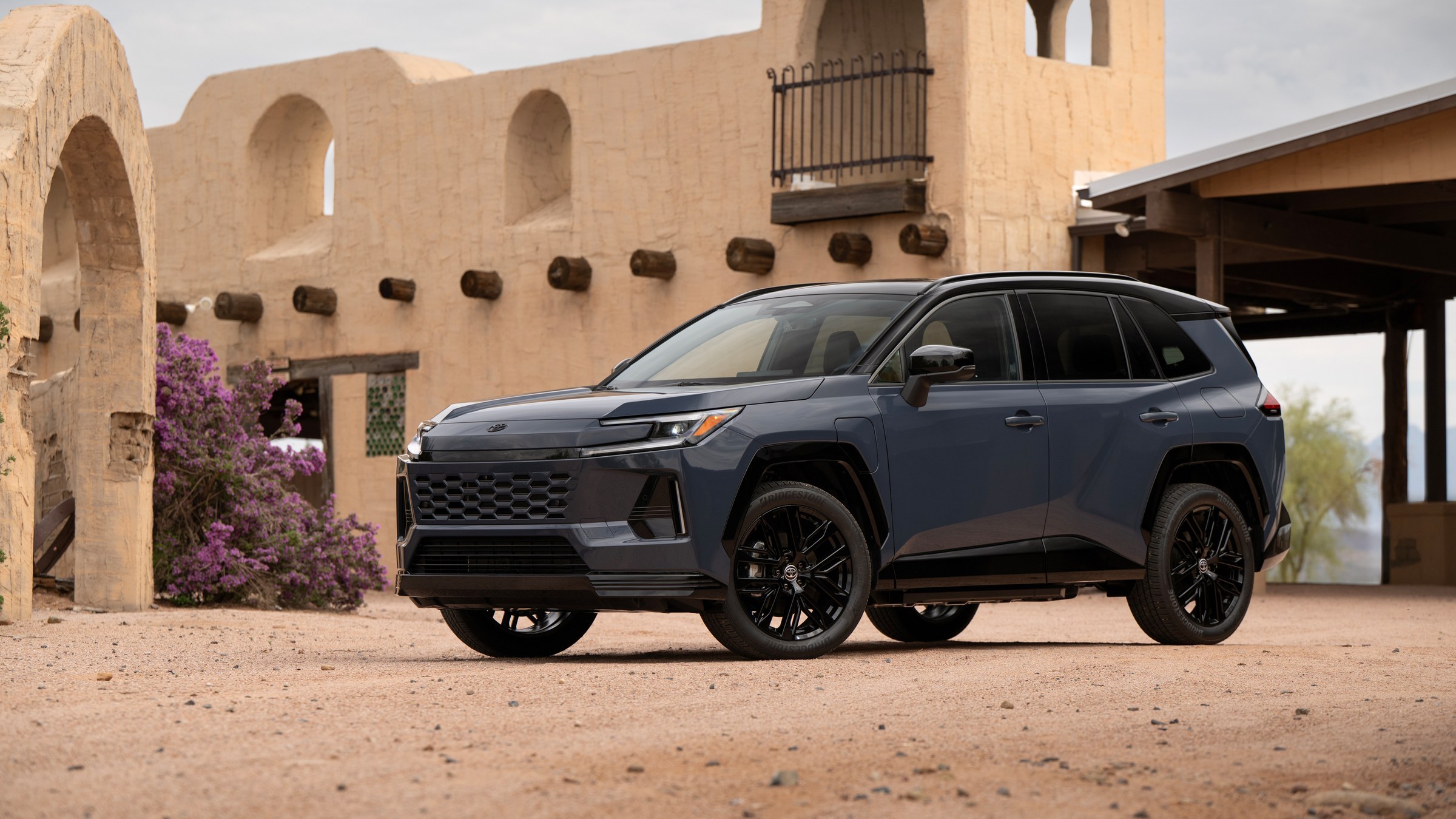
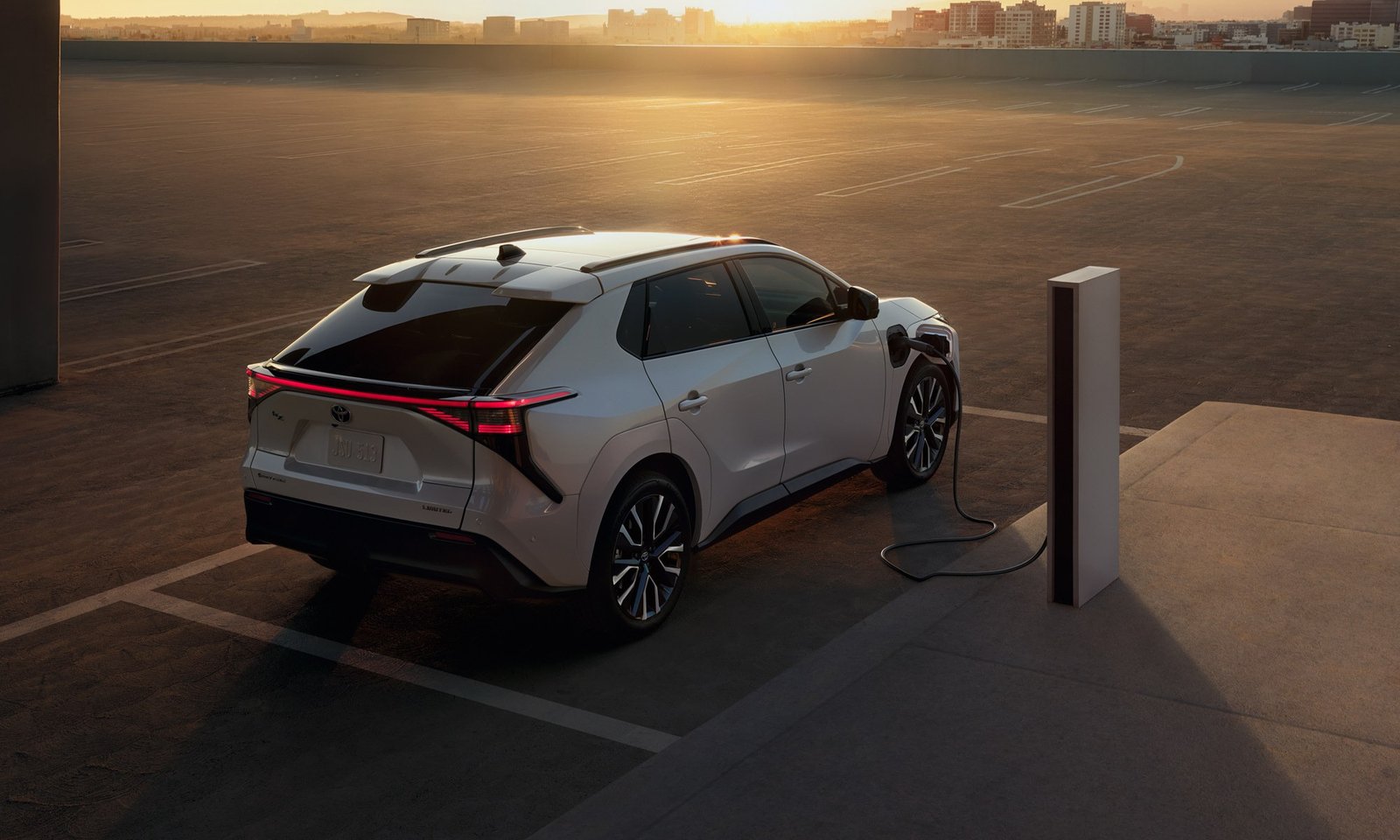
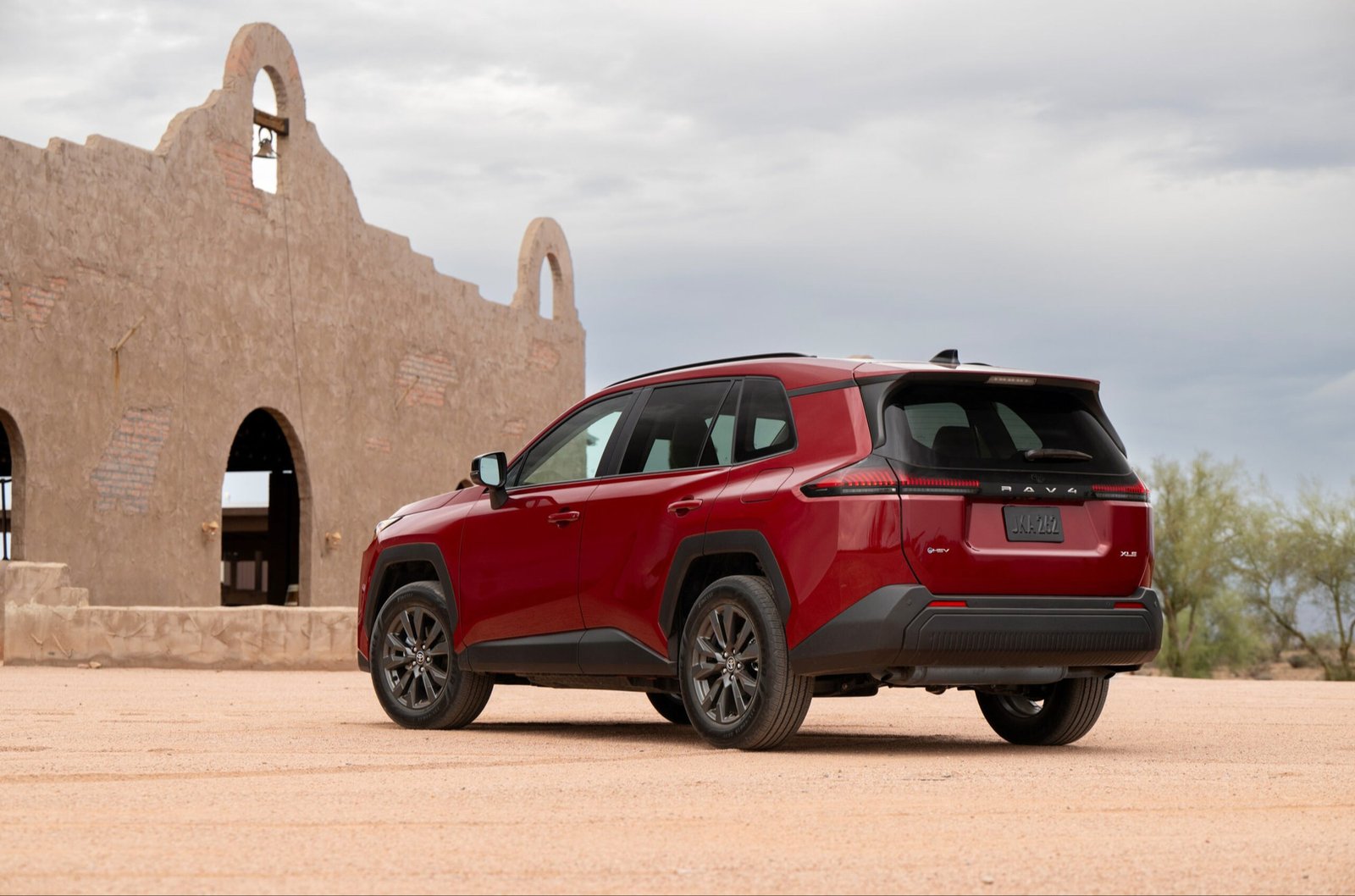
Toyota now sells the same compact SUV three ways: a RAV4 that never plugs in, a RAV4 that can, and the bZ, which only plugs in. Same brand, same size class, all-wheel drive on all three, and a price spread of just over $5,000 between them. That makes this the cleanest hybrid-versus-plug-in-versus-EV cost comparison the U.S. market currently offers, so we ran the five-year numbers on the closest-matched trims: the 2026 RAV4 Hybrid SE AWD, the 2026 RAV4 Plug-in Hybrid SE, and the 2027 bZ XLE AWD.
The short version: at today's $4.49 gas, the regular hybrid is the cheapest to own over five years in every scenario we ran, by roughly $4,100 to $6,600. The plug-in hybrid only justifies its premium if you charge it nearly every night, and even then it does not catch the hybrid. The bZ has the lowest energy bill of the three by a wide margin but gives most of it back in depreciation, at least by the class averages we have to work with. The full math, and everything it rests on, is below.
What we are comparing, and the prices we used
All prices are MSRP plus Toyota's destination charge, with no lease offers, dealer markups, or discounts. The RAV4 Hybrid SE starts at $34,700 in front-drive form; all-wheel drive adds $1,400, so the AWD version is $36,100 plus $1,450 destination, or $37,550. The RAV4 Plug-in Hybrid SE is all-wheel drive as standard at $41,500 plus $1,450, or $42,950. The 2027 bZ XLE AWD is $39,980 plus a $1,595 destination fee, or $41,575. The bZ figure is the one to watch: Toyota's press release lists MSRPs without the fee, and the $1,595 comes from Electrek's report on the price sheet, so confirm it on the window sticker.
Efficiency comes from the EPA where the EPA has published it. The RAV4 AWD SE is rated at 42 mpg combined on fueleconomy.gov, and the 2027 bZ AWD at 120 MPGe, 28 kWh per 100 miles, and 288 miles of range. The plug-in is the exception: as of September 26, fueleconomy.gov still has no entry for the 2026 RAV4 Plug-in Hybrid, so we used the figures Toyota publishes as EPA estimates on its own site, 40 mpg on gasoline, 101 MPGe on electricity, and 54 miles of electric range for the SE. Toyota's launch materials said 52 miles; the consumer site now says 54. We used 54 and will update when the official rating posts.
The five-year table
Every line item below is either computed from the inputs above or taken from AAA's 2026 Your Driving Costs study, which averages five top-selling models per category over five years and 75,000 miles. The PHEV column uses two charging scenarios, because that single choice moves its total by more than any fuel-price swing.
| 2026 RAV4 Hybrid SE AWD | 2026 RAV4 Plug-in Hybrid SE | 2027 Toyota bZ XLE AWD | |
|---|---|---|---|
| Price incl. destination | $37,550 | $42,950 | $41,575 |
| Powertrain | 2.5L hybrid, 236 hp, AWD | 2.5L plug-in hybrid, 324 hp, AWD, 22.7-kWh battery | Dual-motor EV, up to 338 hp, AWD, 74.7-kWh battery |
| EPA efficiency | 42 mpg combined (fueleconomy.gov) | 40 mpg / 101 MPGe (Toyota's EPA estimate; not yet on fueleconomy.gov) | 120 MPGe, 28 kWh/100 mi (fueleconomy.gov) |
| Electric range | None | 54 mi (Toyota estimate) | 288 mi (EPA) |
| Energy cost per year, 15,000 mi | $1,604 | $1,154 charged nightly / $1,684 never plugged in | $769 |
| Loan payment (15% down, 60 mo, 7.0% APR) | $632/mo | $723/mo | $700/mo |
| Interest paid over five years | $6,003 | $6,866 | $6,646 |
| Depreciation, five years (AAA compact-SUV class average) | $19,225 | $22,860 (our midpoint between AAA's hybrid and EV figures) | $26,490 |
| Maintenance, repair, tires, five years (AAA) | $7,530 | $7,270 (midpoint) | $7,010 |
| Full-coverage insurance, five years (AAA) | $11,470 | $11,430 (midpoint) | $11,385 |
| License, registration, taxes, five years (AAA) | $3,695 | $4,175 (midpoint) | $4,655 |
| Level 2 home charger, one-time | $0 | $1,700 if charged nightly / $0 | $1,700 |
| Five-year total, 12,000 mi/yr | $54,337 | $58,918 charged nightly / $59,336 never plugged in | $60,962 |
| Five-year total, 15,000 mi/yr | $55,941 | $60,072 charged nightly / $61,020 never plugged in | $61,731 |
| Cost per mile at 15,000 mi/yr | 74.6¢ | 80.1¢ / 81.4¢ | 82.3¢ |
| Federal tax credit | $0 | $0 | $0 |
Base assumptions: regular gasoline at $4.49 per gallon, AAA's national average on September 25; home electricity at 18.31 cents per kWh, the EIA's U.S. residential average for July 2026; a 60-month loan at 7.0 percent APR, Edmunds' August average for new cars, with 15 percent down; and a $1,700 Level 2 charger installation, Qmerit's 2026 average. The "charged nightly" plug-in scenario assumes 69 percent of miles on electricity, in line with the utility-factor curve the EPA applies to a PHEV with roughly 50 miles of range. Fuel math: miles divided by mpg times price for gasoline; miles times kWh per 100 miles divided by 100 times price for electricity, using the EPA's wall-to-wheel consumption, which already includes charging losses.
Where the money actually goes
Energy is the line everyone argues about, and it is the smallest of the big four. At 15,000 miles a year the bZ saves $4,173 in fuel over five years versus the hybrid, and the nightly-charged plug-in saves $2,247. Those are real savings. They are just smaller than the two lines that push the other way.
The first is the purchase price itself, which shows up as $640 to $860 more in loan interest and higher registration taxes for the two plug-in models. The second, and by far the largest, is depreciation. AAA's 2026 compact-SUV data has an EV losing $5,298 a year in value against $3,845 for a hybrid, a gap of more than $7,000 over five years. That single line is bigger than the bZ's entire fuel advantage. It is also the number we trust least: AAA's figures are averages for five top-selling models in each powertrain, not a forecast for the bZ, whose 2027 pricing was only announced in August and whose resale curve is still taking shape. If the bZ depreciated at $4,140 a year or less, it would tie the hybrid at 15,000 miles. Nothing in the current used market suggests it will, but that is the assumption to revisit.
The plug-in's problem is different. Its extra $5,400 up front buys 88 more horsepower and the option of a gasoline-free commute, but the hybrid's 42 mpg is so close to the PHEV's 40 mpg in gas mode that an unplugged RAV4 Plug-in costs slightly more to fuel than a RAV4 Hybrid. Charged nightly at the national electricity rate, the plug-in's energy bill drops by about $530 a year, which is roughly the price of the charger installation every three years. A buyer who can charge at work or on a 120-volt outlet and skips the Level 2 install improves the nightly scenario by $1,700; a buyer who plugs in twice a week should use the "never plugged in" column and treat any electric miles as a bonus.
What changes with gas prices and mileage
Gas is up sharply this year: AAA's national average was $3.16 a year ago and $4.10 a month ago. So we re-ran the 15,000-mile case at $3.50 and $5.50. At $3.50 the hybrid's lead grows to about $5,300 over the nightly-charged plug-in and $7,550 over the bZ, and the unplugged PHEV actually edges the plugged-in one because the charger no longer pays for itself. At $5.50 the bZ overtakes the unplugged plug-in for the first time, but it still trails the hybrid by about $4,000. For the bZ to match the hybrid over five years at the national electricity rate, gasoline would need to average $7.75 a gallon; for the nightly-charged plug-in, about $8.00.
Mileage helps the plug-in models, but slowly. Going from 12,000 to 15,000 miles a year narrows the bZ's gap to the hybrid from $6,625 to $5,790. High-mileage drivers who can charge at home are the natural EV case, and even for them the gap closes rather than flips at these prices.
The state-incentive exception
The federal $7,500 credit is gone for all three, as our look at the year without it lays out, so state programs are the only public money on the table. California's MyFirstEV rebate, launched in August, takes $3,500 off a new zero-emission vehicle priced under $50,000 at the point of sale for first-time ZEV buyers, and Toyota is among the 13 automakers signed up, with its dealers slated to join in September. That would cut the bZ's national-average gap to the hybrid from $5,790 to $2,290. The catch is California's own electricity: at the state's 33.61-cent residential average, the bZ's five-year energy cost nearly doubles to $7,058, the rebate is eaten, and the hybrid finishes about $5,500 ahead. Under that rate the nightly-charged plug-in also costs more to run than the unplugged one, so a California PHEV buyer without a cheap overnight tariff should not count on the plug at all. Whether MyFirstEV covers plug-in hybrids is a detail to confirm with the dealer and the Air Resources Board; the program's own language refers to zero-emission vehicles.
Colorado's state credit is $750 in 2026 for new EVs and plug-in hybrids under $80,000, which applies to both the bZ and the RAV4 Plug-in and moves the totals by less than a tank of gas a year. The Colorado Energy Office's published schedule raises it to $2,000 for vehicles under $50,000 starting January 1, 2027, so a Colorado buyer with a bZ on the shortlist has a reason to wait three months.
What we don't know
- The official EPA rating for the 2026 RAV4 Plug-in Hybrid. Toyota's 40 mpg / 101 MPGe / 54-mile figures are the manufacturer's EPA estimates; if the final label differs, the PHEV rows change.
- What these three specific vehicles will actually be worth in 2031. AAA's depreciation lines are class averages by powertrain, and our PHEV figures are a midpoint we interpolated, not AAA data.
- Where gas and electricity go from here. Both inputs are dated to September 2026 and both moved by double-digit percentages in the past year.
- Transaction prices. RAV4 supply remains tight, as we covered in our RAV4 shortage explainer, while the bZ is the newer, lower-volume model whose real transaction prices we have no data on. Real-world discounts could easily be worth more than the fuel differences here.
Which one should you buy
If the question is purely which one costs less to own over five years, the RAV4 Hybrid wins in every scenario we can construct from current data, and it is not close. The only inputs that flip the result are $7.75 gasoline or a bZ that holds its value like a hybrid, and neither is on the table today.
That is not the same as saying the other two are bad buys. The RAV4 Plug-in Hybrid is the right choice for a driver who will charge nearly every night, wants 324 hp, and is willing to pay roughly $4,000 over five years for a commute that rarely uses gasoline. It makes no financial sense for anyone who will not plug in. The bZ is the pick for a household that already charges at home cheaply, drives a lot, and values the lowest running cost and the quietest drive; its $770-a-year energy bill is a real thing to enjoy, and a California first-time buyer with a cheap overnight rate gets closer to break-even than anyone else. Everyone else should take the hybrid, and if the RAV4 wait is too long, our CR-V Hybrid comparison and Tucson-versus-RAV4 comparison cover the alternatives. For a pure-EV shortlist, our Model Y-versus-Ioniq 5 comparison runs the same kind of numbers on the two best sellers.
Prices and ratings verified September 26, 2026. We will update this comparison when the EPA publishes the RAV4 Plug-in Hybrid's official rating, when Toyota announces 2027 RAV4 pricing, or if gasoline moves more than 50 cents from the $4.49 used here.