GM Is Building an Eyes-Off System for a Market Mercedes Just Abandoned
With Mercedes pausing Drive Pilot, no eyes-off system is on sale in the US. GM's automated driving lead explains the data strategy meant to fill that gap by 2028.
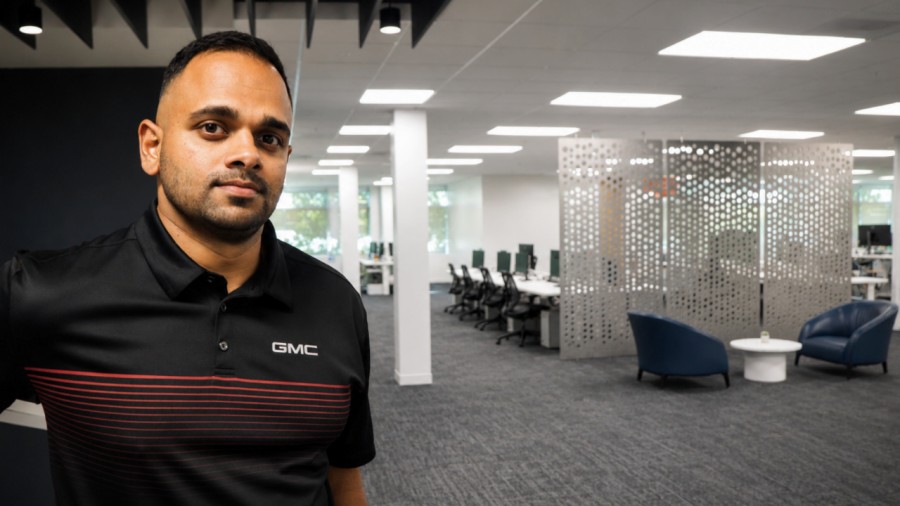
Right now, no automaker sells a car in the United States that legally lets you take your eyes off the road. Mercedes-Benz, the only company that ever did, paused its Drive Pilot system in January — and General Motors is building its eyes-off technology for exactly that empty market, targeting a 2028 launch on the Cadillac Escalade IQ.
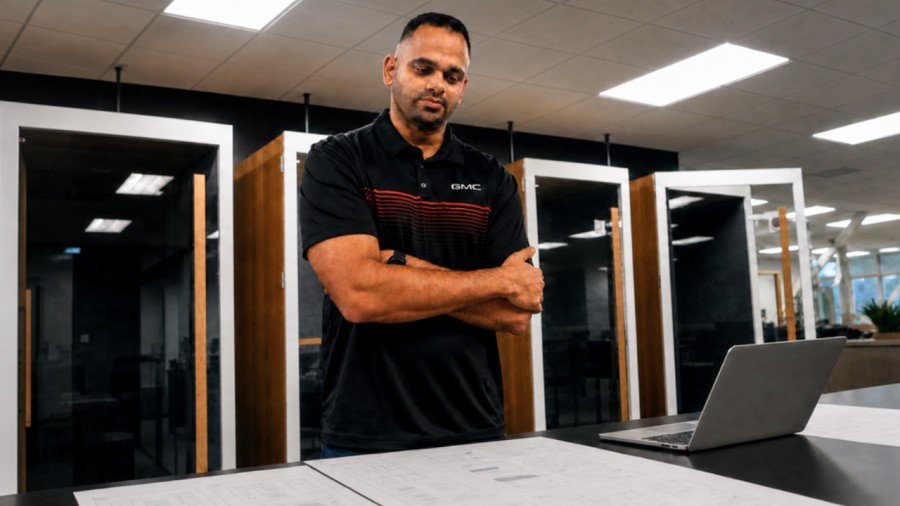
John Kaychi, GM's Senior Group Product Manager for Automated Driving, leads the product team behind the system, and the automaker has now detailed how it plans to prove the technology is ready. Validation will draw on three data streams: telemetry from production vehicles already in customer hands, a next-generation development fleet built for high-precision sensor capture, and synthetic simulation environments designed to cover rare edge cases — the long tail of sudden weather, road changes, and unpredictable human traffic.
Kaychi frames retail cars as the industry's third wave of autonomy, after ridesharing changed behavior and robotaxis proved the technology. Retail, he argues, is where autonomy gets tested at scale — and where trust, not capability, decides the outcome.
"You can have the best technology in the world. But if customers don't trust it, it won't stick."
Why the market is empty
Mercedes proved that shipping eyes-off driving and making it stick are different problems. Drive Pilot, launched in late 2023 on the S-Class and EQS, was the first and only Level 3 system certified for US retail buyers — but it worked only below 40 mph, in traffic jams, on mapped highways in California and Nevada. Reports point to modest demand, expensive lidar hardware, and supplier trouble with Luminar as reasons the refreshed S-Class dropped it. Mercedes says it will return to eyes-off driving later, with a more capable system.
That's the cautionary tale GM is walking into. The company hasn't disclosed its system's speed range or operating conditions yet, but it says the rollout will proceed domain by domain, validating each environment against real-world data before expanding to the next — a structure meant to avoid launching something too narrow to matter.
What GM brings that Mercedes didn't have
GM's case rests on scale. Super Cruise has been in production since 2017 across 23 models, with roughly 600,000 miles of mapped hands-free roads in North America and more than 700 million hands-free miles logged without a reported crash attributed to the system, per GM. Cruise, folded into the automaker after GM wound down its robotaxi business, adds AI models trained on millions of driverless miles plus its simulation framework. Kaychi's own résumé runs through that robotaxi wave: at Zoox, GM says, he helped launch the company's first employee ridesharing service on San Francisco's steep hills and dense corridors.
GM committed to the 2028 date at its GM Forward event last October, confirming a lidar-radar-camera sensor set rather than a vision-only approach, with turquoise lighting signaling when the car is in control. The Escalade IQ, currently starting around $127,500, gets it first. Pricing for the feature — and whether it keeps the Super Cruise name — remains undisclosed. Until then, the eyes-off market in America stays exactly as Mercedes left it: empty.