Honda Recalls 635,808 Acura and Pilot Models as Software Can Cut Power Steering
A Bosch-supplied software error can force the steering system into failsafe mode. Dealers will reflash it for free, but owner letters won't arrive until mid-December.
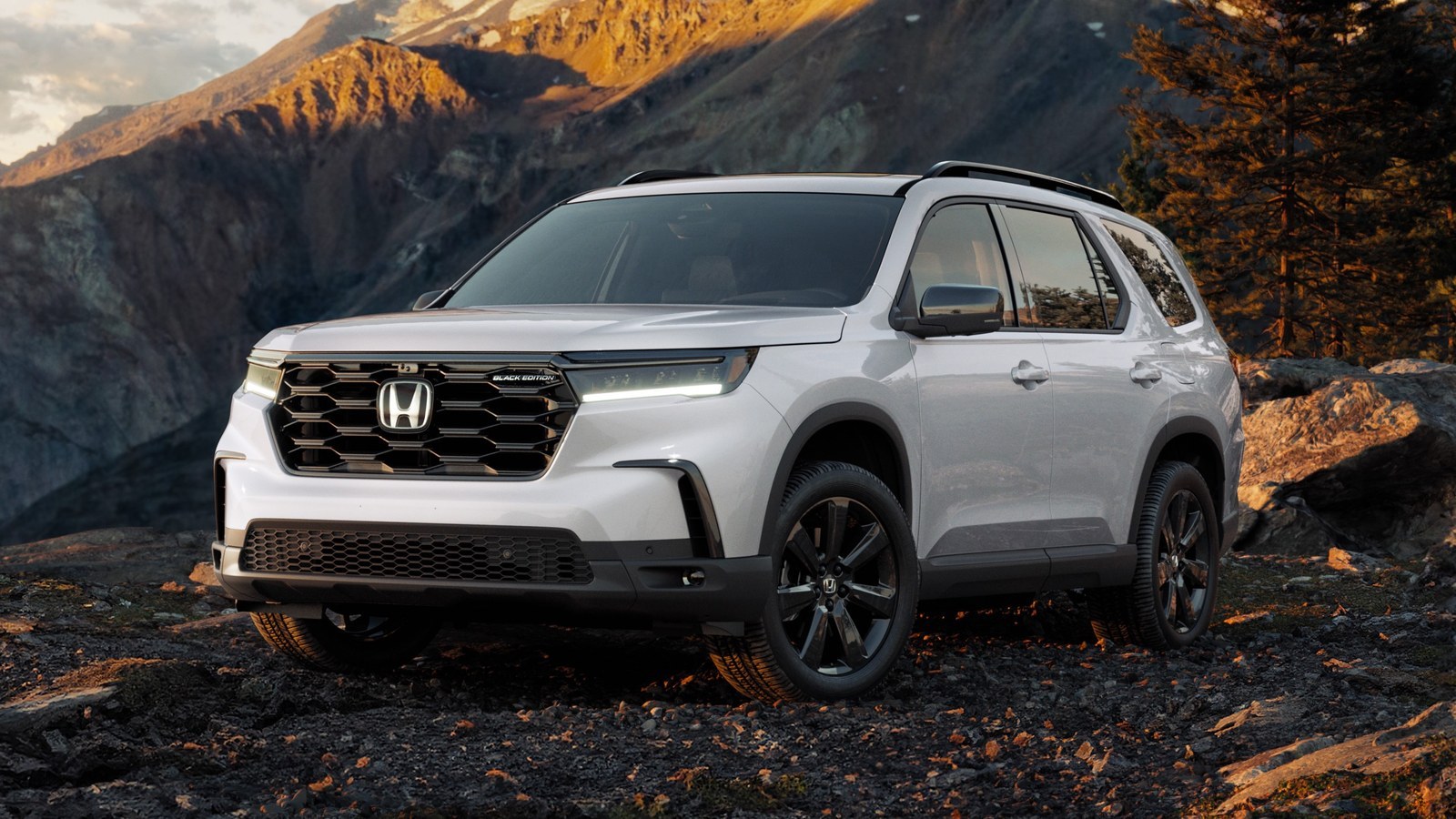
Honda is recalling 635,808 Acura TLX sedans and Acura MDX and Honda Pilot SUVs in the U.S. because a software error can switch off power steering assist while the vehicle is moving. The fix is a free reprogramming of the steering control unit at a dealer, but owner letters won't go out until December 14.
The campaign, NHTSA recall 26V-721, covers 2021–2025 Acura TLX, 2022–2024 Acura MDX, and 2023–2025 Honda Pilot models. The Pilot makes up most of it with 383,110 vehicles, followed by 177,100 MDX and 75,598 TLX, according to Honda's Part 573 safety recall report. Honda estimates that every vehicle in the population has the faulty software. The new campaign dwarfs Honda's October recall of 4,804 tire repair kits.
A divide-by-zero bug
The steering software came from supplier Robert Bosch Automotive Steering, and Honda says it was built wrong in two ways. A calculation tied to the Driver Attention Monitor's road-condition compensation can, under specific conditions, attempt a floating-point division by zero and trigger an internal error. The system was then configured to answer that error by disabling power assist.
When it happens, the EPS warning lights come on in the instrument cluster and the wheel suddenly takes much more effort to turn. The steering still works mechanically, but Honda acknowledges the heavier effort can reduce controllability and raise the risk of a crash. The company says the fault shows up only in certain conditions while the vehicle is traveling straight.
Loss of steering assist has been a recurring recall theme this fall: in October, Ram recalled 265,512 ProMaster vans over a power steering fault.
Four years to pin it down
Honda's chronology shows how long the bug stayed hidden. The first report arrived on November 29, 2021. More came in between August 2023 and August 2025, but returned parts kept testing clean because dealers or the supplier had deleted the error codes. Bosch finally identified the failure through analysis of returned parts in August 2025, and Honda reproduced it in December 2025 using dashcam footage.
Honda decided to recall the vehicles on October 22, 2026. By then it had logged 146 warranty claims and one injury report linked to the issue, with no reported deaths. The company says the affected vehicles are no longer in production.
This is not the first software campaign for this trio. In January 2025, Honda recalled 294,612 Acura MDX Type S, Acura TLX Type S, and Honda Pilot vehicles (NHTSA 25V-031) because a fuel injection control unit error could stall the engine. And in 2023, a separate campaign (23V-735) replaced the steering rack on 519 Pilots over a loose ball bearing.
What owners should do
Honda notified dealers on October 30. VINs became searchable on NHTSA's recall lookup on November 11, and owners can call Honda customer service at 1-866-784-1870; Honda's own campaign codes are KQB and TQA. NHTSA hasn't attached a do-not-drive or park-outside advisory to this recall.
The long gap between dealer notice and owner letters is the kind of delay NHTSA's push to raise recall completion rates is meant to address. Owners who don't want to wait for mail can check their VIN now and book the update.
Other recent recalls
- Lincoln Navigator, 36,994 vehicles (NHTSA 26V-691). On 2025–2027 models, the rear audio control module can trigger the chauffeur-seat function and move or recline the front passenger seat with no input. Dealers will update software to disable chauffeur mode, and owner letters are due in November.
- Ford Explorer Police Interceptor, 33,578 vehicles (NHTSA 26V-726). On 2026–2027 models, a phantom "Global On" command can switch on the overhead map lights and keep them from turning off, which fails federal safety standard FMVSS 101. Dealers will replace or inspect the overhead console. The Explorer is also the subject of a federal probe into side airbag burns.