House China Committee Gives Mercedes-Benz Until Dec. 1 to Detail Its Chinese Shareholders
A bipartisan letter seeks the automaker's agreements with BAIC, Geely founder Li Shufu, and Chinese tech suppliers. Mercedes says it will cooperate and that its shareholders have no management role.
The House Select Committee on China has given Mercedes-Benz until December 1 to turn over its agreements with its two largest shareholders, both of them Chinese, and with a list of Chinese technology suppliers. The committee announced the bipartisan inquiry on November 17.
The request lands while Congress weighs whether to turn the Commerce Department's Connected Vehicle Rule into permanent law. The version a Senate committee approved in July caps Chinese ownership of an automaker at 15%.
Who signed, and what they asked for
The seven-page letter is dated November 16 and signed by Chairman John Moolenaar, a Michigan Republican, and Ranking Member Ro Khanna, a California Democrat. It is addressed to Jason Hoff, CEO of Mercedes-Benz North America, and Ola Källenius, chairman and CEO of Mercedes-Benz Group.
The lawmakers focus on two holders: state-owned Beijing Automotive Group (BAIC) and Geely founder Li Shufu. According to the letter, each owns a stake approaching 10%, together nearly 20% of the company, and the two cast about one-third of the votes at shareholder meetings. The committee writes that the ownership concern is compounded by "the operational influence they appear to exert" over the company.
The letter contains seven numbered requests, most with several sub-parts. Among them:
- All agreements with BAIC and with Li or Geely entities, including joint ventures such as Beijing Benz and smart, and the 2023 arrangement under which both holders agreed to stay below 10% during a share buyback.
- A timeline of Mercedes' dealings with both shareholders, and a description of what access they have to non-public records, technology, internal meetings, and senior executives.
- Five years of correspondence between senior Mercedes leaders and the two shareholders.
- Narrative descriptions of Mercedes' relationships with lidar maker Hesai, Tencent, Momenta, and Afari/Chongqing Qianli, including any use of their technology outside China, plus its use of Chinese-made engines.
- A model-by-model list of Chinese parts and components in every Mercedes sold or built in the U.S.
- A record of meetings between Mercedes leadership and senior Chinese officials since 2010.
The committee also told the company to preserve all related documents and asked for an in-person meeting with Hoff.
The letter does not cite the Commerce rule by name, and it contains no specific request about American customers' vehicle data. It also accuses Mercedes of having opposed legislation on Chinese connected vehicles.
What Mercedes says
Mercedes-Benz said it had received the letter and would cooperate, according to a company statement reported by Reuters. The automaker said it operates independently under its board of management. "Our shareholders have no management board seats and no management authority," the statement said. It also rejected the suggestion that it opposes U.S. national security measures.
Geely did not immediately respond to Reuters' request for comment.
The rule and the bill behind the letter
Two separate measures are in play. The Commerce rule, in force since March 2025, bars Chinese- and Russian-linked connectivity and automated-driving software from model year 2027 and the related hardware from model year 2030. It also bars new-vehicle sales by manufacturers with a sufficient nexus to either country. It has already ended Polestar's U.S. sales.
The Connected Vehicle Security Act would write a stricter version into statute. The Senate Commerce Committee approved it on July 22 with that 15% cap, which also covers ownership tied to Russia, Iran, and North Korea. The full Senate has not voted. Sen. Bernie Moreno, the bill's Republican co-sponsor, has said the final text will ensure Mercedes is not banned, Reuters reported.
Some of the partners named in the letter already appear in Mercedes' own announcements. When the company detailed its hands-free driving system for the U.S. this week, it described NVIDIA as its lead partner in Western markets; the version sold in China was developed with Momenta. The smart brand, meanwhile, is one of the China-engineered products Western automakers don't sell in America.
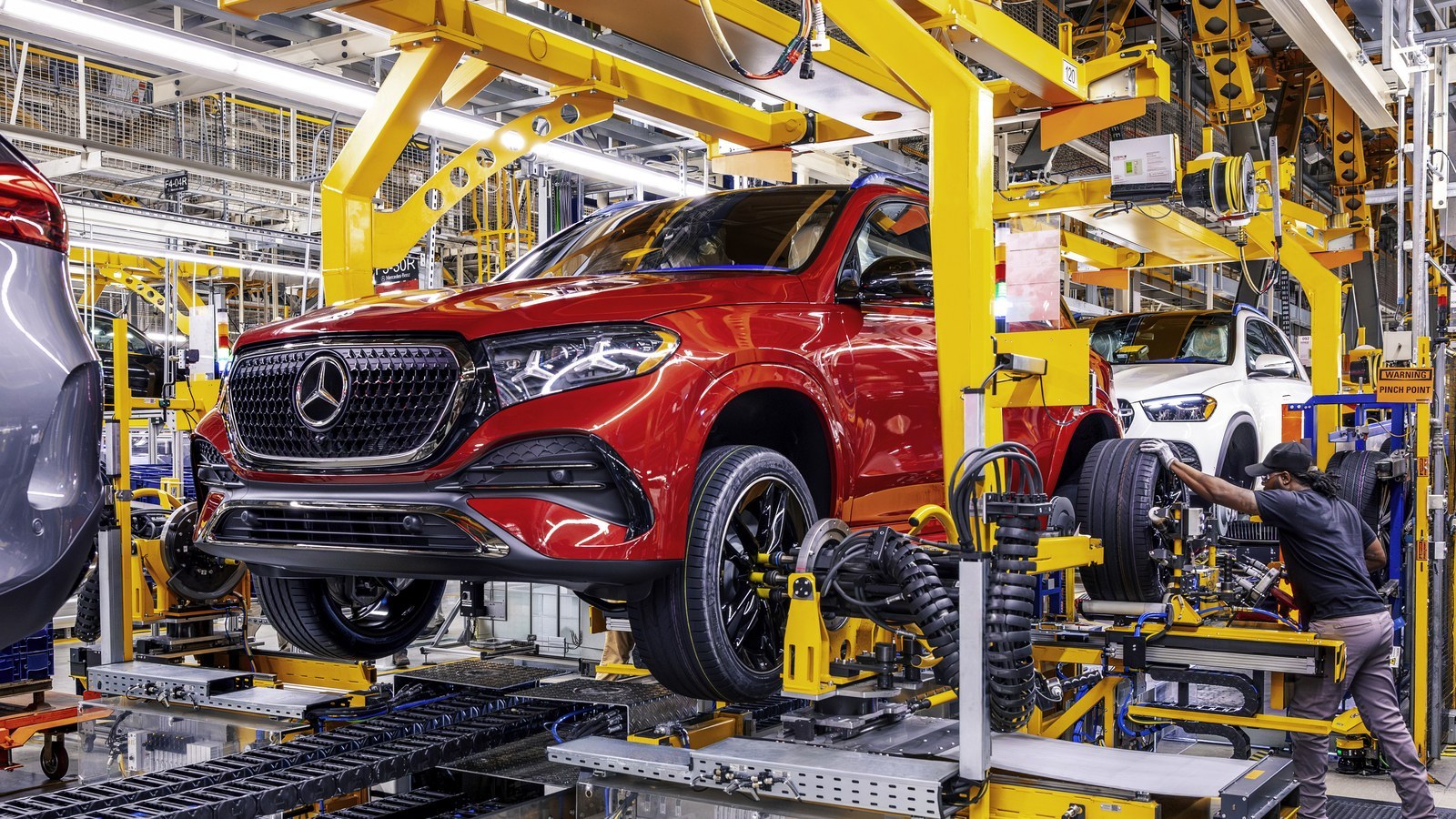
Mercedes builds the GLE, GLS, and its electric EQE and EQS SUVs in Vance, Alabama, where it recently pushed GLC production back to 2030.
What happens next
December 1 is the date the committee set for answers and documents. A committee letter is a request, not a subpoena, and the lawmakers have not said what they will do if the response falls short. Mercedes has not said whether it will publish its reply, and no date has been announced for the meeting with Hoff or for a Senate vote on the bill.