Mercedes Says AI Will Cut 17 Months From Developing a New Car
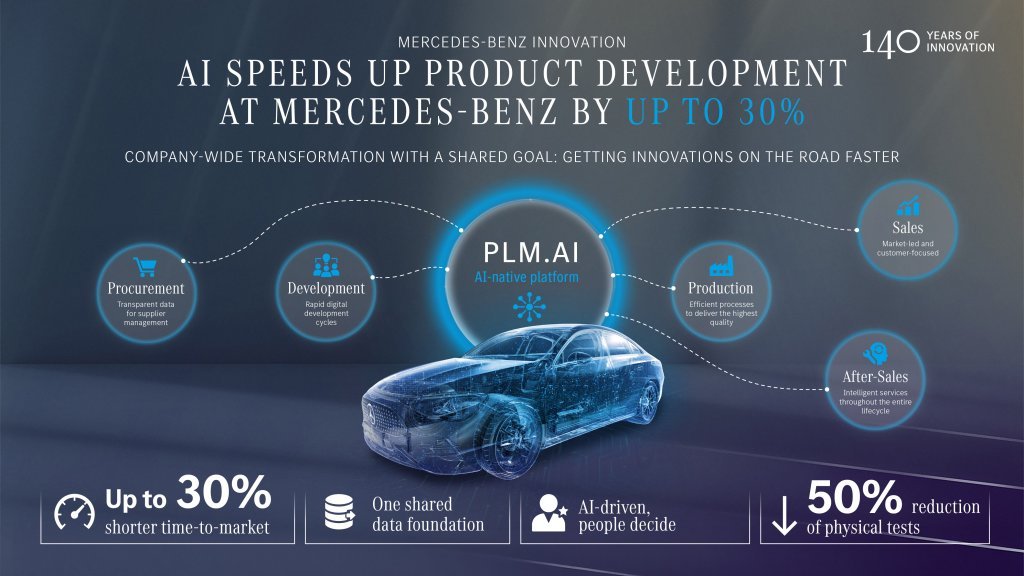
The new PLM.AI platform, built with CONTACT Software and Siemens, is meant to halve physical testing and get new models to market up to 30% sooner. Mercedes is putting roughly half a billion euros behind it.
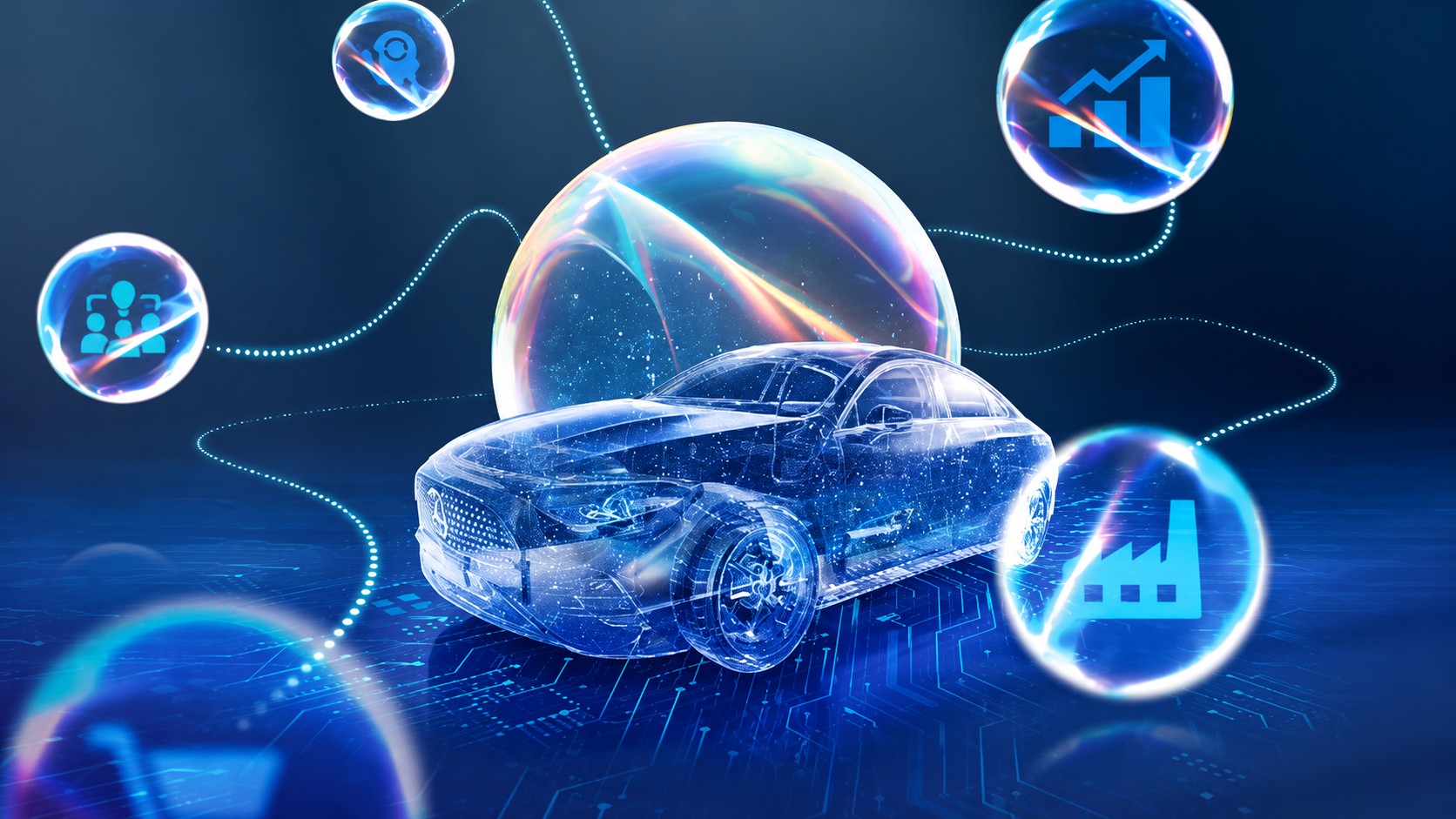
Mercedes-Benz says artificial intelligence will shave roughly 17 months off the time it takes to develop a new vehicle. The tool is PLM.AI, a company-wide product lifecycle management platform that the automaker is calling the "digital backbone" of its future engineering, and it comes with a price tag of about half a billion euros.
The announcement landed the same day as Mercedes' expanded NVIDIA deal for automated driving, which gives a sense of where the company's attention is right now: less on individual models, more on the software plumbing underneath all of them.
What PLM.AI actually does
According to the October 16 announcement, PLM.AI ties development, procurement, production, sales, and aftersales into a single data model, so that AI agents can read across all of them at once. Mercedes already uses such agents for narrower jobs, such as trimming material costs, handling homologation paperwork, and tracing faults. The difference now is that the agents will share one standardized data foundation instead of working inside isolated process steps.
The company's own example is weight reduction. Changing one component ripples through cost, crash performance, software, and the assembly line. Today, those effects are assessed one by one. With PLM.AI, Mercedes says specialized agents will evaluate them simultaneously and hand engineers a complete picture faster. The decision still belongs to the humans, the company stresses.
The headline numbers are up to 30% less development time per vehicle, efficiency gains of up to 50% in some engineering processes, and a long-term goal of cutting physical testing in half. Run the math on the 17-month figure and it implies a current cycle of roughly four and a half to five years from program start to series maturity, which is in line with what traditional automakers typically need.
Two partners, but Mercedes keeps the keys
Bremen-based CONTACT Software supplies the open PLM core, its CONTACT Elements suite, which Mercedes describes as the modular layer that lets it plug in new AI tools later. Siemens handles AI-assisted design, simulation, and digital validation for the digital twin. That extends a relationship that already produced a digital energy twin for Factory 56 in Sindelfingen in 2024.
Mercedes says it retains full ownership of its data and of the AI models trained on it, and that it alone defines the architecture, data models, and governance. For an automaker handing a core system to outside vendors, that clause is the one worth remembering.
Why the rush
Mercedes isn't alone in treating development speed as the next battleground. GM's chief product officer Sterling Anderson told IEEE Spectrum in June that the company wants to compress its four-to-five-year cycle to about two years, pointing to the electric Hummer as proof it can be done, and that AI has cut some crash simulations from 15 hours to under a minute. BMW's restructuring plan from late September promised "systematically higher development speed" through agentic AI and a crash-simulation partnership with Mistral, though without putting a number on it.
Mercedes now has a number, and a budget, where its German rival has a goal. The pressure is the same in all three cases: Chinese automakers iterate on 18- to 24-month cycles, and a legacy five-year program risks arriving with hardware that was specified before the market moved.
For Mercedes, the near-term test is whether technologies such as its second solid-state battery program reach showrooms faster than they would have otherwise. The company hasn't said when the first vehicle developed end to end on PLM.AI will arrive, or how far the global rollout has progressed. What it has made clear, in a release wrapped in its 140th-anniversary branding, is that the quality and safety standards won't be the thing that gives. The timelines will.