Mercedes Gives Its Smallest Engine an F1-Derived Electric Turbo, Starting With the GLB
The M 252 LS makes 228 hp plus 30 hp of hybrid assist and promises up to 17% less CO2 than the 2.0-liter four it replaces.
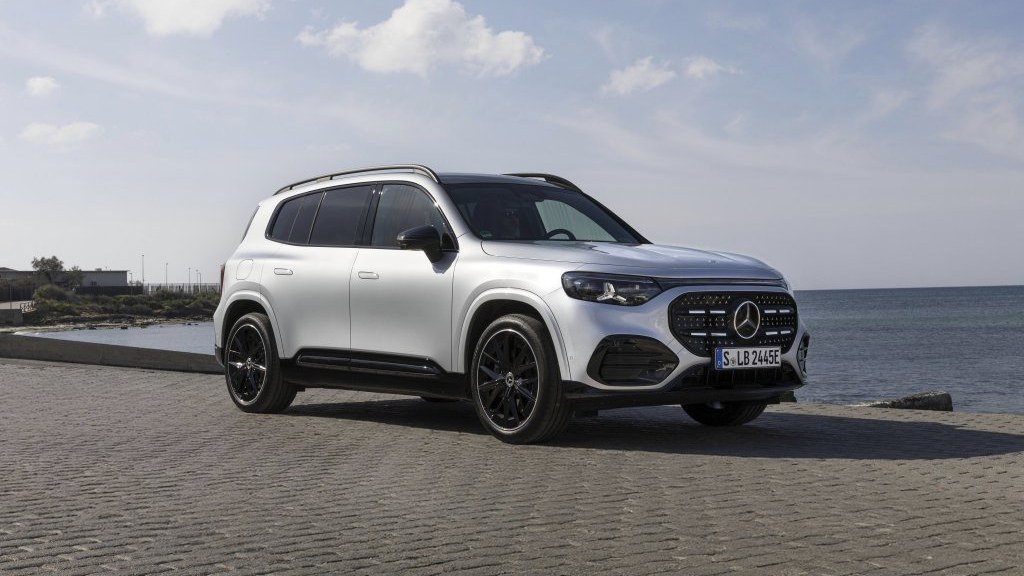
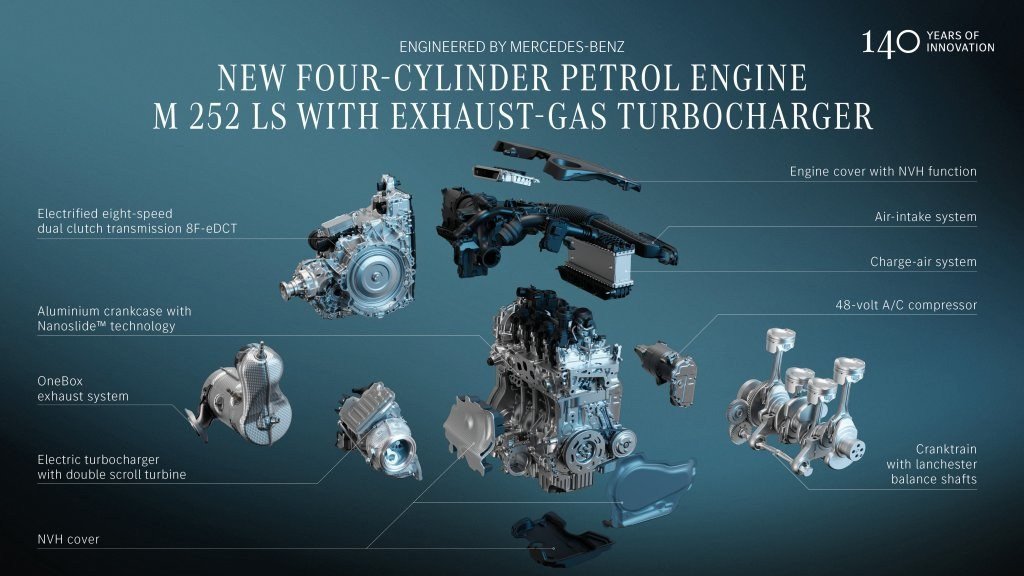
Mercedes-Benz has given its smallest gas engine an electric turbocharger. The updated 1.5-liter four, called the M 252 LS, makes 228 hp (170 kW) on its own, with another 30 hp (23 kW) from the hybrid system's electric motor. That makes it the most powerful four-cylinder in the brand's compact lineup, Mercedes says, and it debuts in Europe in the new GLB 250 4MATIC.
The headline number matters less than where the hardware is going. Electric turbos have so far lived in AMG models, and the M 252 LS brings one to the cars that sit at the bottom of Mercedes' lineup. American buyers will have to wait to see whether this version reaches them: Mercedes is rolling out its new compact family with EVs first and hybrids later, as our report on the new GLA's production start explains.
What the electric turbo does
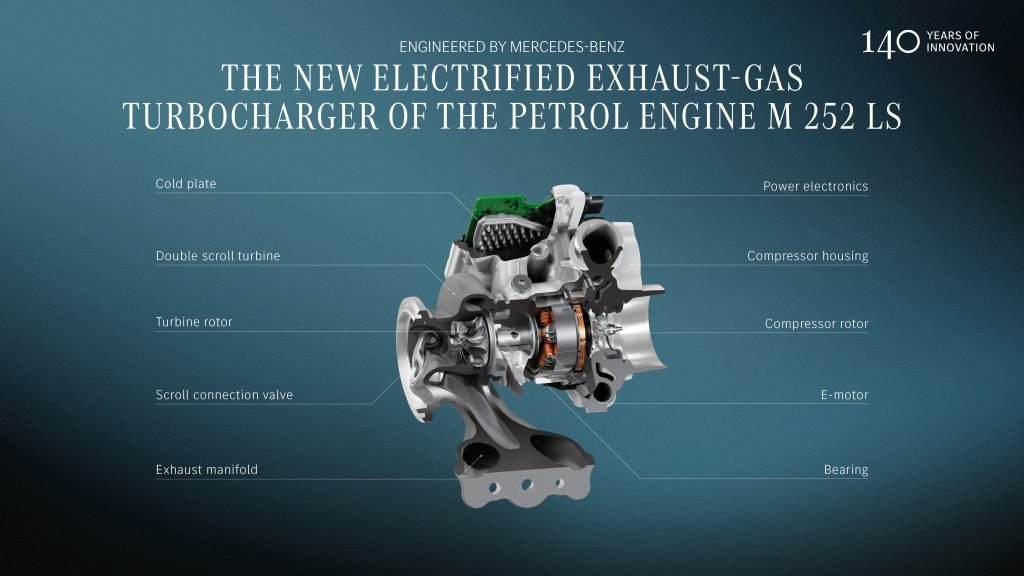
A small electric motor on the turbocharger shaft runs off the car's 48-volt system and adds about 7 hp (5 kW) of its own. Its job is to spin the turbo up before exhaust gas can, which Mercedes says sharpens throttle response across the rev range and cuts fuel use. The motor also works in reverse, turning exhaust energy into electricity for the 48-volt system. Italian outlet Tom's Hardware puts that recovery at up to 2 kW.
Mercedes credits the design to its Formula 1 engine shop, Mercedes-AMG High Performance Powertrains in Brixworth, England, whose e-turbo work Mercedes says helped the works team win eight world championship titles. The engine also gains two Lanchester balance shafts to smooth out the shake that four-cylinders are known for. The rest of the package is shared with the original M 252: an aluminum block with NANOSLIDE-coated bores and an electrified eight-speed dual-clutch transmission.
Not quite a first
Mercedes calls the M 252 LS its first engine with an electric exhaust-gas turbocharger. AMG got there earlier. The 2023 Mercedes-AMG C 43's 2.0-liter four, developed with Garrett, also used a 48-volt e-turbo spinning to 175,000 rpm, Design News reported. That engine makes 402 hp in a car that costs far more than a GLB.
Against the engine it replaces, the gains are clearer. Mercedes says the M 252 LS cuts CO2 emissions by up to 17% compared with the outgoing 2.0-liter M 260. In the US, that older engine still powers today's GLB 250, where it makes 221 hp and 258 lb-ft. The GLB 250 starts at $43,800 for the 2026 model year, according to Mercedes-Benz USA. Mercedes hasn't released a torque figure for the new 1.5-liter.
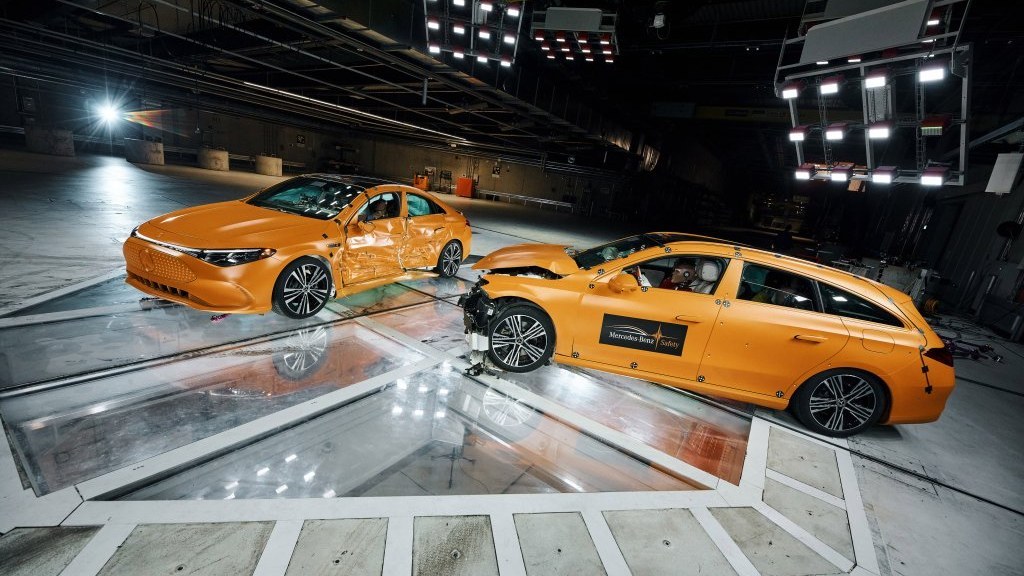
The original M 252 arrived last year as the base engine of the hybrid CLA, the car Mercedes recently crashed into an electric CLA in its car-to-car side-impact test. The LS version follows the same plan of one modular gas engine shared across many models. Mercedes says it is preparing nearly 30 new model launches by 2028, and the FAME engine family covers everything from the GLA to the S-Class.
Batteries, too
The same announcement covers Mercedes' battery work. The company says it is developing its own cell chemistries, including a lithium nickel manganese oxide (LNMO) cell that uses no cobalt. Mercedes claims it could offer up to 30% more range than an LFP pack of similar weight and size. Solid-state testing with Factorial and ProLogium continues, but there's no production date yet. Our solid-state battery tracker shows where those programs stand.
Mercedes hasn't said when the GLB 250 with the M 252 LS goes on sale, which other models will get the engine, or whether it will be offered in the US.