Solid-State EV Batteries: Who's Really Close to Production — and Who's Just Testing
Toyota still targets 2027–28 for its first all-solid-state EV, but every other car with "solid-state" cells is a test mule — and some aren't fully solid at all.
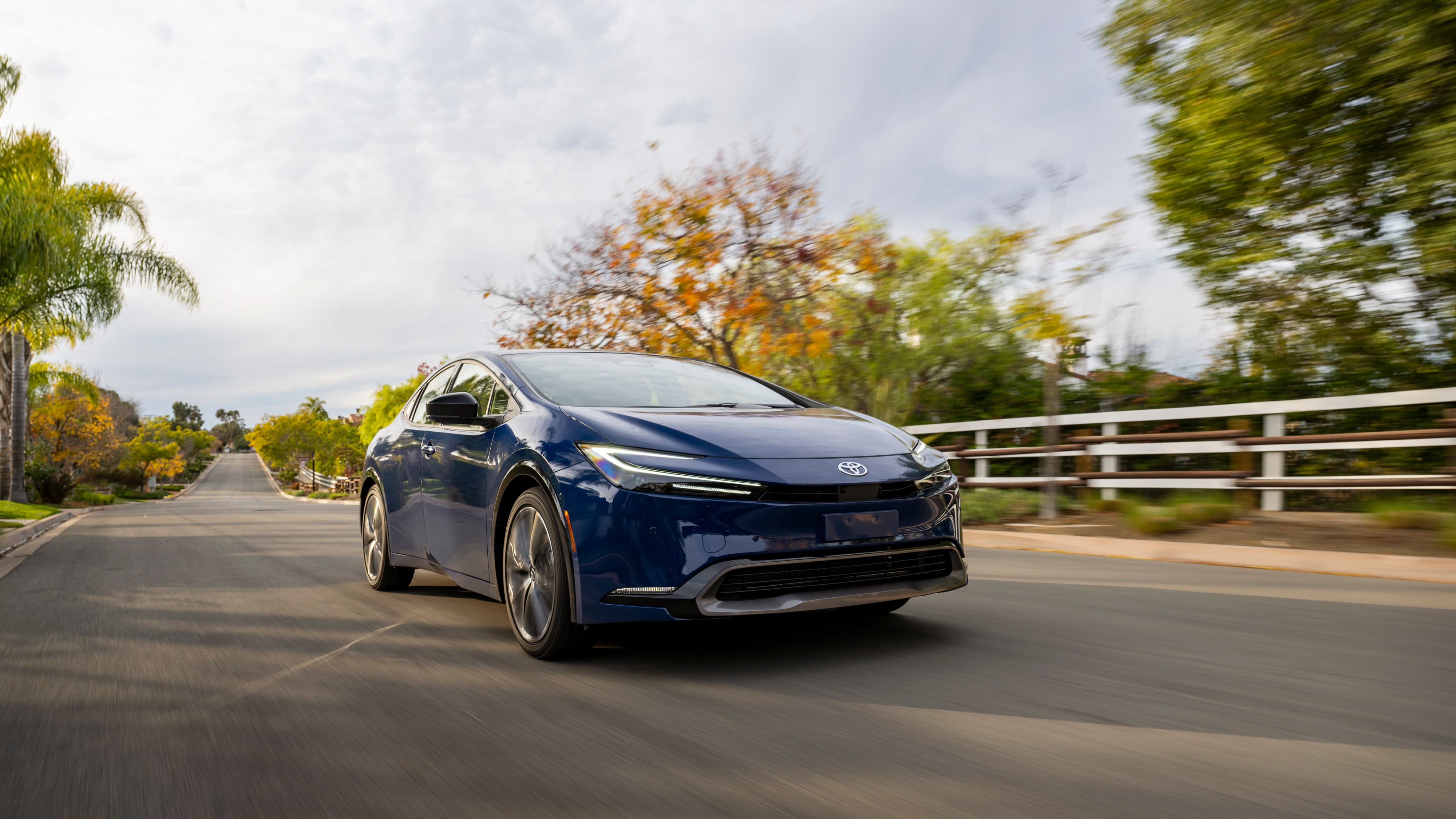
No automaker has yet put a price, a model name, and an on-sale date on a car with an all-solid-state battery. Toyota comes closest: it has said since 2023 that its first battery-electric vehicles with all-solid-state cells will launch in 2027–28, and its electrolyte supplier is building the plant to back that up.
Everyone else is somewhere between a test car and a pilot line. Mercedes-Benz has two separate bets running, as we covered in Mercedes' second solid-state battery deal, with ProLogium. Stellantis and BMW have prototypes on public roads. QuantumScape has a motorcycle and four automaker customers. This tracker sorts every claim by date and status: target, testing, demo, or on sale.
The tracker
| Company (partner) | Battery type, as described by the company | Furthest public step | Production claim | Status |
|---|---|---|---|---|
| Toyota (Idemitsu) | Sulfide all-solid-state | Electrolyte pilot plant under construction (Jan. 2026); plan certified by Japan's METI (Sept. 2024) | BEVs in 2027–28 (stated Oct. 2023) | Target |
| Mercedes-Benz (Factorial) | Lithium-metal FEST cells; Factorial calls the electrolyte quasi-solid | EQS test car drove 749 miles on one charge (Aug. 2025) | Series production "by the end of the decade" (Sept. 2025) | Testing |
| Mercedes-Benz (ProLogium) | Gen4 inorganic solid-state | Joint testing agreement (Sept. 2026) | None stated | Testing |
| Stellantis (Factorial) | Lithium-metal FEST cells | Dodge Charger Daytona road tests (June 2026) | None stated | Testing |
| BMW (Solid Power, Samsung SDI) | Sulfide all-solid-state | i7 test car near Munich (May 2025) | None from BMW; Samsung SDI targets cell mass production in 2H 2027 | Testing |
| QuantumScape (VW PowerCo, Honda) | Anode-free lithium-metal with ceramic separator | Ducati V21L demo (Sept. 2025); Eagle Line pilot production (Feb. 2026) | No car launch date | Demo |
| Nissan | All-solid-state | Pilot line at Yokohama plant | First EV in fiscal 2028 | Target |
| Honda | All-solid-state | Demonstration line in Sakura, Japan | Models in the second half of the 2020s | Target |
| Hyundai | All-solid-state | Pilot line in Uiwang, Korea (reportedly 2025) | Around 2030 (reportedly) | Target |
| CATL | All-solid-state | Level 4 of 9 on technology readiness (June 2026) | Small batches in 2027 | Target |
| BYD | Sulfide all-solid-state | Test car reportedly running | Small batches in 2027, mass production by 2030 | Target |
| NIO, IM, MG | Semi-solid (part liquid, part solid) | In customer cars in China | Already built | On sale, not all-solid-state |
Closest to a date: Toyota and Idemitsu
Toyota and oil refiner Idemitsu Kosan agreed in October 2023 to industrialize sulfide solid electrolytes, with Toyota committing to launch BEVs with all-solid-state batteries in 2027–28. Japan's Ministry of Economy, Trade and Industry certified Toyota's battery production plan in September 2024.
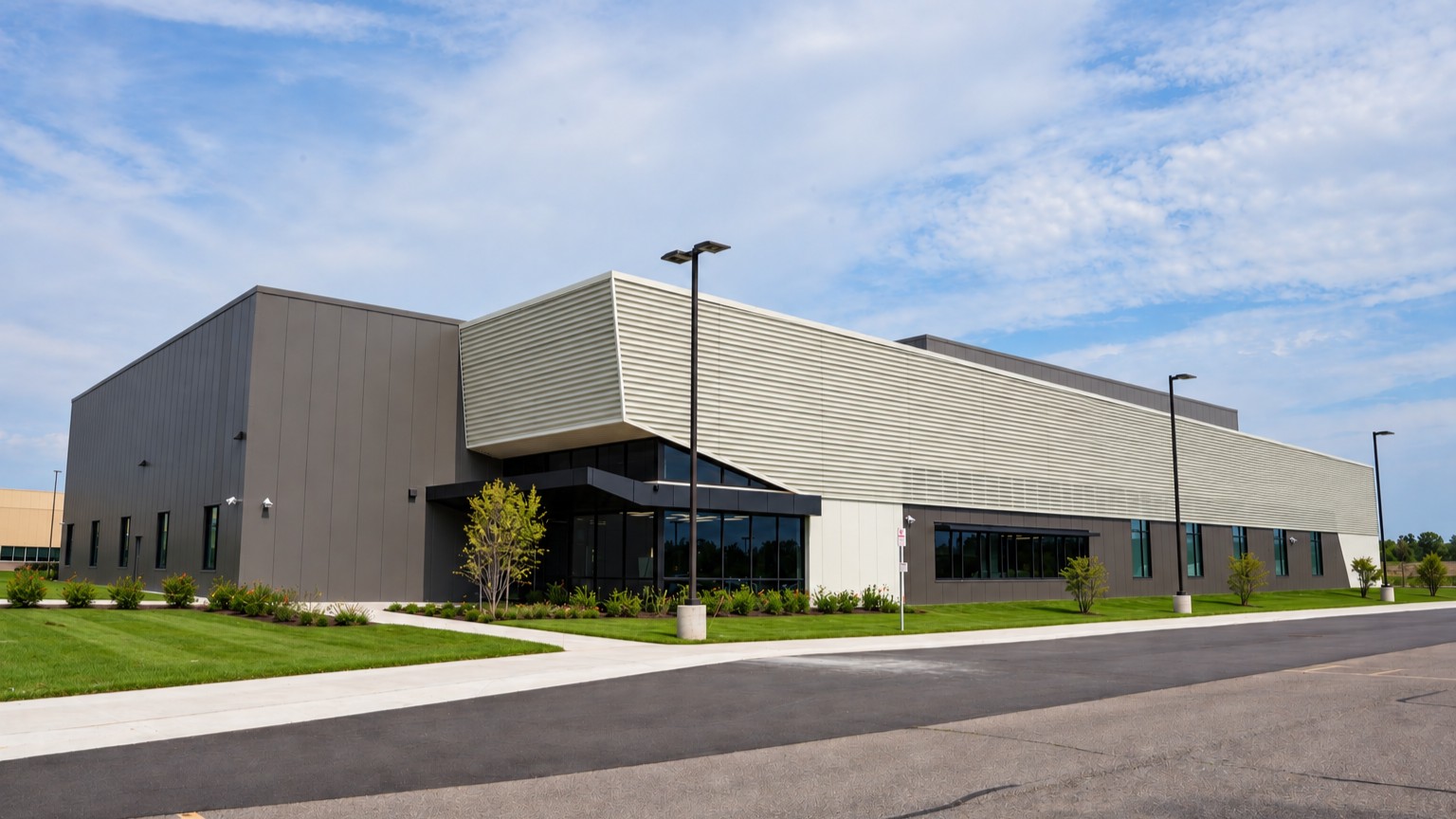
The hardware is now following the paperwork. Idemitsu took a final investment decision in January 2026 and began building a large pilot plant for solid electrolyte at its Chiba site, with completion due in 2027, according to Reuters. That timing is tight against a 2027–28 launch, which is one reason to read Toyota's date as a target rather than a promise. Toyota has not named the first model, its market, or its price. Toyota's U.S. EV lineup for now runs on conventional cells, as our 2027 bZ, C-HR, and bZ Woodland comparison shows.
On the road, no date: Mercedes, Stellantis, and Factorial
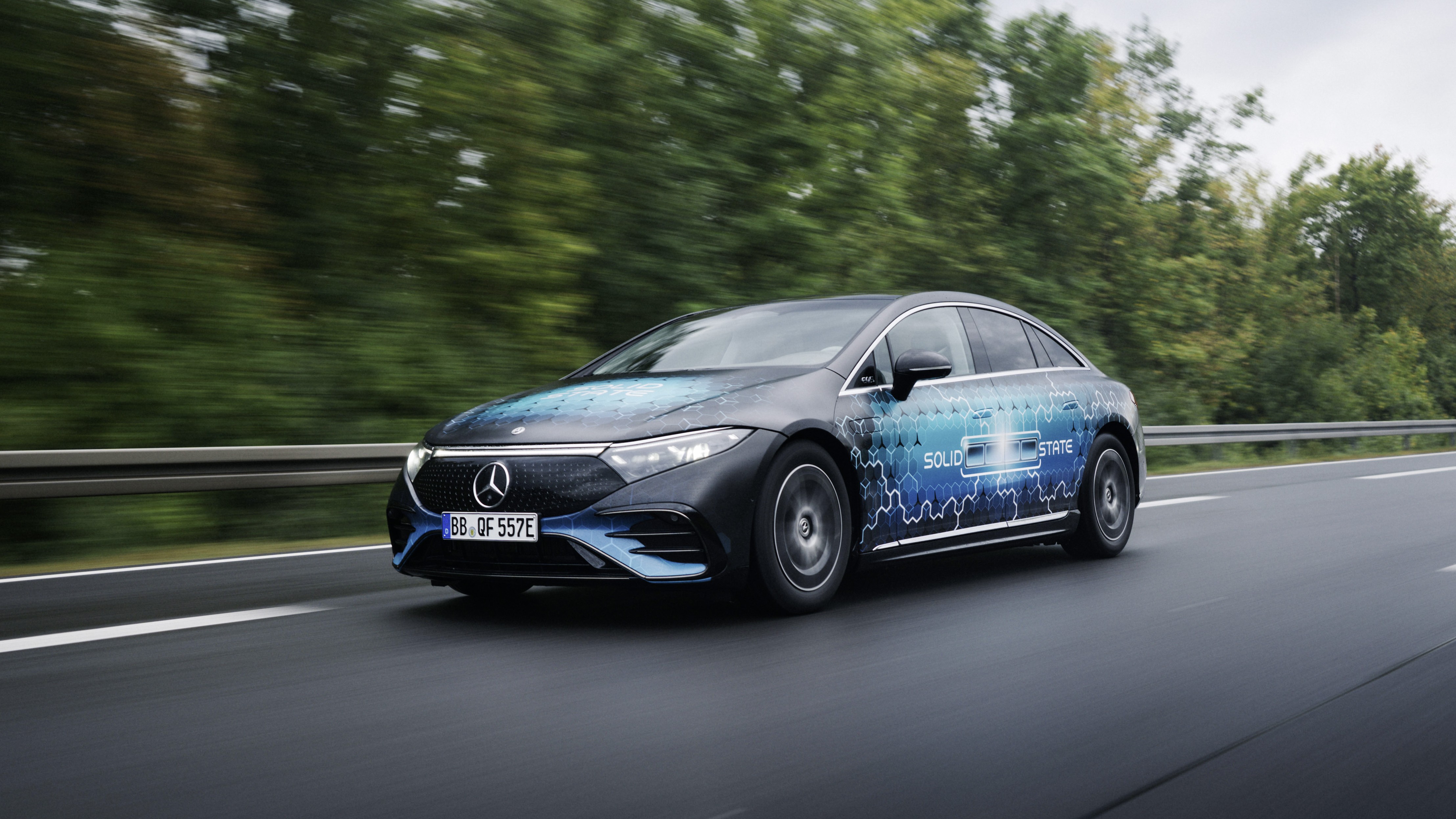
The most impressive real-world drive so far belongs to Mercedes. A lightly modified EQS with Factorial cells drove 1,205 km (749 miles) from Stuttgart to Malmö, Sweden, in late August 2025 without charging and arrived with 137 km (85 miles) still showing, Mercedes said. The company says the pack holds 25% more usable energy than the standard EQS battery at a comparable size and weight. CTO Markus Schäfer set a goal of series production by the end of the decade.
Stellantis began road-testing the same FEST cell family in a Dodge Charger Daytona development car in June 2026. In 2025 lab validation, the cells reached 375 Wh/kg and charged from 15% to 90% in 18 minutes, Stellantis and Factorial said. Stellantis has given no production timeline.
One caveat matters here. Factorial's own technical description of FEST pairs a lithium-metal anode with a quasi-solid polymer electrolyte. Factorial's fully solid design is a different product, a sulfide cell called Solstice, which Mercedes is also developing. So both test cars are a real step past today's lithium-ion, but they are not running all-solid-state batteries in the strict sense.
BMW, Solid Power, and Samsung SDI
BMW put large-format all-solid-state cells from Colorado-based Solid Power into an i7 test car near Munich in May 2025. The program studies how to manage cell expansion, operating pressure, and temperature. BMW said plainly that further development steps are required before the technology works in a competitive battery system.
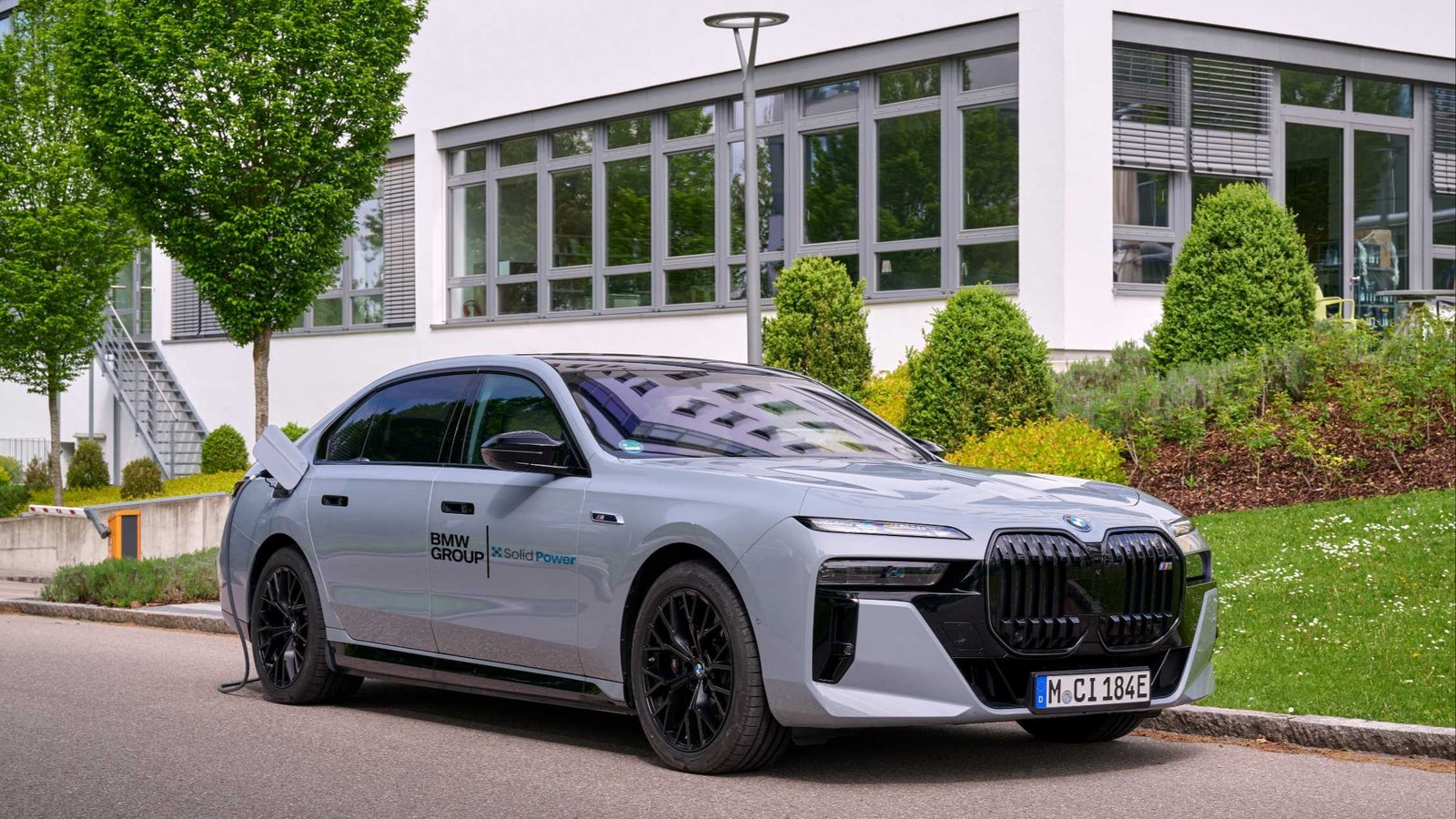
In October 2025, Samsung SDI joined the partnership to build cells with Solid Power's electrolyte for a next generation of BMW evaluation vehicles. A Samsung SDI vice president told Korea JoongAng Daily that the company targets mass production in the second half of 2027. We have not found a formal Samsung SDI announcement of that date. BMW's next production battery, meanwhile, is a conventional design: the Gen6 pack behind the iX3's 434-mile range.
QuantumScape: a motorcycle, a pilot line, and four automakers
QuantumScape's first public vehicle was a Ducati V21L race bike running QSE-5 cells, shown at IAA Mobility in Munich in September 2025 with Volkswagen's battery company, PowerCo. The startup says its anode-free lithium-metal design uses a nonflammable ceramic separator.
Its Eagle Line pilot production line in San Jose opened in February 2026. Honda signed a multiyear joint research agreement on June 18, 2026, and QuantumScape now counts four top-10 automakers as customers, it said in its second-quarter shareholder letter. That letter names no production car and no launch date.
Japan, Korea, and China: pilot lines and 2027 small batches
Nissan has a pilot line at its Yokohama plant and says its first EV with all-solid-state batteries will arrive in fiscal 2028, which runs from April 2028 to March 2029. Honda builds cells on a demonstration line in Sakura, Japan, and aims to use them in models launched in the second half of the 2020s. Hyundai reportedly opened its own pilot line in Uiwang, South Korea, in 2025, with production reportedly targeted for around 2030.
China's two battery giants are aligned on 2027 for small-batch output. CATL repeated that target to investors in July 2026, though in June it rated its own technology at level four on the nine-step readiness scale. BYD's battery arm aims for limited batches in 2027 and mass production by 2030. According to a report by Autohome, an upcoming Yangwang luxury sedan will be the first BYD to use them.
Already on sale (sort of): semi-solid batteries
If you've seen headlines about "solid-state" cars already on Chinese roads, those are semi-solid batteries. They cut the liquid electrolyte but keep some of it. NIO offers a 150-kWh semi-solid pack through its battery-swap network. IM Motors offers a 133-kWh semi-solid pack in the top L6, and SAIC's MG4 has a semi-solid version in China. None is all-solid-state, and none is sold in the U.S.
What a solid-state battery is, and why it has taken so long
A conventional lithium-ion cell moves ions through a liquid electrolyte. An all-solid-state cell replaces that liquid with a solid, usually a sulfide, oxide, or polymer. That swap is meant to enable a lithium-metal anode, which stores far more energy than graphite.
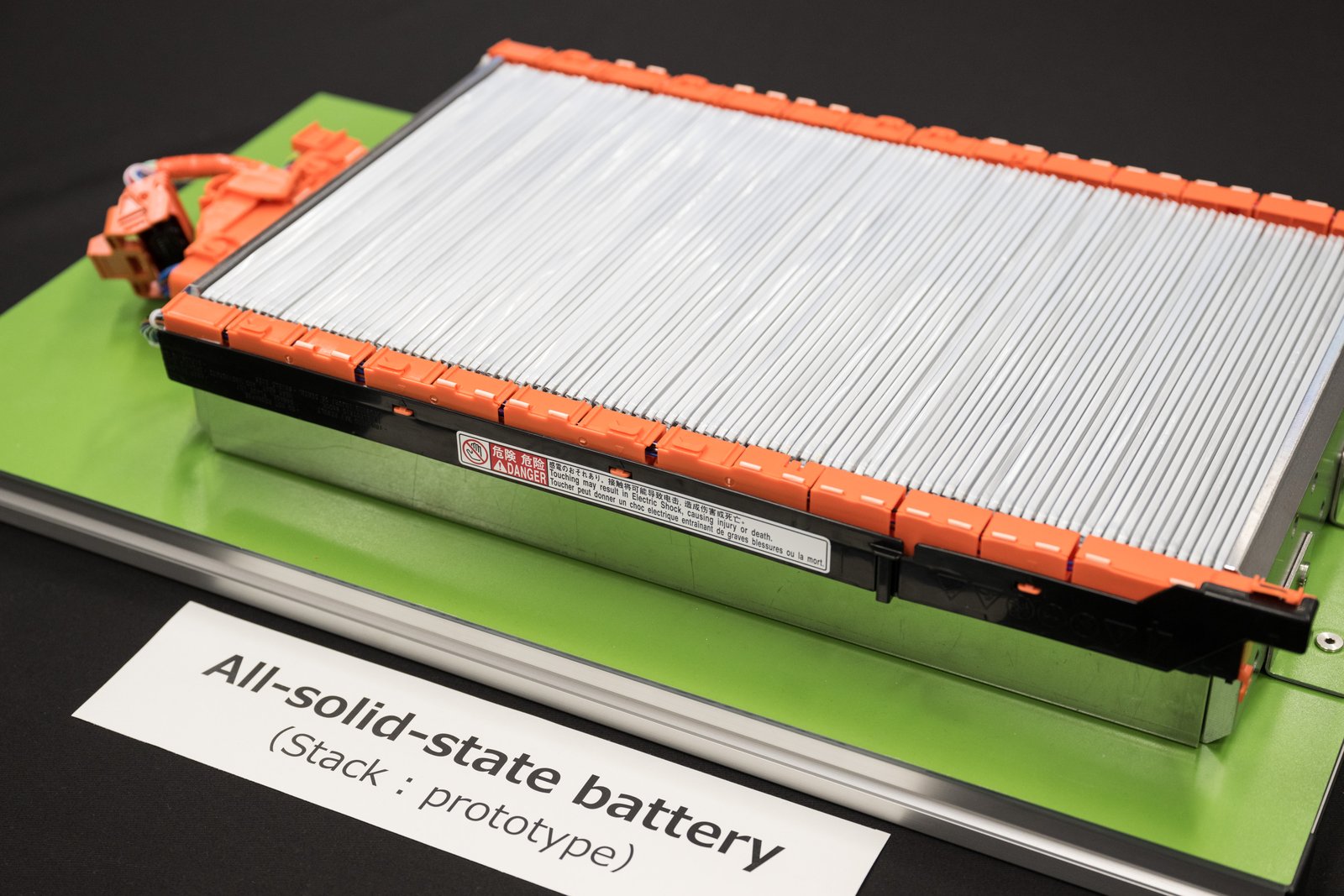
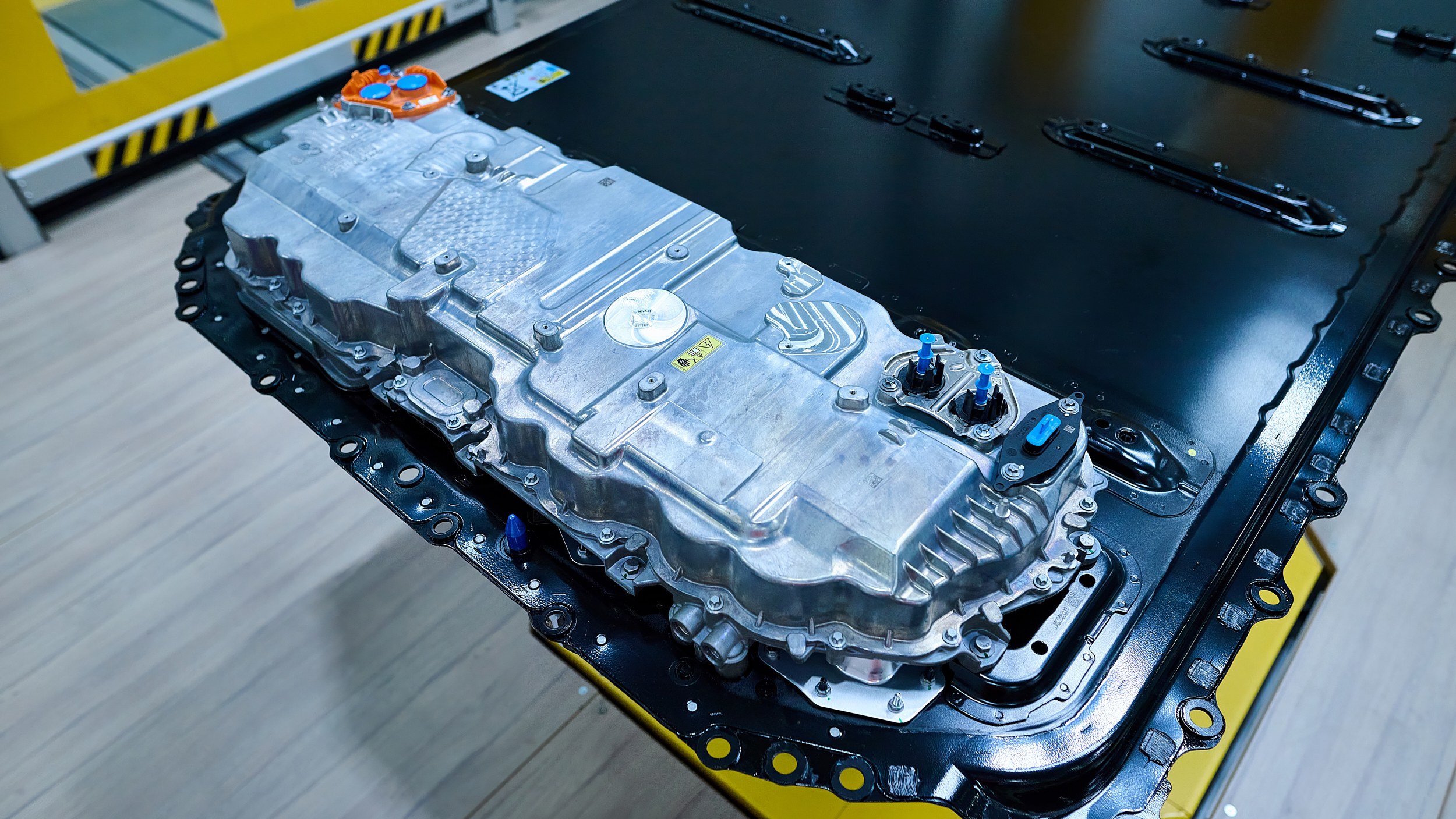
Three problems have kept it in labs for more than a decade. Lithium can grow needle-like dendrites through the electrolyte and short the cell. Solid layers lose contact as cells swell and shrink, so packs need constant pressure; Mercedes uses pneumatic actuators in the EQS test pack for exactly this reason. And sulfide electrolytes are expensive and difficult to make at scale, which is why Idemitsu is building a plant before Toyota can build cars.
What buyers would actually get
On paper, the payoff is more range from a pack of the same size, as in the EQS test car, plus faster charging and lower fire risk. The fast-charging figures so far come from lab cells, not production cars. The cost case is unproven: no company has published a cell price.
Conventional cells are not standing still either. GM's lithium manganese-rich chemistry now has a factory in Spring Hill, Tennessee, and that kind of incremental gain is what solid-state cells will have to beat on price.
What we don't know yet
- What all-solid-state cells will cost. No automaker or supplier has published a price per kWh for production cells.
- Which car comes first in America. No company has named a model, an on-sale date, or a price for a U.S. car with an all-solid-state battery.
- Whether Samsung SDI's 2027 target is official. It comes from an executive interview, not a company announcement.
- Toyota's first model, and whether its 2027–28 window still holds once Idemitsu's plant is finished.
- Whether FEST, a quasi-solid design, reaches production before anyone's all-solid-state cell does.
What's next
The next concrete markers are BYD's Yangwang sedan, which Autohome expected to debut in October 2026, and QuantumScape's third-quarter results. In 2027, watch for Idemitsu's pilot plant coming online, Samsung SDI's production start, and CATL and BYD's first small batches. We'll update this tracker when any company names a production model or a start date.