Route 66 Turns 100 on November 11. Here’s What’s Left to See and What It Costs
The Mother Road was commissioned on November 11, 1926. A century later about 85 percent is still drivable, gas is above $4, and the official calendar has two dates left.
Route 66 turns 100 on November 11, 2026. The road was commissioned on that date in 1926 as part of the first numbered federal highway system, ran roughly 2,400 miles from Chicago to Santa Monica across eight states, and was formally decommissioned in 1985 after the interstates made it redundant. It never went away. The National Historic Route 66 Federation estimates that about 85 percent of it is still drivable in an ordinary car, and the centennial year has filled the calendar with parades, caravans, and a set of U.S. Postal Service stamps.
If you are planning to drive it before the year is out, here is what the centennial actually changes, what the road costs to cross now that gas is averaging above $4 a gallon, and where the official stops are.
What the centennial is, and what it is not
Congress created the Route 66 Centennial Commission in December 2020 (Public Law 116-256). The 15 appointees serve without pay, can only spend donated money, and are tasked with recommending commemorations rather than building anything. The commission itself says it has no budget. That matters for expectations: there is no federally funded repaving program, no national charging corridor, and no single official ceremony on the anniversary date.
What exists is a network of state associations, the National Park Service's Route 66 Corridor Preservation Program (more than 170 cost-share grant projects since 2001), and the National Trust for Historic Preservation, which says it has put more than $2.3 million into sites along the road. The commission's website aggregates the events.
The calendar for the rest of 2026
The big kickoff already happened in Springfield, Missouri, over the first weekend of May, and the Main Street of America caravan ran Santa Monica to Chicago in June. What is left:
- November 10–11, Springfield, Illinois — the Illinois Route 66 Scenic Byway statewide conference and a centennial concert at Route 66 Motorheads on the evening of the 11th.
- November 11, Tulsa — the Route 66 Tulsa Birthday Bash, folded into the city's Veterans Day parade.
- Through December — the commission's online speaker series continues, and the commission itself dissolves on December 31, 2026 by statute.
The stamps are real: a pane of eight, one photograph per state, issued May 5 in Phoenix. The National Park Service has also added a centennial passport stamp at sites along the route.
How long it takes
AAA's guidance is at least 10 days end to end, with two to three weeks as the comfortable figure, and it recommends spring or fall over summer for weather and motel availability. Mid-October through early November is inside that window, which is one reason the November 11 date works for a late-season trip. Expect cold nights on the Arizona high plateau and in New Mexico, and shorter daylight for photography.
Plan the route with the NPS interactive and printable maps rather than a navigation app set to "fastest." The modern road is a patchwork of frontage roads, state highways, and original two-lane alignments, and the point of the trip is the slow parts.
What it costs to fuel the drive
AAA's national average for regular gasoline was $4.33 on October 16, after a record September monthly average. The spread across the route is wide: Texas was at $3.94, California at $6.40. For a 2,400-mile run in a full-size SUV returning 20 mpg, that is roughly 120 gallons, or about $520 at the national average and closer to $600 if you fill up on the California end.
Electric is possible but not organized. Senators from the Route 66 states asked the Transportation and Energy departments in October 2024 to prioritize the corridor for federal charging grants "in time for the Centennial"; no program came of it. Interstate 40, which shadows the western half of the route, is a designated alternative fuel corridor, so fast charging exists along the interstate even where it does not exist in the small towns. AAA puts the national average public charging rate at 42 cents per kWh. Our list of which EVs can use Tesla Superchargers is the practical reference for the gaps between CCS stations in Oklahoma and Texas.
Can you do it hands-free?
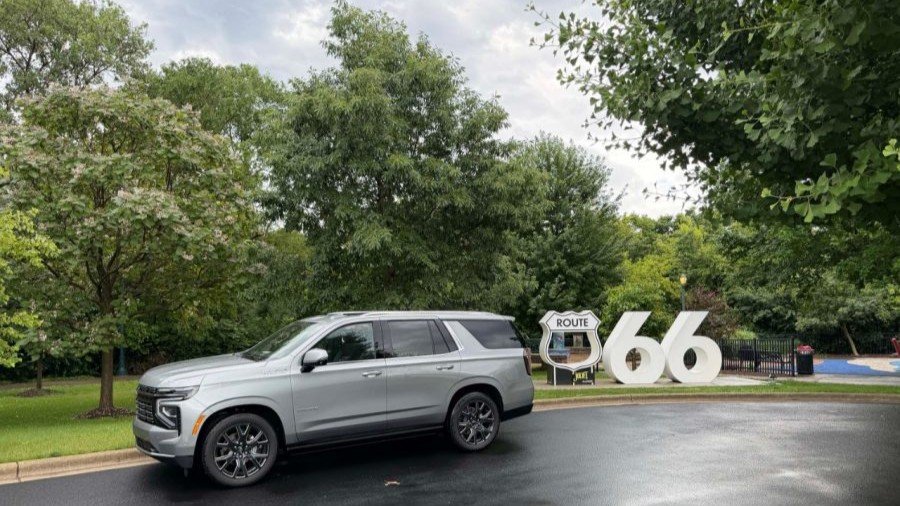
Partly. GM published an employee road-trip post on September 30 describing a Detroit-to-Santa-Monica run in a 2026 Chevrolet Tahoe High Country using Super Cruise "on Route 66 and the highways connecting its iconic stops." The post does not say how many of those miles were hands-free, and GM's compatible-road map at onstar.com remains the authority: Super Cruise works on divided highways it has mapped, which in practice means the interstates that parallel the old road, not the two-lane original alignments through Oatman or Galena. The same applies to Ford BlueCruise. Treat driver assistance as a tool for the interstate connectors and expect to drive the historic segments yourself. (For what else the current Tahoe can do, see our note on GM's phone-wallet digital key for the Tahoe and Yukon.)
Eight states, eight stops that are actually official
Route 66 has thousands of photo opportunities and a lot of private "museums." These are the ones with a government or National Register pedigree behind them.
- Illinois: The route starts in downtown Chicago. Springfield hosts the state's centennial events on November 10–11, and Cozy Dog Drive In is AAA's pick for the classic roadside stop there.
- Missouri: The Gateway Arch in St. Louis is a national park unit on the route, and Springfield, Missouri, is where the kickoff was held.
- Kansas: The shortest leg of the route, through Galena, where the tow truck that inspired Mater in Cars still sits in town, a stop GM's own Route 66 travelogue singled out.
- Oklahoma: More drivable original miles than any other state, over 400 by the state association's count. The Blue Whale of Catoosa, built between 1970 and 1972, is city-owned and free.
- Texas: Cadillac Ranch, west of Amarillo, is ten half-buried Cadillacs installed in 1974 on a frontage road off I-40. It is open 24 hours, free, and spray paint is expected.
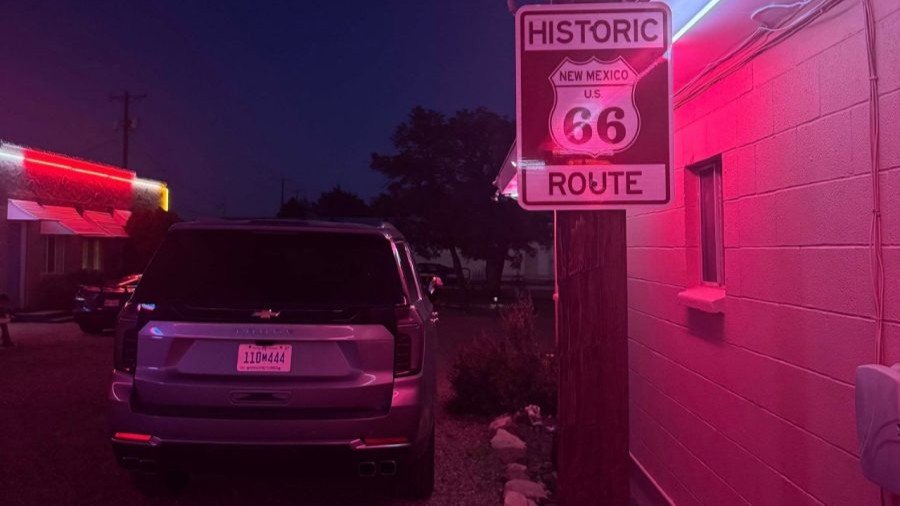
- New Mexico: Tucumcari's neon and Albuquerque's KiMo Theatre, which hosted the state's centennial kickoff.
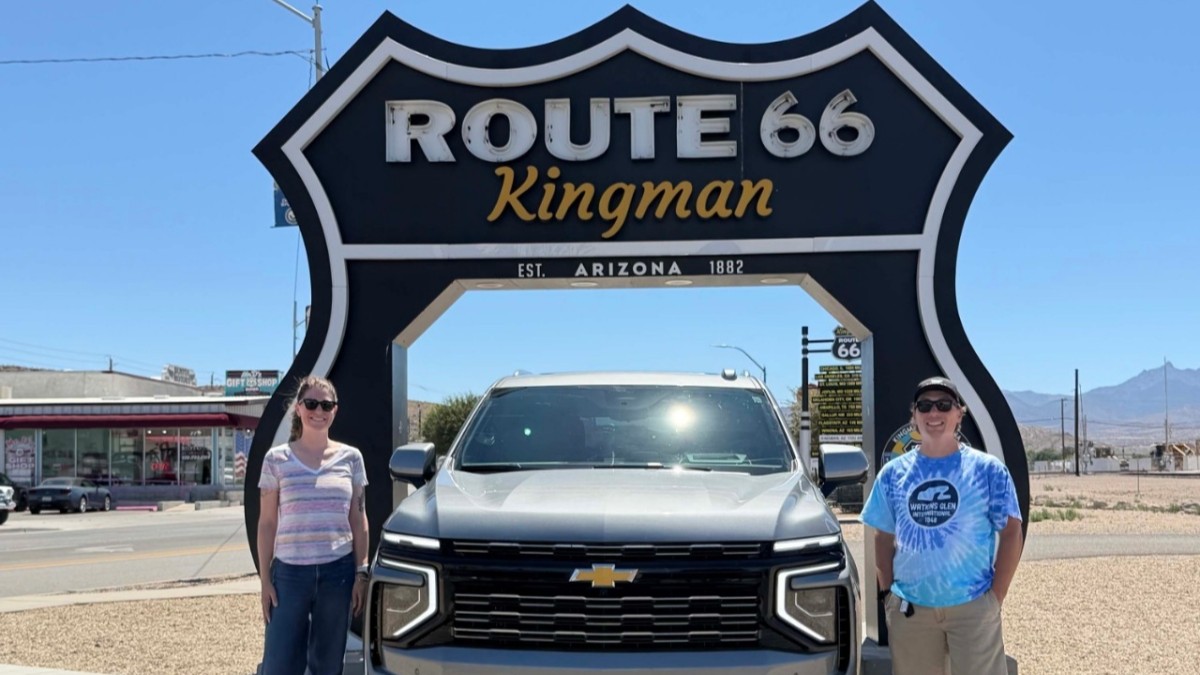
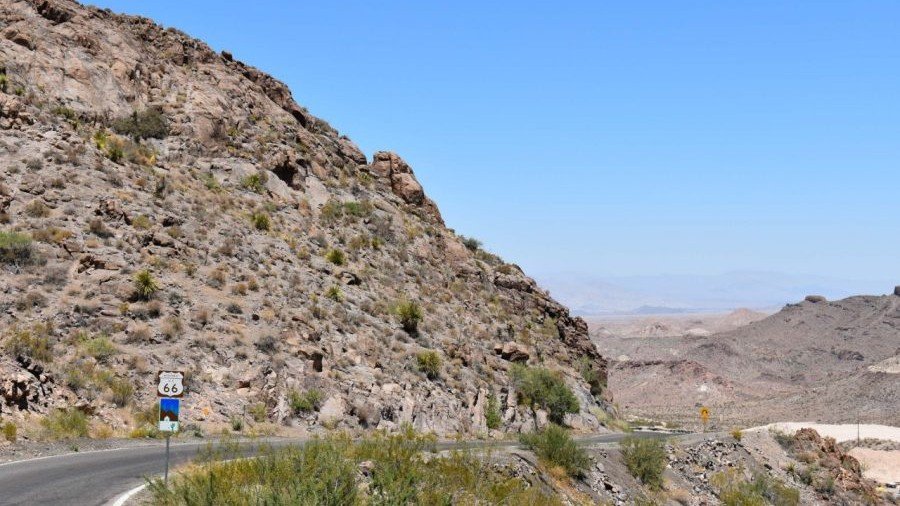
- Arizona: Petrified Forest is the only national park with a Route 66 segment inside it; the pullout has a 1932 Studebaker marking the old alignment. The Wigwam Village Motel in Holbrook (1950, 15 concrete teepees) is on the National Register. Kingman's arch and the Oatman switchbacks are the western Arizona set pieces.
- California: The "End of the Trail" sign on Santa Monica Pier was installed in 2009 and the pier was never the legal terminus, but it is where every trip ends.
What we don't know yet
- Whether any automaker will ship a Route 66 special edition for the centennial. As of mid-October, GM, Ford, and Stellantis have published nothing of the kind; Stellantis' "America Made Us" America250 program is a separate campaign.
- Whether Route 66 becomes a National Historic Trail. A designation bill is pending in Congress; passage would unlock NPS management rather than new money.
- The exact mileage. The NPS and the Postal Service say about 2,400 miles; AAA and the Senate letters use 2,448. Nobody has a definitive figure for a road that was realigned repeatedly over 60 years.
What's next
The November 11 events in Springfield and Tulsa are the last organized dates of the centennial. After December 31 the commission is gone and the road returns to the state associations and the NPS grant program that have kept it alive since 1985. If the trip is on your list, this fall is the window where the towns are decorated for it.