VW's 2027 Cars Can Pull Over and Call for Help If the Driver Passes Out
The 2027 IQ.DRIVE update lets the Atlas, Golf, Tiguan, and ID. Buzz steer to the shoulder when the driver is unresponsive — and adds turn-signal lane changes.
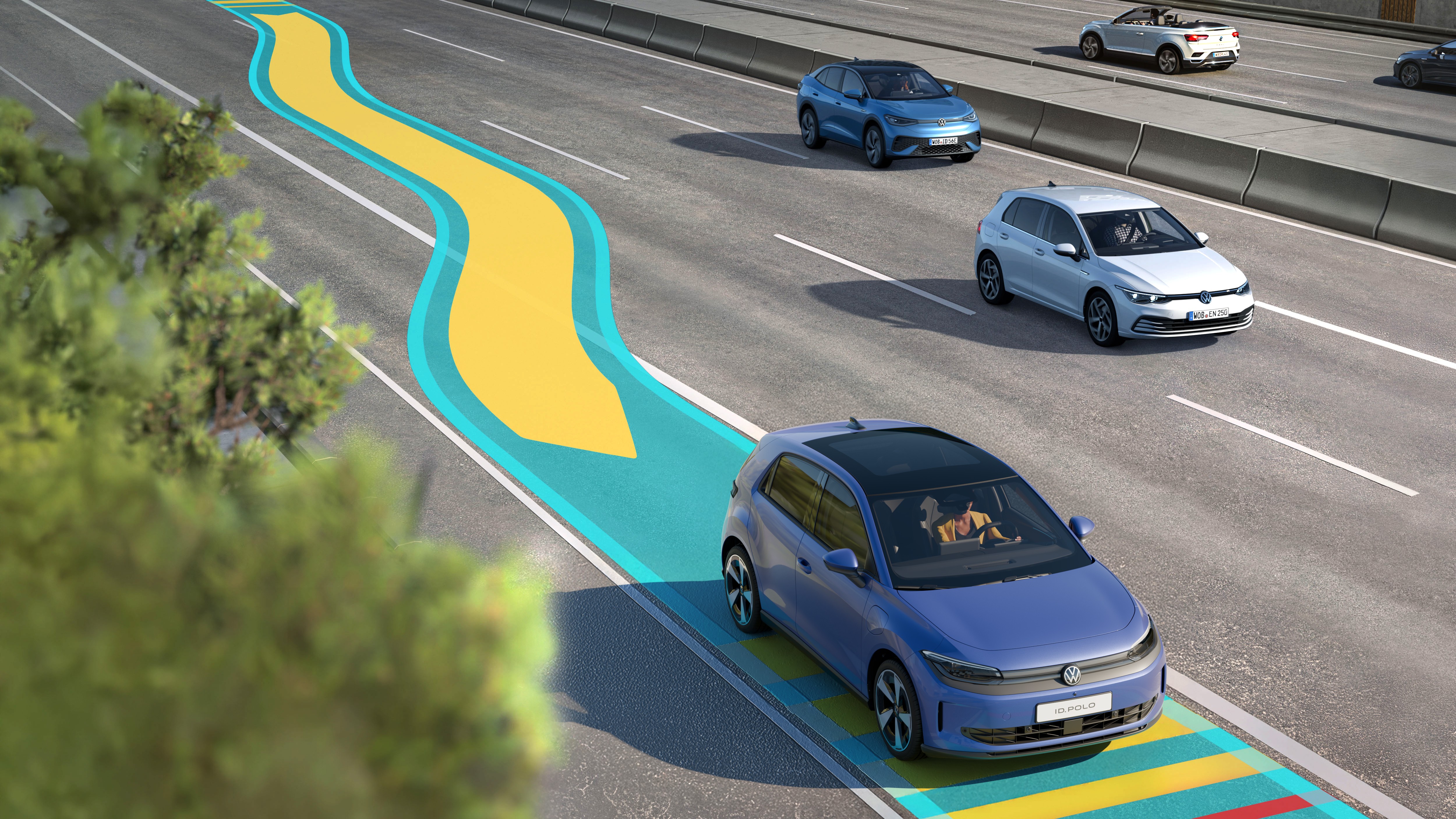
Volkswagen's 2027 models will be able to do something most driver-assistance setups still can't: move an unresponsive driver's car out of traffic. The new Emergency Assist Plus feature, part of this year's IQ.DRIVE update, can steer the vehicle onto the right shoulder, bring it to a stop, shift into Park, and place an emergency call on its own.
The upgrades cover VW's MQB Evo and MEB-based lineup — the Atlas family, Golf family, Tiguan, and ID. Buzz — and build on a driver-assistance package that comes standard on every Volkswagen sold in the U.S.
Off the Road, Not Just Stopped in It
Emergency Assist Plus works through either Lane Assist or Travel Assist. With Lane Assist active, repeated uncorrected lane departures trigger the system; with Travel Assist, it takes 25 seconds without any steering input. The car then escalates — visual and audible warnings first, and in Travel Assist mode the horn sounds, the brakes jerk three times, and the seatbelt tightens in an attempt to rouse the driver.
If none of that works, the car signals, switches on its hazards, and steers toward the shoulder, provided the front camera confirms there is enough room. If there isn't, it settles for the rightmost lane. Once stopped, the vehicle shifts into Park, keeps the hazards and horn going, unlocks the doors, turns on the lights, and triggers the emergency-call function.
That final maneuver is what separates VW's system from most rivals. Mercedes-Benz's Active Emergency Stop Assist, for instance, slows an unresponsive driver's car to a halt but stays in its lane, and Volkswagen's own base Emergency Assist works the same way. Getting the car off the roadway removes it as a target for secondary collisions — a meaningful difference on a busy interstate.
Lane Changes by Turn Signal
Travel Assist also gains driver-initiated lane changes on more models. Above 45 mph, a partial press of the turn-signal stalk prompts the car to check adjacent traffic with its rear radar and swap lanes once clear. If the target lane is occupied, an on-hold function keeps the request alive for up to 12 seconds.
Ford has offered a similar tap-to-change function since BlueCruise 1.2 in 2022, so Volkswagen is catching up rather than leading here — though it's doing so within a standard-equipment suite instead of a subscription-based hands-free system.
Elsewhere, certain 2027 Atlas, Tiguan, and ID. Buzz trims get an upgraded rearview camera that detects pedestrians and automatically brakes while reversing between 1 and 6 mph. Predictive Adaptive Cruise Control now adopts higher posted speed limits sooner — the driver confirms with a tap of the accelerator — and extends its operation to highway exit ramps.
The ID. Buzz additionally picks up Road Experience Management, cloud-based swarm data that improves map quality for the driver-assistance systems and helps keep the van centered even where lane markings are faded. It's bundled into the In-Vehicle Premium subscription, with a one-year trial included on 2027 models.
Volkswagen hasn't said exactly when the updated 2027 models reach dealers, and notes that all specifications remain preliminary.