AAA Test: Intersection Braking Fails to Stop Three of Four SUVs
The Tesla Model Y braked for a car turning into its path. The Chevrolet Equinox, Ford Explorer and Hyundai Tucson hit it every time. No U.S. rule tests for it.
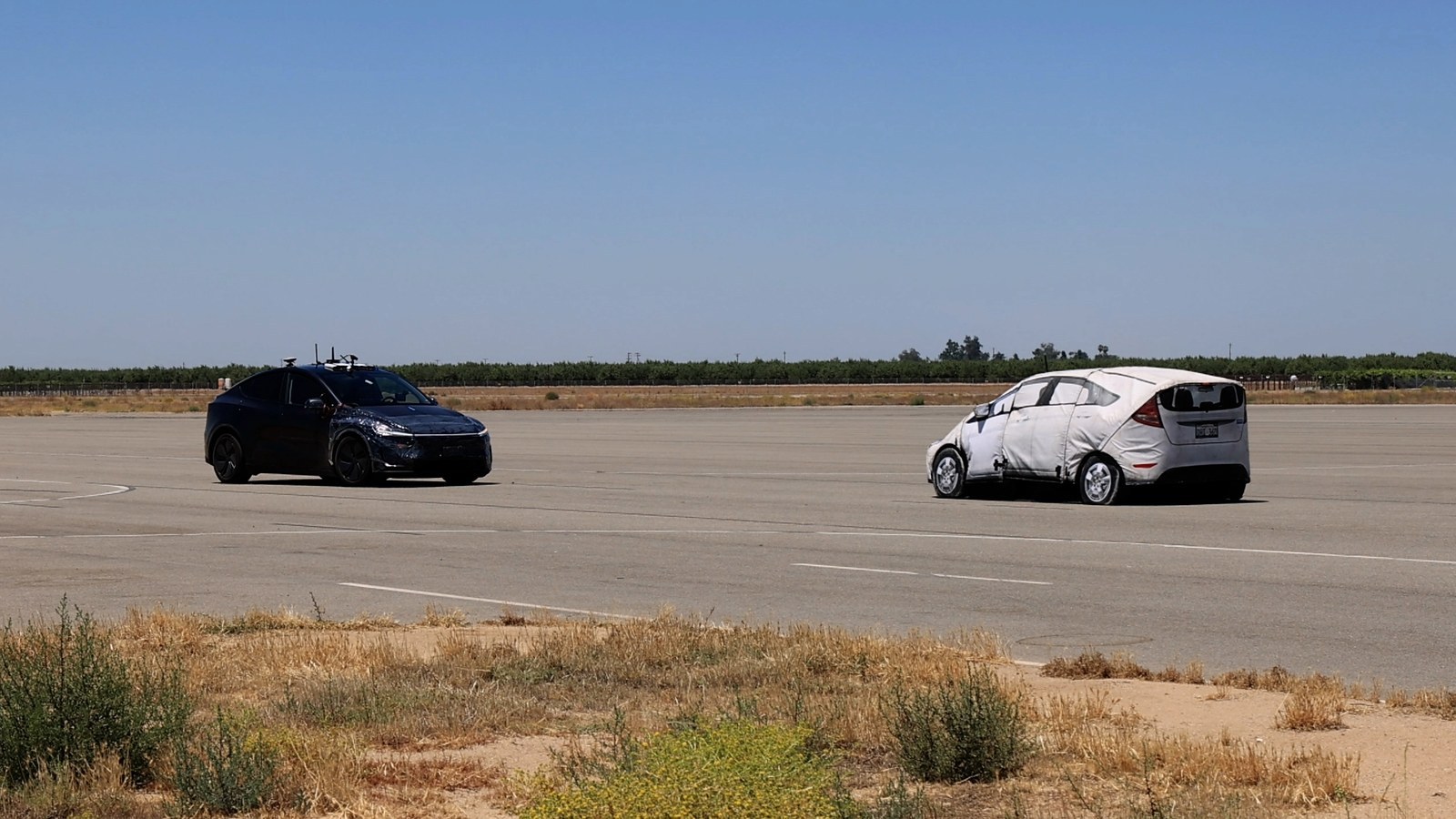
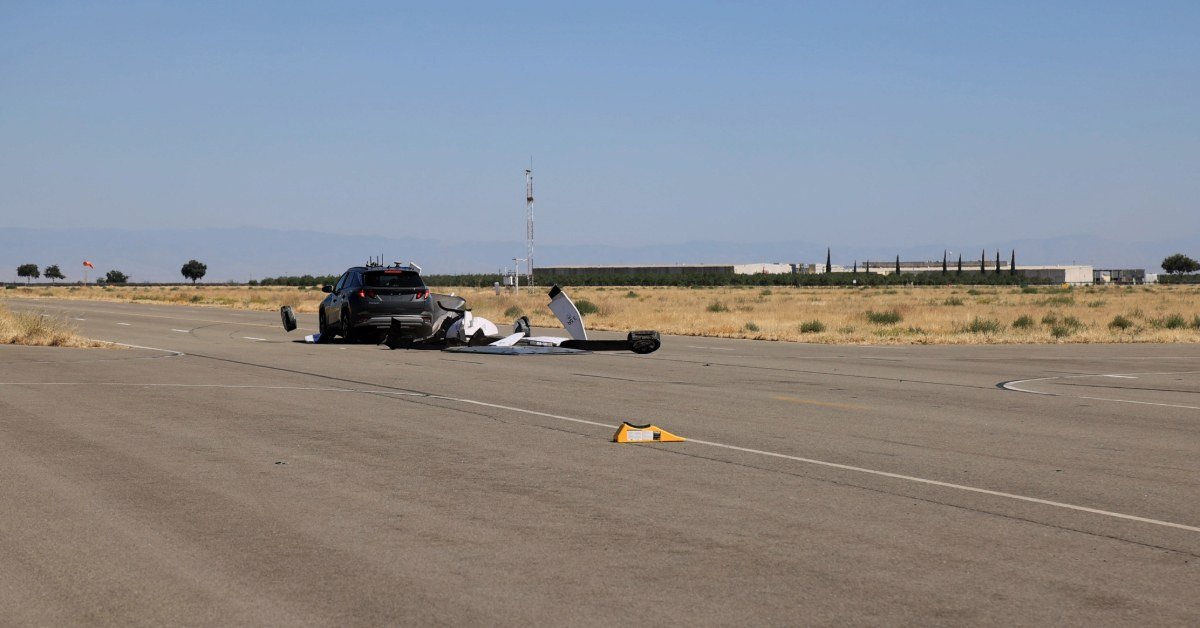
Automatic emergency braking built for intersections still misses one of the most ordinary crashes that happen there. In new AAA testing of four 2026 SUVs, three drove straight into a car that turned right into their lane from a side road. Only the Tesla Model Y stopped.
The Chevrolet Equinox, Ford Explorer and Hyundai Tucson hit the foam target car in every valid run, according to research AAA published on Nov. 12. It arrives a month after heavy-duty pickups flunked IIHS's first crash-avoidance tests.
What AAA tested
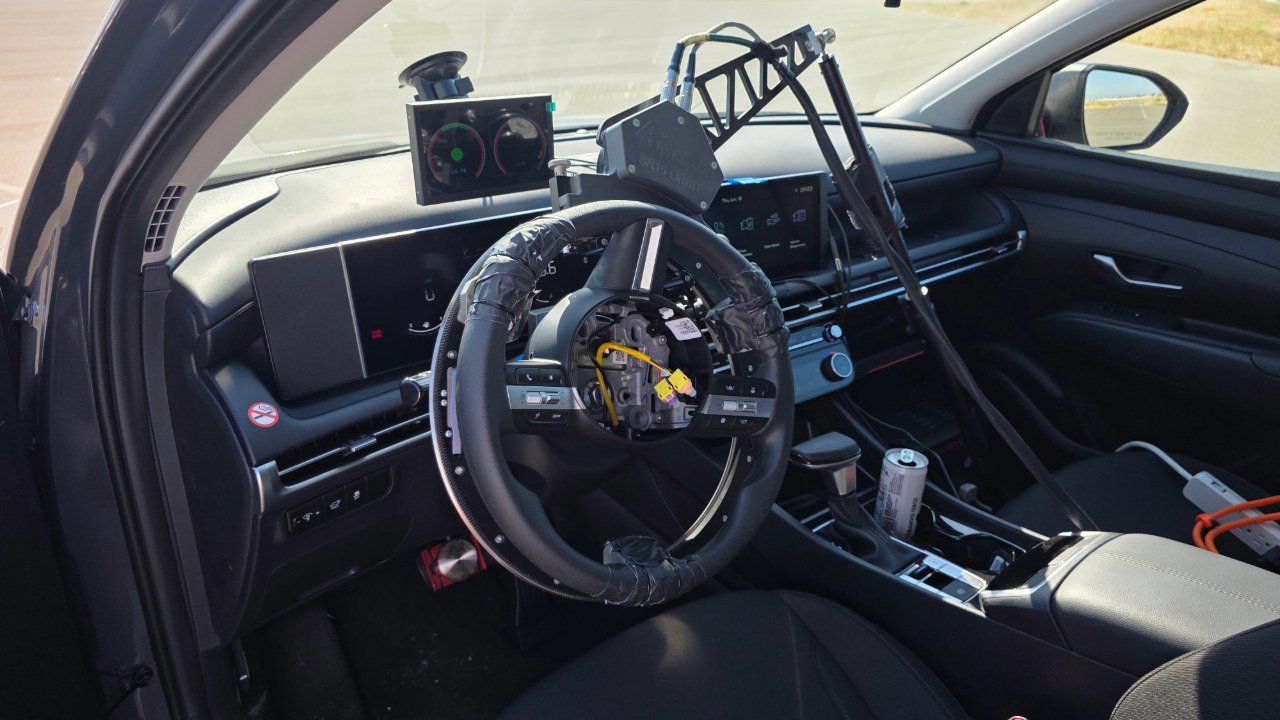
All four SUVs carry intersection AEB as standard equipment. AAA ran them on a closed course in daylight with the Automobile Club of Southern California's Automotive Research Center, logging 74 valid runs against a robotic soft car.
In the hardest scenario, the test vehicle drove straight at 30 mph while the target turned right into its path at 5 mph. The results split sharply:
- Tesla Model Y: warned and braked in all five runs, stopping about 5 feet (1.6 meters) short on average.
- Chevrolet Equinox: warned in four of five runs and braked in one, but hit the target every time.
- Ford Explorer: no warning and no braking in three runs.
- Hyundai Tucson: no warning and no braking in three runs.
AAA halted the Explorer and Tucson after three runs each to protect the equipment. Impact speeds averaged about 25 mph (40 km/h) for all three vehicles that crashed.
Passing the test they were built for
The picture changed in the one scenario with an established protocol. In Euro NCAP's left-turn-across-oncoming-traffic test, with the SUV turning at 9.3 mph and the target approaching at 18.6 mph, all four avoided contact in 20 of 20 runs. Swapping the steering robot for a human driver didn't change that.
Switching off the turn signal did. Without it, the Tucson gave no warning, didn't brake and struck the target in all three runs. The other three SUVs still stopped.
"Unfortunately, performance outside those scenarios is spotty," said Greg Brannon, AAA's director of automotive engineering and research.
That is still progress. When AAA ran intersection tests in 2022 on a Chevrolet Equinox, Ford Explorer, Honda CR-V and Toyota RAV4 without intersection-specific AEB, none warned or braked in any run.
What the rules don't cover
Angle crashes, including these intersection types, accounted for roughly 41 percent of deaths in two-vehicle crashes from 2020 through 2024, according to an AAA Foundation for Traffic Safety analysis of federal data cited in the full report.
Federal rules won't close the gap soon. FMVSS No. 127 makes AEB mandatory on new light vehicles from Sept. 1, 2029, but it addresses lead-vehicle and pedestrian crashes, not crossing or turning traffic. NHTSA drafted an intersection test procedure in 2019 and never finalized it. IIHS front crash prevention ratings, which feed awards such as Top Safety Pick+ for compact SUVs, center on front-to-rear crashes.
AAA wants automakers and regulators to add more intersection scenarios, turn-into-path included. For drivers, its advice is to cover the brake when entering an intersection. As with hands-free highway driving systems, the person behind the wheel is still the backup.
The study has limits: one vehicle per brand, daylight only and no pedestrian targets. AAA's release includes no response from the four automakers.