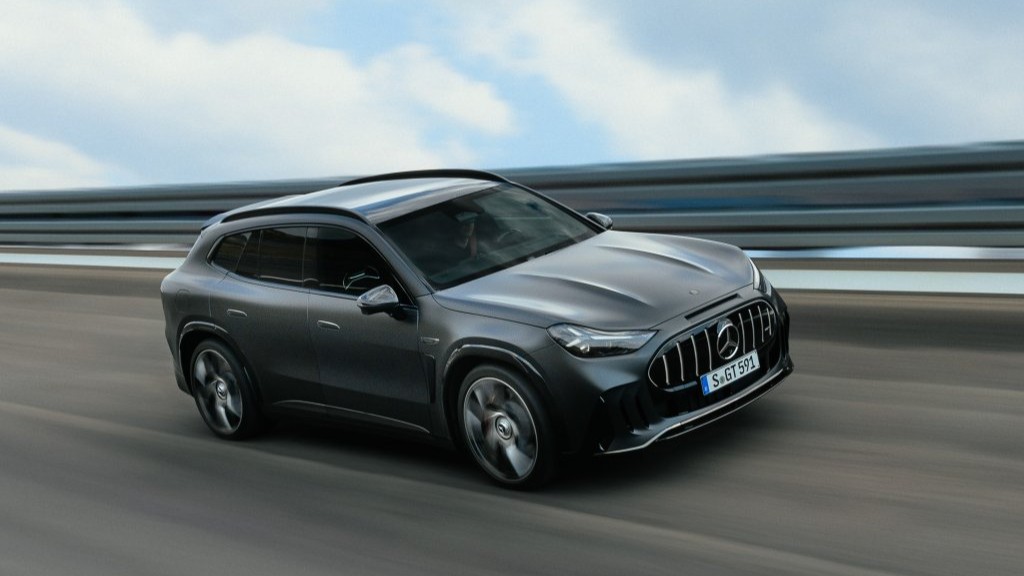
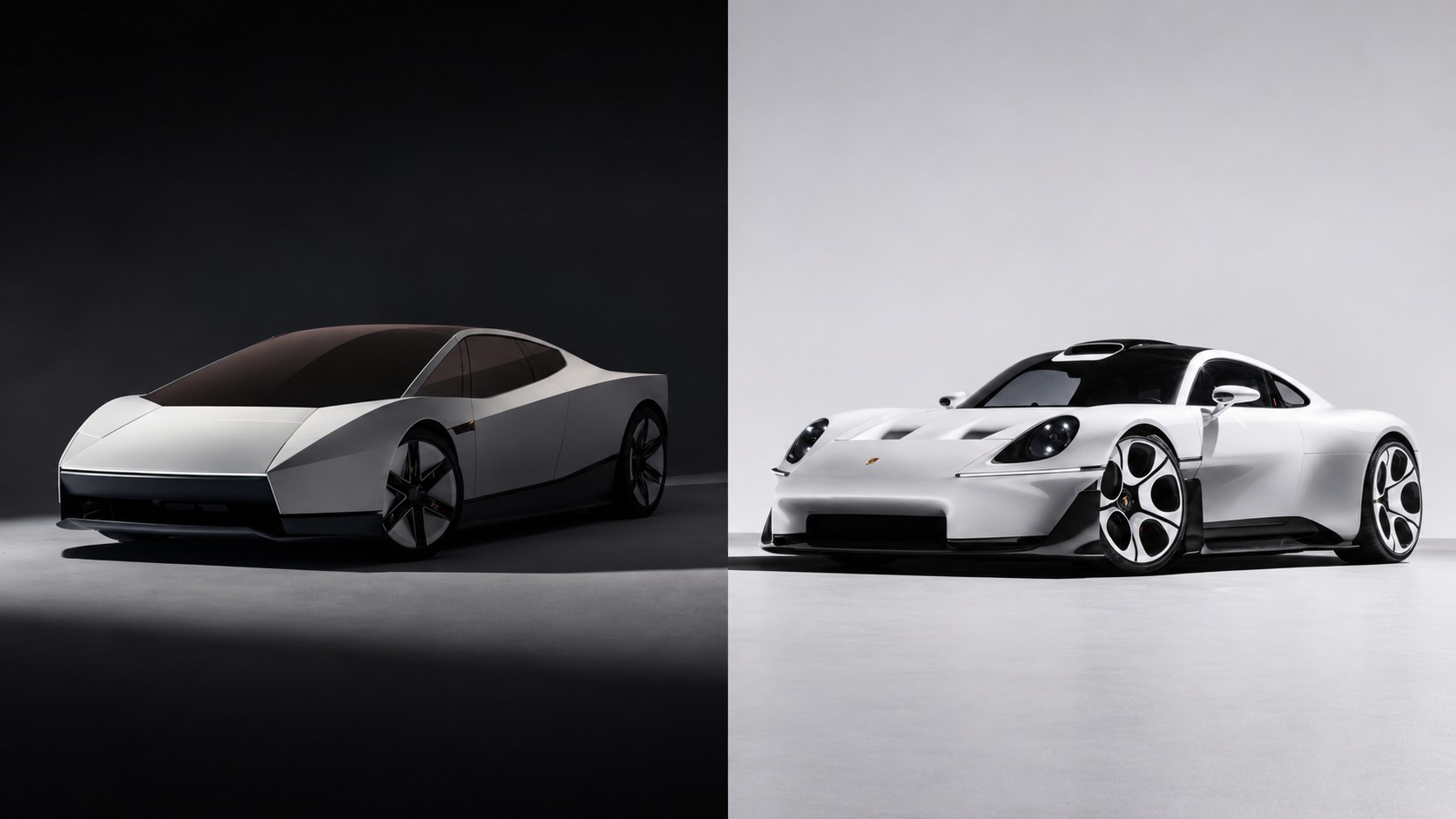
AMG's 1,153-HP GT SUV vs. the Cayenne Turbo Electric: Worth Waiting Until Summer 2027?
Mercedes-AMG's 1,153-hp SUV charges at 710 kW on paper, but it has no US price and no EPA rating until 2027. Porsche's 1,139-hp Cayenne is in showrooms at $163,000.
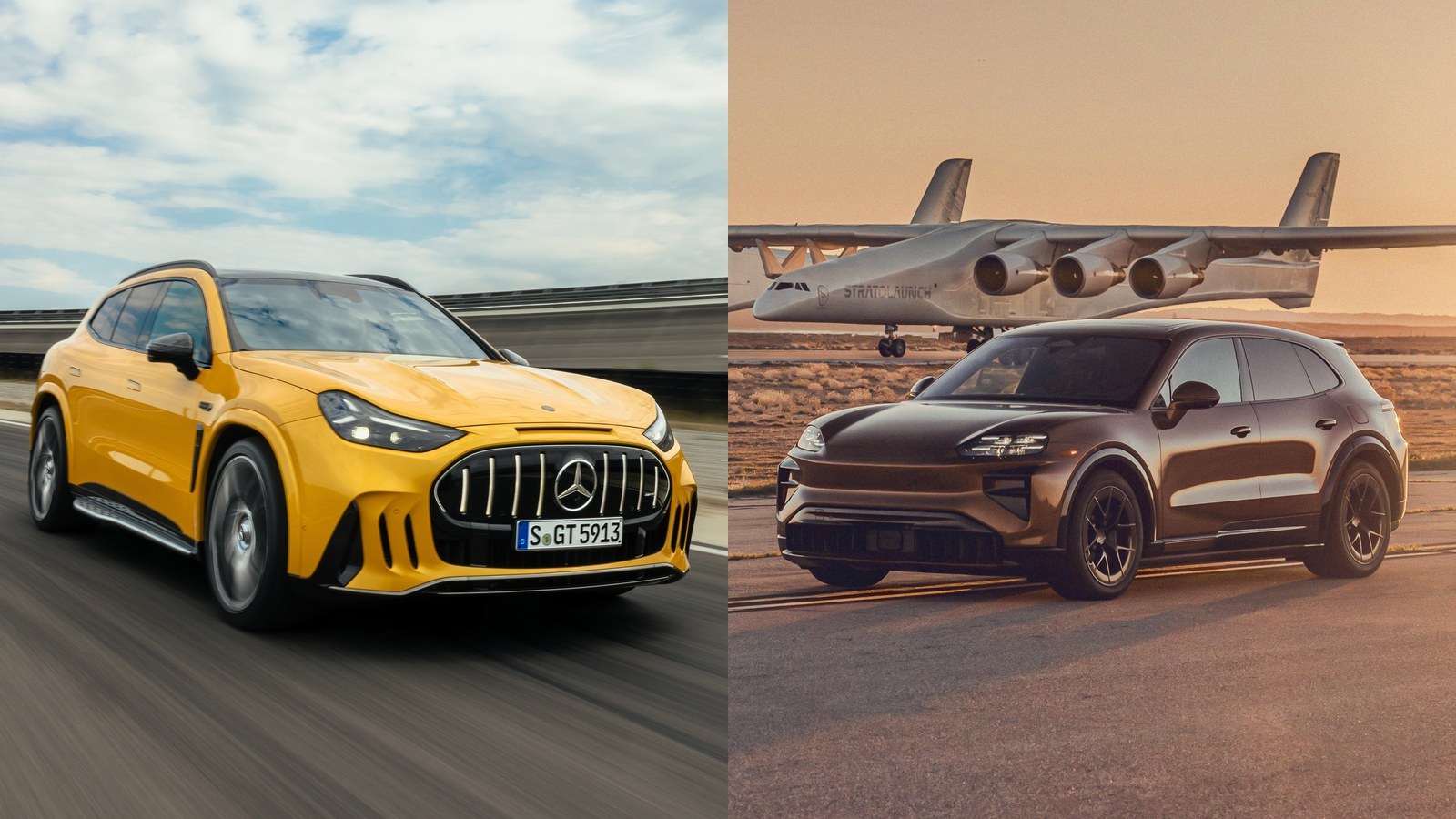
Two German electric SUVs now claim more than 1,100 horsepower, and only one of them is in a US showroom. The Porsche Cayenne Turbo Electric has been on sale since late summer with a $163,000 sticker. The Mercedes-AMG GT SUV showed up on October 17 with 1,153 hp, charging rated at 710 kW, and no American price. If you are shopping at this level, the real question is not which one wins on paper. It is whether the AMG is worth waiting until summer 2027 for.
We covered what America gets from the AMG GT SUV when it debuted, and the Cayenne Electric's 2027 updates and prices in September. This is the first time we line the two up side by side. One caveat up front: AMG's figures are preliminary factory estimates, Porsche's range number is an EPA estimate from Porsche rather than a published EPA listing, and neither SUV has been through an independent test we can cite as official.
AMG GT 63 SUV vs. Cayenne Turbo Electric: the numbers
| Spec | 2028 Mercedes-AMG GT 63 SUV | 2027 Porsche Cayenne Turbo Electric |
|---|---|---|
| US base price | TBA | $163,000 plus $2,350 delivery |
| US availability | Summer 2027 (2028 model year) | On sale now; 2027 models from Q1 2027 |
| Motors | Three axial-flux motors | Two permanent-magnet synchronous motors |
| Peak output | 1,153 hp (860 kW) | 1,139 hp (850 kW) with Launch Control; 844 hp (630 kW) in normal mode |
| Continuous output | 711 hp (530 kW) | Not quoted |
| Peak torque | 1,475 lb-ft (2,000 Nm) | 1,106 lb-ft (1,500 Nm) |
| 0–60 mph | 2.4 s (AMG est., 1-ft rollout) | 2.4 s (Porsche, with Launch Control) |
| Top speed | 168 mph | 162 mph |
| Battery (usable) | 128 kWh (106 kWh on GT 53) | 113 kWh |
| Range | 385–435 mi WLTP; EPA TBA | 350–388 mi WLTP; 298 mi EPA est. (Porsche) |
| Peak DC charging | 710 kW | 400 kW |
| 10–80% charge | 12 min (16 min at 400 kW) | Under 16 min |
| WLTP range added in 10 min | 282 mi (454 km) | 196 mi (315 km) |
| US charge port | NACS | NACS (DC) plus J1772 (AC) |
| Curb weight (DIN) | 5,941 lb (2,695 kg) | 5,831 lb (2,645 kg, EU spec) |
| Length / wheelbase | 200.2 in / 119.7 in | 196.3 in / 119.0 in |
| Drag coefficient | 0.27 | 0.25 |
| Cargo, rear seats up | 21.4 cu ft plus 2.8 cu ft frunk | 19.5 cu ft plus 3.2 cu ft frunk |
| Towing | Not quoted | 7,716 lb (3,500 kg), properly equipped |
| Active suspension | AMG Active Ride Control+ standard | Porsche Active Ride optional; air suspension standard |
| Rear-axle steering | Up to 6 degrees | Optional, up to 5 degrees |
AMG figures come from the Mercedes-Benz USA release and are marked preliminary. Porsche figures come from Porsche Cars North America and the global press kit; weight is the EU DIN value because Porsche has not published a US curb weight.
Horsepower: a tie that AMG wants to turn into a rout
Fourteen horsepower separates the two peak figures, which is noise at this level. AMG's argument is about what happens after the first launch. The GT 63 is rated for 711 hp of continuous output, and its spec sheet lists a 63-second boost window. Porsche does not publish a continuous figure for the Cayenne; it quotes 844 hp in normal driving, with the full 1,139 hp tied to Launch Control and a 10-second Push-to-Pass burst of 173 hp on top of the everyday number.
The torque gap is real: 1,475 lb-ft against 1,106 lb-ft. Both companies quote 2.4 seconds to 60 mph, though AMG's time uses a 1-foot rollout and is marked as an estimate. Without the rollout, AMG says 2.6 seconds. In practice, both SUVs will out-accelerate almost anything that shares the road with them, and the owner who feels the difference will be the one who repeats the launch five times in a row.
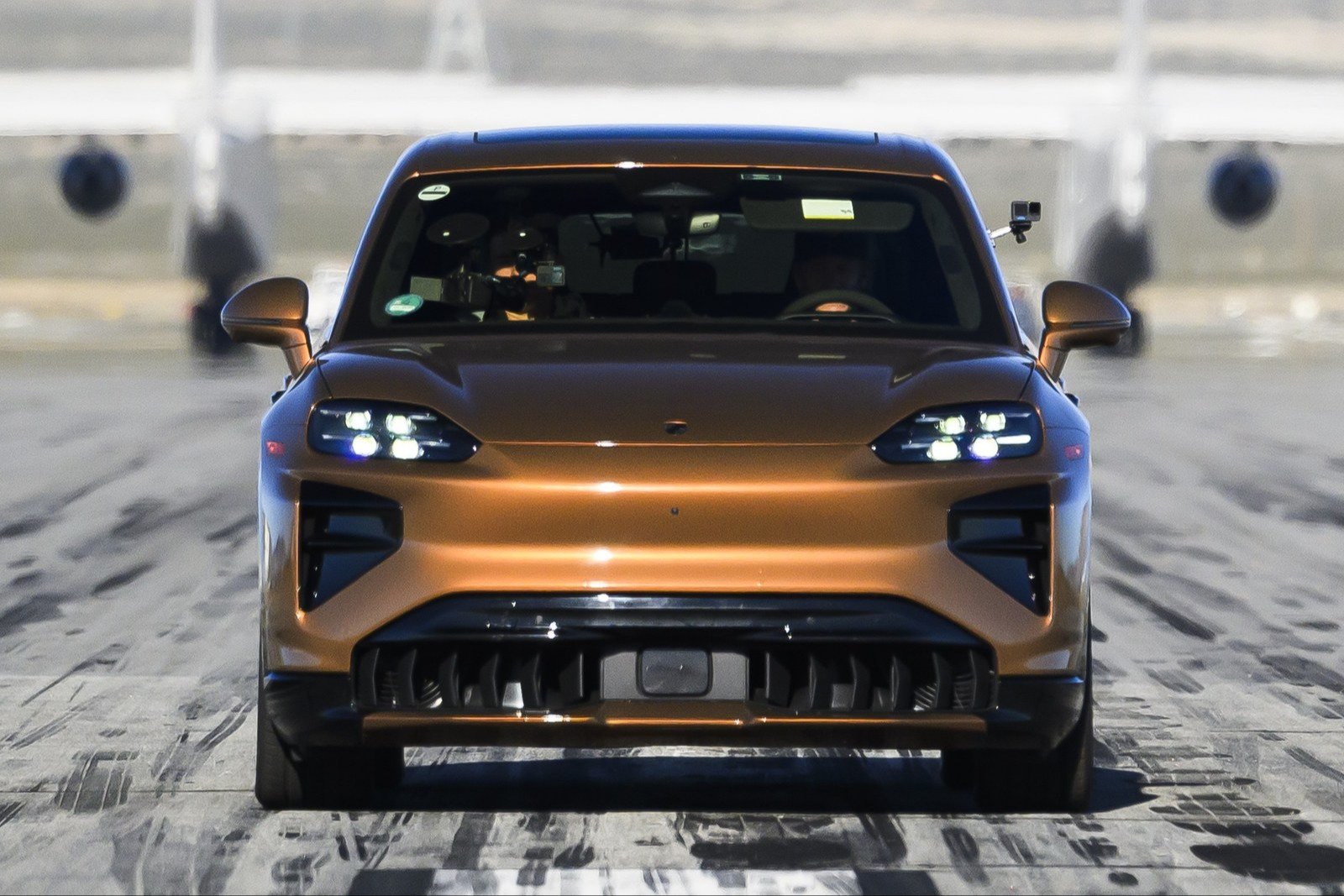
Charging is where the AMG opens a real gap
The Cayenne's 400-kW peak and sub-16-minute 10–80% charge were the headline numbers at its launch last November. The AMG, which Mercedes unveiled at its 140th-anniversary festival in Stuttgart, moves the bar on paper: 710 kW peak and 12 minutes for the same window. Mercedes says a 10-minute stop adds 282 miles of WLTP range, against 196 for the Porsche.
Two things temper that. First, no public charger in the US delivers 710 kW today. Plugged into a 400-kW station, the AMG needs 16 minutes for 10–80%, which is essentially the Porsche's number. Second, AMG calls all of its charging data preliminary. The advantage is structural, since the 128-kWh pack uses directly cooled cylindrical cells, but it will only pay off once higher-powered hardware shows up along American highways. Both SUVs use a NACS port in the US, so Tesla Supercharger access is not a differentiator.
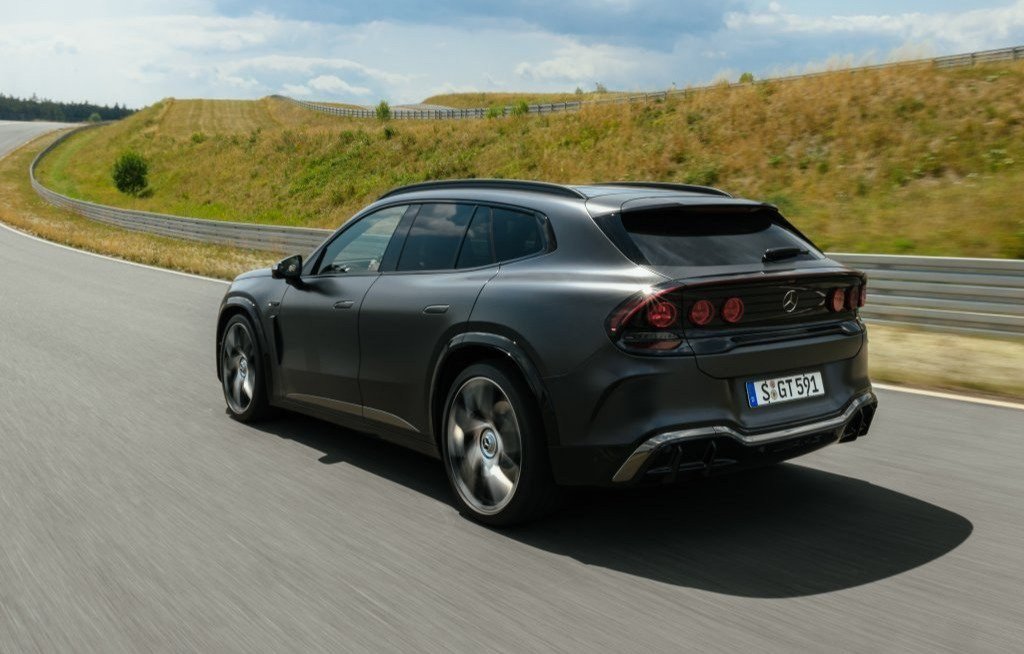
Range: one estimate, one placeholder
Porsche's US site lists an EPA range estimate of 298 miles for the Turbo Electric, rising to 303 miles on 21-inch all-season tires. Mercedes has only WLTP numbers for the AMG: 385 to 435 miles with the 128-kWh pack. WLTP figures run well above EPA ratings, so the AMG's eventual EPA number will land a long way below 435 miles. The larger battery should give it the edge, but the margin is unknown until Mercedes-Benz USA files its numbers.
Size, utility, and the things a spec table hides
The AMG is about four inches longer, 110 pounds heavier, and slightly less slippery through the air. It also carries two more cubic feet behind the rear seats. Porsche counters with a quoted 7,716-pound tow rating, a figure Mercedes has not matched or even published for the GT SUV, and an optional Off-Road Design package. The Cayenne is the one of the two that is pitched as an all-rounder; the AMG is pitched as a sports car with a tall roof, and its standard Active Ride Control+ suspension with active pitch and roll control is the hardware behind that claim. Porsche sells its equivalent, Active Ride, as an option on the Turbo Electric.
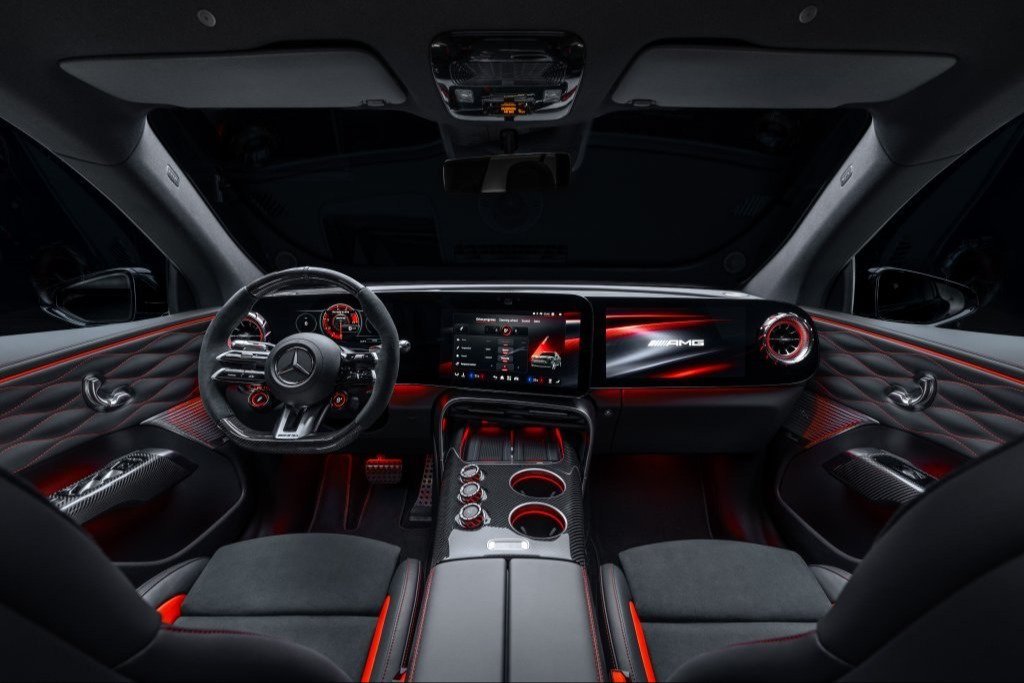
Price and timing: the part Mercedes hasn't filled in
Here the Porsche has the only hard number. The Cayenne Turbo Electric starts at $163,000 before the $2,350 delivery fee, and the 2027 model is open for orders with deliveries in the first quarter. Mercedes has priced exactly one GT SUV anywhere: the entry GT 53, which opens for orders in Germany on October 20 at €113,050 including 19 percent VAT. That tells you nothing about a US sticker for the GT 63, and Mercedes-Benz USA has not published one. All three AMG versions reach American dealers in summer 2027 as 2028 models.
The broader US field matters too. The Cadillac Escalade IQ sits at $127,405 with 750 hp and a Cadillac-estimated 465 miles of range; Lucid's 1,070-hp Gravity GT-S starts at $125,900 before destination, per Lucid. Neither is a Cayenne rival on handling, but both show that 1,000-plus horsepower and six-figure pricing no longer belong to the Germans alone.
Which one should you wait for?
If you want the car in your driveway before next summer, the choice is made for you: buy the Cayenne Turbo Electric. It is quicker than anything a reasonable person needs, its charging is still among the fastest you can actually use at a US station today, and Porsche has given you a price, a range estimate, and a delivery window. Those are not small things in a segment where rivals keep announcing SUVs they haven't finished.
Waiting for the AMG makes sense in two cases. One, you charge on long trips and expect to see 600-plus-kW hardware near you within the next couple of years; the AMG's battery is built for that future in a way the Porsche's is not. Two, you want the bigger battery and the longer real-world range that should follow from it. Against that, you accept a car with no US price, no EPA rating, preliminary performance figures, and a nine-month wait. The AMG's spec sheet is the more ambitious one. The Porsche's spec sheet is the one you can act on. We will update this comparison when Mercedes-Benz USA publishes pricing and EPA figures, and when the AMG's first independent tests arrive.