Porsche Mission S vs. Tesla Roadster: Two Supercars, One Week, Zero Prices
Porsche and Tesla revealed their next supercars hours apart. One has a red button that switches off every driver aid; the other flipped upside down on thrusters. Here is what each has actually committed to.
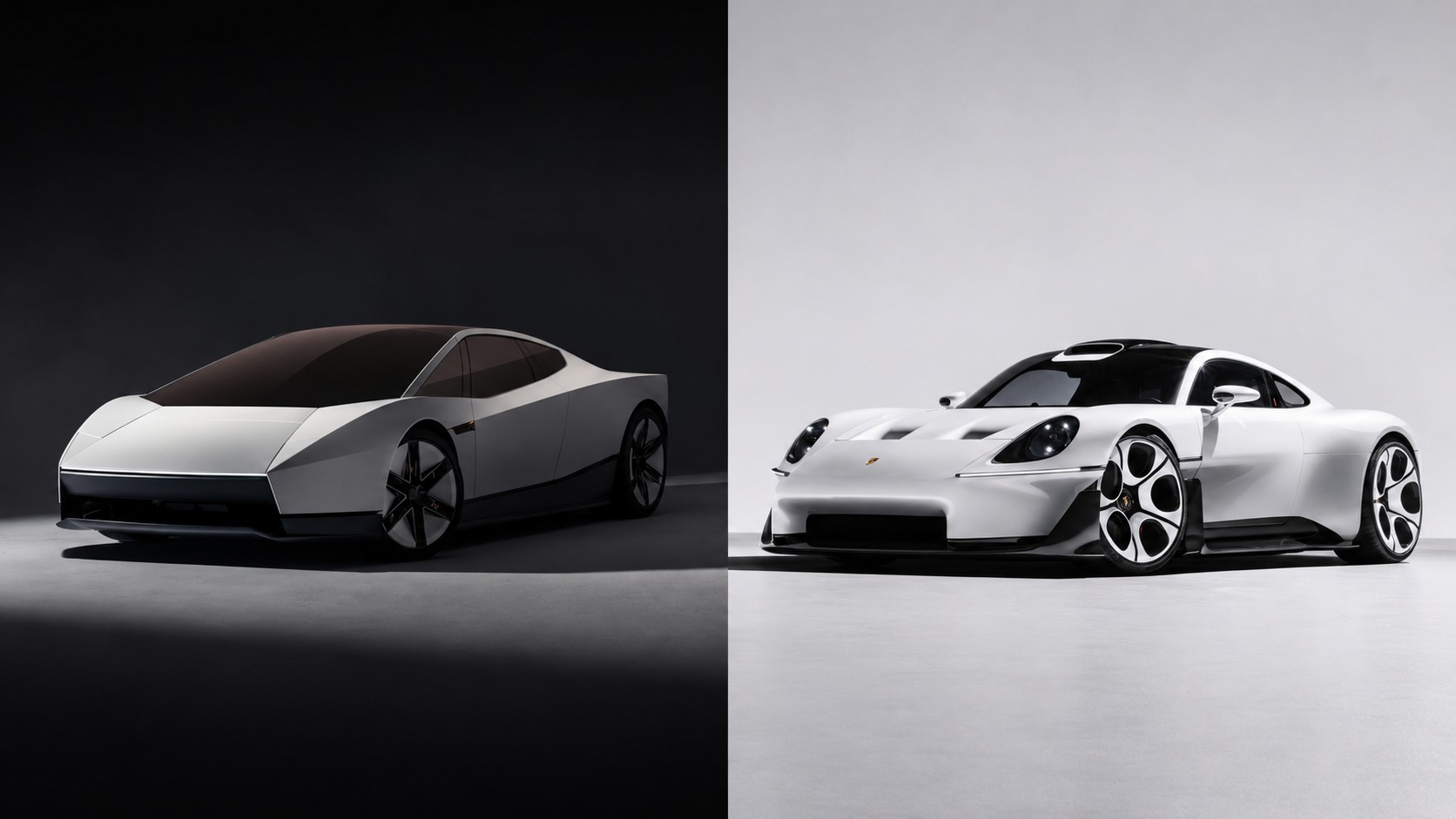
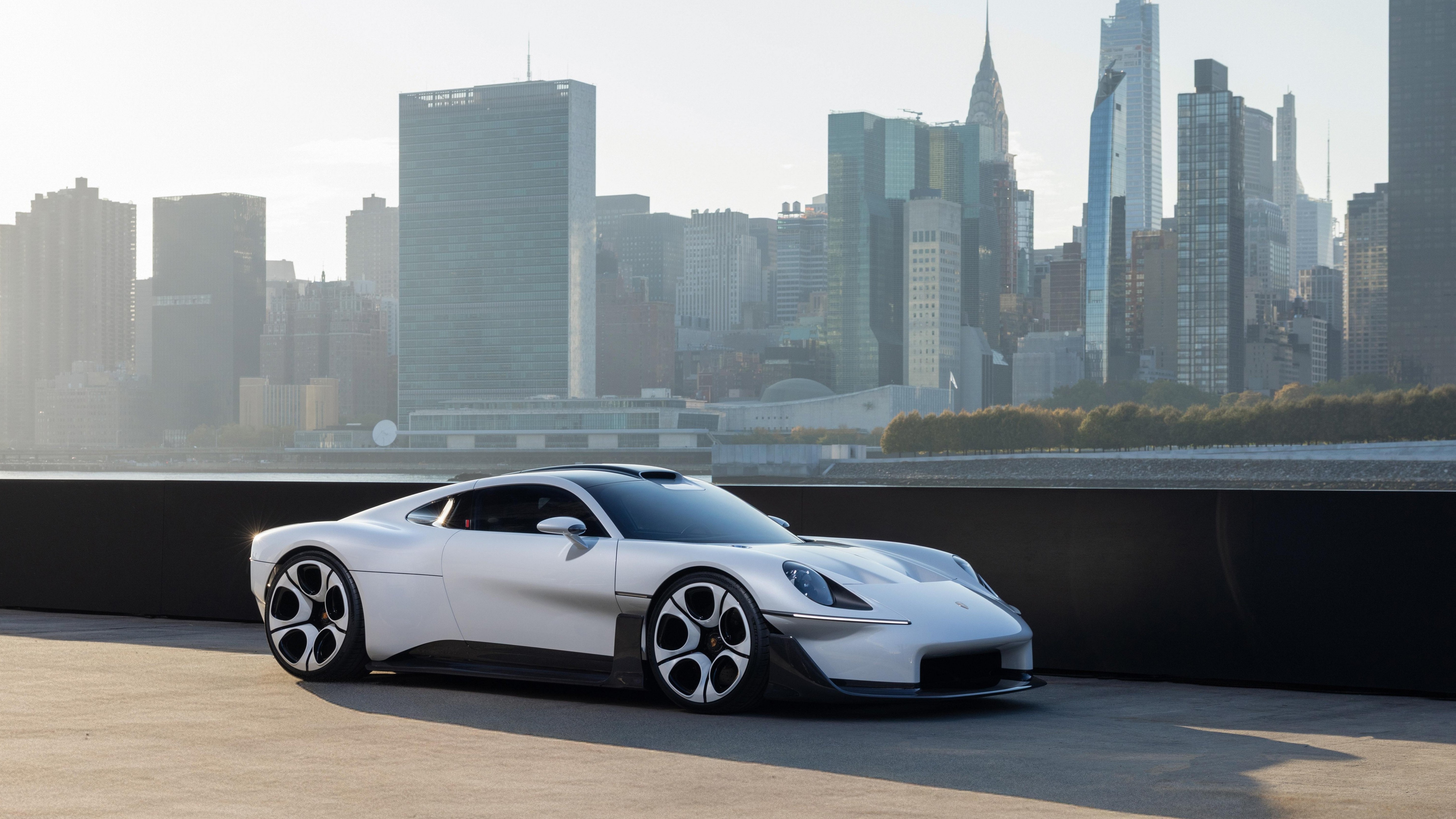
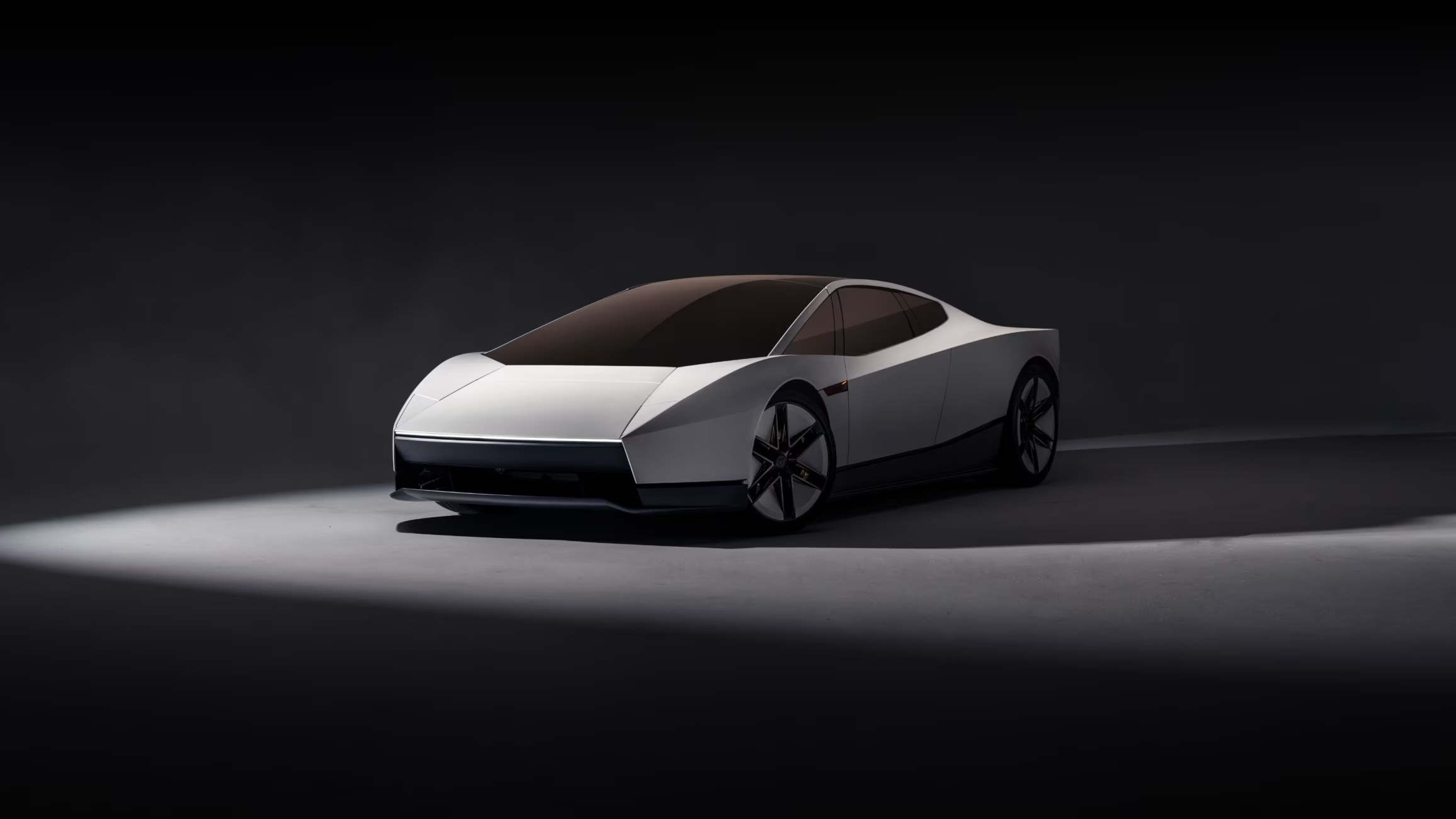
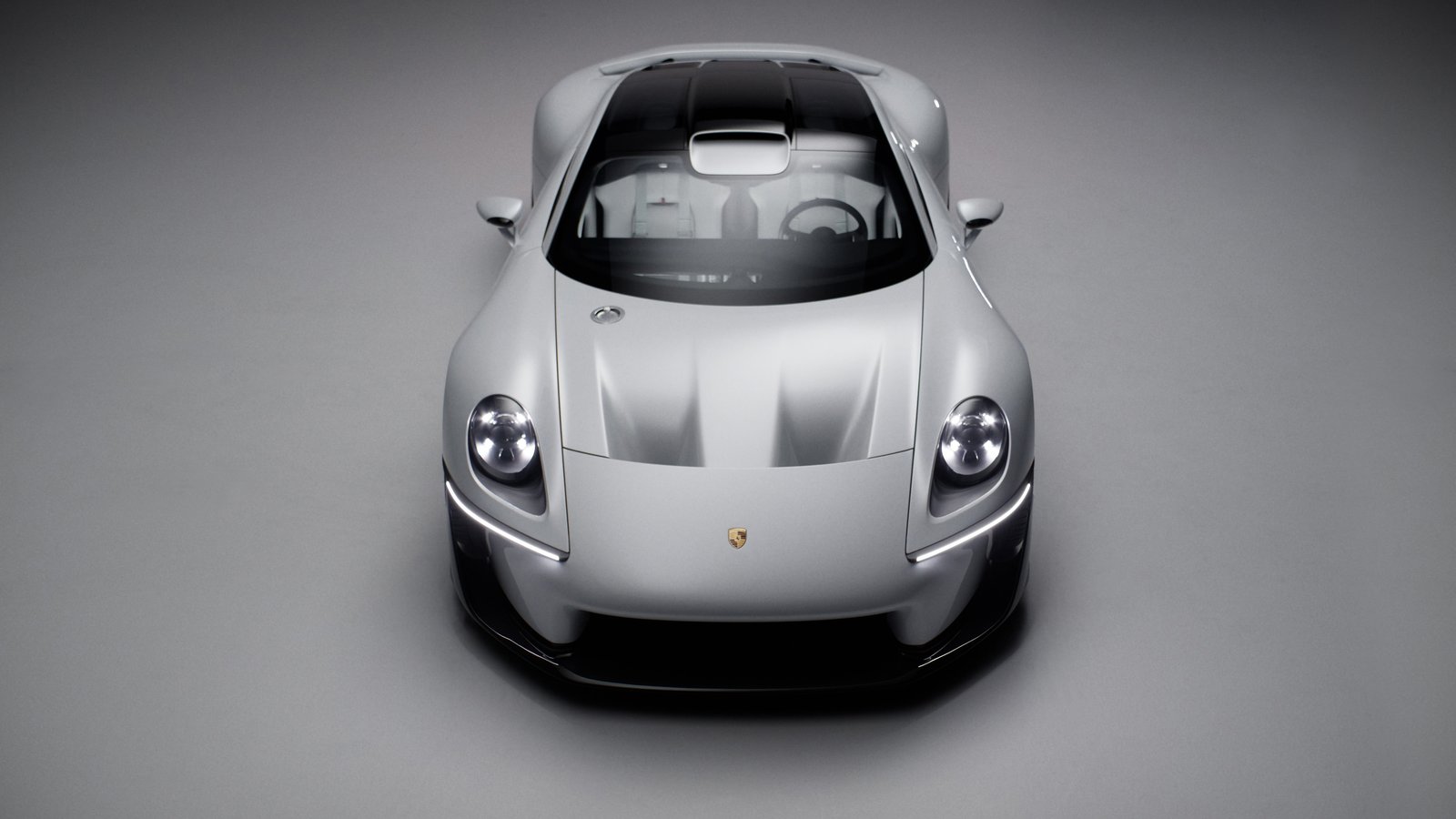
On Thursday, within a few hours of each other, Porsche and Tesla showed what they think a supercar should be in 2028. Porsche drove the Mission S onto a pier in Queens, New York, with a red button on the steering wheel that switches off every driver aid. Tesla drove the new Roadster up a ramp at a SpaceX rocket test site in McGregor, Texas, held it upside down with fans, and flipped it back to the ground with compressed-air thrusters. Both cars are headed for production. Neither has a price.
We have covered each reveal on its own: our Porsche Mission S guide and the Tesla Roadster reveal story. This is the side-by-side: what each company has actually committed to, what it has only claimed, and which one you should be putting a deposit on if you are the kind of buyer both of them want.
The spec sheet, as far as it exists
| Criterion | Porsche Mission S | Tesla Roadster |
|---|---|---|
| Status | "Vision model," previews a permanent mid-engine series model above the 911 (Porsche release) | Prototype; Tesla says production in 2028 |
| Revealed | Oct. 15, 2026, Queens, N.Y. | Oct. 15, 2026, McGregor, Texas |
| Powertrain | Mid-mounted engine; Porsche says gas or hybrid, not electric (CEO Michael Leiters to Road & Track). Output TBA | Battery electric. Motor count, output, battery capacity TBA |
| Transmission | Show car has a PDK; platform engineered for a manual as well (Leiters) | Single-speed; no manual |
| 0–60 mph | TBA | Tesla's on-screen timer read 0.81 s in a live run; "under one second" is the official claim. Not independently timed |
| Top speed | TBA | "Over 230 mph" (Tesla claim) |
| Range | n/a | "Over 300 miles" (Tesla claim; 2017 promise was 620) |
| Seats | Two | Two (Performance, Thrust); one (Rocket) |
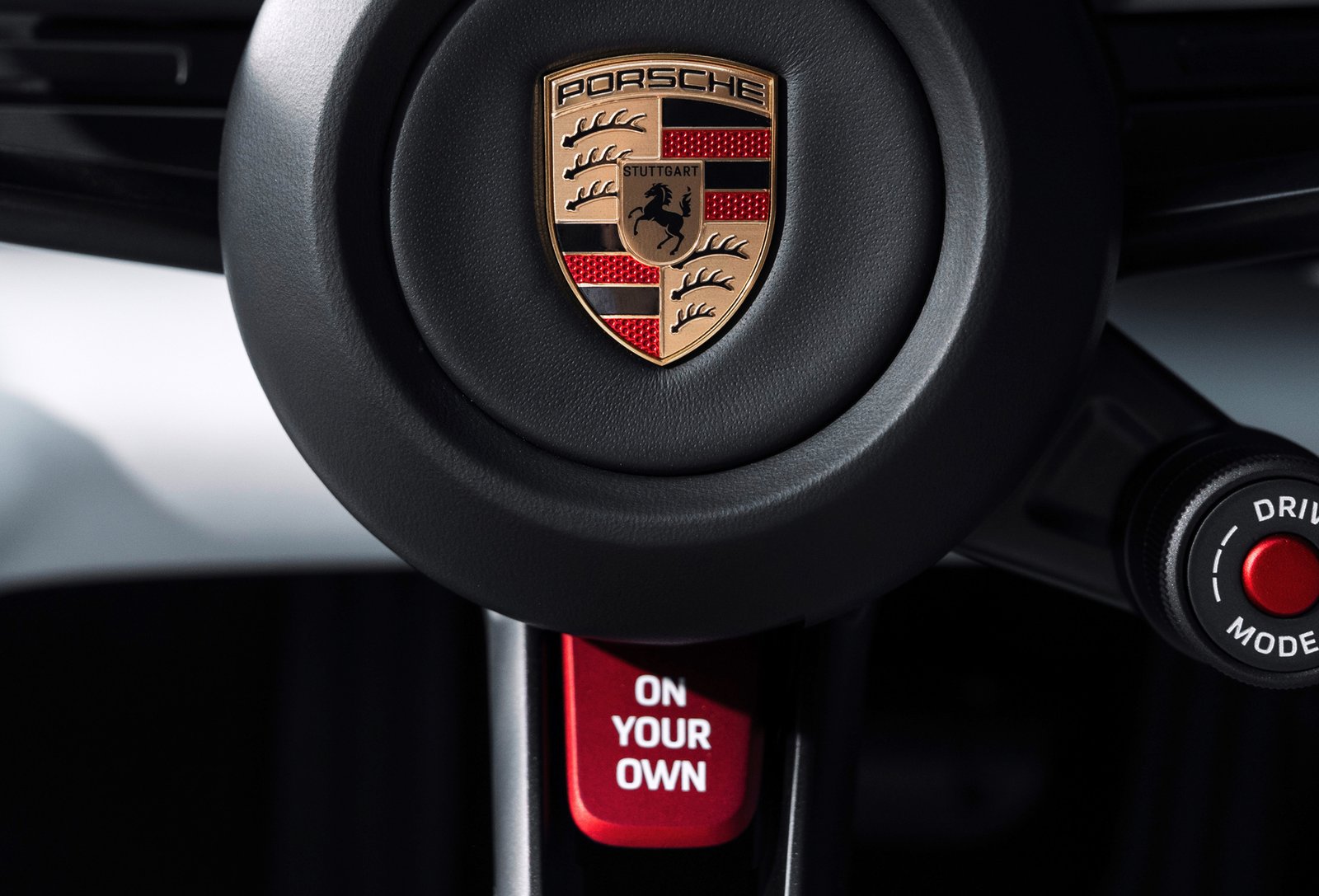
| Driver aids | "On your own" red button disables assistance systems | Musk: the Roadster is the only Tesla that will stay human-driven |
| Center screen | None; retractable phone mount, five round gauges | TBA |
| Deposit | None taken | $50,000 (Performance), $250,000 (Thrust); Rocket invite-only |
| Price | TBA | TBA; $200,000 base quoted in 2017 |
| On sale | TBA | 2028 (Tesla) |
Difference one: what counts as proof
Tesla showed. The inverted ramp drive, the mid-air flip, the jump over a line of Tesla's own vehicles, and the sub-second launch all happened in front of cameras. What Tesla did not show is anything you would use to decide whether to buy a car: a battery figure, a motor layout, a curb weight, or a price. The 0.81-second time was Tesla's own display, and Reuters, The Drive, and every other outlet in the room reported it as the company's number.
Porsche told. The Mission S release is four pages, and the word "engine" appears without an adjective. Everything about the powertrain comes from Leiters talking to reporters afterward: gas or hybrid, manual or PDK, "customer demand will define what we build on this platform." Porsche did drive the car on stage, and it made a noise, but it published no performance claim at all.
If you want a number, Tesla has one. If you want a commitment that survives contact with an engineering department, Porsche's statement that this is "a permanent and versatile addition to our customer offering" is the more conservative promise and, on the company's record, the more reliable one.
Difference two: the driver
The Mission S is an argument against screens. There is no center display, no passenger display, and the instruments are five round dials that rearrange themselves by drive mode. The key is a slab of aluminum that slots in to the left of the wheel, where a 911 key has always gone. The red "On your own" button is the whole philosophy in one control: press it and the car stops helping.
The Roadster is an argument that the driver is a legacy feature. On Tesla's Q1 earnings call in April, Musk said the Roadster would be the company's only manually driven car long term, and on Thursday he repeated that every other new Tesla will be autonomous. The Roadster exists, in his framing, as "the best of the last of the human-driven cars." The thrusters, the suction fans, and the invite-only single-seat Rocket trim are a stunt package bolted to that farewell.
Difference three: what the companies need from them
Porsche needs the Mission S to make money. The car is the halo of the "Sportwagenschmiede '35" plan announced a week earlier, which reset the lineup around combustion and hybrids after the EV-first strategy stalled. A permanent mid-engine model above the 911, priced against Ferrari and Lamborghini, is the highest-margin product Porsche can build, and Leiters said as much by calling it a platform rather than a one-off.
Tesla does not need the Roadster to make money, and Musk said so on stage: he is not sure it "moves the needle massively from a revenue standpoint." Morningstar's analyst called it a halo; Deepwater's Gene Munster called it "an engineering flex with no commercial value beyond embarrassing traditional car makers." Both can be true. Tesla reports third-quarter results on October 21, and the Roadster's job that week is to be the most-watched car on the internet.
Which one should you put money on?
Only one of them will take your money today, so the question is partly rhetorical. A $50,000 Roadster deposit buys a place in a queue that opened in 2017, closed, and reopened in September; the car has slipped from the 2020 Musk originally promised to 2028, and the range promise has fallen by more than half. Check the refund terms on the reservation page before you wire anything; Tesla has not published new ones with the reveal.
The Mission S has no order book, no price, and no date, and that is not a weakness. Porsche is not taking deposits on a vision model, and the production car will arrive with a spec sheet, an EPA label if it is a hybrid, and a dealer. If you are choosing between the two on the basis of which car you will actually drive, the Porsche is the safer bet by a wide margin. If you are choosing on the basis of which one your friends will ask about, the Roadster already won on Thursday night.
Our bet: the Mission S production car arrives before the Roadster does, with a manual option, and the first owners will spend their first weekend pressing the red button. The Roadster's first owners will spend theirs reading the terms of the Thrust package.
What we don't know yet
- Porsche: engine configuration and output, hybrid or not, manual availability at launch, production name, model year, dimensions, weight, and price. Porsche has not commented beyond "gas or hybrid."
- Tesla: battery capacity, power, drivetrain, per-trim performance figures from any source other than Tesla's display, base price, Rocket pricing and availability, and whether the planned Snake River Canyon jump happens.
- Whether either company will publish an independently timed acceleration figure before deliveries.
What's next
Porsche says the Mission S design language will "soon" reach the production portfolio; the production supercar's engine and timing are the next official steps, and a manual would put it on our list of every new car still offered with a stick. Tesla's next date is the October 21 earnings call, where analysts will ask what the Roadster costs to build and whether 2028 holds.