BMW Cuts Its Car Margin Outlook to Break-Even as Operating Profit Falls 30%
Restructuring charges coming in the fourth quarter push BMW's car-margin forecast to minus 0.5% to plus 0.5%, its second cut since June, as China sales fall by a quarter.
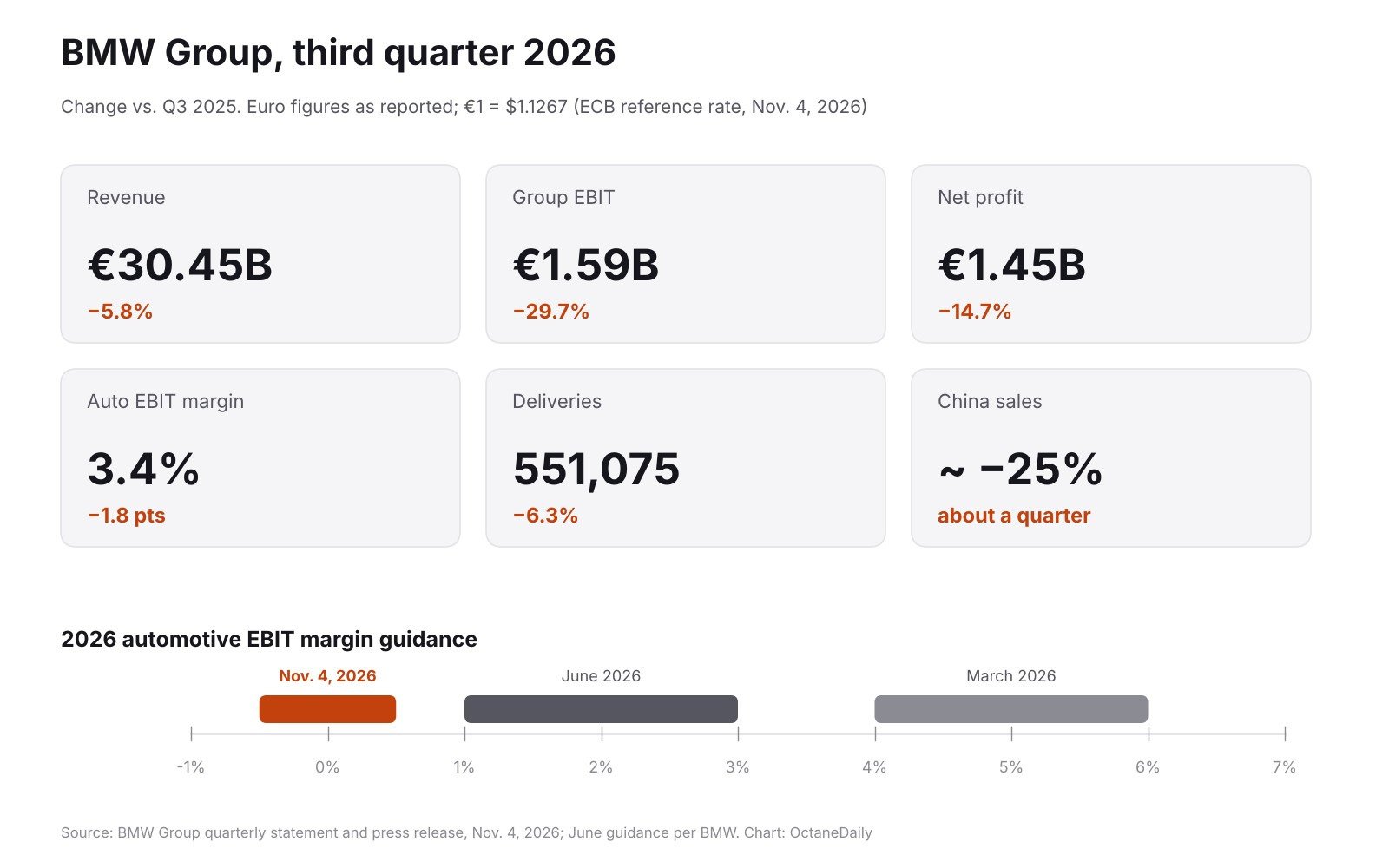
BMW now expects its car business to finish 2026 at roughly break-even on a reported basis. The new forecast came with third-quarter results that showed group operating profit (EBIT) down 29.7% to €1.59 billion ($1.79 billion), and it is the second time since June that the automaker has lowered its outlook for car margins.
Unlike most of the companies in our Q3 2026 auto earnings scorecard, BMW is not blaming the quarter itself for the new number. The bigger hit is still to come: restructuring charges the company will book in the fourth quarter.
For July through September, revenue slipped 5.8% to €30.45 billion ($34.31 billion), or 7.7% excluding currency swings. Net profit fell 14.7% to €1.45 billion, and earnings per share came to €2.46. The car division's EBIT margin narrowed to 3.4% from 5.2% a year earlier, which was still a little better than the 3.1% analysts had expected, according to Investing.com.
Deliveries dropped 6.3% to 551,075 vehicles. The BMW brand accounted for 479,294 (down 6.8%), MINI for 70,712 (down 2.4%), and Rolls-Royce for 1,069 (down 18%).
Why the forecast moved again
BMW began the year targeting a car margin of 4% to 6%. In June it cut that to 1% to 3%, citing a worsening Chinese market and the economic fallout of the Middle East conflict. The range now runs from minus 0.5% to plus 0.5%. That figure covers the car business only; the group as a whole remains profitable.
Before what BMW calls portfolio and structural measures, the company still expects a car margin above 2%. Those measures will cost about 2.5 percentage points this year. Strong demand for the Neue Klasse models has led BMW to add production shifts and speed up the ramp, so it plans to retire older vehicles and technology sooner, including selected models built on its fifth-generation battery tech. It is also cutting management roles faster than first announced.
The automaker hasn't put a euro figure on the fourth-quarter charges. It kept its target for automotive free cash flow above €2.5 billion ($2.82 billion) and now expects car deliveries to come in moderately below 2025. "Current developments in our industry call for decisiveness and swift implementation," said Milan Nedeljković, chairman of BMW's board of management.
China down a quarter, the U.S. still growing
BMW's sales in China fell by about a quarter in the third quarter, roughly in line with the overall market, the company said. The long-wheelbase iX3 goes on sale there this month.
The U.S. and Europe partly offset that. BMW Group's U.S. sales rose 2.5% in the quarter and 3.4% for the year to date, while Europe gained 2.6%. As our breakdown of BMW's Q3 U.S. sales showed, the outgoing 3 Series carried the brand while the iX dwindled to 121 sales. Higher import tariffs trimmed about 1.25 points from the car margin, down from roughly 1.75 points a year earlier.
Price pressure is also showing up on used cars. Automotive News reported that BMW and Volkswagen both said weaker resale values for combustion models, as more EVs reach the used market, are weighing on profits.
What it means for Spartanburg and U.S. buyers
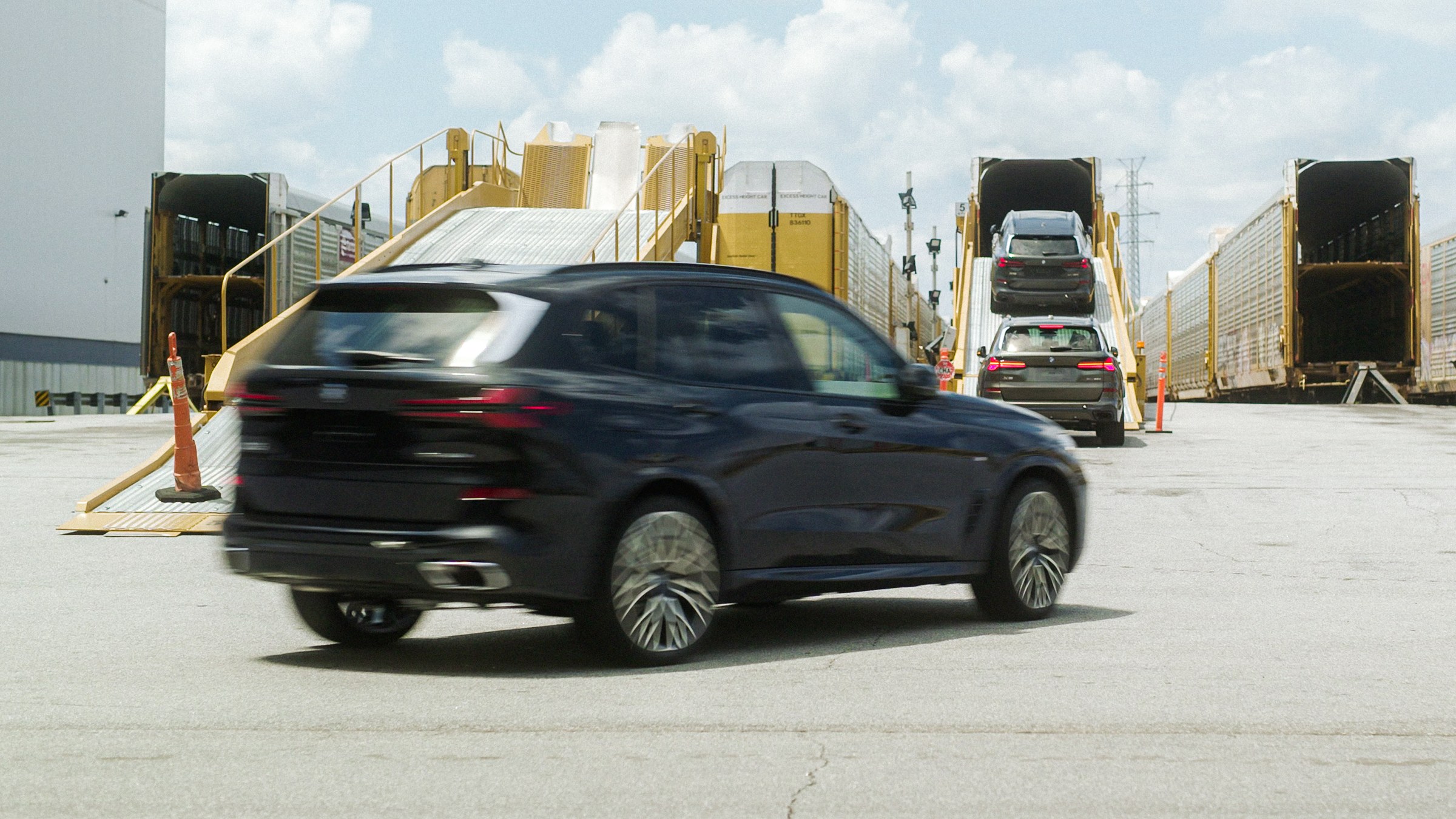
BMW's restructuring announcement doesn't mention its U.S. operations. Its plant in Spartanburg, South Carolina, built 412,799 X models in 2025 and shipped about half of them abroad, worth about $9 billion, making BMW the largest U.S. auto exporter by value. On the analyst call, Nedeljković named Spartanburg among the five plants that will build Neue Klasse models. The voluntary severance program he described covers indirect employees of BMW AG in Germany.
BMW hasn't said which fifth-generation battery models will end early, and it hasn't said anything about U.S. pricing. The next big test for American buyers is the eighth-generation 3 Series, which starts at $49,900 and arrives in early 2027. That is above the $40,000-to-$45,000 band where the cheapest luxury cars now sit.
BMW will report full-year 2026 results in March. On the analyst call, management reiterated a 3% to 5% car margin target for 2028.