BMW Survey: 73% of Americans Need 75 Miles a Day. 42% Want an EV With 300
A BMW-commissioned poll finds most Americans could live with 75 miles of range, yet 42% want 300. Price, not range, is still the biggest barrier.
Most Americans say an electric car with 75 miles of range would cover their daily driving. A large share still won't consider one that goes less than 300. That is the central finding of a new survey commissioned by BMW Group, a company with long-range EVs to sell, and it should be read with that in mind.
BMW's interest is easy to see. Its iX3 is EPA-rated at up to 434 miles, and the iX4 coupe-SUV due in March carries a company estimate of 428 miles. A poll showing that shoppers prize big range numbers flatters exactly those cars.
What the survey found
According to BMW's release, 73% of respondents picked 25, 50, or 75 miles when asked how much range would get them through a normal day. Yet 42% said they would want at least 300 miles before considering an EV. That group includes the 18% of all respondents who want 400 miles or more.
Minimum range would be a deciding factor for 72%. Men said so far more often than women, 80% to 64%.
The daily figure holds up against independent data. The AAA Foundation for Traffic Safety, which has no cars to sell, found that U.S. drivers averaged 31.1 miles a day in 2024. BMW's own 2025 poll put the 75-miles-is-enough share at 75%, so the number has barely moved.
The 300-mile wish is also less demanding than it sounds. The median range of 2024-model-year EVs was 283 miles, according to the Department of Energy. Shoppers are asking for roughly what a typical new EV already delivers, plus a margin for road trips and for the range EVs lose in cold weather.
Charging speed and price
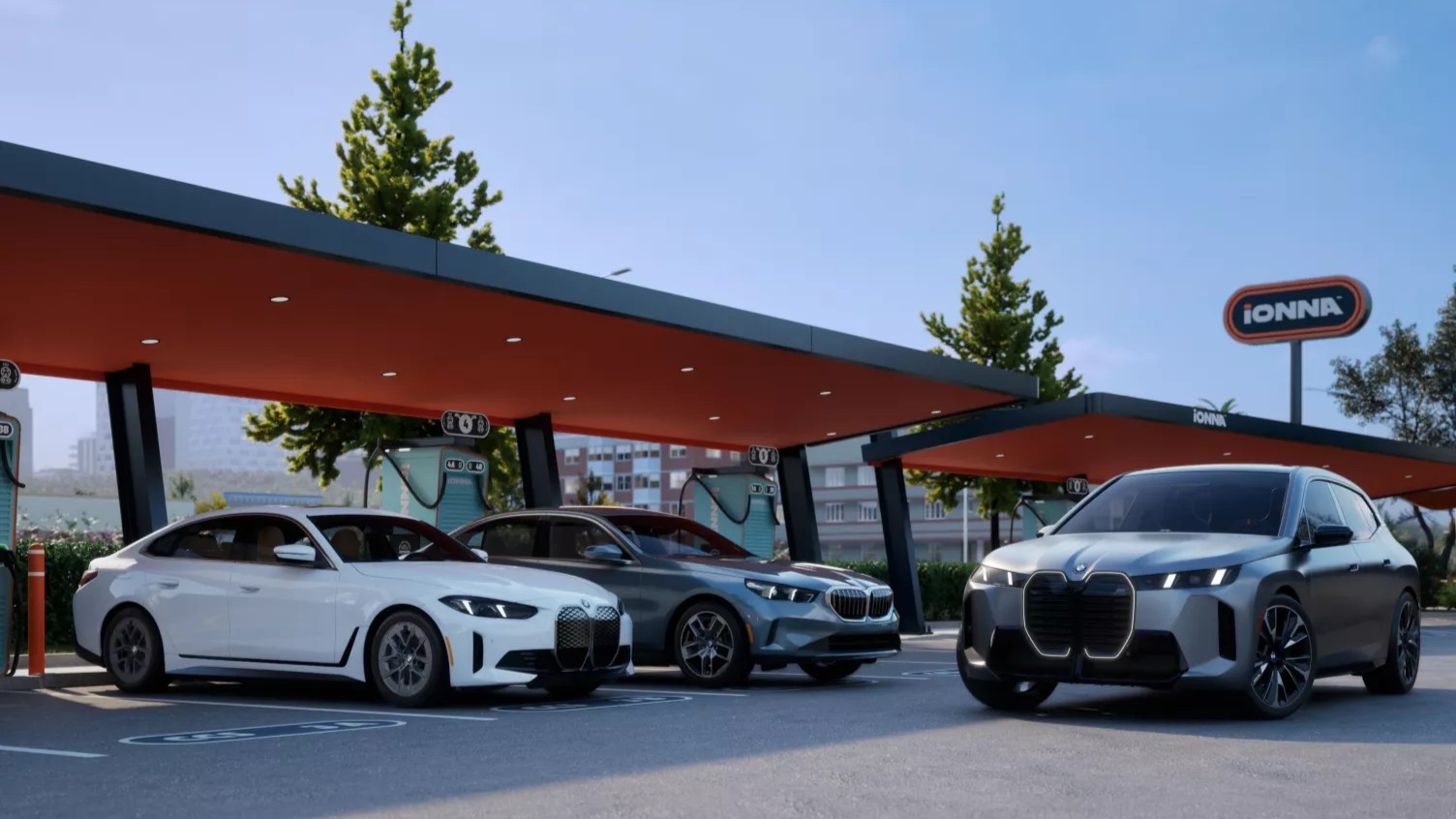
BMW also asked about fast charging. Some 53% said they would be more likely to consider an EV that adds about 150 miles in a 10-minute stop. The split by age is wide: 70% of Gen Z and 65% of Millennials, but 30% of Baby Boomers.
That benchmark sits just under what BMW claims for the iX3, which it says can add an estimated 185 miles in 10 minutes on an 800-volt charger. The release makes the connection itself.
Range is not what stops most people. Purchase price was the top barrier, named by 51%, ahead of battery longevity or replacement cost (31%) and charging time (26%). Driving range came in at 24%.
More than half, 55%, would consider a used or certified pre-owned EV if the savings were big enough. That market is less of a bargain than it was: used EV prices are up about 8% from a year ago.
Considering is not buying
BMW reports that 68% of Americans would consider an EV, and that 56% now see EV buyers as "early adopters," down from 62% in 2025. Alexander Schleicher, the company's head of e-mobility for North America, said the survey confirms that "EVs are mainstream now."
Sales data is cooler. EVs have held near 5.8% of new-car sales in 2026, according to Cox Automotive. And when AAA asked a stricter question in 2025, only 16% of U.S. adults said they were likely or very likely to buy an EV as their next car. The wording and timing differ, but the distance between the two figures shows how low a bar "would consider" is.
How the survey was done
Big Village ran the survey online from September 11 to 13, 2026, among 1,005 U.S. adults, weighted to represent the adult population. Year-over-year comparisons use a May 2025 survey of 1,007 adults.
The release gives no margin of error and does not publish the full question wording. Small year-to-year shifts should be read cautiously.