The $7,500 EV Credit Has Been Gone for a Year. Here's What Actually Changed
EV sales settled near 5.8% of the market, stickers fell by up to $9,800, leasing dropped from 71% to 53%, and used EVs got more expensive. What the numbers say a year after September 30, 2025.
On September 30, 2025, the federal clean-vehicle credits stopped applying to new purchases. Twelve months later the EV market has not disappeared, but it has settled at roughly half its former share of new-car sales, and it now runs on lower sticker prices, fewer leases, and a used market that is suddenly the busiest corner of the business.
What the law took away
Public Law 119-21, signed July 4, 2025, ended three credits for any vehicle acquired after September 30, 2025: the $7,500 new-vehicle credit (Section 30D), the up-to-$4,000 used credit (25E), and the commercial credit (45W) that finance arms used to pass $7,500 through to lease customers regardless of where the car was built. "Acquired" meant a signed binding contract plus a payment, so buyers with a deposit down by the deadline could still claim the credit after delivery, per IRS fact sheet FS-2025-05. The 30% home-charger credit followed on June 30, 2026.
Sales: a record, a drop, then a floor
The deadline pulled demand forward. Kelley Blue Book counted 438,487 new EVs sold in the third quarter of 2025, an all-time high and 10.5% of the market (Cox Automotive later revised the share to 10.6%). The fourth quarter fell to about 234,000 units and a 5.8% share, the lowest quarterly volume since late 2022.
Since then the line has flattened rather than kept falling. Sales were 216,399 in the first quarter of 2026 and 247,226 in the second, down 27% and 20.5% from a year earlier but holding a share near 5.8% both times, according to Cox Automotive's Q2 report. August 2026 brought 78,895 sales and a 5.7% share, 46.9% below August 2025, though that month was the peak of the pre-deadline rush. Tesla still sold 51.7% of all new EVs in August, and Cox's January forecast of a share "near 8%" for 2026 has proved two points too optimistic.
Prices: the credit was replaced by sticker cuts
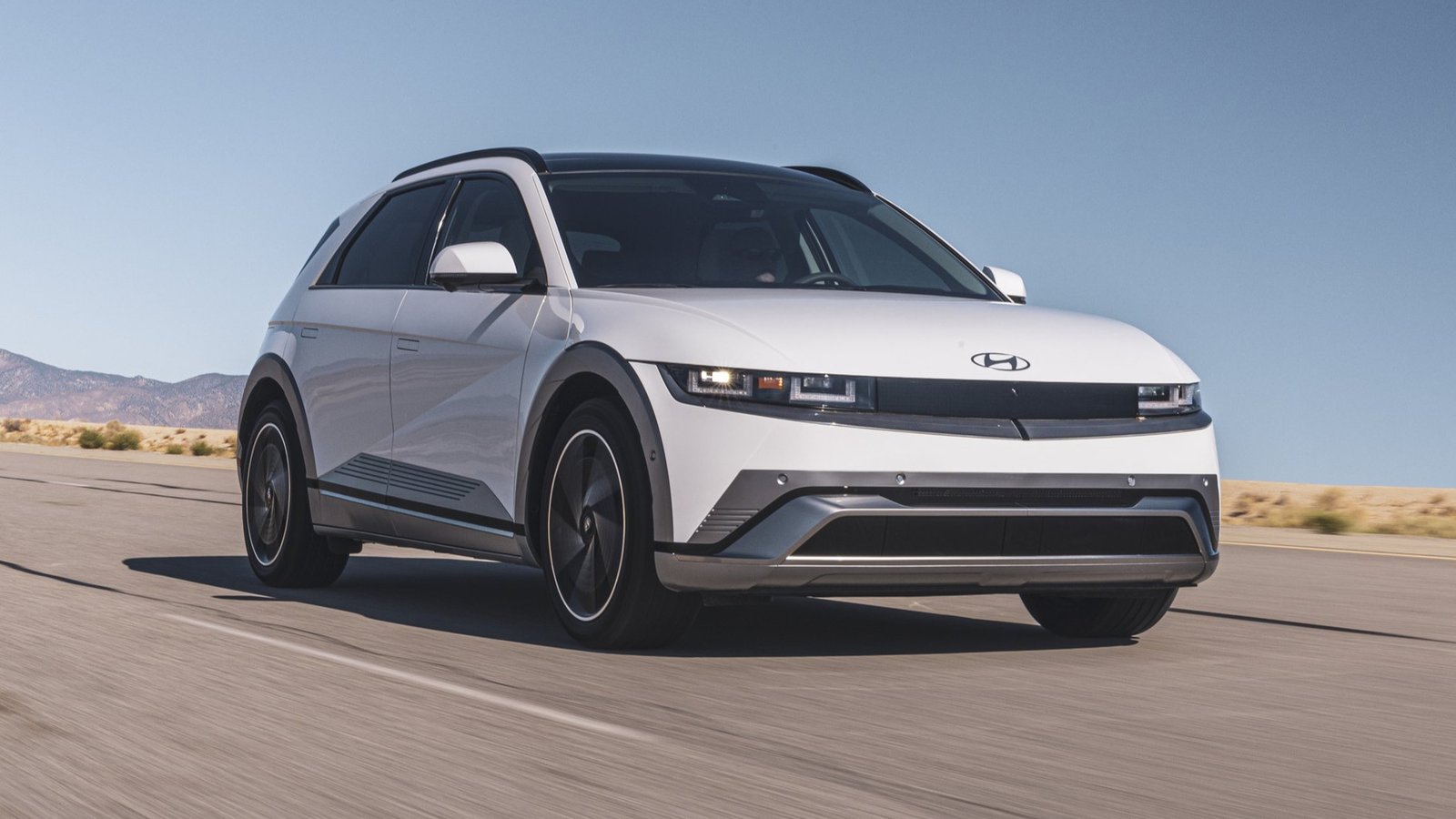
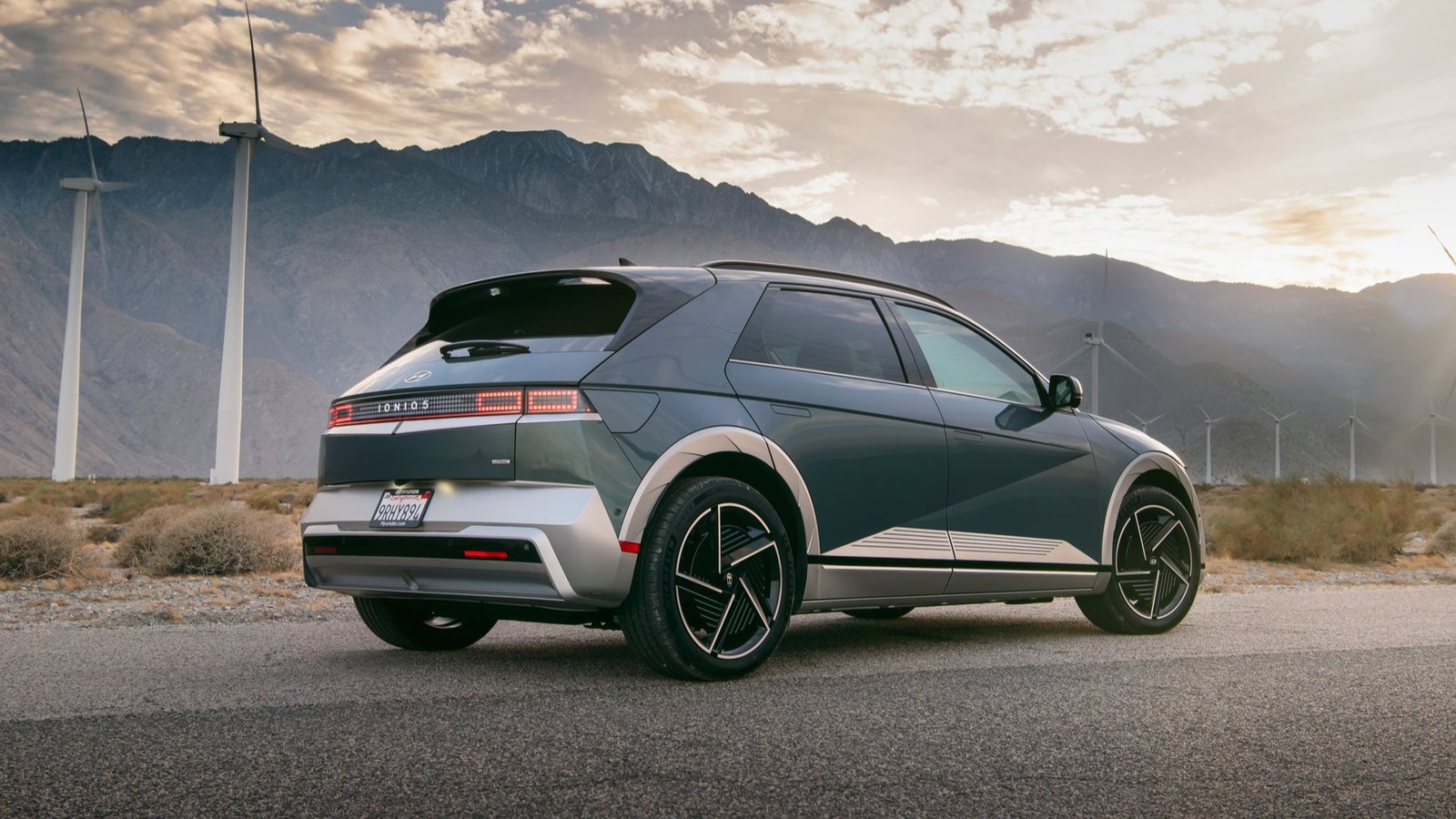
Automakers absorbed part of the lost credit themselves. On October 1, 2025, one day after the deadline, Hyundai cut 2026 Ioniq 5 prices by $7,600 to $9,800 per trim, bringing the base SE to $35,000 before a $1,600 freight charge. Tesla followed on October 7 with the Model 3 Standard at $36,990 and the Model Y Standard at $39,990, trims that give up Autosteer and the glass roof. Two days later, Chevrolet announced the returning 2027 Bolt at $29,990 including destination, with an EPA-rated 262 miles of range.
The transaction data reflects those moves. The average transaction price of a new EV was $54,813 in August 2026, down 2.7% year over year, and the EV premium over gas and hybrid vehicles narrowed to 9.4% from more than 16% in August 2025, per Kelley Blue Book's August ATP report. Incentives on EVs averaged 12% of transaction price, down from 14.6% a year earlier but still nearly double the 6.5% industry average. The sticker came down, the discounts came down slightly, and the net price of a new EV sits close to where it stood with the credit, for a smaller set of models.
Leasing: the loophole closed
Experian's Q3 2025 data shows more than 56% of new EVs were leased in the final quarter before the deadline, up from just over 46% a year earlier, and EVs made up one in four of all new-vehicle leases. Edmunds, which tracks dealer transactions only, put EV lease penetration at roughly 71% in September 2025 and 53% by November.
The 2026 picture comes from Experian's Q2 report: EVs fell to 8.15% of new-vehicle financing from 9.21% a year earlier, a level Experian describes as where the market stood before the federal incentives, while hybrids rose to 16.80% from 12.99%. The average monthly loan payment was $646 for a new hybrid, $692 for an EV, and $721 for a gasoline vehicle.
The models that left
The credit's end was one factor among several, but two product casualties are confirmed by the automakers themselves. In December 2025, Ford said it would stop building the battery-electric F-150 Lightning in favor of an extended-range version with a gasoline engine, taking a $19.5 billion charge after $13 billion in EV losses since 2023. In March 2026, Honda canceled the 0 Series Saloon, the 0 Series SUV, and the Acura RSX, citing tariffs and competition from newer EV makers rather than the credit itself.
Used EVs: the credit's afterlife
The $4,000 used credit is gone, yet the used market grew anyway. Cox counted 44,350 used EV sales in August 2026, up 14.7% year over year, with an average listing price of $37,441, up 8.2%, and days' supply down to 42, level with gas vehicles for the first time this year, according to the August EV Market Monitor. Recurrent's same-model tracking shows used EV prices up 5.1% from January to June 2026, with cars under $20,000 up 9.4%; a 2023 Bolt EV that listed for $17,718 in January averaged $21,204 by June. Supply is the wild card: Recurrent projects as many as 500,000 EV lease returns in 2026 and up to twice that in 2027, the tail of the lease boom the credit created.
What this means if you are shopping now
- Compare the out-the-door price, not the sticker. With incentives at 12% of transaction price, nearly double the industry average, the gap between MSRP and what buyers pay is wider on EVs than on most of the lot.
- Check state programs. California's MyFirstEV takes $3,500 off a new zero-emission vehicle with an MSRP up to $50,000, or $1,750 off a used one up to $25,000, for first-time ZEV buyers at the dealer since August 7, 2026. Colorado offers a $750 credit on new EVs, $2,500 more under $35,000, and a $9,000 income-qualified exchange rebate.
- Run the fuel math again. AAA's national average for regular gasoline was $4.49 on September 25, 2026, against $3.16 a year earlier.
- Look at three-year-old EVs. A 2023 Ioniq 5 or Bolt EV is where the value is, and a 42-day supply says they are not sitting around.
- Shopping new under $40,000? Start with our Kia EV3 versus Bolt and Leaf price comparison; for how a premium brand repriced after the credit, see the Cadillac EV lineup breakdown.
What we don't know yet
- Third-quarter 2026 sales, the year's key number, are due from Cox Automotive around October 10, the first quarter measured against the pre-deadline record.
- No 2026 EV lease-penetration figure has been published by Experian or Edmunds since the November 2025 reading.
- Whether automakers hold EV incentives near 12% of transaction price into the 2027 model year.
- Whether used EV prices survive the 2027 lease-return wave.