Diesel Is $6.29 While Gas Falls to $4.17. Here's Why the Gap Keeps Widening
Tight distillate stocks, strong exports, and a seasonal squeeze keep diesel above $6 while gasoline slides. For heavy-duty truck owners, the fuel math has flipped again.
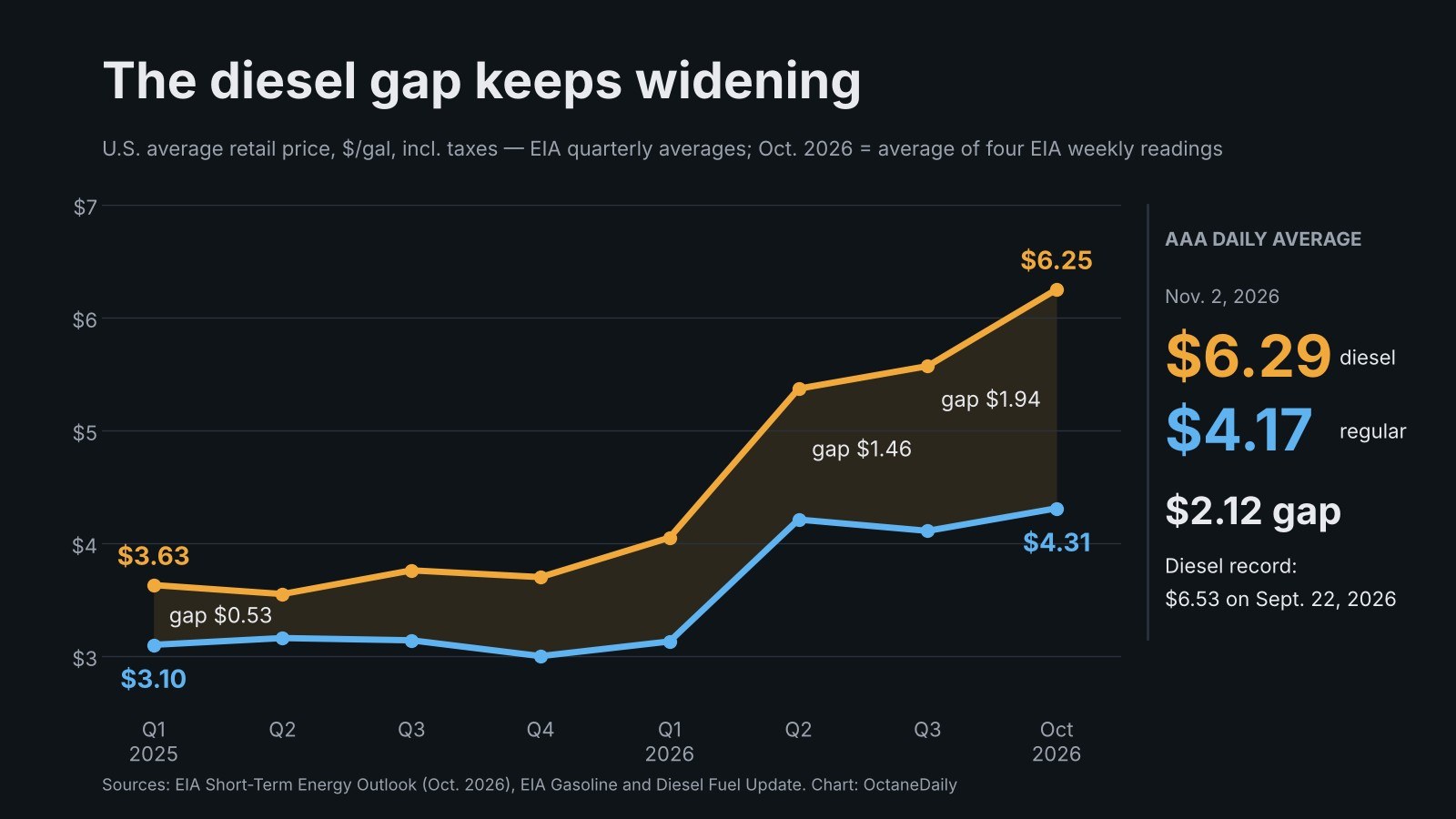
On Nov. 2, the AAA national average for diesel stood at $6.29 a gallon. Regular gasoline was $4.17. That is a $2.12 gap, and it has been widening even as both fuels came off their highs. A year ago, diesel cost $3.68 and regular $3.04, a difference of 65 cents.
For anyone who runs a diesel truck, the shift matters more than the headline price. The fuel math behind a heavy-duty diesel, which we worked through in our gas vs. diesel heavy-duty truck cost breakdown, has moved again since September. Here is why distillate costs so much more than gasoline right now, and who ends up paying for it.
The Numbers, Side by Side
Diesel is up 71% from a year ago, according to AAA's daily national averages. Regular is up 37%. Diesel set its all-time AAA record of $6.53 on Sept. 22, 2026, and has eased only 24 cents since. Regular, by contrast, is still well below its 2022 record of $5.02.
The direction of travel is the real story. Over the past month, regular fell from $4.40 to $4.17. Diesel barely moved, from $6.37 to $6.29. So the gap grew from $1.98 to $2.12 mostly because gasoline got cheaper, not because diesel got more expensive.
The federal data shows the same widening over a longer stretch. In the first quarter of 2025, EIA's retail diesel average ran 53 cents above regular. By the third quarter of 2026, the difference was $1.46. In October, EIA's weekly readings put it near $1.94.
Why Diesel Is Different: One Barrel, Two Markets
Diesel and heating oil come from the same slice of the crude barrel, called distillate. Jet fuel comes from a neighboring cut. Gasoline is a separate stream with its own supply and demand. When distillate gets tight, diesel prices can climb even while gasoline drifts lower, and that is what has happened this fall.
The clearest measure is inventory. In the week ending Oct. 23, U.S. distillate stocks stood at 102.8 million barrels, 10% below the five-year average for the time of year, according to the EIA's Weekly Petroleum Status Report. Gasoline inventories were only 2% below their five-year average. One fuel is short. The other is close to normal.
The squeeze is worst on the East Coast. The EIA's October Short-Term Energy Outlook says East Coast distillate inventories were 32% below their five-year seasonal average in September. The region burns more distillate than its refineries make and depends on pipeline and tanker shipments from the Gulf Coast plus imports.
Exports, Refineries, and a Tight World Market
American refiners have been sending more diesel abroad. EIA data shows U.S. distillate exports averaged about 1.75 million barrels a day in July 2026, roughly 27% more than in July 2025. The EIA's outlook describes extreme tightness in global diesel markets, which pulls U.S. barrels toward foreign buyers and makes it harder for East Coast importers to rebuild stocks.
That global tightness ties back to crude. The EIA's October outlook assumes oil flows from the Middle East stay constrained through the fourth quarter, tied to disruptions around the Strait of Hormuz, and forecasts Brent crude at about $105 a barrel for the quarter. Higher crude raises the price of every fuel, but the EIA also cites elevated diesel crack spreads, meaning refiners earn an unusually large margin on each barrel of diesel over the cost of crude.
Refinery capacity is not much help right now. U.S. refiners ran at 92.8% of capacity in the week ending Oct. 23, down from late-summer levels as autumn maintenance season takes plants offline for repairs. Less throughput means less distillate at exactly the time demand turns seasonal.
Jet fuel, often blamed for pulling distillate away from diesel, does not look like the driver this time. The EIA's latest weekly data shows four-week jet fuel demand down 3.5% from a year earlier.
Why Gasoline Is Getting Cheaper
Gasoline is moving through its usual fall pattern. Summer driving season is over, demand eases, and stations switch to winter-blend gasoline, which is cheaper to produce. With gasoline stocks near normal, there is little to stop the slide.
Diesel's calendar runs the other way. Harvest season and fall freight keep truck fuel demand high, and heating oil demand starts in the Northeast. The EIA says about 3% of U.S. households heat with oil, mostly in the Northeast, and expects their heating bills to rise about 21% this winter even with a milder forecast. Those homes and the region's trucks are buying from the same short tank.
What It Costs a Heavy-Duty Truck Owner
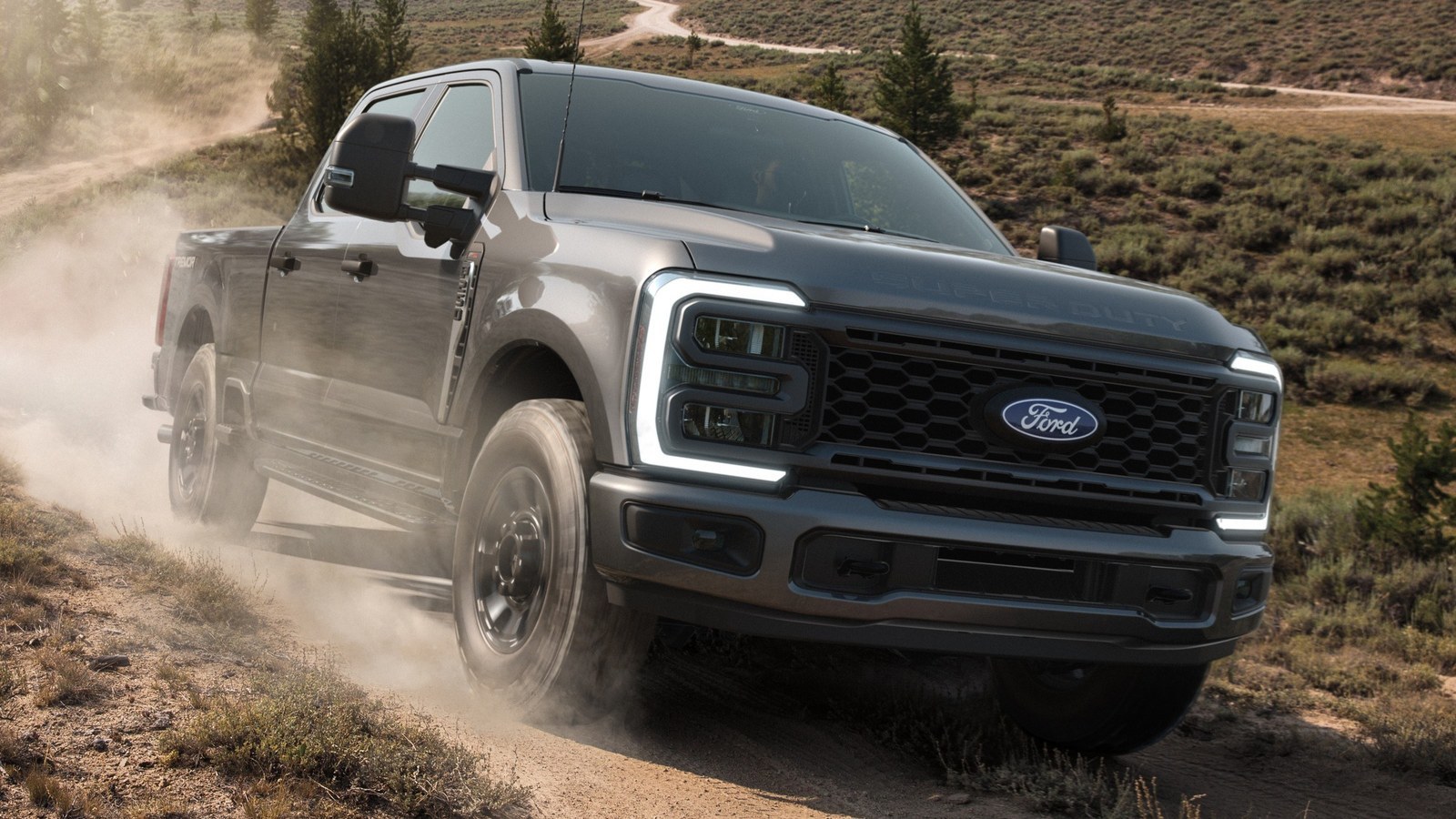
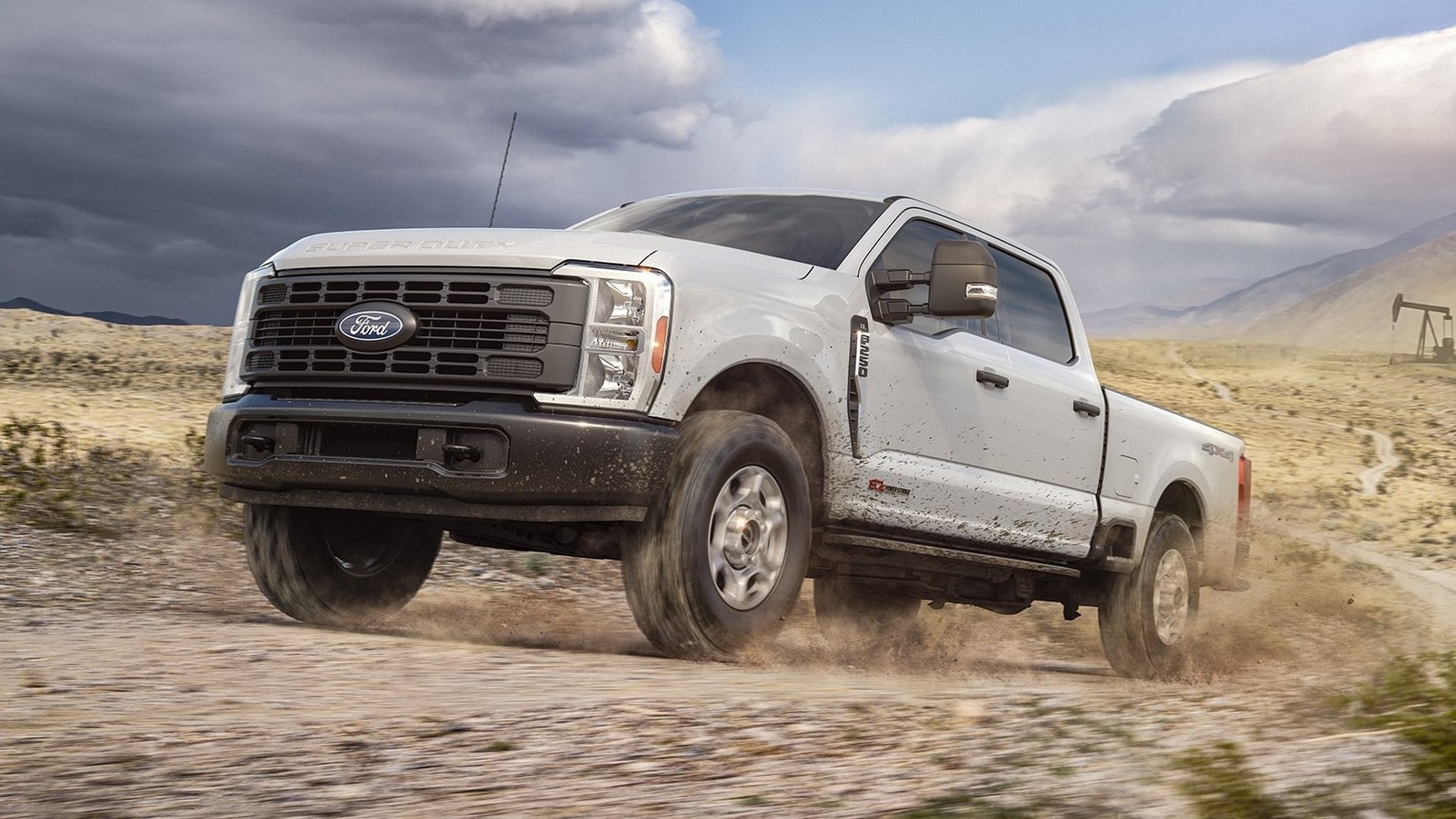
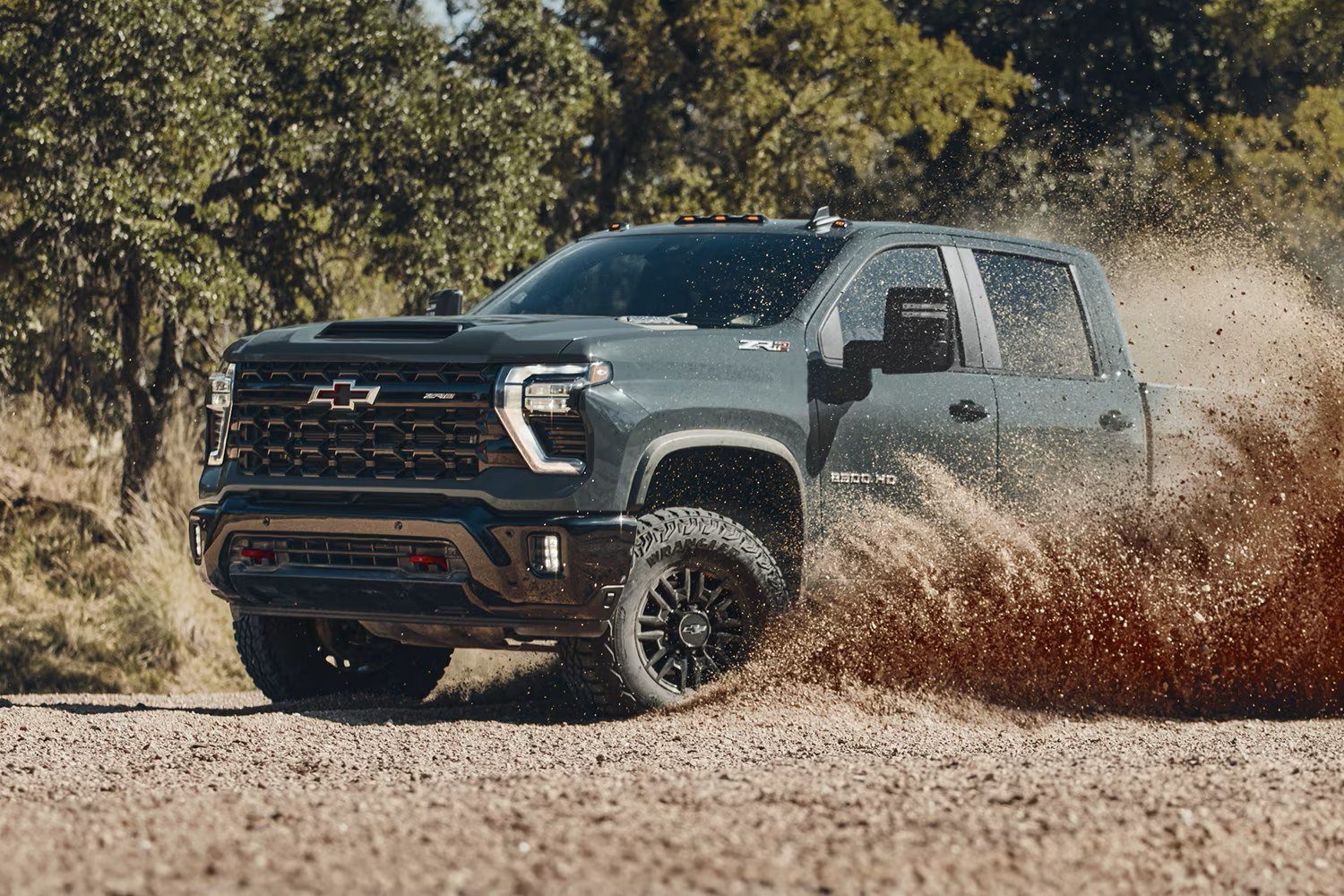
Heavy-duty pickups are where most American drivers meet diesel. GM says more than 60% of its heavy-duty buyers choose diesel. Ford's 2027 Super Duty offers one diesel, the 6.7-liter High-Output Power Stroke, alongside the 7.3-liter gas V8, as our 2027 Silverado HD vs. Super Duty comparison details.
Divide the diesel price by the gas price and you get the efficiency edge a diesel truck needs just to tie a gas truck on fuel. At today's AAA averages, that ratio is 1.51. A year ago it was 1.21. In late September, when we last ran the numbers, it was 1.44.
No heavy-duty pickup carries an EPA fuel economy rating, so the figures below are illustrations, not test results. They assume 15,000 miles a year and a gas truck averaging 12 mpg, the same baseline we used in September.
- Diesel at 15 mpg (25% better than gas): about $6,290 a year in fuel, versus $5,210 for the gas truck. The diesel costs about $1,080 more. At last year's prices, it would have saved about $110.
- Diesel at 16.5 mpg (37.5% better): about $5,720, or roughly $510 more than gas. A year ago, it would have saved about $450.
- Diesel at 18 mpg (50% better): about $5,240, essentially a tie. A year ago, it would have saved about $730.
None of this counts diesel exhaust fluid, maintenance, or towing, where diesels tend to hold their efficiency advantage best. But the direction is plain: on an unloaded commute, the fuel savings argument for a diesel truck has disappeared at current prices. In my view, anyone ordering a diesel heavy-duty truck today should be buying it for towing capacity, not for fuel savings.
Where It Hurts Most
State averages vary more than the national number suggests. AAA's Nov. 2 figures:
- California: diesel $8.34, regular $5.91. The largest dollar price in the country, but a ratio of only 1.41 because gasoline is expensive there too.
- Indiana: diesel $6.76, regular $3.81. A $2.95 gap and a ratio of 1.77, among the worst for diesel owners anywhere.
- New York: diesel $6.49, regular $4.34, a $2.15 gap in a state exposed to the East Coast shortage.
- Texas: diesel $5.74, regular $3.65. Cheaper in dollars, but still a $2.09 gap.
Owners in states like these can run the same division with their own pump prices to see where their truck stands.
Who Else Pays
Diesel moves nearly everything that is not a passenger car. Most trucking contracts pass fuel through surcharges pegged to the weekly government diesel price, so higher diesel eventually shows up in what shippers pay. We have not found public freight-rate data that isolates how much of this year's increase has reached car or parts prices, so we are not putting a number on it.
Diesel passenger cars, meanwhile, are almost gone from the U.S. market. Stellantis dropped its EcoDiesel V6 from the Ram 1500, Jeep Wrangler, and Jeep Gladiator after the 2023 model year. Among light-duty vehicles, GM's 3.0-liter Duramax in its full-size SUVs and the Mercedes-Benz Sprinter van remain. Diesel is now mainly a heavy-duty-truck fuel, which concentrates the pain on contractors, farmers, and anyone who tows for a living. If you own a farm truck, note that untaxed off-road diesel is still not legal for highway use, as our red diesel explainer covers.
What the EIA Expects
We are not forecasting prices. The EIA's October Short-Term Energy Outlook, completed Oct. 1, projects retail diesel will average $5.81 a gallon in the fourth quarter of 2026 and $4.49 for 2027, and says it expects diesel to stay above $4 through next year. It projects regular gasoline at $4.15 for the fourth quarter and $3.56 for 2027.
That implies the gap narrows next year without closing. The agency's November outlook will update those numbers.
What We Don't Know
- How long the East Coast shortfall lasts. The EIA expects regional distillate stocks to stay well below average through the winter, but weather and import flows can change that.
- How much of the diesel increase has reached freight bills and, from there, vehicle and parts prices. There is no public data series that isolates it.
- Real-world fuel economy for 2027 heavy-duty pickups. Neither the EPA nor the automakers publish it, so every payback calculation depends on assumptions.
For drivers getting ready for cold weather, our winter car prep checklist covers what to check before the first freeze.