Ford Fathom Will Power Your House Without a $5,000 Inverter
The 2027 Fathom sends more than 10 kW to a home from an inverter built into the truck, and Ford says the home-side hardware will cost about $2,100, not $5,205.
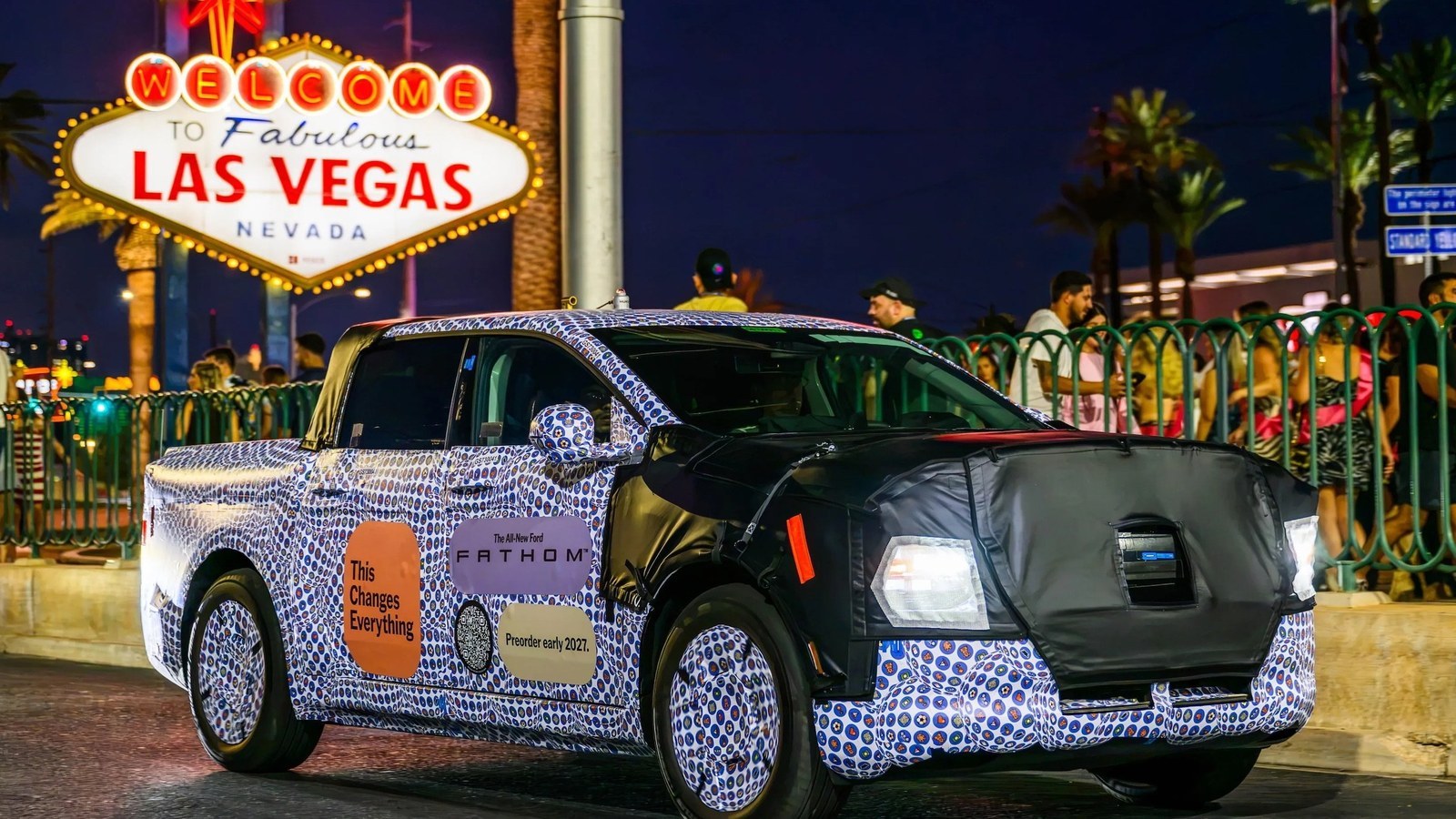
Ford says the 2027 Fathom will send more than 10 kW of AC power into a house straight from the truck, with no wall-mounted inverter in between. That single change strips the most expensive piece of hardware out of home backup, and Ford's numbers suggest the gear a Fathom owner needs will cost less than half of what an F-150 Lightning owner paid for the same job.
The details come from a post by Dave McCreadie, Ford's director of grid and energy services, published on October 27. The Fathom, which starts at $28,350 before a $1,595 destination charge, is covered in detail in our Ford Fathom price, range, and release date guide. The truck itself is unchanged; what's new is where the power conversion happens.
The inverter moves into the truck
Every EV battery stores DC power, while a house runs on AC. On the F-150 Lightning, that conversion happened in a separate box on the garage wall, the Home Integration System, which was the bulk of the cost. On the Fathom, Ford says the inverter sits inside the truck's E-box, one of five main modules on the Universal EV Platform, which also handles charging and the vehicle's 48-volt electrical system. Ford credits the hardware to Auto Motive Power, a startup it bought in 2023, and to the SAE J3068 communication standard, which it says makes the home-side charger cheaper to build.
Two home products follow from that. The Ford Home Power Station is the charger alone, and it enables what Ford calls Home Power Management: charging the truck when electricity is cheap and running the house off the battery when rates climb. Adding the Ford Home Backup Power Panel enables Home Backup Power, which switches the house over to the truck automatically when the grid goes down. Ford also says the system is designed to meet UL 1741 and IEEE 1547, the standards utilities use to approve grid-connected equipment, and that owners could join utility virtual-power-plant programs.
What V2H costs now, and what Ford is promising
Ford's own post gives only relative figures: the Home Power Station should cost about half as much as its first-generation bidirectional charger, and the backup panel at least 60 percent less than the first-generation backup hardware. In absolute terms, Ford told TechCrunch the station will run around $650 and the full backup kit around $2,100, before installation.
Those percentages map cleanly onto the Lightning's 2022 price list. Ford's Charge Station Pro was a $1,310 option on the standard-range truck, and the Sunrun-installed Home Integration System, which held the inverter, a transfer switch, and a small start-up battery, was $3,895, for $5,205 in hardware before a single wire was run. The Lightning delivered 9.6 kW to the house through that setup; the Fathom's projected output is higher, and the truck costs less than the Lightning ever did. If you're weighing a used Lightning against waiting, our used F-150 Lightning buying guide covers what the older hardware involves.
The competition hasn't moved this way yet. GM Energy's V2H Bundle for the Silverado EV and its Ultium siblings, a PowerShift charger plus an enablement kit with its own inverter, lists at $6,748 on sale and $8,998 at full price, per GM Energy, again before installation. Tesla's Powershare routes through a separate gateway that costs roughly $1,950 plus $2,000 to $4,000 to install, and only the Cybertruck can use it, as we explained in our look at Tesla Powershare for the Model 3 and Model Y. Ford says the Fathom will be the first EV from a U.S. automaker under $30,000 to feed a home without a separate inverter; no rival has announced a comparable built-in setup, but that claim is Ford's.
What Ford hasn't said
Installation is the open question, and it's a big one. A spokesperson told TechCrunch that installer partnerships and labor costs will come later; Lightning owners found that the electrical work, not the hardware, often doubled the bill. Ford also hasn't said how long a full Fathom battery will run a typical home, which loads it can carry at once, or when the Home Power Station will go on sale. The truck's battery sizes and range remain unannounced, too.

The timeline is the one Ford set in August: Fathom preorders open in early 2027, deliveries follow later that year, and the trucks will be built at the retooled Louisville Assembly Plant in Kentucky. Since July, Ford has been working with American Electric Power, BC Hydro, Consumers Energy, Exelon, and PG&E on interconnection rules, because a cheap inverter is only useful where the local utility lets a truck plug into the grid. There are more than 3,000 utilities in the U.S. and Canada, and most have their own process. For how the Fathom stacks up against Ford's gas-and-hybrid cheap truck, see our Fathom vs. Maverick comparison.