Used F-150 Lightning Prices Have Cratered. Here's What $30,000 to $50,000 Really Buys
With production over and no tax credit, used Lightnings now trade at 50–60% of sticker. Which battery, trim, and recall history to insist on, and the five-year energy math.
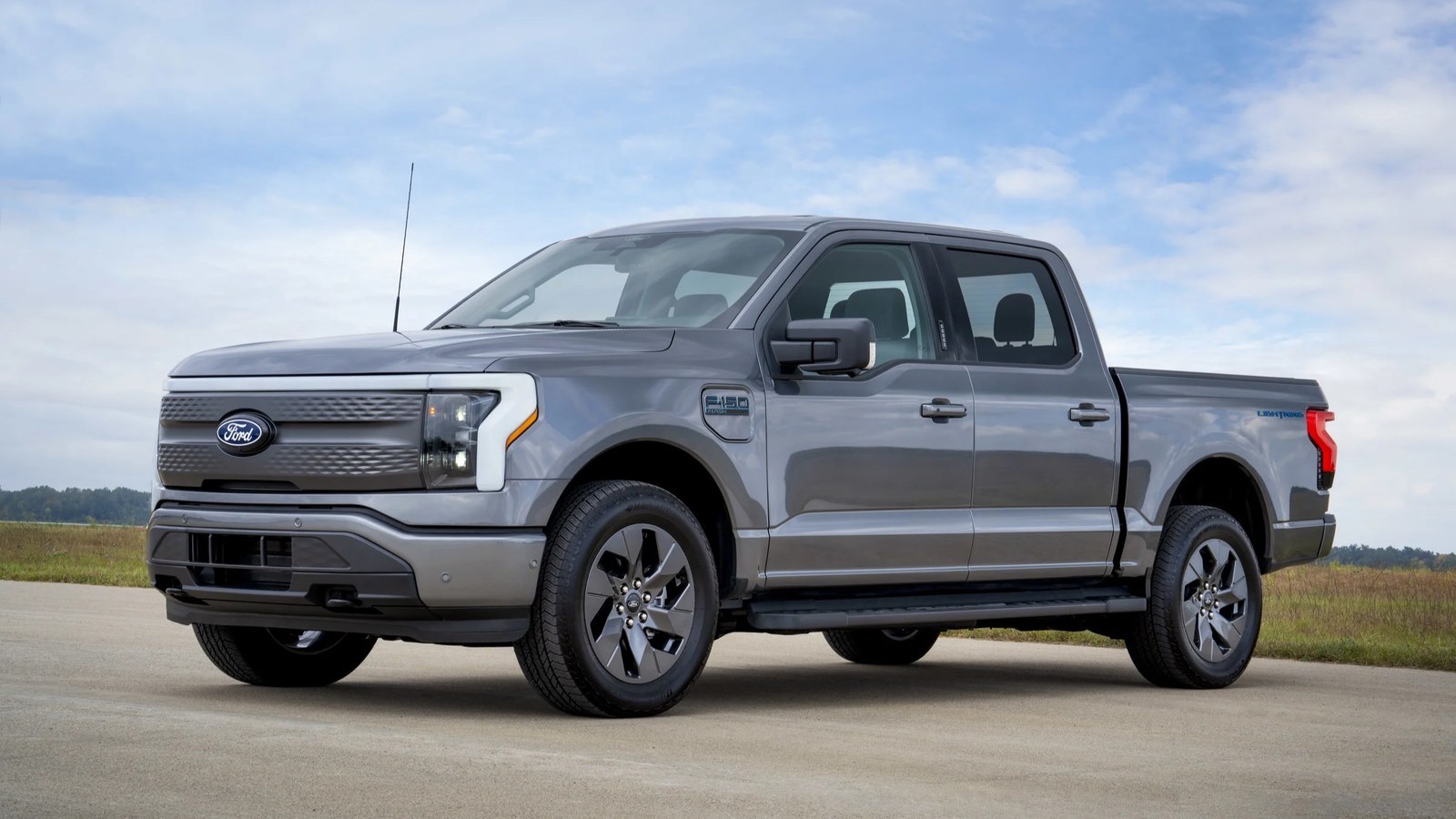
The Ford F-150 Lightning is the rare electric vehicle that got cheaper to buy and harder to find at the same time. Ford ended production of the battery-electric truck in December 2025, and the used market has turned it into one of the fastest-moving EVs in the country: Bloomberg reported on October 11 that used Lightnings now change hands at 50% to 60% of their original sticker, and Recurrent's third-quarter data put the median listing at $47,590 with a median 16 days to sell. If you are shopping, start with our general used EV buying guide, then come back here for the Lightning-specific catches.
Two things make this truck different from any other used EV. First, there is no new one to compare it against. Ford's Lightning page now says the truck is no longer available to order in its current form, and the next-generation Lightning will be an extended-range EV with a gasoline generator, with no launch date. Second, the price you see depends enormously on which battery, which trim, and which model year you are looking at, because Ford repriced this truck repeatedly over four years.
Why used Lightning prices fell so far
The short answer is that the sticker was never stable. The Lightning Pro launched in 2022 at $39,974. By the 2023 model year, that same trim listed for $59,974, and in July 2023 Ford cut it to $49,995 after demand cooled. For 2024, the Pro went back up to $54,995, the XLT to $64,995, a new Flash trim arrived at $73,495, the Lariat with the extended-range battery listed at $79,495, and the Platinum dropped to $84,995, all before a destination charge of roughly $2,000.
Then the $7,500 federal purchase credit expired on September 30, 2025, and Ford cut 2026 prices by up to $4,000. Three months later the company announced it was ending production altogether, taking roughly $19.5 billion in charges across its EV business. A truck that cost $80,000 new and lost its maker, its tax credit, and its successor in the same quarter was always going to reset hard on the used lot. Those resets are now the buyer's leverage.
What has not collapsed is demand. Bloomberg, citing Edmunds, reported that the average used Lightning transaction has risen 4% since January to about $50,000, and that the trucks sell in roughly 20 days against a 44-day average for used vehicles. Nearly a third are being sold by non-Ford dealers who would normally wholesale a trade-in back to a Ford store. The cheap Lightning is real, but it is not sitting around.
What each price band actually buys
Treat the figures below as arithmetic on Ford's own MSRPs at the 50% to 60% discount Bloomberg described, not as market prices. Regional listings, mileage, and condition will move any individual truck by thousands of dollars.
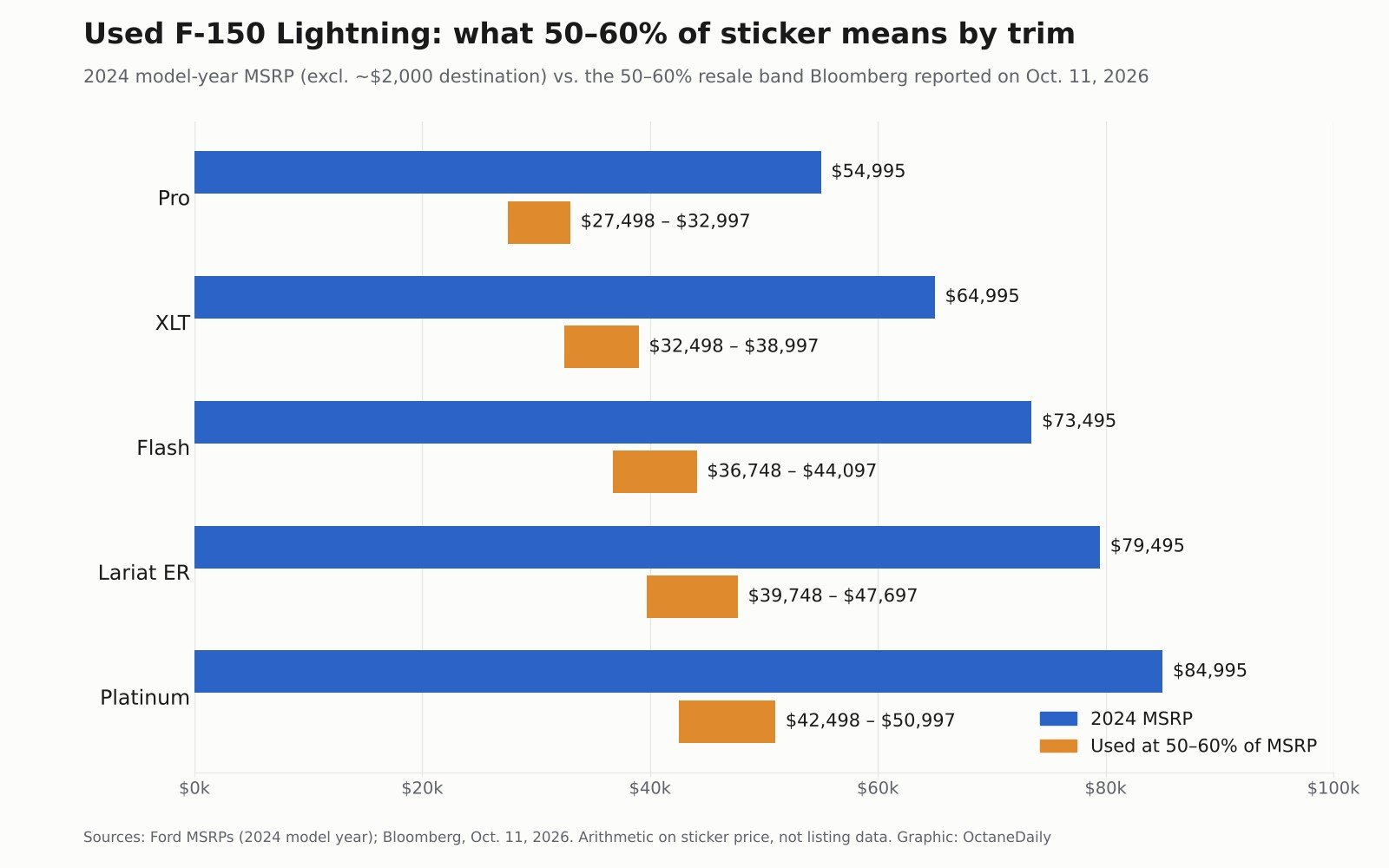
- Under $30,000: This is 2022 and early-2023 territory, almost always the standard-range battery (98 kWh usable) in Pro or XLT trim. EPA range is 230 miles for 2022 builds and 240 miles for trucks built from fall 2022 onward. Expect the 2.4 kW Pro Power Onboard system unless the original buyer paid for the 9.6 kW option, and expect fleet history on many Pros.
- $30,000 to $40,000: The sweet spot for 2023 and 2024 XLT trucks and some 2024 Pros. The standard-range battery is still the norm here. A 2024 XLT at $64,995 new lands at $32,500 to $39,000 on a 50% to 60% basis, which is why this band is where most of the buying activity sits.
- $40,000 to $50,000: Extended-range trucks start showing up: 2023 and 2024 XLT ER, Flash, and Lariat ER. The 131 kWh usable pack is rated at 320 miles on 20-inch wheels, and these trims carry the 9.6 kW Pro Power Onboard as standard or as a common option. This is the band Recurrent's $47,590 median describes.
- $50,000 and up: 2024 and 2025 Lariat ER and Platinum. The Platinum's 22-inch wheels cost it range: EPA rates it at 300 miles, not 320. At this money you are buying the full-size luxury interior and a nearly new truck, not a bargain.
Standard range vs. extended range: the only spec that matters
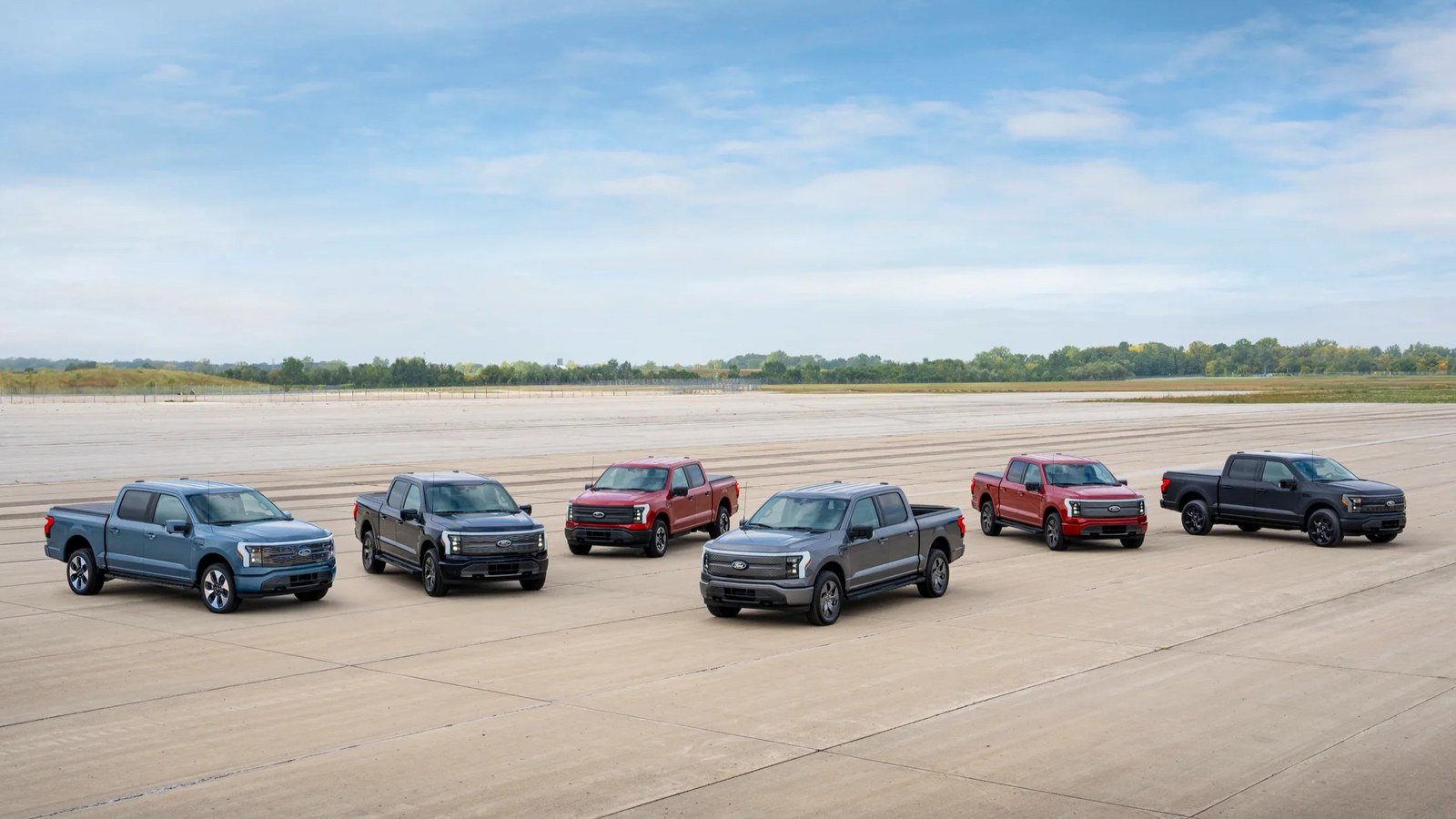
Two packs were offered through 2025. The standard-range battery has 98 kWh usable and was rated at 230 miles for 2022 and 240 miles from the 2023 model year. The extended-range battery has 131 kWh usable, is rated at 320 miles on XLT, Lariat, and Flash trims, and 300 miles on the Platinum. Ford's own figures put the extended-range truck at 580 hp against 452 hp for the standard pack, with 775 lb-ft of torque on both, and the maximum tow rating of 10,000 pounds requires the big battery; the standard pack tops out at 7,700 pounds.
In practice, range is the number to shop by. Towing cuts it sharply on either pack, and our winter data shows the Lightning holding about 80% of its rated range at freezing and 73% at 20°F; the full model-by-model winter range table has the comparisons. A 240-mile truck in a northern winter is a 175-mile truck. If you tow, commute more than 60 miles a day, or live where it snows, the extended-range premium is the best money in this market.
Battery health and the warranty clock
Ford's high-voltage battery warranty is 8 years or 100,000 miles, and the company's BEV warranty guide sets the threshold at 70% of original capacity. The warranty runs from the original in-service date, so a 2022 truck delivered in June 2022 has coverage into mid-2030, assuming the odometer cooperates. Ford says its support for existing Lightning owners is unchanged after the production halt, including over-the-air updates and replacement parts, which is the main reason this truck is not a stranded asset.
Before you buy, ask for three things. A battery state-of-health reading from a Ford dealer or an independent EV shop, not a dashboard screenshot. The truck's charging history, because a fleet Pro that spent three years on DC fast chargers will have aged differently from a retail Lariat charged in a garage. And a completed-recall printout, which brings us to the next section.
Recalls: check these campaigns by VIN
The Lightning has accumulated a long recall list, and most campaigns are software or inspection work. Two matter most for a used buyer. NHTSA campaign 25V863, issued in December 2025, covers every 2022–2026 Lightning along with Mach-E and Maverick models, 272,645 vehicles in all, for a park module that may fail to engage park and let the truck roll away. The remedy is a software update, over the air or at a dealer. Campaign 25V131, from February 2025, covers 950 trucks built between March 2022 and August 2024 whose battery cells from SK Battery America may have misaligned electrodes; affected trucks were told to charge to no more than 80% until the dealer inspected and replaced the array.
The rest of the list includes a repeat campaign for the rear lightbar on 2022–2023 trucks (25V731), an upper control arm ball joint nut on 2023–2025 trucks (24V949, expanded by 25V341), and loose battery junction-box fasteners on 2023 models (24V144, expanded by 25V272). Run the VIN at nhtsa.gov and insist that every open campaign be closed before money changes hands. On a truck whose maker has stopped building it, open recalls are not a negotiating point; they are a condition of sale.
Charging: the truck is still a CCS1 vehicle
No Lightning was ever built with a native NACS port, so Tesla Superchargers require Ford's Fast Charging Adapter, a $200 part since the second-generation version launched in March 2025. Ford shipped more than 140,000 adapters free to early owners, so ask whether one comes with the truck. The adapter works only at Supercharger DC stations, not at Tesla Destination chargers, and our guide to which EVs can use Tesla Superchargers covers what each brand can plug into.
At home, Level 2 charging is the normal case. The extended-range truck can also push up to 7.6 kW back out through Pro Power Onboard to charge another EV, and with the Ford Charge Station Pro and a home integration system the Lightning can back up a house during an outage. If that feature is part of your reason to buy, confirm the original owner had the hardware installed; the charger alone is a four-figure line item.
The five-year energy math
Here is the ownership calculation that matters more than the purchase price. EPA figures imply the Lightning uses about 0.41 kWh per mile on either pack; add roughly 10% for charging losses and call it 0.45 kWh per mile. At the 18.2 cents per kWh the EIA forecasts for U.S. residential power in 2026, that is about 8.2 cents per mile, or roughly $980 a year at 12,000 miles and about $5,000 over five years.
Our comparison assumption for a gas F-150 is 20 mpg combined, which is generous for a four-wheel-drive crew cab. At the AAA national average of $4.30 per gallon on October 19, that is 21.5 cents per mile, about $2,580 a year, and roughly $12,900 over five years. On home charging, the Lightning saves about $8,000 in fuel over 60,000 miles. If you cannot charge at home and rely on DC fast charging at 45 cents per kWh, the Lightning's energy cost rises to about 20 cents per mile, and the advantage mostly disappears. The used Lightning is a home-charger's truck.
Pro vs. XLT, and the Pro Power Onboard question
The Pro was built for fleets: vinyl seats, a smaller screen, and the 2.4 kW generator system standard, with 9.6 kW optional. The XLT and above add the retail interior, and the Lariat and Platinum came with the 9.6 kW system standard. For a buyer who wants the truck as a mobile power source, the 9.6 kW system is the difference between running a circular saw and running a job site. Check the window sticker or the bed outlets before you assume a truck has it; the 2.4 kW and 9.6 kW trucks look identical from the outside.
What we don't know yet
- Residual value in three years. Recurrent's third-quarter report tracks price changes for other models but not the Lightning, and Edmunds' 4% year-to-date rise is a single data point. Nobody has a credible curve for a discontinued EV truck with a successor that has no date.
- When, and whether, the EREV Lightning arrives. Ford says the next-generation truck will be built at the Rouge Electric Vehicle Center with an estimated range above 700 miles, and that it is not yet prepared to announce availability. The Fathom, Ford's $28,350 midsize electric pickup due in early 2027, is a different product; our Fathom guide has the details.
- How long the dealer flipping lasts. If non-Ford stores keep selling Lightnings directly, supply at the low end stays thin and prices hold. If they revert to wholesaling, the under-$35,000 band could deepen quickly.
Our take
A 2023 or 2024 XLT with the extended-range battery, a 9.6 kW Pro Power Onboard, a closed recall list, and a Fast Charging Adapter in the glovebox is the truck to find. Pay for the big battery and skip the Platinum's wheels. Do not pay a premium for a 2025 or 2026 model year on the theory that the last trucks will become collectible; Ford sold more than 27,000 of them in 2025 alone, and the warranty, not the production date, is what the next buyer will care about.