Genesis GV90 Gets Standard Air Suspension, Twin e-LSDs, and 5.7-mm Acoustic Glass
The third GV90 engineering briefing puts numbers on the flagship's ride and quietness, including a 3-dB cabin noise cut from glass alone and a Hyundai Motor Group driveline first.
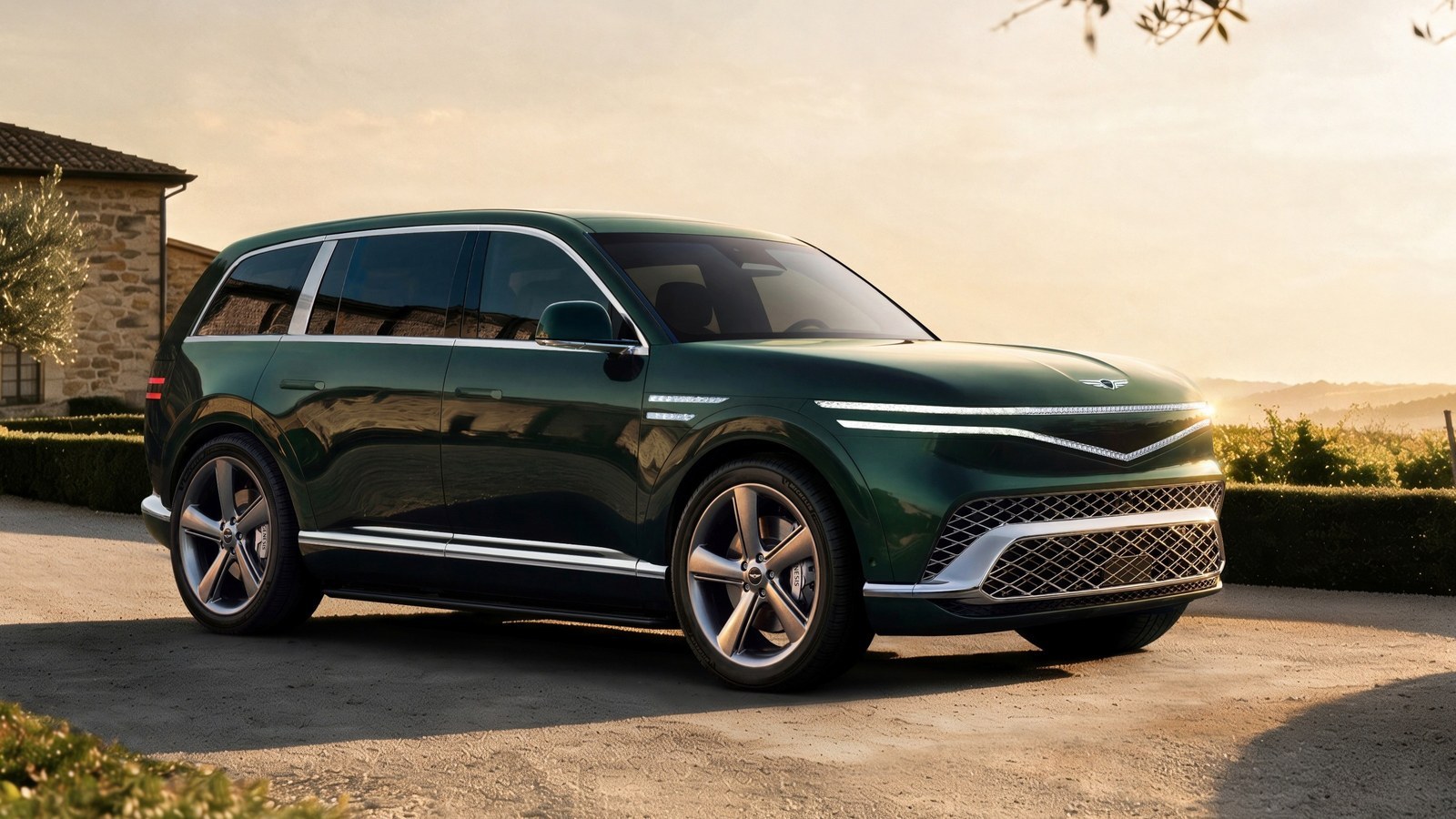
Genesis has released the third installment of its GV90 engineering series, and this one is about the hardware you feel rather than see: multi-chamber air suspension on every version, electronic limited-slip differentials on both axles, and a noise-control package the company says starts with the thickest glass it has ever fitted.
The briefing, published October 20 on the Genesis global newsroom, follows two earlier parts on the in-car experience and the body structure. It still leaves the questions in our 2028 Genesis GV90 guide open: there is no pricing, no EPA range, and no firmer U.S. timing than the "early 2027" the brand has used since August.
Air springs on every GV90, with four ride heights
Genesis confirms the multi-chamber air suspension is standard across the lineup, not reserved for the Neolun. Each strut has two internal chambers: both stay open for a softer spring rate in everyday driving, and one closes to firm things up at speed or in corners. Monotube dampers with separate compression and rebound valves adjust continuously rather than stepping between a few fixed settings.
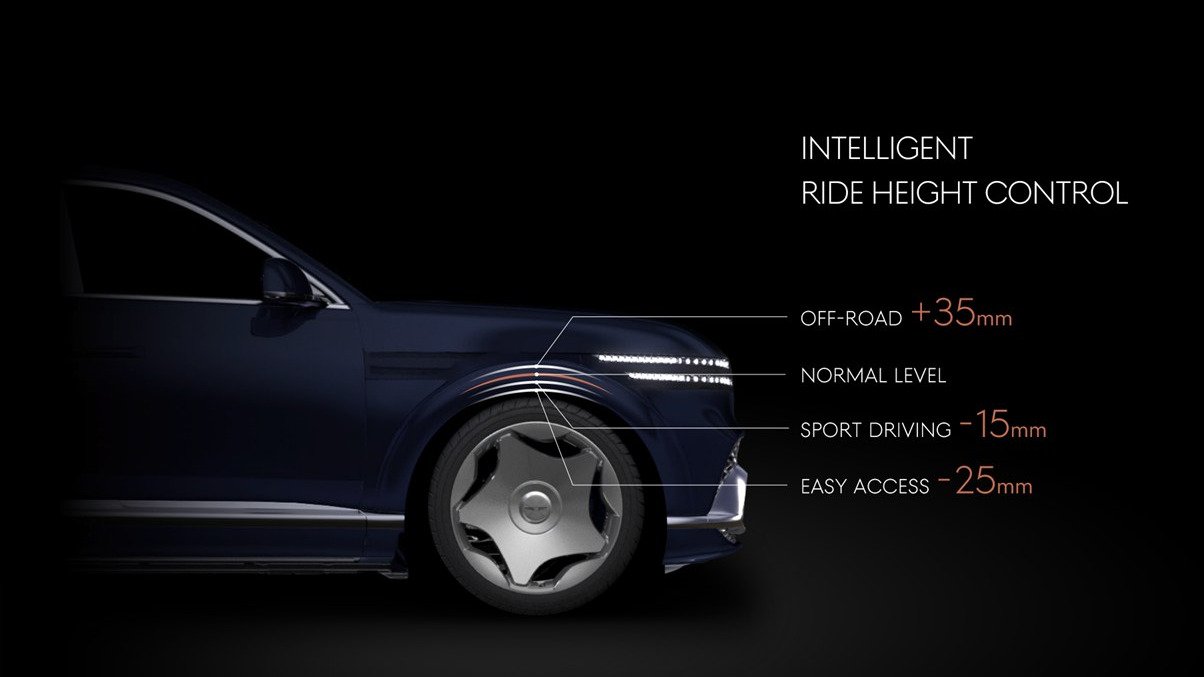
The system also moves the body. Ride height rises 35 mm (1.4 inches) on rough surfaces, drops 15 mm (0.6 inch) in Sport mode, and drops 25 mm (1.0 inch) for getting in and out. The rear can squat up to 40 mm (1.6 inches) for loading cargo.
Underneath, Genesis engineers set front caster trail at 42 mm for stronger self-centering and placed the roll center 20 mm lower than what the company calls key competitor benchmarks, to reduce body lift in corners. A stiffer rear stabilizer bar and hydraulic bushings in the rear crossmember give the GV90 17 percent more roll stiffness and 13 percent more lateral stiffness than those rivals, according to Genesis, with Sport mode adding another 15 percent roll stiffness. The company has not named the vehicles it benchmarked.
Two e-LSDs, a Hyundai Motor Group first
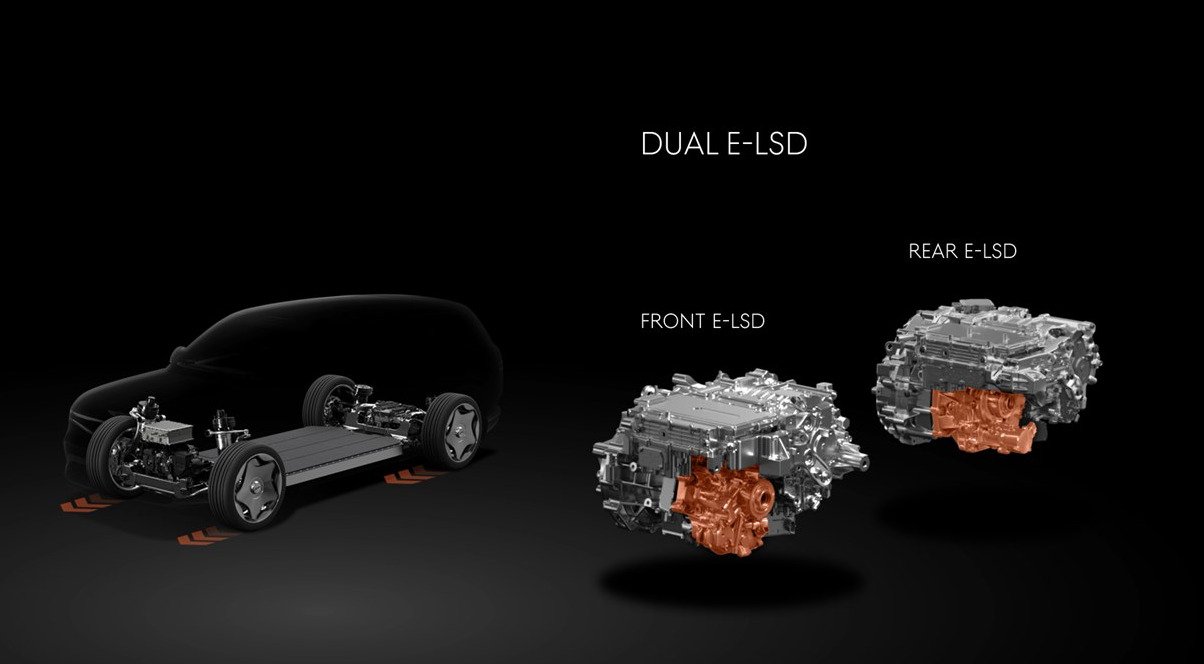
The GV90 puts an electronic limited-slip differential in both the front and rear drive units, which Genesis says has not been done on any Hyundai Motor Group vehicle before. Brushless actuators shift torque between the inside and outside wheels in corners to reduce understeer, and away from a slipping wheel on snow, wet pavement, or gravel.
That is a different approach from the GV90's two nearest U.S. targets. Cadillac pairs Magnetic Ride Control 4.0 with Adaptive Air Ride and standard four-wheel steering on the Escalade IQ, and the Mercedes-Benz EQS SUV makes AIRMATIC air suspension and 10-degree rear-axle steering standard. Genesis has already said the GV90 steers its rear wheels up to five degrees, so the e-LSDs are where it is trying to pull ahead on traction rather than on steering. The spec-sheet gap is laid out in our GV90 vs. Escalade IQ comparison.
Where the quiet comes from
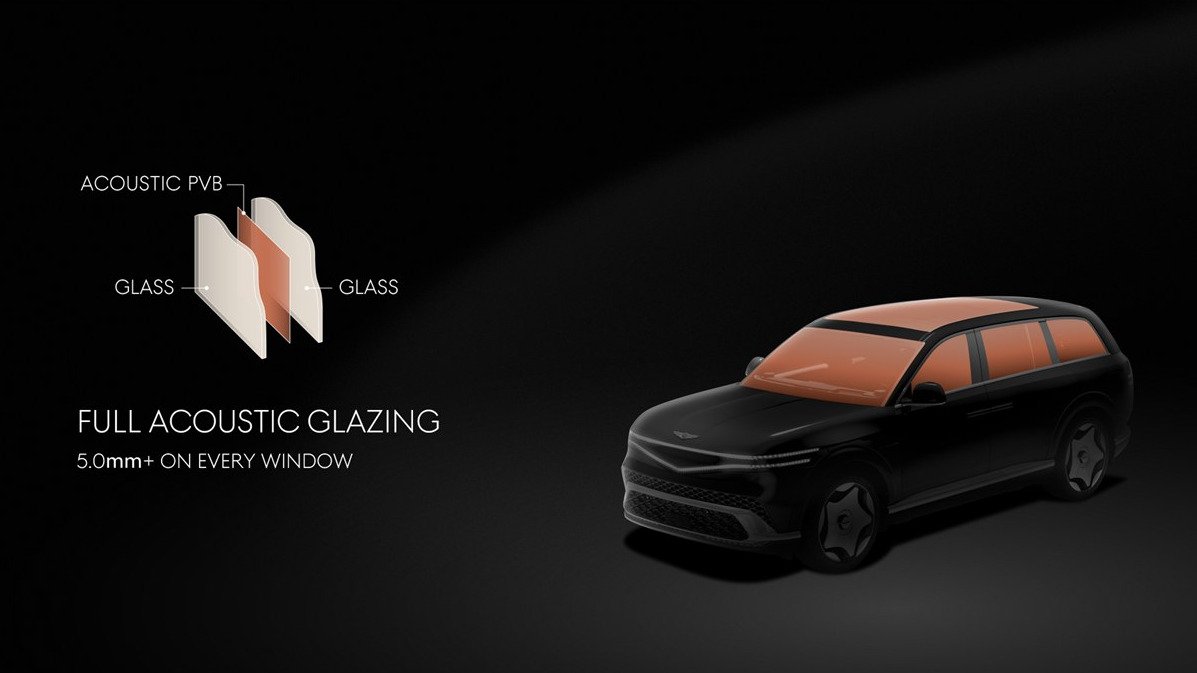
Every window on the GV90 uses laminated acoustic glass at least 5.0 mm thick, a first for the brand. The side windows and the panoramic roof go to 5.7 mm with a sound-absorbing film between the layers. Genesis puts the glazing's contribution at 3 dB less cabin noise than its earlier models. For comparison, Mercedes sells laminated acoustic glass on the EQS SUV as part of an optional Acoustic Comfort Package rather than as standard equipment.
The body gets high-expansion structural foam injected at six points in hollow sections, where it swells up to 45 times its volume to seal air paths and stiffen the shell. Genesis measured up to another 3 dB reduction in mid- and high-frequency noise from the foam in standardized testing. Insulation pads cover the firewall, floor, wheel arches, and cargo area, and the assembly sequence was changed so sound-absorbing material wraps the underfloor wiring.
On the powertrain side, the motor control unit generates an opposing electrical waveform to cancel current ripple and the whine it produces at the source, and acoustic coverage around the motors and inverters rises to 80 percent. The four-seat Neolun Executive Suite adds a partition behind the second row to wall the cabin off from the cargo bay, the same quiet-room thinking behind the GV90's rising 24.6-inch cinema display.
Genesis attributes the program to Sungki Jung's Vehicle Testing Group 1. "Outstanding driving performance is determined in places you cannot see, and it begins with suspension geometry," Jung said.
None of these figures have been verified outside Genesis yet, and the comparisons are the company's own. The GV90 launched in South Korea first as a 2027 model; U.S. deliveries of the 2028 model year remain slated for early 2027, with pricing still unannounced.