Lexus RZ vs. Kia EV6 for 2027: The $8,050 Gap Shrinks to $650 When You Match Trims
The cheapest RZ costs $8,050 more than the cheapest EV6. Matched by drivetrain, the gap falls to $650–$4,225, and the Kia still goes farther and charges faster.
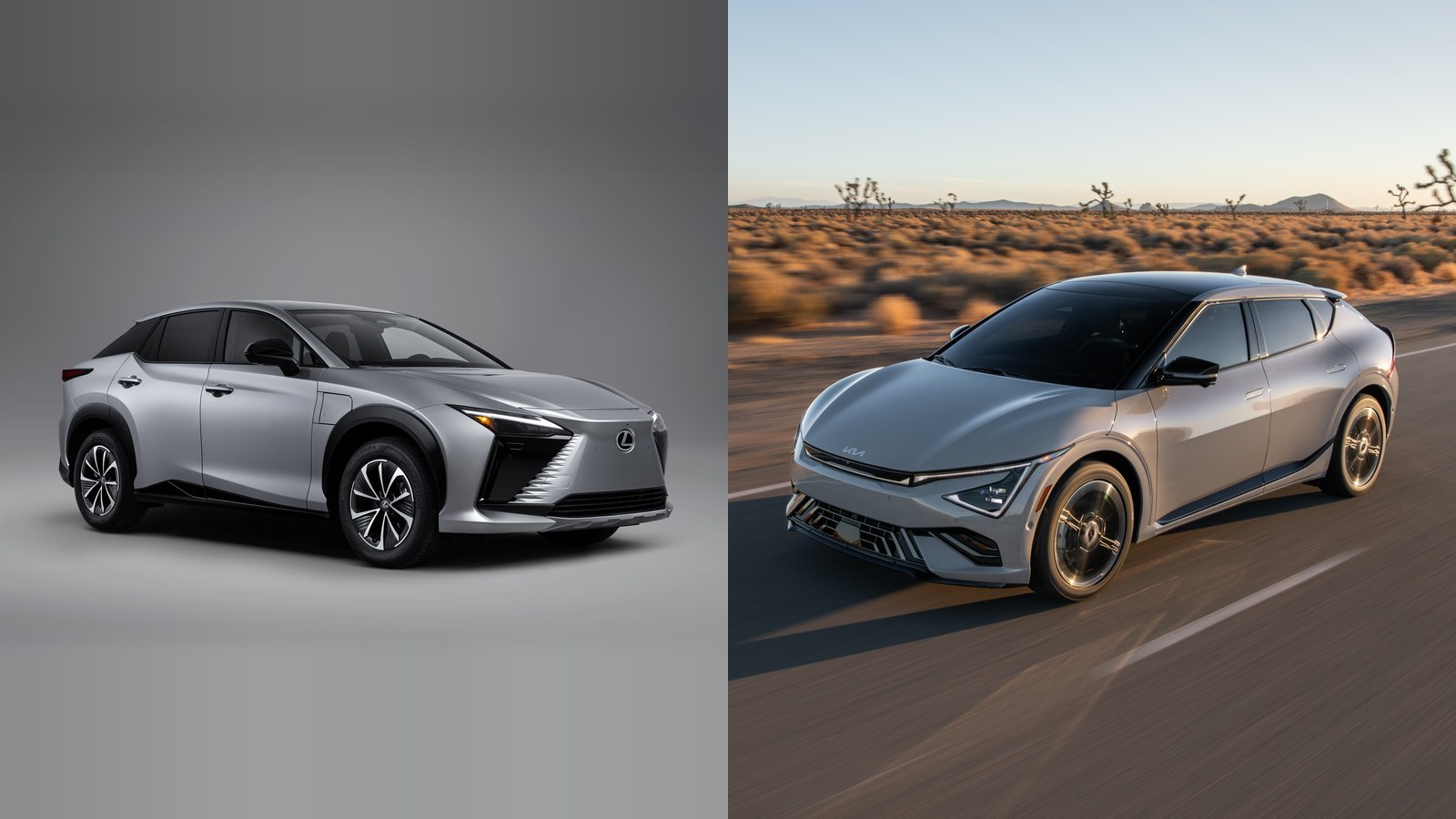
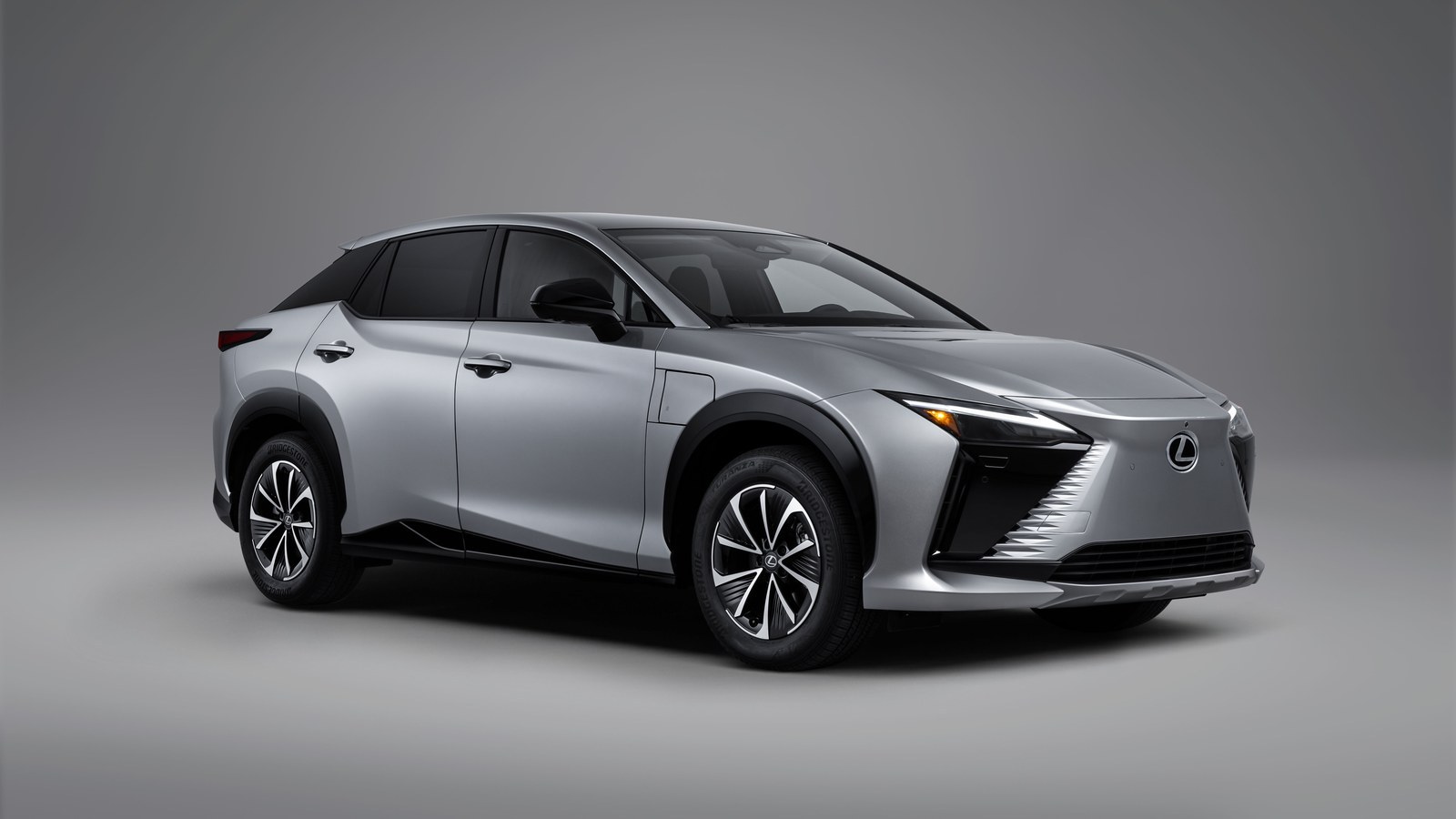
On the price sheets, the 2027 Lexus RZ and the 2027 Kia EV6 look like they shop in different stores. The RZ starts at $47,495 with destination, and the cheapest EV6 costs $39,445 once Kia's $1,545 destination charge is added. That $8,050 gap is real, but it sets a 221-hp front-drive Lexus against a 237-mile EV6 Light, and that is not the choice most buyers of either car are actually making.
Both automakers released 2027 pricing this week, and both cars are carryovers. Lexus nudged RZ prices up $100 to $375, as we detailed in our 2027 Lexus RZ pricing story, while Kia held all seven EV6 trims at their 2026 stickers, as laid out in our 2027 EV6 price breakdown. Line the lineups up by drivetrain, and the Lexus premium falls to between $650 and $4,225.
Three matchups, trim by trim
We paired each RZ with the EV6 closest to it in layout and price: the front-drive RZ 350e against the rear-drive EV6 Wind, the RZ 450e against the Wind AWD, and the RZ 550e F SPORT against the GT-Line AWD, the top EV6 trim Kia currently sells in the U.S. Prices include destination. Range and efficiency are EPA ratings for the 2026 models, because neither 2027 car has been rated; Lexus' own estimate for the 2027 RZ 450e is 260 miles, four fewer than the 2026 rating.
| Model | Price | Power | EPA range | Efficiency | 5-year home charging |
|---|---|---|---|---|---|
| Lexus RZ 350e FWD | $47,495 | 221 hp | 301 mi | 126 MPGe | $3,651 |
| Kia EV6 Wind RWD | $46,345 | 225 hp | 319 mi | 114 MPGe | $4,036 |
| Lexus RZ 450e AWD | $50,995 | 308 hp | 264 mi | 110 MPGe | $4,182 |
| Kia EV6 Wind AWD | $50,345 | 320 hp | 295 mi | 106 MPGe | $4,340 |
| Lexus RZ 550e F SPORT AWD | $58,770 | 402 hp | 229 mi | 95 MPGe | $4,843 |
| Kia EV6 GT-Line AWD | $54,545 | 320 hp | 270 mi | 97 MPGe | $4,743 |
The five-year column assumes 15,000 miles a year, all charged at home at 18.2 cents per kWh, the EIA's forecast for the 2026 U.S. residential average. That is the same method we used in our Mach-E vs. Model Y comparison, so the numbers line up across both stories. EPA efficiency ratings already include charging losses.
Two things stand out. The EV6 goes farther in every pairing, by 18 to 41 miles, because it carries an 84-kWh battery against the RZ's 74.69 kWh (76.96 kWh in the 550e). The RZ is the more efficient car in the first two matchups, which trims its real premium over five years to about $765 against the Wind RWD and about $490 against the Wind AWD. The 550e is the outlier: it is $4,225 dearer than the GT-Line, slightly thirstier, and 41 miles shorter on range.
Charging, warranty and safety
| Spec | 2027 Lexus RZ | 2027 Kia EV6 |
|---|---|---|
| DC fast charge, 10–80% | About 30 min (Lexus) | About 18 min on a 350-kW charger (Kia) |
| Charging port | NACS (SAE J3400) | NACS, with Plug & Charge |
| Basic warranty | 4 years/50,000 miles | 5 years/60,000 miles |
| Powertrain / EV system | 6 years/70,000 miles powertrain; battery terms TBA | 10 years/100,000 miles, battery covered below 70% capacity |
| IIHS | 2024 Top Safety Pick; updated moderate-overlap test not yet run | No 2026 award; Marginal in updated moderate-overlap test |
| Built in | Motomachi, Japan | West Point, Georgia |
Charging is the EV6's clearest win. Both cars now plug straight into Tesla Superchargers, but Kia's 800-volt hardware quotes roughly 18 minutes from 10 to 80 percent, against about 30 minutes in the 2027 RZ release. On a long trip with three fast-charge stops, that is more than half an hour saved, and the bigger battery means fewer stops to begin with.
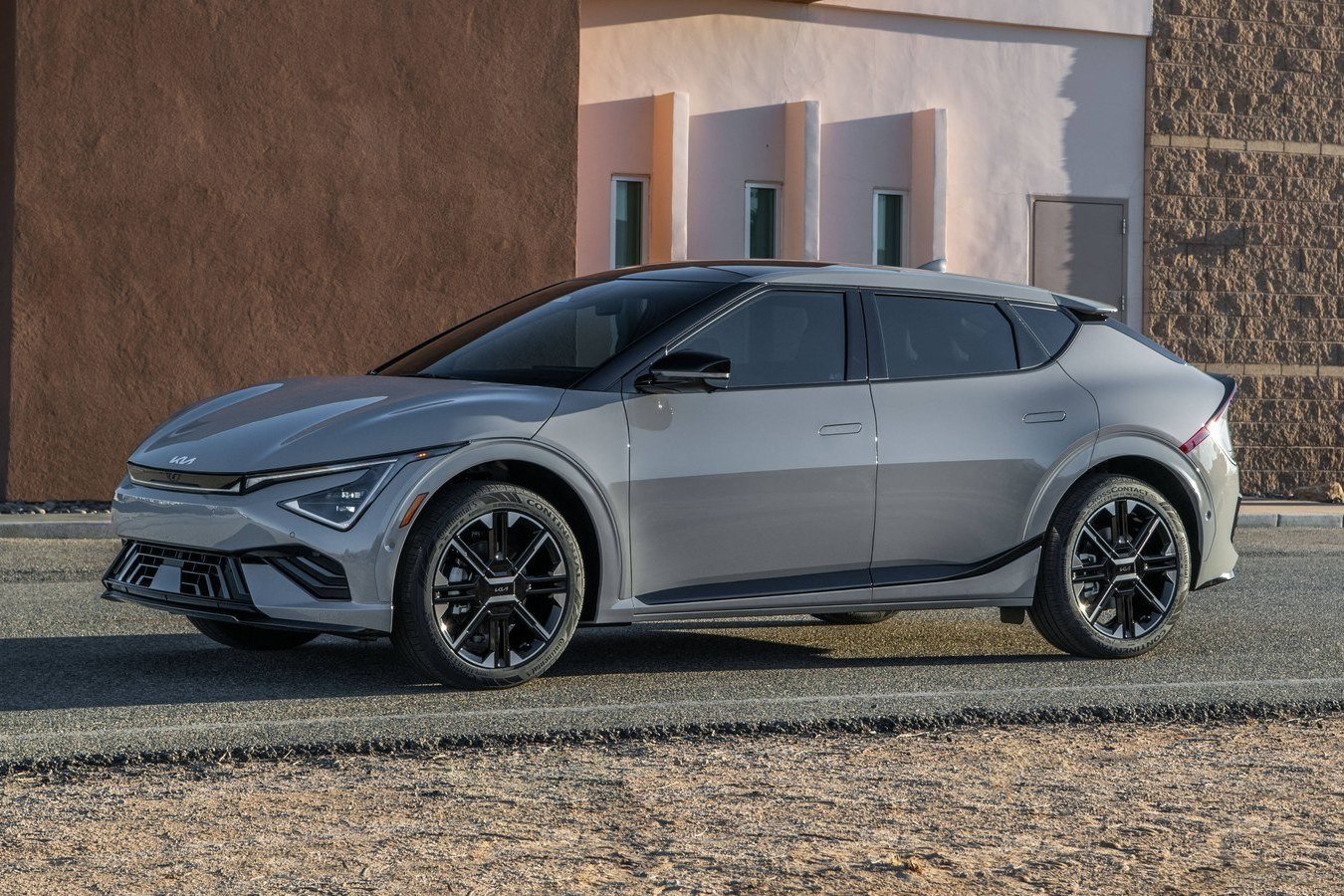
The warranty gap runs the same way. Kia's published coverage runs five years or 60,000 miles bumper to bumper and 10 years or 100,000 miles on the EV system, including a battery capacity guarantee. Lexus covers four years or 50,000 miles and lists six years or 70,000 miles for the powertrain, but its U.S. warranty page does not spell out RZ battery terms, so that row stays open until Lexus confirms them.
Safety data does not settle anything. Neither car holds a 2026 IIHS award. The IIHS rates the 2026 EV6 Marginal in its updated moderate-overlap test because of rear-passenger protection, though its Hyundai Ioniq 5 platform mate is a Top Safety Pick+, as noted in our compact SUV safety roundup. The RZ's last award was a 2024 Top Safety Pick under older criteria, and IIHS has not published an updated moderate-overlap result for it. On current data, neither car can claim to be the safer one.
What the Lexus premium actually buys
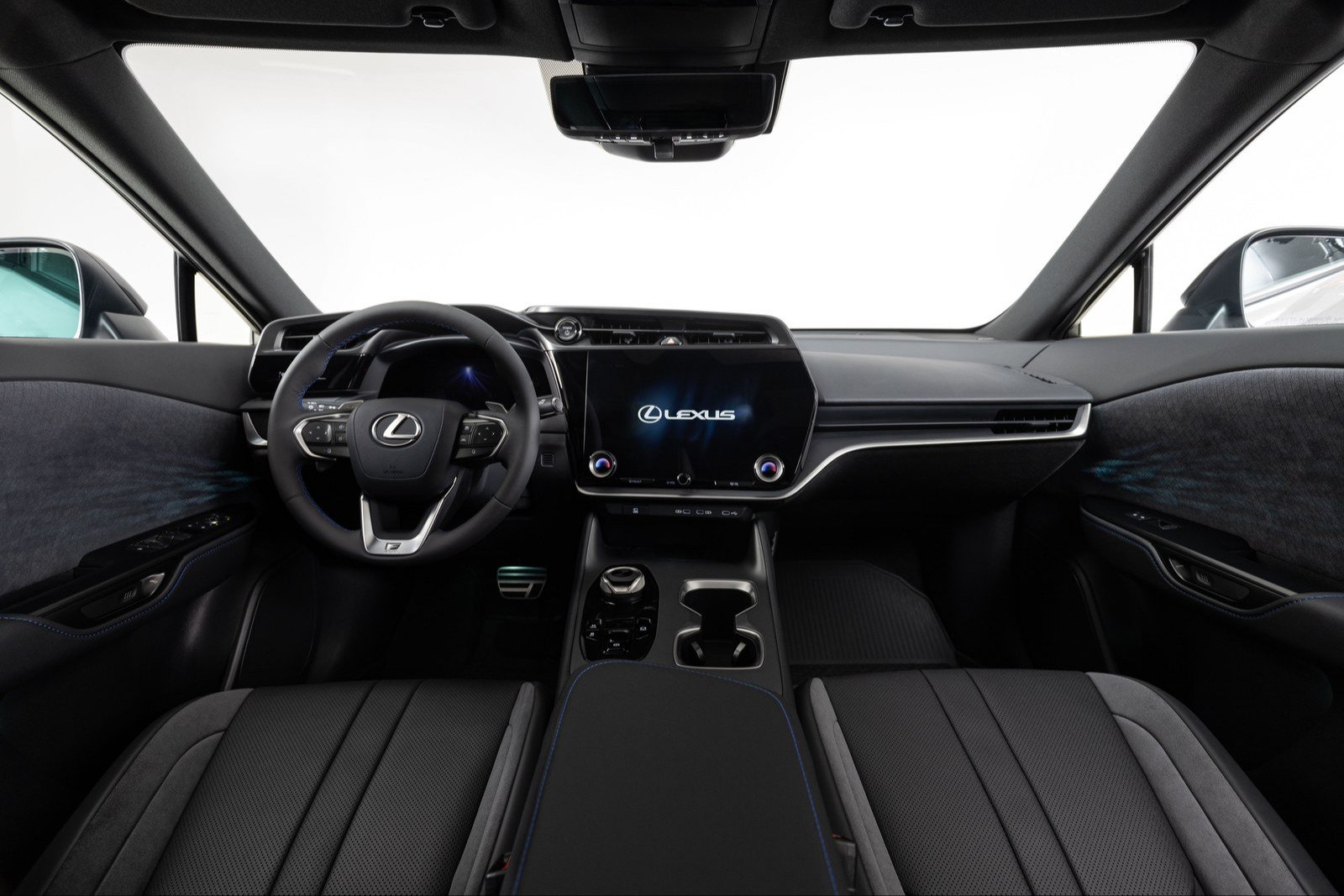
Not range, charging speed, or warranty length; the EV6 leads on all three. What the RZ adds is cabin and brand. Every RZ comes standard with heated and ventilated front seats, a heated steering wheel, a 14-inch touchscreen, a power tilt-and-telescopic column, and memory for the driver's seat, wheel, and mirrors, plus noticeably better efficiency in the 350e and 450e. The 550e adds 82 hp over the GT-Line and a 4.1-second 0–60 mph claim, and with Kia's 641-hp EV6 GT shelved in the U.S. for now, it is the quicker of the two you can actually order.
The headline $8,050 buys more than it seems at first: the base RZ beats the EV6 Light's 237-mile rating by 64 miles. But the EV6 Light Long Range RWD, at $42,745, is rated at 319 miles, 18 more than the RZ 350e, for $4,750 less.
Which one should you buy
In my view, the RZ 350e is the easiest Lexus to justify. At $1,150 over an EV6 Wind RWD, it uses less electricity, wears a nicer cabin, and gives up 18 miles of range, a trade many home-charging commuters will happily make. The 450e against the Wind AWD is a coin toss at $650 apart. The 550e is the hardest sell: $4,225 more than a GT-Line for more speed, less range, and slower charging.
The EV6 is the better pick for anyone who road-trips, keeps cars past five years, or wants the most range per dollar. It is also the safer bet on timing: the 2027 RZ will not reach dealers until early 2027, and leftover 2026 models of both cars are mechanically the same, so whichever you choose, check for 2026 incentives before ordering a 2027.
What we don't know yet
- EPA ratings for either 2027 model; the figures above are 2026 ratings.
- A firm on-sale date for the 2027 RZ beyond Lexus' early-2027 estimate, and any dealer date for the 2027 EV6.
- Whether the 641-hp EV6 GT returns for 2027.
- The RZ's U.S. battery warranty terms, and November incentives from either brand.