Mach-E vs. Model Y at $40,000: Ford Brings the Battery, Tesla the Network and Software
Both start within $5 of $40,000. Ford adds 88 kWh and free lane centering; Tesla has an EPA rating, native Superchargers, and a $99 FSD subscription.
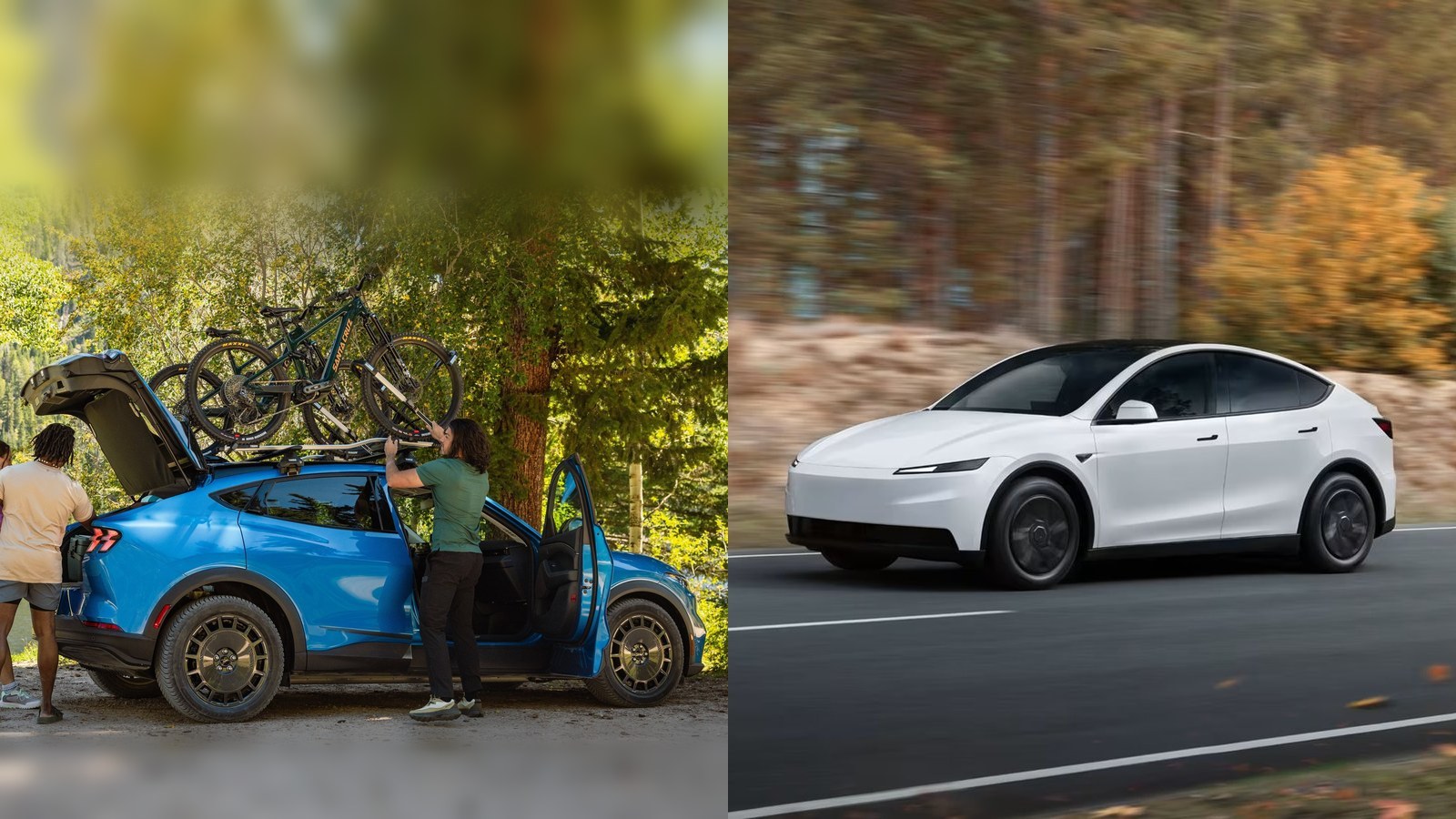
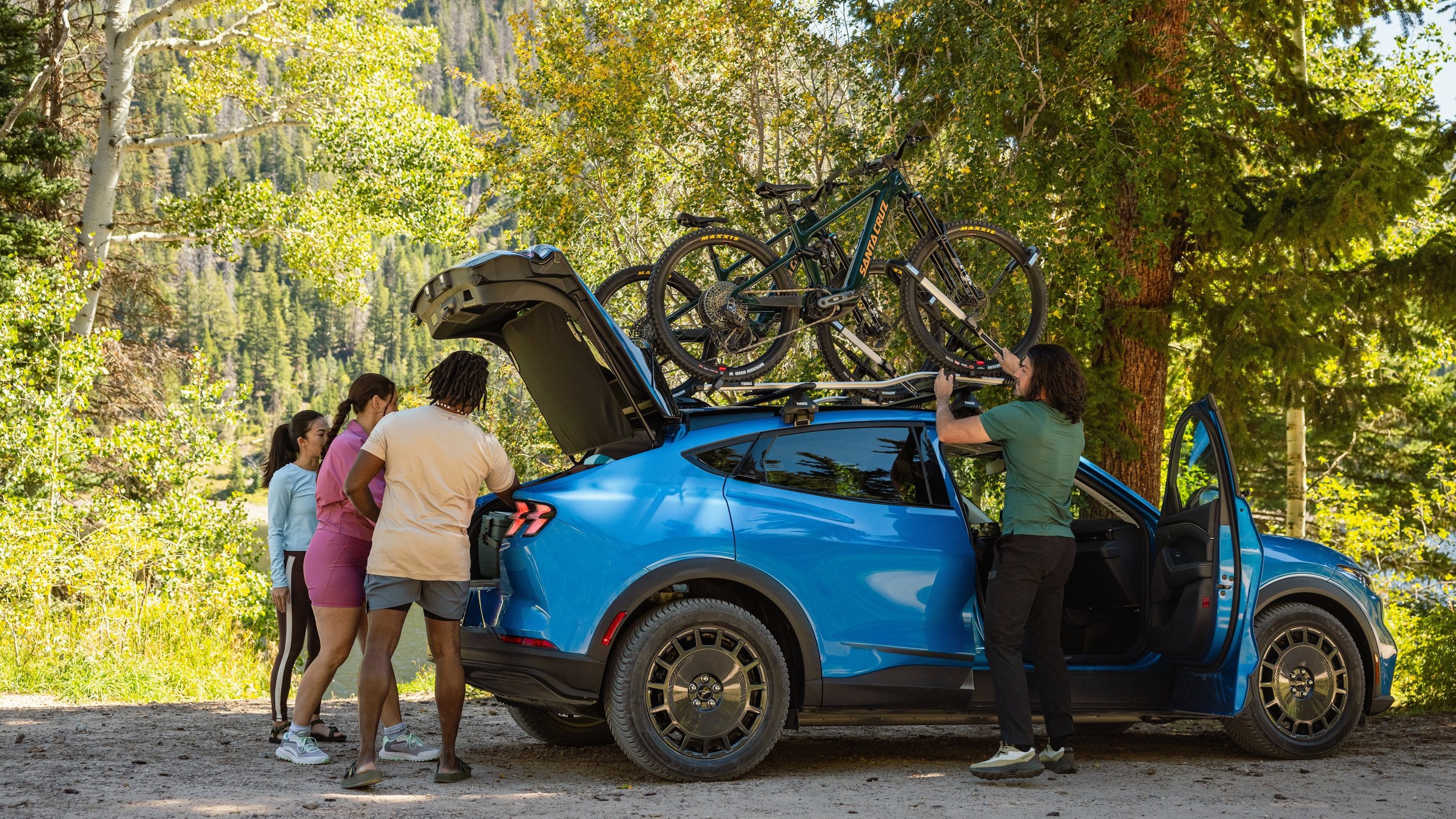
For 2027, Ford has made its bigger battery standard on every Mustang Mach-E, and the base Select RWD still starts at $39,995 before destination. That puts Ford's electric crossover within $5 of the Tesla Model Y Standard, which lists at $39,990. On sticker price, the cheapest Mach-E and the cheapest Model Y are now the same car.
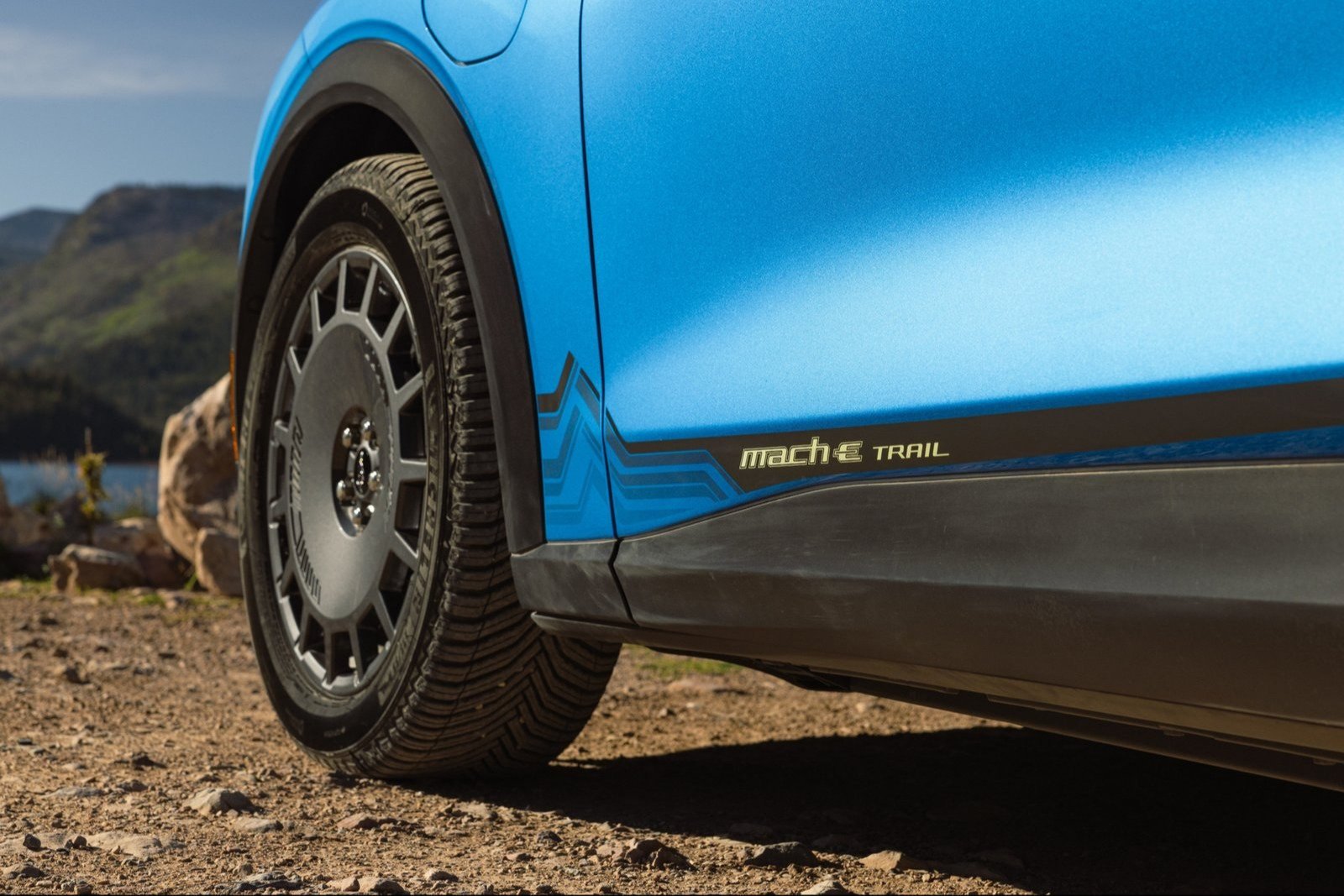
They are not the same deal. Ford gives you 88 kWh of usable battery and lane centering without a subscription. Tesla gives you an EPA range rating today, a native port for its Supercharger network, and the option to rent Full Self-Driving (Supervised) by the month. Our look at the 2027 Mach-E and its new $2,295 Trail package covers Ford's announcement; here is how its $40,000 car stacks up against the best-selling EV in America. Tesla prices below were checked on October 22, 2026, and Tesla can change them on any day.
Mach-E vs. Model Y at $40,000: specs at a glance
| 2027 Ford Mustang Mach-E Select RWD | 2026 Tesla Model Y Standard RWD | |
|---|---|---|
| Price before destination | $39,995 | $39,990 (as of Oct. 22, 2026) |
| Destination and fees | TBA (not in Ford's release; Electrek reports $2,045) | $1,390 destination + $250 order fee = $41,630 |
| Usable battery | 88 kWh (Ford) | Not published by Tesla |
| EPA range | TBA; Ford says ratings come closer to availability | 321 miles |
| DC fast charging | TBA for 2027; current extended-range pack: up to 150 kW, 10–80% in about 36 minutes (Ford) | Peak not published for Standard |
| Supercharger access | Yes, via Ford's NACS adapter; plugs straight into CCS stations | Native |
| Standard driver assistance | Adaptive cruise with stop-and-go and lane centering (Co-Pilot360 Assist+ on the 2026 Select) | Traffic-Aware Cruise Control; no lane centering |
| Paid upgrade | BlueCruise hands-free: Tech Pack Lite at order only, 15 months included, then $49.99/mo, $495/yr, or $2,495 once | FSD (Supervised): $99/mo, subscription only |
| Battery warranty | 8 yr / 100,000 mi, 70% capacity | 8 yr / 100,000 mi |
| Basic warranty | 3 yr / 36,000 mi | 4 yr / 50,000 mi |
| IIHS | 2026 Top Safety Pick | 2026–27 Top Safety Pick+ |
| NHTSA overall | 5 stars (2026) | 5 stars (2026) |
| Cargo, rear seats up / folded | 29.7 / 59.7 cu ft + 2.6-cu-ft front trunk (2026) | 29.5 / up to 75 cu ft |
| What the cheap one gives up | BlueCruise can't be added after purchase; no Pro Power Onboard outlets | Lane centering, ventilated seats, rear screen, seven speakers instead of 16, FM radio, power steering column, light bar |
| U.S. sales, Q3 2026 | 5,574 (Ford) | 99,037 (Cox Automotive estimate) |
Range: the one number Ford hasn't given us
The Model Y Standard is rated at 321 miles by the EPA. The 2027 Mach-E Select RWD has no rating yet, and Ford's announcement says estimates will arrive closer to availability. That is the biggest hole in this comparison, and we won't call a winner on range until it closes.
There is a reference point, but it is not a promise. Ford's current site lists the 2026 extended-range Mach-E at up to 320 miles as a Premium RWD. The 2027 Select RWD uses the same 88-kWh usable figure, but the 2027 lineup has changed hardware, including a new front drive unit on eAWD models, and the EPA hasn't tested it. The 2026 number doesn't carry over automatically.
Efficiency is a clearer gap. The EPA rates the Model Y Standard at 138 MPGe, or about 24 kWh per 100 miles. The extended-range Mach-E RWD has been rated at 106 MPGe and 32 kWh per 100 miles. On those numbers, the Ford uses about 30% more electricity per mile, and that shows up in your electric bill.
Charging: Tesla's network vs. Ford's adapter
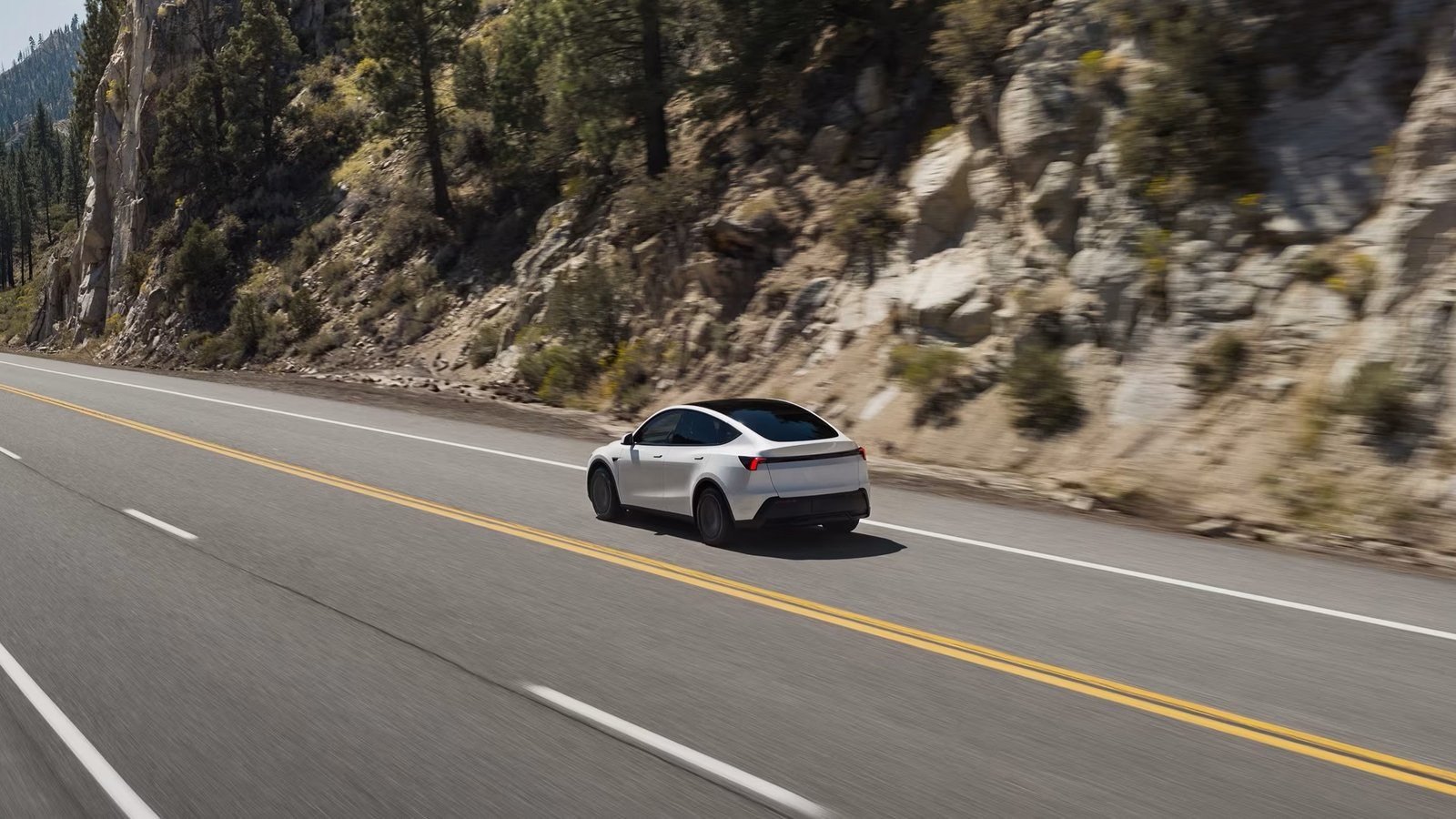
The Model Y plugs straight into every Supercharger, and Tesla's app plans the stops for you. The Mach-E still has a CCS1 port, so on Tesla's network it needs Ford's NACS adapter, which ford.com lists as an option. In return, the Ford plugs directly into CCS networks such as Electrify America and IONNA without any adapter at all. Our guide to which EVs can use Tesla Superchargers explains how adapter access works.
Ford quotes up to 150 kW and about 36 minutes for a 10–80% charge on the current extended-range pack; it hasn't published 2027 figures. Tesla doesn't publish a peak rate for the Standard, and in Edmunds' own test the car averaged 95 kW. On a road trip, Tesla's advantage is less about kilowatts and more about the number of stalls you can reach without thinking about it.
Driver assistance: included vs. rented
This is where the two companies split most sharply. The 2026 Mach-E Select comes with Co-Pilot360 Assist+, which includes adaptive cruise with stop-and-go and lane centering. Hands-free BlueCruise 1.5 is extra: on the Select it comes with the optional Tech Pack Lite, the hardware must be ordered with the car, and the first year plus 90 days of service is included.
The Model Y Standard keeps Traffic-Aware Cruise Control and nothing that steers. Lane centering lives inside FSD (Supervised), which costs $99 a month and can no longer be bought outright, as we explained in our breakdown of what a Tesla includes after Autopilot. FSD does far more than BlueCruise, handling city streets and intersections under supervision. But Tesla told investors on October 21 that unsupervised driving for the first customer cars is targeted around the second quarter of 2027, inside its geofenced areas, as our analysis of Tesla's third quarter details.
Five-year cost: electricity and software
We assumed 15,000 miles a year, all charged at home, at the 18.2 cents per kWh the EIA projects as the 2026 U.S. residential average in its October outlook. The EIA expects 18.7 cents in 2027, so treat these numbers as a floor. EPA consumption figures already include charging losses. For the Mach-E we used the 2024–26 extended-range RWD rating, because the 2027 car isn't rated yet.
- Model Y Standard: about 18,300 kWh over 75,000 miles, or roughly $3,330.
- Mach-E Select RWD: about 24,000 kWh, or roughly $4,370, about $1,035 more than the Tesla.
- FSD (Supervised) for five years: $5,940 at today's $99 a month, and Elon Musk has said the price will rise as the software improves.
- BlueCruise after the included 15 months: $1,980 in four annual renewals, or $2,495 once at purchase, plus the price of Tech Pack Lite, which Ford hasn't published for 2027.
Skip the paid systems, and the Tesla is about $1,000 cheaper to fuel over five years, while the Ford is the only one of the two that centers itself in its lane. Add hands-free driving to both, and the Mach-E's software bill is about $3,960 lower before the Tech Pack Lite price. Unless that package is expensive, the gap covers the Ford's higher electricity cost several times over.
Two variables could move this. Ford's Power Promise currently gives 2026 Mach-E buyers a free home charger with standard installation, or $1,500 in bonus cash, through the fourth quarter; Ford hasn't said whether it applies to 2027 cars. And if Electrek's $2,045 destination figure holds, the Mach-E costs about $410 more than the Model Y before any offers.
What we don't know yet
- EPA range for the 2027 Mach-E. Ford hasn't given a date beyond "closer to availability."
- The 2027 destination charge. Ford's release excludes it; Electrek's $2,045 is not a Ford figure.
- 2027 option prices. Tech Pack Lite and the NACS adapter aren't priced yet, and Build & Price opens early next year.
- October offers. We couldn't confirm national October programs from Tesla or for the 2027 Mach-E.
- Tesla's next price move. Tesla reprices without notice; our figures are as of October 22, 2026.
Which one should you buy?
Pick the Mach-E if you want lane centering without a monthly bill, plan to charge mostly at home and on CCS networks, or want a bigger usable battery for the money. Order BlueCruise at the dealer if there's any chance you'll want it, because it can't be added later.
Pick the Model Y if you take long Supercharger-corridor trips, want FSD (Supervised) and accept the subscription, or need a car now with a known range rating and the stronger IIHS award. It is also the more efficient car, and that saving shows up on every electric bill.
Wait for the EPA number if you're leaning Ford. If the Select RWD lands near the 2026 car's 320 miles, Ford's case is strong on battery and included features. If it lands well below the Model Y's 321, the argument narrows to software and charging habits. Until then, we're not calling a winner.
A year after the $7,500 tax credit expired, the two companies are betting on different things. Ford is putting more hardware into the base car, while Tesla keeps the sticker low and sells the rest as software. Our Model Y vs. Ioniq 5 comparison shows a third approach, and it's worth reading before you sign anything.