Porsche Built One Road-Legal Slantnose 911 — and Crash-Tested It Like a Production Car
Porsche's Sonderwunsch division spent three years turning one customer's 911 GT2 RS into a street-legal 935 tribute — complete with crash simulations and a 93,200-mile wing endurance test.
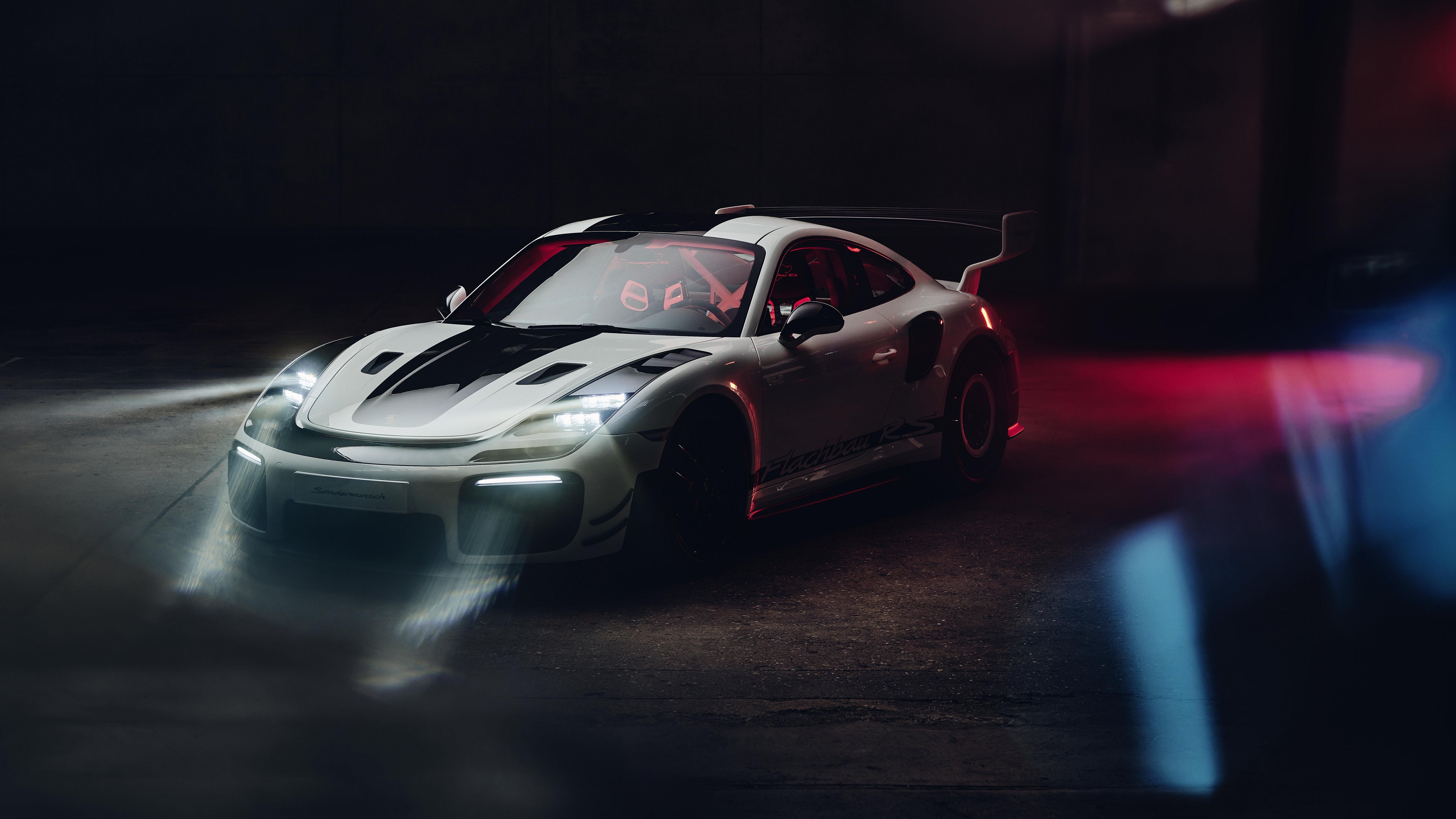
When Porsche registered the names 'Flachbau' and 'Flachbau RS' with the European Patent Office in May 2025, the internet assumed a new limited edition was coming. The reality is odder: Porsche's Sonderwunsch personalization division spent almost three years, built three test vehicles, and ran crash simulations — all to convert a single customer's 911 GT2 RS into a street-legal slantnose.
The donor car is a like-new 2018 GT2 RS with the Weissach Package, the 991.2-generation model whose 700-hp twin-turbo flat-six was left alone at the owner's request. Everything around it changed. The front fenders sit lower and carry slatted louvers that vent the wheel arches, the bumper is a new design with Manthey canards, and the round headlights gave way to three stacked LED strips — the low- and high-beam units each stand less than 1.5 inches tall. The look references the 935/78 Le Mans racer known as 'Moby Dick,' down to the U-shaped carbon-fiber graphic on the hood.
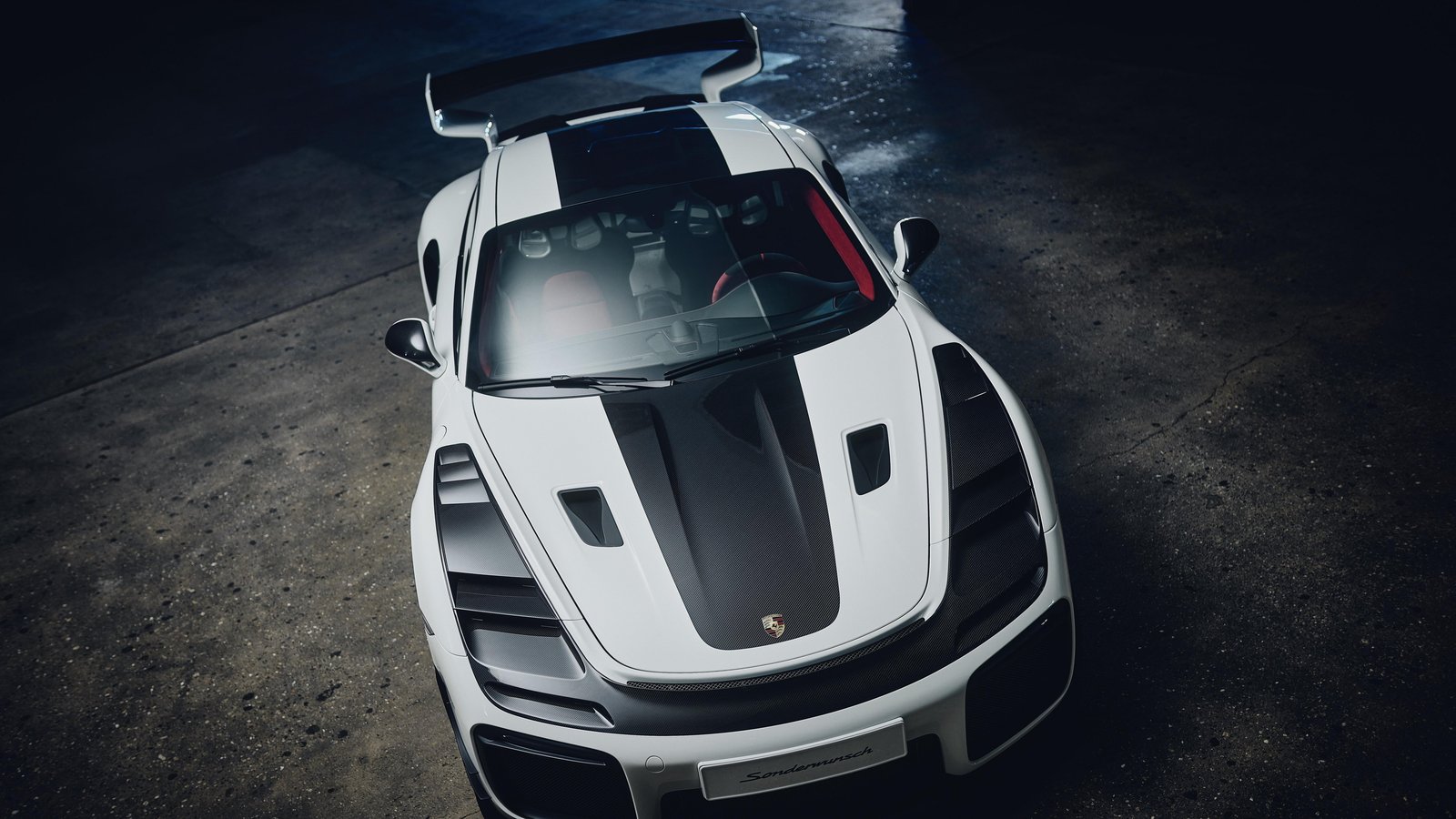
The rear wing borrows its shape from the current 911 GT3 R rennsport but sits almost two inches higher, with S-shaped mounts and three manually adjustable positions. Porsche says it generates roughly 1,221 pounds of downforce on the rear axle at a track speed of around 211 mph, a two to three percent gain over a GT2 RS running the Manthey Kit. Despite the added bodywork, the finished car weighs about 70 pounds less than before.
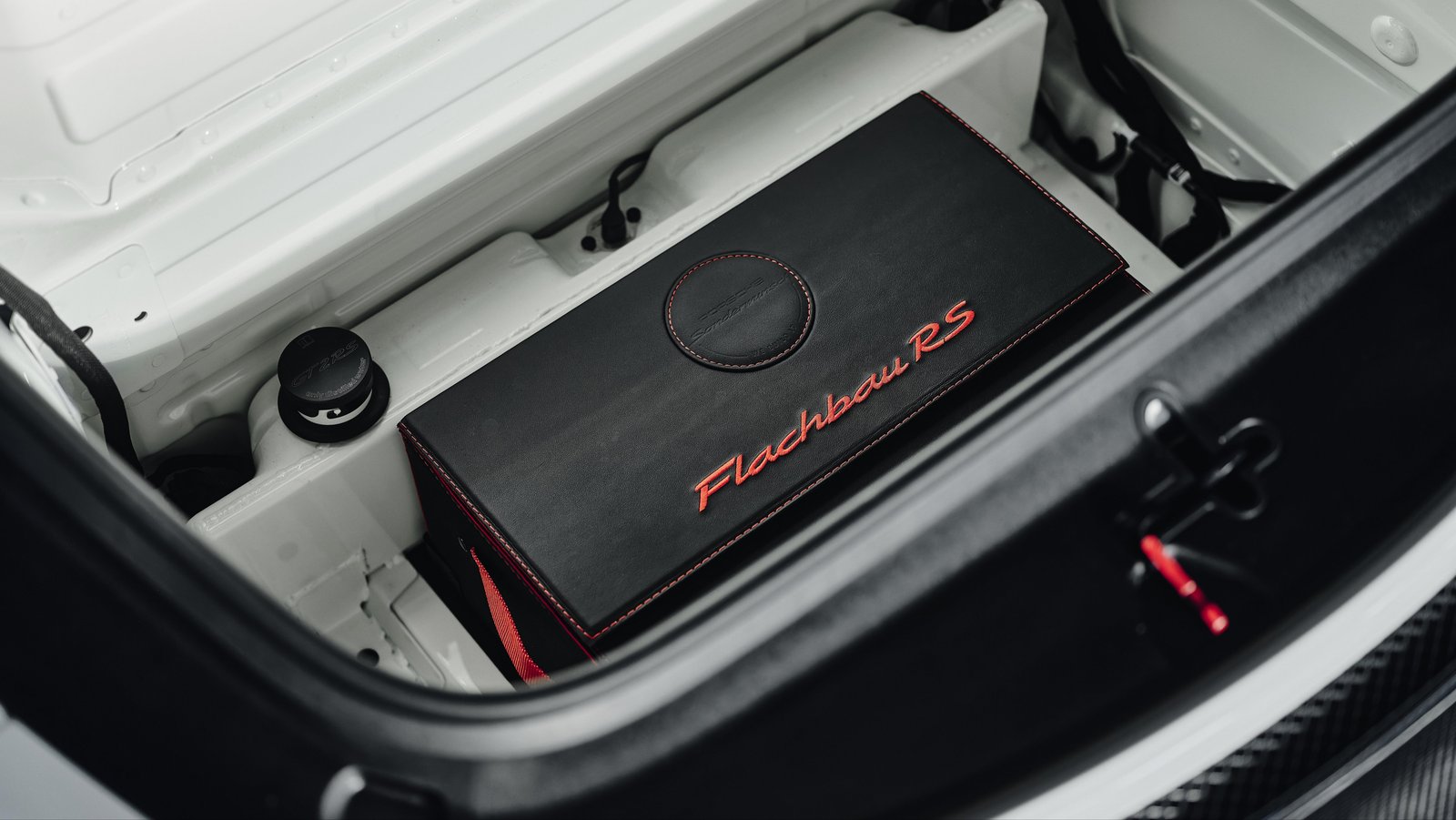
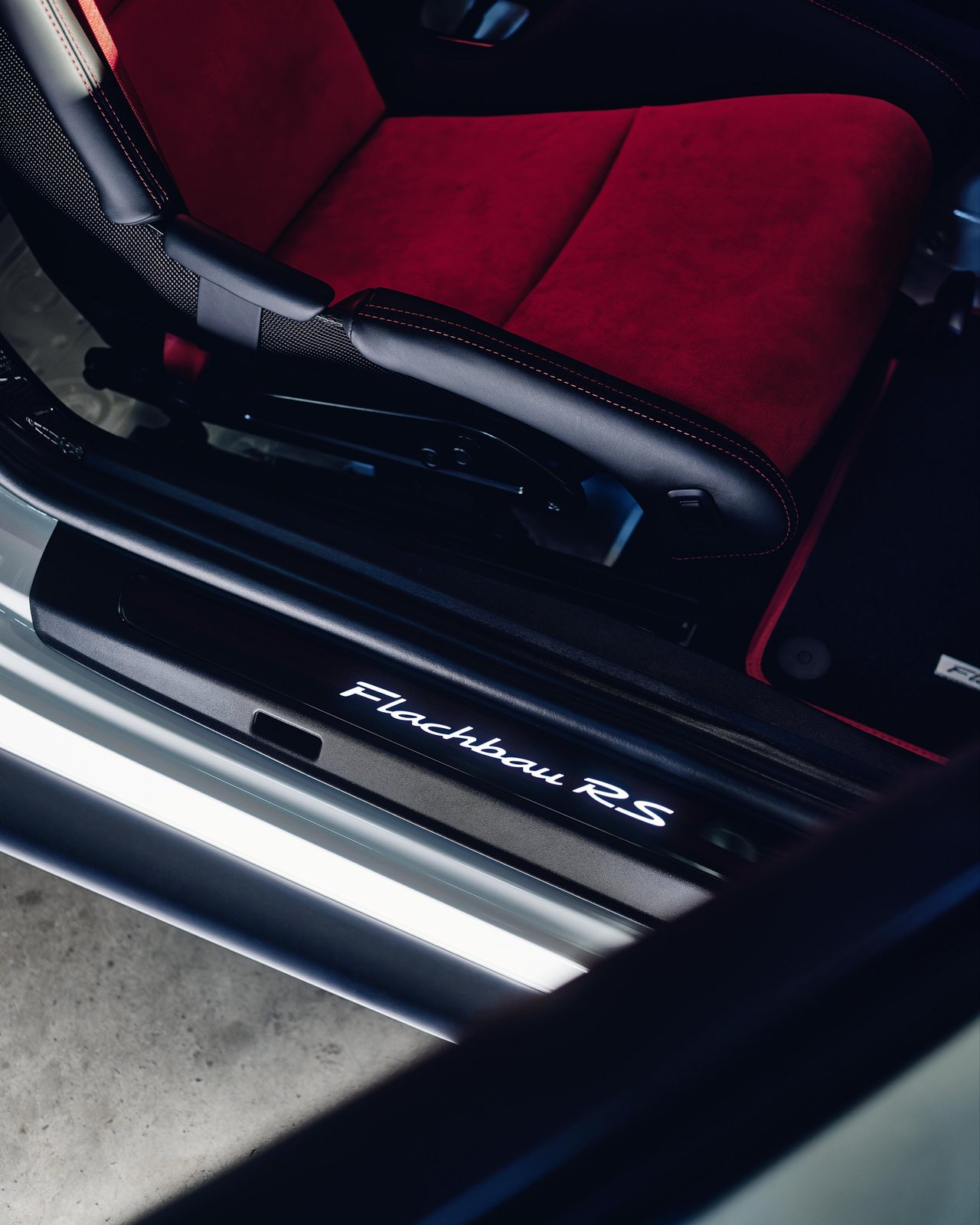
Much of that came out of the cabin. The infotainment system was replaced with a leather-trimmed storage bin, the audio system was removed entirely, and the rewired harness runs exposed along body panels painted Grand Prix White. Even the mounting points for the warning triangle and towing eye are gone — the legally required items now live in a removable box, so the owner can leave them in the garage on track days.
A one-off with production-car validation
What separates the Flachbau RS from a tuner build is the paperwork behind it. Porsche ran crash and airbag-deployment simulations, stress-tested the wing on a hydropulse rig, and put three prototypes through wind tunnels, the Mendig airfield, and 50 laps of the Nurburgring-Nordschleife. Combined, the tests simulated wing loads equivalent to roughly 93,200 miles of customer driving — a development program most limited-run models never see, applied to a build of one.
The slantnose keeps coming back
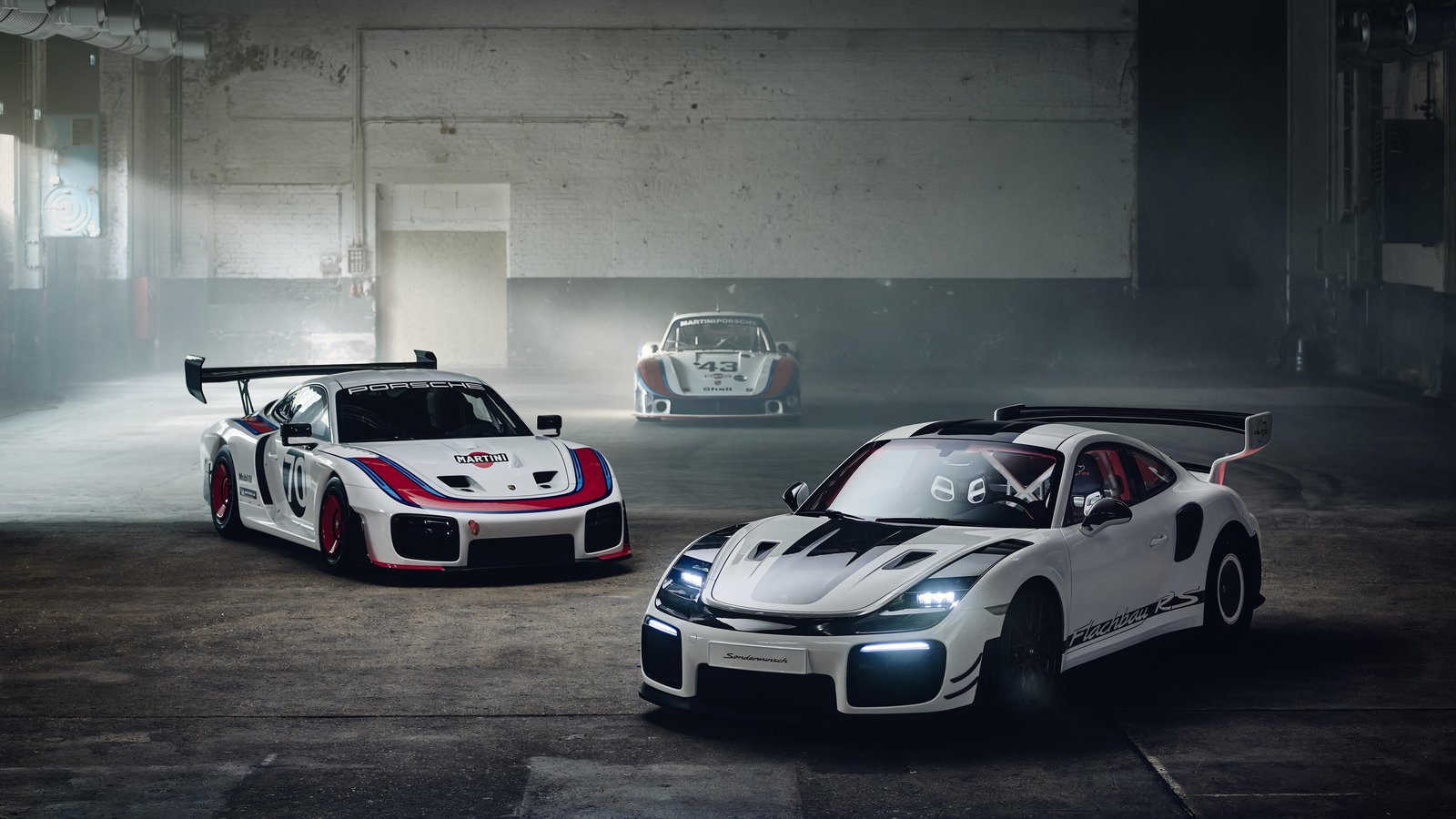
The Flachbau shape has been Sonderwunsch territory since the 1980s, when Porsche sold 948 slantnose versions of the 930-generation 911 Turbo, styled after the dominant 935 race car. The design of this new one-off came from Grant Larson, now retired from Porsche, who also penned the 935 revival of 2018 — a 77-unit, GT2 RS-based club racer priced from 701,948 euros that was never legal for the road. That is the gap this car closes: it wears license plates.
Porsche hasn't disclosed what the conversion cost or who commissioned it, and it hasn't said whether more Flachbau builds will follow. But the company rarely files name and design protections for a car it plans to make exactly once. The full technical rundown is on Porsche's newsroom.