Porsche Mission S Revealed in New York: A Permanent Supercar Above the 911, but Still No Engine
Porsche unveiled its mid-engine supercar concept on a New York pier and called it a permanent model line, not a one-off. It still hasn’t named the engine, the price, or a date.
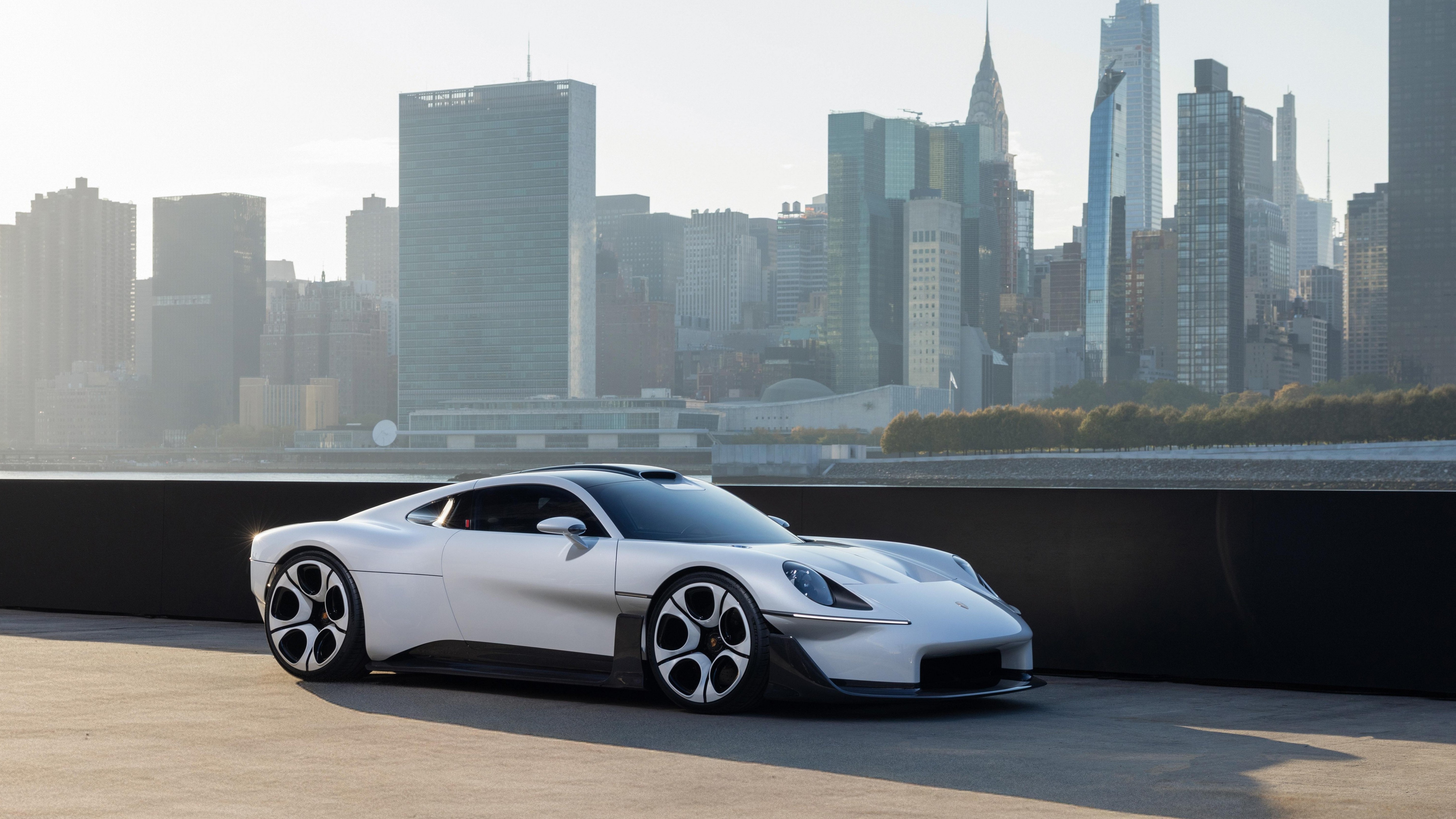
Porsche unveiled the Mission S on Thursday on a pier in Queens, New York, with the Manhattan skyline behind it, and used the car to answer the biggest question left over from its new strategy: the mid-engine supercar above the 911 is meant to be a permanent model line, not a limited run. What Porsche still won't say is what engine it has.
The reveal comes eight days after Porsche's strategy through 2035 committed the company to a "mid-engined super sports car platform" for a model line above its best-known sports car. This page separates what Porsche has now confirmed from what it still hasn't said, including whether Americans will be able to buy one.
What Porsche confirmed on Thursday
- Layout: mid-engine, two seats, with the engine "positioned centrally in the vehicle."
- Positioning: a super sports car platform above the 911, planned as "a permanent and versatile addition," in CEO Michael Leiters' words, rather than a one-off hypercar.
- Status: a "vision model." Porsche calls it a first glimpse of its future design identity and says the platform is in development.
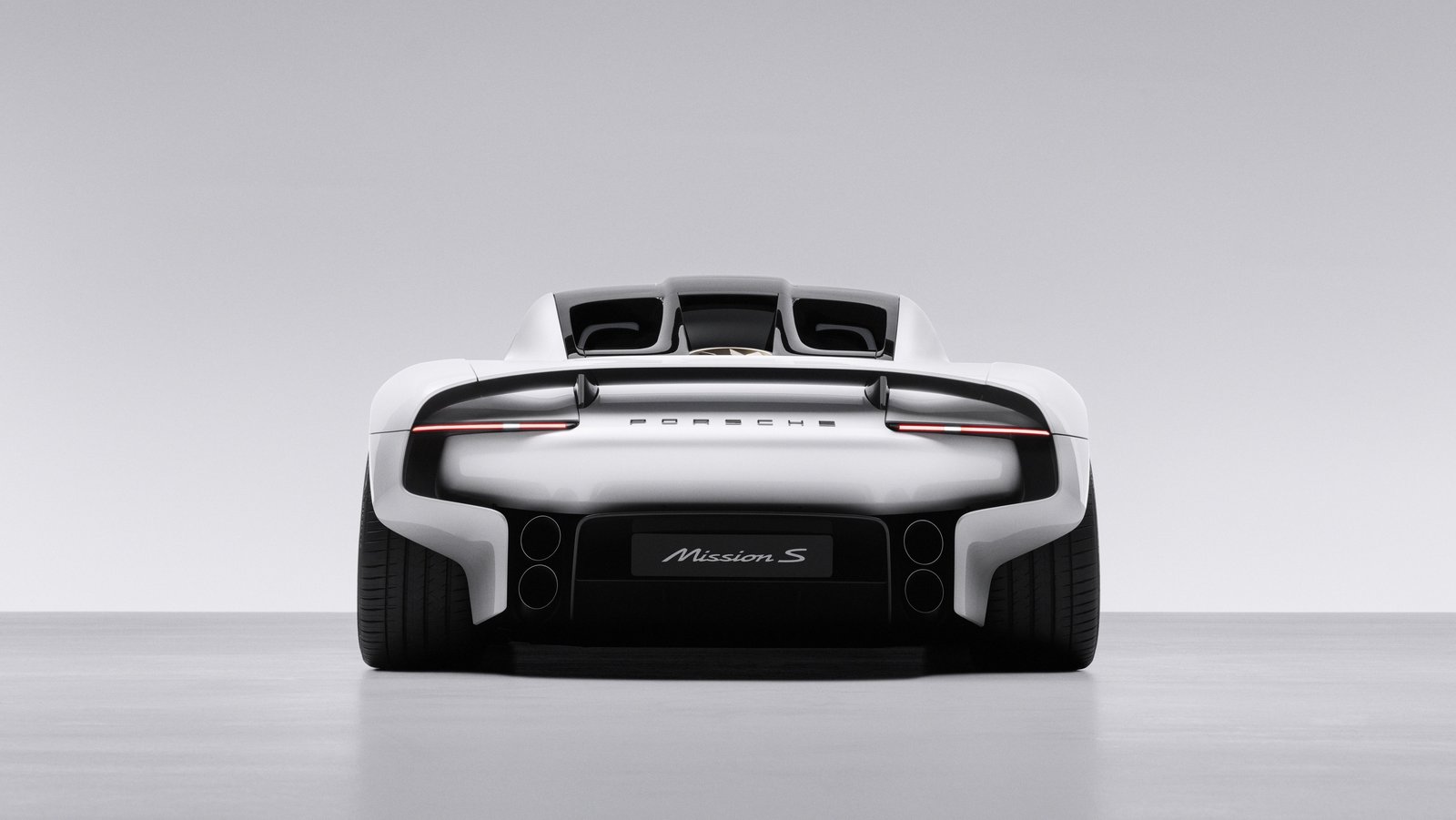
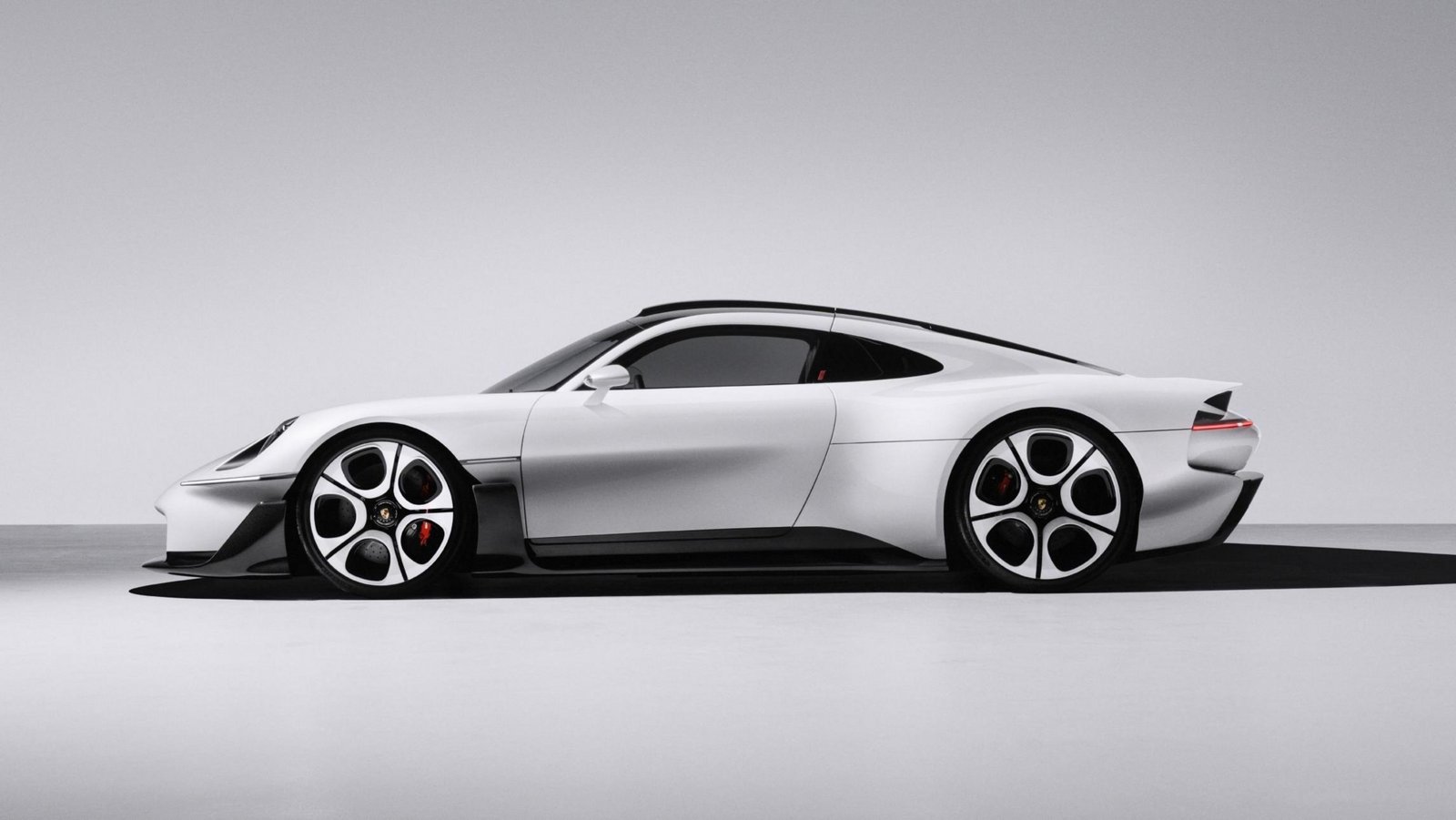
- Design cues: round headlights and "torpedo" fenders from the 911, a flat front and a car-in-car rear derived from the 911 GT1, a roofline that nods to the 959, cooling inspired by the 917's radiator fan, and wheels based on the 928's "dial" design.
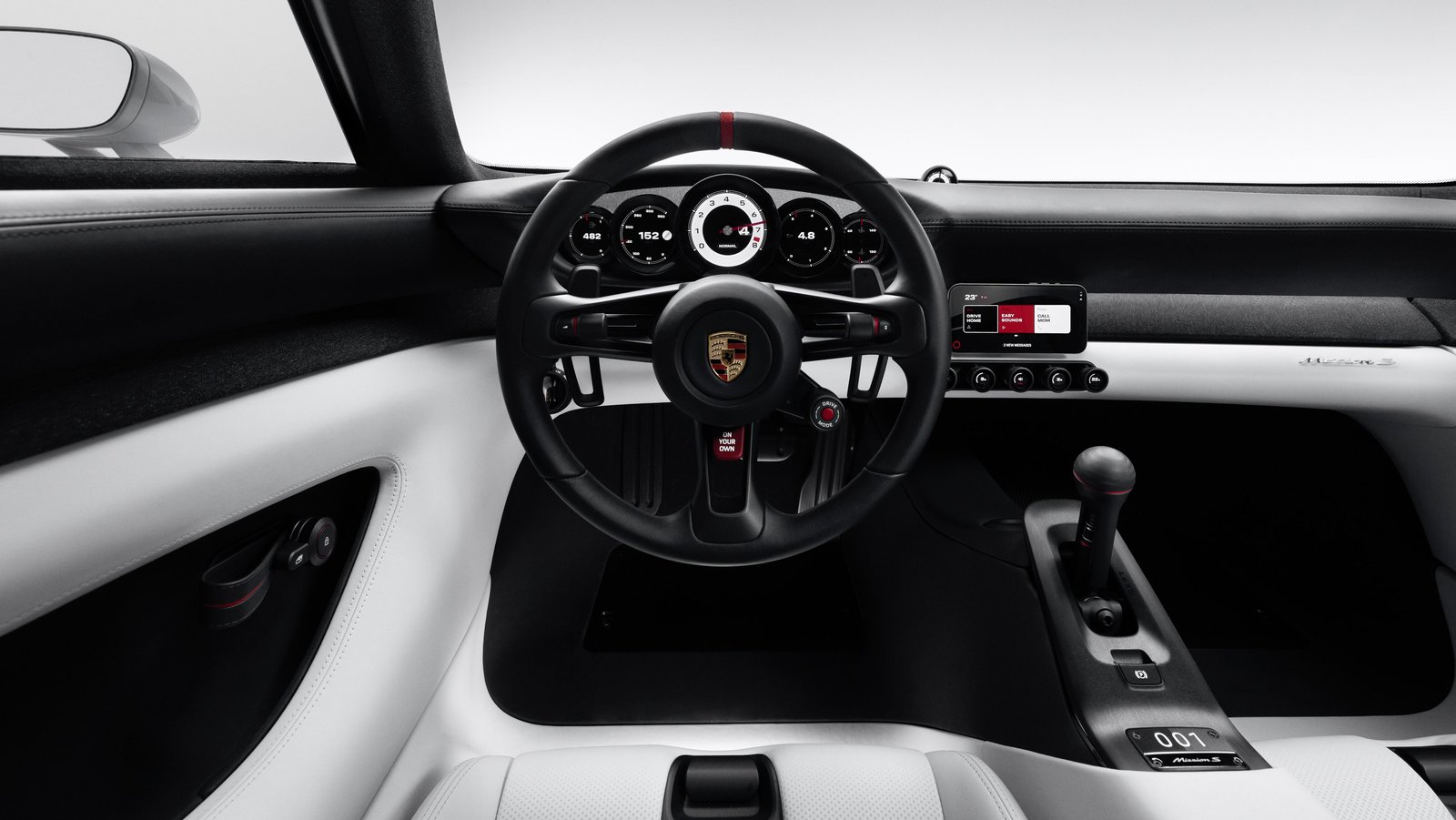
- Cabin: five round instruments, a physical key slot to the left of the wheel, and no fixed center screen.
- Colors: Firn White Metallic paint with Light Red Metallic, Black Chrome, and Special Black inside.
Porsche published no engine, output, weight, performance, price, or production date. The release runs to about 1,300 words and does not contain a single powertrain specification.
"The Mission S represents a mid-engined super sports car platform positioned above the 911 – not as a one-off hypercar, but as a permanent and versatile addition to our customer offering."
That is Leiters, quoted in the release. Porsche adds that it is planning "for the first time, a permanently available super sports car offer," which is a different business model from the 1,270-unit Carrera GT and the 918-unit 918 Spyder.
A gas engine, and a key to start it
The powertrain was the main open question going into the reveal, and it still is. Porsche's strategy release on October 7 described only a "potential" platform and named no engine. Leiters went further in person: according to Autocar, he said the car would be combustion-only and would not be based directly on a mid-engine model from Lamborghini or Audi, though some parts could be shared within the Volkswagen Group.
Thursday's release doesn't repeat that. It confirms the engine sits behind the seats and says nothing about cylinders, displacement, or electrification. The only official teaser before the reveal showed a physical ignition key, and the show car keeps it: the key slot sits to the left of the steering wheel, where Porsche has put it since the days of Le Mans running starts.
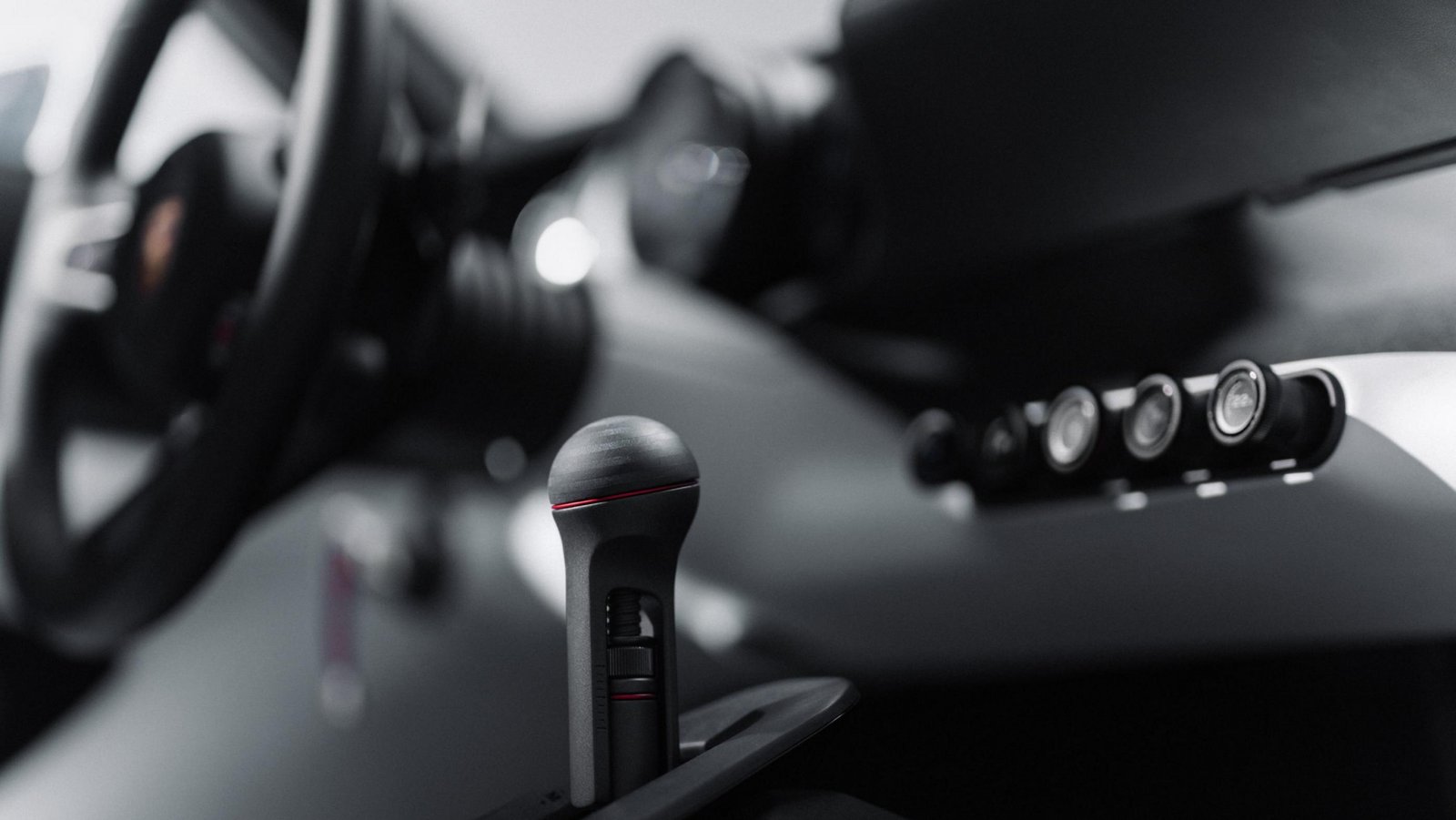
The cabin photos show a tall shift lever on the center tunnel. Porsche's release doesn't describe the transmission, and Road & Track reported Thursday that Leiters said the platform could accommodate a manual. Treat that as a possibility, not a specification.
Design: a 911 face on a mid-engine body
Porsche's new design chief, Tobias Sühlmann, calls the Mission S "the result of a forward-looking, holistic design strategy" that the company will "soon be translating into our future product portfolio." In plain terms, the next Porsches will borrow from this car.
The release describes "floating volumes": a wraparound line connects the front and rear light bars, the surfaces above it are shaped for muscle, and the surfaces below expose technical functions such as the carbon-fiber aero elements and the fully integrated active rear wing. The headlights are round and the fenders rise above the hood, both 911 signatures. The shut lines that run into the light graphics are a nod to the 1970s G-series 911, and the glazed rear section that shows the engine bay is what Porsche calls a car-in-car concept, taken from the 911 GT1 of the late 1990s.
Inside: five dials and your phone
The interior goes the opposite direction from most new cars. There are five round instruments behind the wheel, with the tachometer in the center using an analog needle over a display. Depending on the drive mode, the tach physically moves closer to the driver, and the instrument tubes rearrange themselves side by side or staggered.
There is no permanent center screen and no passenger display. Instead, a retractable holder compatible with MagSafe takes the driver's phone, which runs navigation through a stripped-down My Porsche app. The app can also load historically inspired faces for the gauges. The dashboard controls use a push-pull action, the Sport Chrono clock is reinterpreted, and the seats put the belt buckle in the center panel. Porsche says the architecture is based on the 550 Spyder and the 356.
Why this isn't a Mission X sequel
Porsche has previewed a flagship before and not built it. The Mission X debuted on June 8, 2023, as an electric two-seater with a 900-volt system. Porsche framed its targets conditionally: if the car reached series production, it should be the fastest road-legal car around the Nürburgring Nordschleife and carry roughly one metric horsepower for every kilogram of weight.
It never reached that stage. The Mission S starts from the opposite premise: an engine behind the seats instead of a battery under them. That fits the rest of the strategy, which makes the next 718 Boxster and Cayman electric-only while Leiters promises the 911 "will never be electric," as Autocar and other outlets at the event quoted him.
The language has also changed. The strategy release called the platform "potential." Thursday's release says Porsche "is planning" a permanently available supercar and that the platform is "in development." That is firmer, but it is still not a production announcement with a date.
The cars it has to follow: Carrera GT and 918 Spyder
Porsche's two modern flagships took opposite routes to the same place.
The Carrera GT began as a concept at the Paris show in September 2000 and reached production in 2003. It used a 5.7-liter V10 developed from a shelved Le Mans prototype, made 603 hp, and came only with a six-speed manual. It was the first production Porsche with a carbon-fiber monocoque, and it topped out at 205 mph. Porsche built 1,270 of them in Leipzig, Germany, through 2006.
The 918 Spyder was a plug-in hybrid rated at 887 metric horsepower (652 kW), or roughly 875 hp. In September 2013 it became the first road-approved car to lap the Nordschleife in under seven minutes, at 6:57. Production was capped at 918 cars, with the last scheduled to leave Zuffenhausen in mid-2015.
Both were limited runs. The Mission S is explicitly pitched as the opposite: a standing model line, which means pricing, volume, and allocation will matter more than they did for either predecessor.
What it means for U.S. buyers
Porsche picked the location deliberately. The Queens pier is where the first photographs of the mid-engine 550 Spyder were taken in 1953, and the release credits that car with laying "an important foundation for Porsche's popularity and success in the US." Launching a supercar in New York rather than Stuttgart is as clear a signal about the target market as Porsche has given without saying so.
It still hasn't said so. There is no Porsche Cars North America release, no U.S. allocation, and no price. When the 918 Spyder was nearly sold out in 2014, Porsche's sales chief said the highest demand came "by some distance" from North America. The region is still the company's largest, and U.S. 911 sales are up 33% this year even as the brand's overall U.S. total is down 14%.
Any American buyer will pay for an imported car. Porsche has no U.S. plant, and Automotive News reported that Leiters ruled out building one in response to tariffs. On price, the strategy says where things are headed in general: Porsche wants the average selling price of its top-of-the-range models to rise by about 20% in the medium term.
The timing is notable for the segment. McLaren will end 750S production in 2027, and Toyota has earmarked only about 200 to 250 examples of its GR GT supercar for the U.S. in the first round. A "permanently available" Porsche supercar would be a different proposition from either.
.jpg)
What we don't know yet
- Engine. Porsche confirmed the mid-engine layout and nothing else. Cylinder count, displacement, and aspiration are all unannounced.
- Output and performance. No horsepower, torque, weight, acceleration, or top speed figures were published.
- Hybrid or not. Leiters' "purely combustion" comment to Autocar is the only guidance; the release is silent.
- Transmission. The show car has a shift lever, but Porsche hasn't said what it connects to. Today the only manual Porsches on our list of new cars with a manual transmission are 911s.
- Production timing. Porsche says the platform is in development and the offer will be permanent. No year has been given.
- Price and U.S. allocation. Nothing has been announced, and Porsche Cars North America had not published a U.S. release as of Thursday evening.
What's next
Porsche says the Mission S design language will "soon" appear in its product portfolio, with the electric 718 due in 2027 and the new gas SUV in 2028. The production supercar has no date. We'll update this page when Porsche Cars North America publishes U.S. details or when Porsche names the engine.