Porsche's Profit Rebounds on Fewer Cars, but Q3 Slowed and 2027 Looks Worse
Nine-month operating profit hit €1.74 billion, up from €40 million. Strip out last year's restructuring bill, and the third quarter was Porsche's weakest of 2026.
Porsche earned €1.74 billion in operating profit in the first nine months of 2026, up from just €40 million a year earlier, while selling 16% fewer cars. Revenue slipped only 5.9%, to €25.28 billion, because each car Porsche sold brought in more money than before.
The headline jump flatters the trend, though. Most of the gap comes from what Porsche spent in 2025 to reverse its EV-heavy plan, and the volume side of the story was already public: Porsche's 178,532 deliveries through September and the 718's collapse in the U.S. The new numbers show what that smaller, pricier Porsche earns.
Why profit jumped
Porsche says its operating return on sales rose to 6.9% from 0.2%. A year ago, the cost of its strategic realignment reached €2.7 billion through September. This year, the company puts the same bill at roughly €500 million.
Margins improved underneath that, too. The Automotive EBITDA margin, which leaves out depreciation, rose to 17.3% from 11.9%.
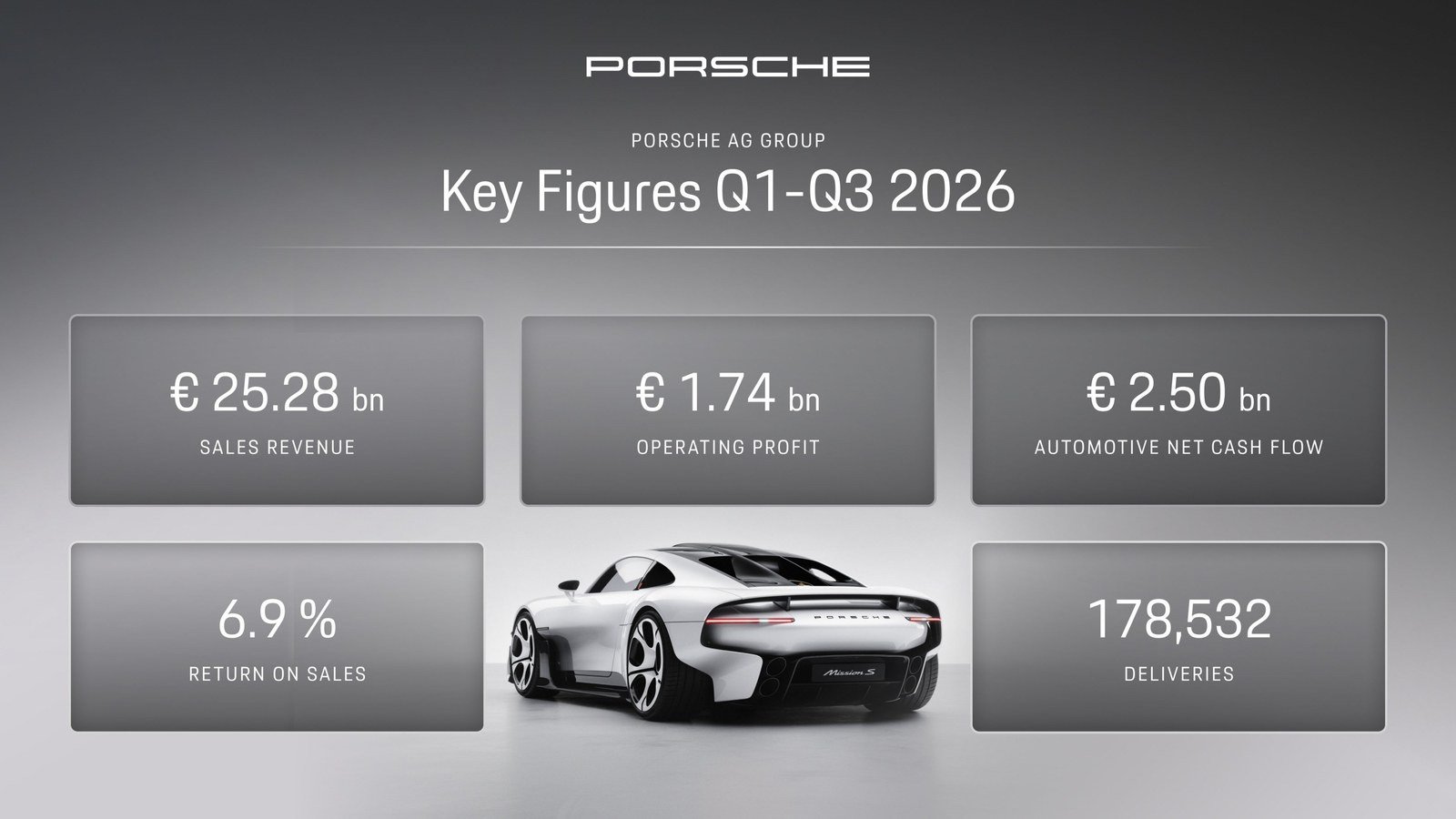
The third quarter on its own was weaker than the first half. Porsche reported €1.35 billion in operating profit on €17.23 billion in revenue in its half-year results. Subtracting those figures from the nine-month totals leaves about €390 million on about €8.05 billion in revenue from July through September, a margin near 4.8%, compared with 7.8% in the first half. That is our arithmetic, not a Porsche figure.
Cash came from selling things
Automotive net cash flow nearly doubled, to €2.50 billion from €1.34 billion. Porsche attributes most of the gain to the sale of its stakes in Bugatti Rimac and the Rimac Group, completed in September. The deal brought in €984 million in cash and a €593 million gain.
The third quarter also carried bills. Porsche lists €100 million to €200 million for its restructuring, €250 million to fund pension obligations, and €200 million in charges from U.S. tariffs. Porsche builds all of its cars in Europe, so every one sold in America pays the import duty. Finance chief Jochen Breckner told analysts that a possible Audi plant in Georgia would not move Porsche production there, Reuters reported.
Porsche is also shrinking beyond cars. In August, it agreed to sell its MHP consulting subsidiary to Tata Consultancy Services, with closing expected within a year.
What Porsche expects next
Porsche confirmed its full-year targets: €35 billion to €36 billion in revenue and an operating return on sales of 5.5% to 7.5%. That implies €9.7 billion to €10.7 billion in fourth-quarter revenue. The cash flow margin target now sits at 5.5% to 7.5%, up from the 3% to 5% Porsche gave in July, mainly because of the Rimac proceeds.
The EV share is moving the wrong way for its own forecast. Battery-electric models made up 21.7% of deliveries, down from 23.1%, against a full-year target of 24% to 26%.
The bigger warning was about 2027. On the analyst call, Breckner said next year's operating profit would come in below 2026, calling it a transitional year without the gas Macan, according to an Investing.com transcript. Formal guidance is due in March.
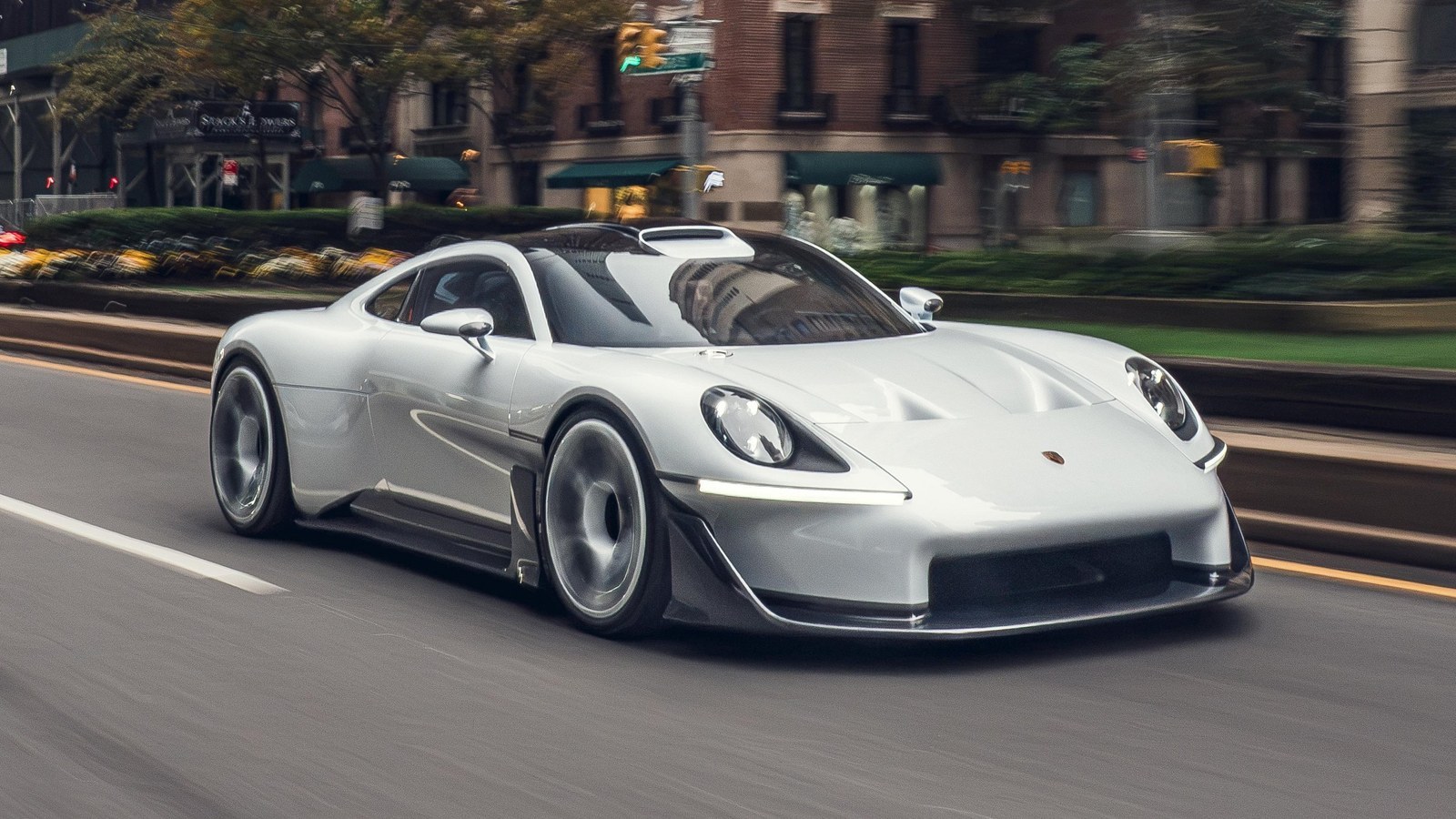
That leaves the new products from Porsche's 2035 plan, including an electric 718 and a gas small SUV, to carry the recovery from 2028. Porsche chose the Mission S supercar concept to illustrate these results, but it still has no engine, price, or production date.