Recall Count Is the Worst Way to Judge a Car. Here's the Right One
Ford, Toyota, Porsche, Land Rover, and Hyundai filed recalls this week. The smallest carries the most urgent warning, which is why the count tells you so little.
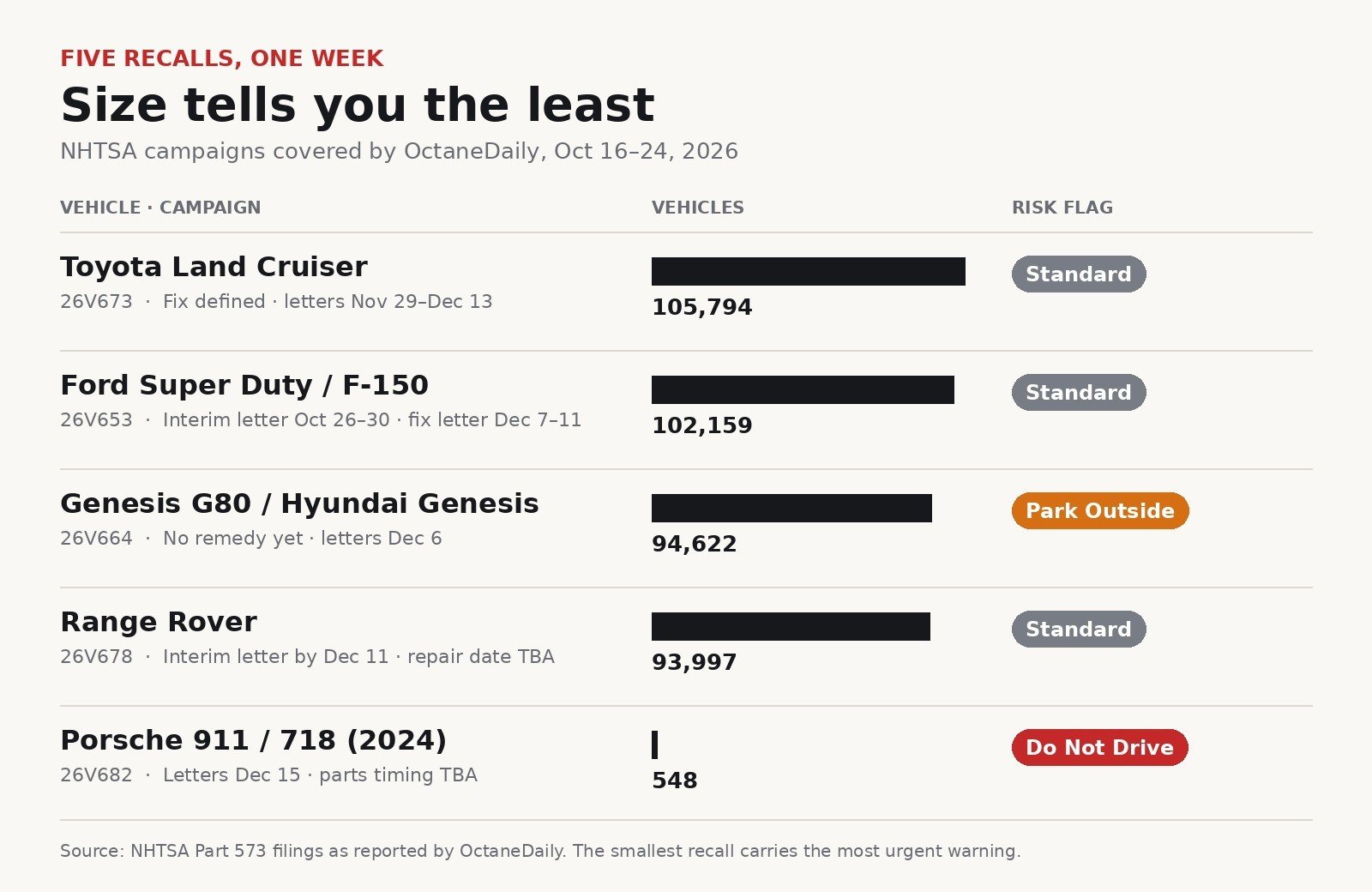
Between October 16 and October 24, OctaneDaily covered five new safety recalls from five automakers. The biggest, Toyota's, covers 105,794 Land Cruisers. The smallest, Porsche's, covers 548 cars. If you judge a car or a brand by how many recalls it has, or how many vehicles they cover, you would rank those two exactly backward. My argument is simple: a recall count is the worst way to judge a car. The three things that actually matter are the type of risk, how fast the fix arrives, and who found the problem.
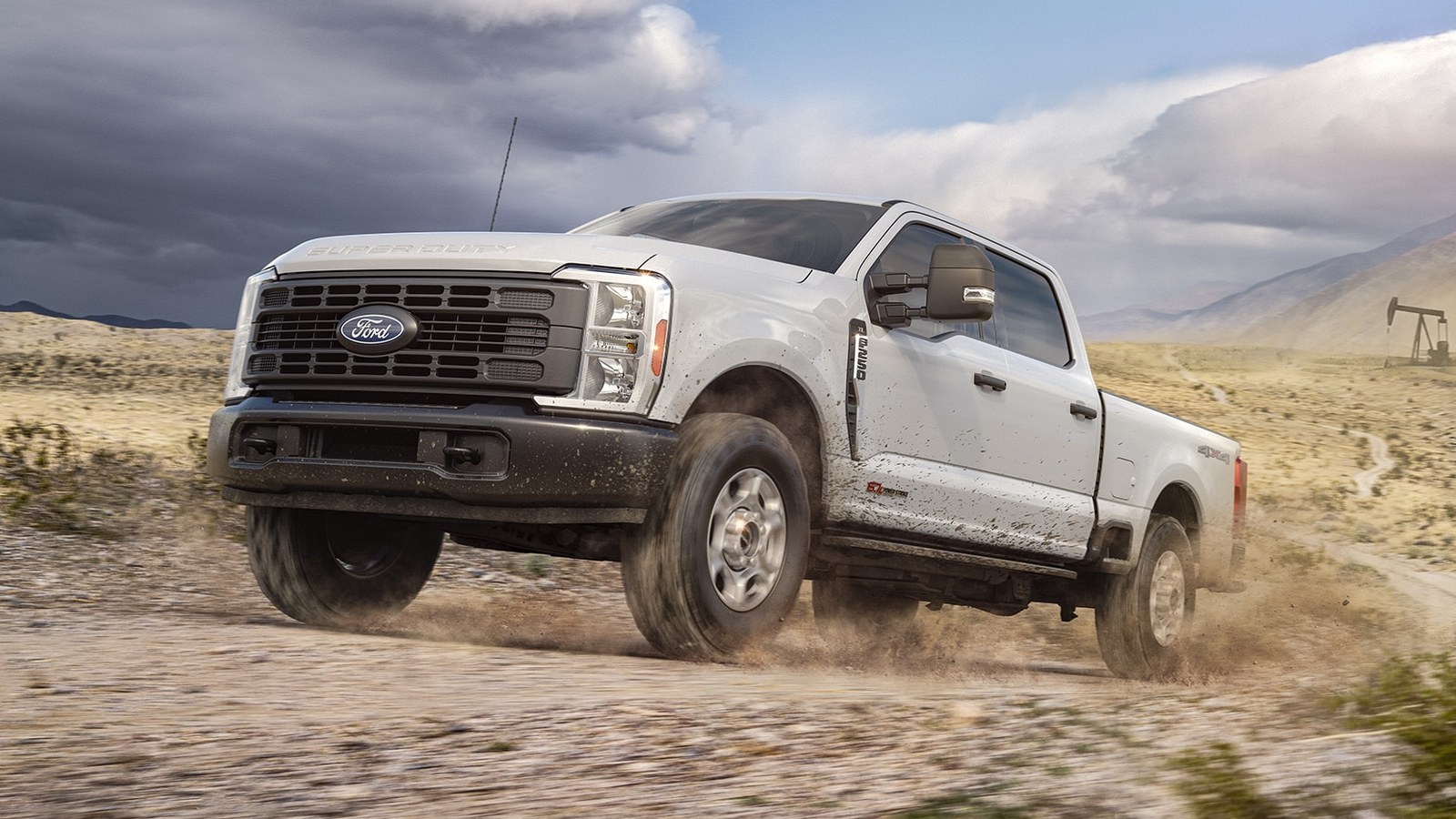
Start with the week itself. Ford's speedometer recall on 102,159 Super Duty and F-150 trucks covers needles that can stick or jump, and Ford expects only about 1 percent of those trucks to have a bad cluster. Toyota's Land Cruiser fuel-leak recall is the largest of the five, yet Toyota's defect estimate is a placeholder for "unknown," and the campaign carries no parking or driving restriction.
Size is a fact about sales, not safety
Ford sold 2,204,124 vehicles in the U.S. last year, according to its full-year sales report, and 828,832 of them were F-Series trucks. A company that builds that many trucks on shared parts will file big recalls, because one supplier slip touches a huge population. The Visteon cluster problem in 26V653 is real, but its size mostly measures how many trucks Ford builds.
The industry-wide numbers make the same point. NHTSA's 2024 annual recalls report counts 950 vehicle recalls covering 29,346,478 vehicles. Headline totals like that tell you how much is being fixed, not which cars are dangerous.
You will see tallies of how many recalls one brand has racked up in 2026. I'm not repeating them. I haven't been able to verify a full-year count against NHTSA's own records, and the year isn't over. More to the point, even an accurate count would reward a brand that sells fewer cars and punish one that sells more.
What matters first: the type of risk
NHTSA attaches two warnings that should change what you do today. A Do Not Drive notice means the car shouldn't move until it's repaired. Porsche's center-lock wheel recall on 548 cars carries one, because a fractured central bolt can let a wheel come off. That is the smallest campaign of the week and the most urgent one.
A Park Outside notice means the car can catch fire while switched off. Hyundai's Genesis and G80 seat-switch recall has one, with no remedy yet. Our guide to Park Outside recalls and the current list explains the difference. Everything else is an ordinary recall: get it fixed, but you don't need to change where you park or whether you drive.
Second: how fast the fix arrives
A recall filing is a promise, not a repair. The gap between the two is where owners carry the risk, and our recall stories report both dates for a reason.
Ford filed 26V653 on October 6. Owners get an interim letter from October 26, but the letter announcing the actual repair isn't due until December 7 to 11. Land Rover's Range Rover backup-camera recall is phased too: dealers hear on October 29, owners get an interim letter by December 11, and the repair date is still unannounced. Hyundai hasn't even defined its remedy. Toyota, by contrast, has a fix spelled out: dealers add a supplemental clamp, with owner letters from November 29.
An interim letter is the tell. When the remedy isn't available at first notice, federal rules require a second letter once it is, so an interim letter means nothing gets repaired until that second one arrives.
Third: who found the problem
Every recall filing must include a chronology of how the automaker reached its decision, under 49 CFR 573.6. That timeline is the most revealing page in the file, and it's public.
Land Rover's chronology shows its own analysts noticed U.S. and Canadian Range Rovers needed new rear cameras far more often than cars elsewhere. That is a company catching its own problem. Hyundai's shows the first U.S. seat fire was reported in December 2021, and the recall came only after Korean-market data arrived this July. Honda's tire-repair-kit follow-up recall began when a dealer spotted the wrong part. I'd argue those three stories tell you more about each company than any annual total.
The NHTSA report adds a useful number here. Only 37 of the 950 vehicle recalls in 2024 were influenced by the agency, but those covered 6,572,283 vehicles, or about 22 percent of the total. Regulator pressure tends to show up in the big campaigns, which is one more reason not to read volume as virtue or vice.
The best argument against me
Counts aren't meaningless. A brand that files constant recalls on the same model, or recalls the same part twice, is telling you something about its engineering or its suppliers. Honda recalling its own remedy, and Jeep's third attempt at a Grand Cherokee spring fix, are fair marks against the companies involved.
I agree, and that's the point. Repeats on the same part are a pattern worth watching. A raw total across a whole lineup is not. Software fixes muddy totals further: Tesla's December 2023 Autopilot recall covered roughly 2 million cars and was delivered over the air, with no dealer visit at all. It counts the same as a recall that needs a new part nobody has built yet.
What to do with any recall
- Check the VIN yourself. Run it at nhtsa.gov/recalls now and before you buy any used car. Mail lags the filing by weeks.
- Don't pay for the fix. Federal law requires the automaker to remedy a safety defect without charge, for vehicles first sold up to 15 years earlier (49 U.S.C. 30120). If you paid before the recall, keep the receipts and ask about reimbursement.
- Know the clock. The automaker must mail owners within 60 days of filing its recall report. If that first letter is an interim one, the repair isn't ready, so plan around the risk flag, not the letter.
Judge the car by those answers. The number on the recall tally is just a measure of how many were sold.