Rivian's Big Software Update Now Warns R1 Drivers About Speed Cameras
Software update 2026.31 moves every R1T and R1S onto the same software as the R2, and its navigation now flags police and speed cameras using reports from Google Maps and Waze users. Two new features sit behind the $14.99-a-month Connect+ plan.
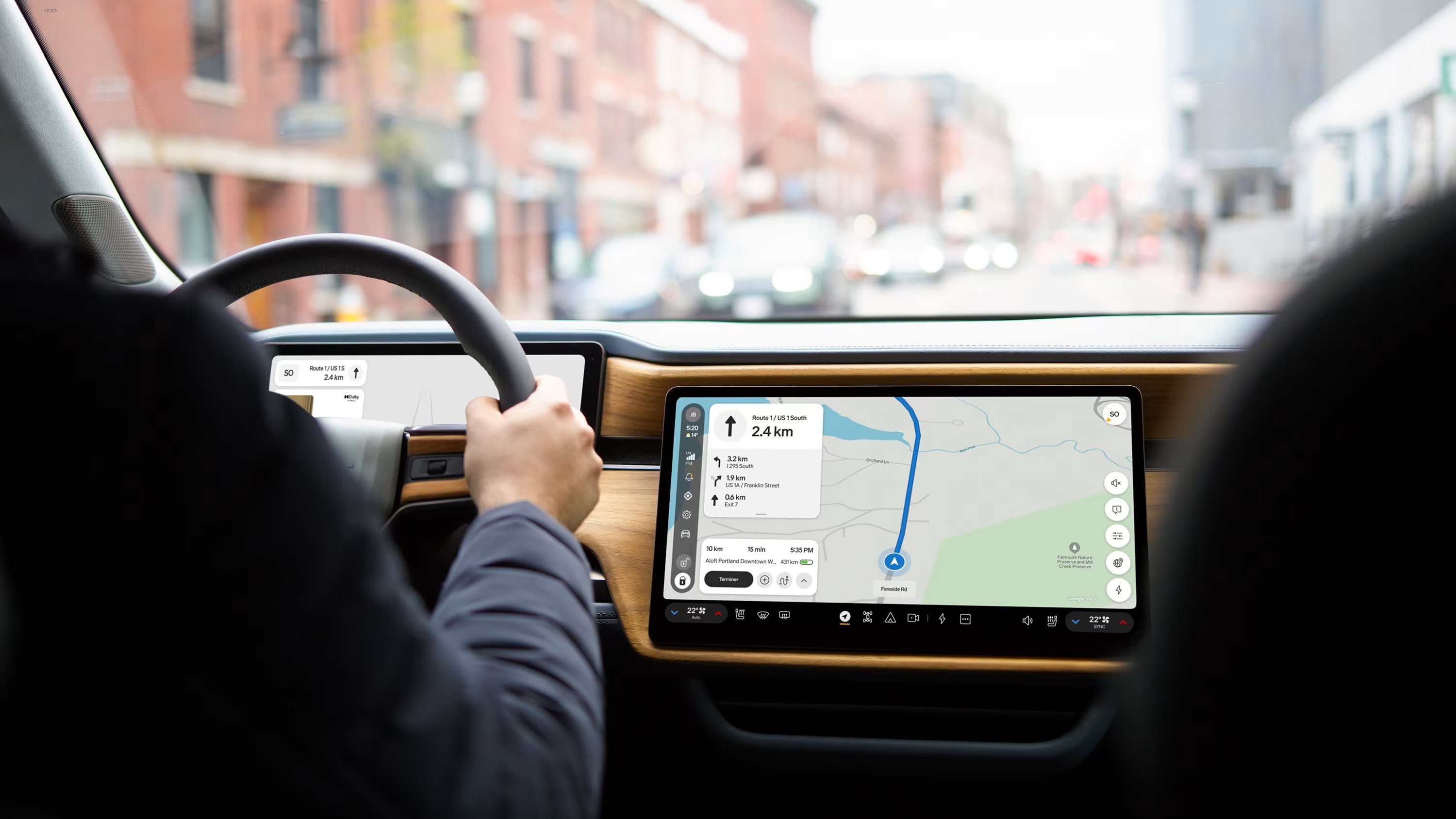
Rivian's built-in navigation now flags police and speed cameras ahead, and the reports come from the same crowd that feeds Google Maps and Waze. The feature arrives with RivianOS 2, which software update 2026.31 is bringing to every R1T and R1S the company has built, first-generation trucks included.
Rivian calls the update the biggest software change in the R1's history. The R2 launched on RivianOS 2 earlier this year; from this release, the R1 and R2 share one software stack, so new features and interface changes should land on both at the same time, scaled to each vehicle's hardware.
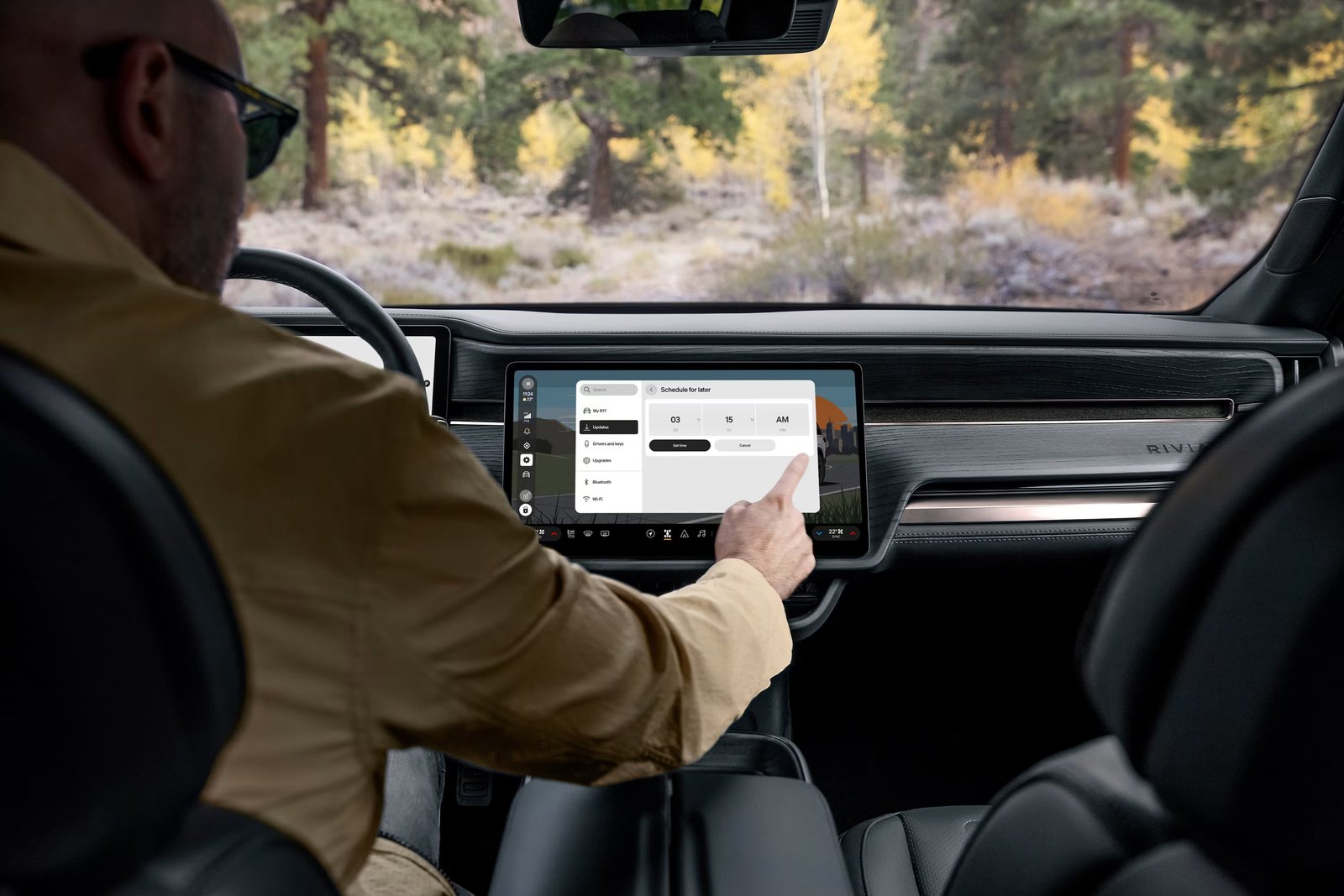
Crowd-sourced alerts reach the factory screen
The route alerts are the part worth watching. Rivian says the police and speed-camera data comes from local authorities, third-party sources, and contributions from Google Maps and Waze users. The release notes describe it as Google Maps and Waze user reports along your route, on all vehicle types. This is not a radar detector: it maps reported enforcement, it doesn't sense it.
That crowd has history. Google began pulling Waze-style speed-trap and camera reports into Google Maps in early 2019, and the NYPD promptly sent a cease-and-desist letter demanding that checkpoint reports be removed. Google declined, arguing that drivers who know a speed trap is coming drive more carefully. Seven years later, the same data is being drawn on a factory-installed screen rather than a phone in a cupholder.
For Rivian, it's the next step on a path that started in July 2025, when update 2025.22 replaced the Mapbox-based navigation with a Google Maps foundation while keeping Rivian's range-on-arrival and charging-stop logic. Rivian still doesn't offer Apple CarPlay or Android Auto.
Game-engine graphics, with a footnote
The other headline change is visual. The car and its surroundings are rendered in real time on the center display by Unreal Engine 5, the same engine behind current video games. Rivian's announcement says all R1 and R2 vehicles use it. Electrek and Carscoops, both citing the company, report that first-generation R1s (model year 2024 and earlier) stay on Unreal Engine 4 to keep the older display hardware responsive. The official release notes don't mention the engine at all, so treat the Gen 1 graphics upgrade as unconfirmed.
The hardware gap shows up elsewhere, too. Local AI processing runs only on the R2 and Gen 2 R1; Gen 1 trucks get the expanded cloud-based voice assistant. Every generation gets the rebuilt interface: quick controls and the media player can sit on either side of the screen, a vertical status bar keeps core functions in reach, and a new Settings app adds universal search.
Two additions sit behind Connect+, Rivian's paid connectivity plan: a weather app with air quality and a 10-day forecast, and Mobile Live Trips, which lets drivers set up and edit an active route from the phone app. Connect+ costs $14.99 a month or $149.99 a year, with a 60-day trial on new vehicles.
Privacy controls also move with the update. On every generation, owners can turn off the voice wake word, limit location sharing, and edit what their driver profile stores.
What Rivian hasn't said
Rivian describes the rollout as beginning and points owners to the app or center display for their own timing. Roamer, a third-party tracker that monitors owners' linked vehicles, had counted the update on about 23 percent of roughly 7,000 cars by September 8, and almost all of the first-day recipients were Connect+ subscribers. The company hasn't given a completion date, hasn't said whether the enforcement alerts behave differently in places that restrict such warnings, and hasn't spelled out which AI features run in the car versus in the cloud.