Tesla's FSD Will Now Grab the Wheel Even When You're Driving Yourself
FSD v14.3.9 can activate on its own if a frontal crash is imminent or the car decides you're not paying attention. Tesla hasn't said whether you can turn it off — or whether it needs the $99 subscription.
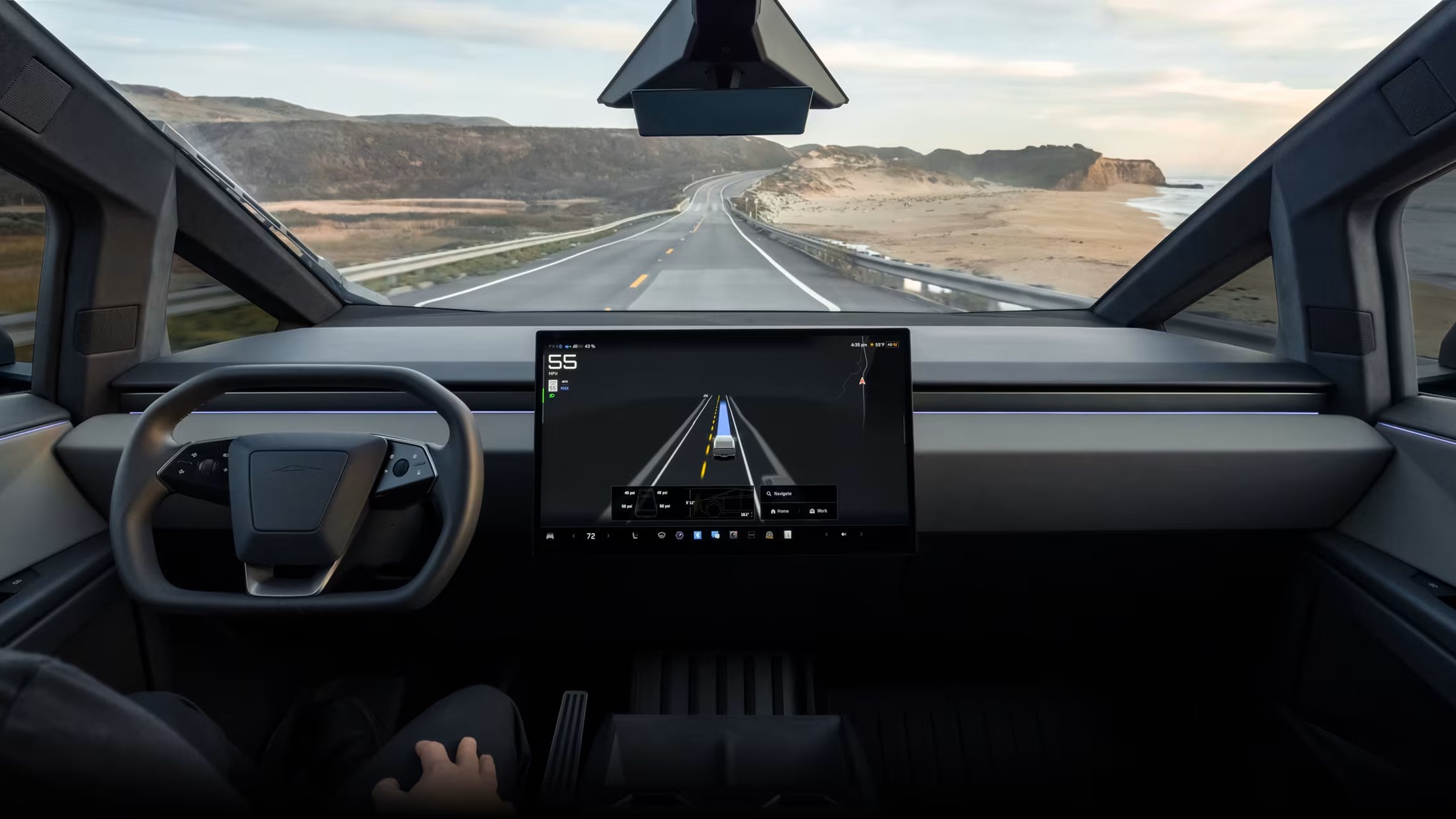
Tesla's driver-assistance software is about to do something it has never done before: switch itself on. Full Self-Driving (Supervised) v14.3.9 adds a feature called Automatic Collision Evasion, which activates FSD while you are driving manually if the car decides a frontal crash is coming and braking alone won't prevent it.
Tesla's AI team announced the update in a post on X on Friday, September 4, saying v14.3.9 was starting to roll out shortly. FSD can now "activate on your behalf when an imminent collision is detected," the company said, in cases where automatic emergency braking may not be enough. It may also step in if the car judges you heavily distracted, or if it thinks you turned FSD off by accident.
Two triggers, and the car keeps driving afterward
The release notes for software update 2026.27.5, which carries FSD v14.3.9, spell out two scenarios. The first is the obvious one: a frontal collision is imminent and braking won't avoid it. The second has nothing to do with an obstacle. If the cabin camera concludes you aren't watching the road — the notes give the example of "reaching toward the back seat" — or if the system believes FSD was disengaged unintentionally, it can engage on its own.
In both cases the sequence is the same. The car activates FSD, attempts to keep itself out of trouble, and then continues driving under FSD rather than handing control straight back. That last detail matters: this isn't a one-second nudge that hands the wheel back, it is a handover to the driver-assistance system.
Tesla lists the feature for Hardware 4 vehicles. The notes published on Not a Tesla App are dated September 6 and describe an employee build; the site reports early-access testers are next. Tesla hasn't confirmed a wide rollout date.
The rest of v14.3.9 is a substantial FSD update in its own right. Tesla says it rewrote the AI compiler and runtime with MLIR for a 20% faster reaction time, upgraded the vision encoder for low-visibility and rare scenarios, improved traffic-light handling at complex intersections, sharpened responses to emergency vehicles and school buses, and made the driver-monitoring camera more sensitive to eye gaze and glasses. The FSD, Robotaxi, and Actually Smart Summon models now run on a single unified network.
Every other automaker waits for you to steer first
Evasive-steering systems aren't new. Ford has sold Evasive Steering Assist for years, and Bosch supplies similar hardware across the industry. The difference is who initiates the maneuver. Ford's own description is explicit: the system only adds steering torque after the driver turns the wheel, and if the driver doesn't steer, nothing happens.
Tesla's version removes that condition. The car decides on its own that steering beats braking, and acts. Electrek, which broke the story, has raised the question of false positives, pointing to earlier v14 builds it documented swerving without cause. A phantom brake is a jolt; a phantom swerve is a different category of risk. Tesla hasn't said how the system weighs steering against braking, or how it avoids steering into the neighboring lane.
Active safety, now inside the FSD subscription
Here's the part the initial coverage has skipped. Since January 23, a new Tesla in North America ships with Traffic-Aware Cruise Control and the standard active-safety suite — automatic emergency braking, lane departure avoidance, blind spot monitoring — and nothing else. Basic Autopilot is gone from new orders, and Autosteer now requires FSD (Supervised), which Tesla sells only as a $99-a-month subscription.
Automatic Collision Evasion works by activating FSD (Supervised). That points to it requiring an active FSD subscription or a permanent license, which would make it the first Tesla crash-avoidance feature to sit behind a paywall rather than in the standard safety suite. Tesla hasn't stated that explicitly, and it hasn't said whether owners can turn the feature off, whether it will reach Hardware 3 cars, or whether it will ship outside North America. The release notes direct owners to the owner's manual, which has not yet been updated.
NHTSA hasn't commented. The agency's Engineering Analysis into FSD's performance in low-visibility conditions, opened in March, remains open; nothing ties the new feature to that investigation. For now, the practical answer to "can my Tesla grab the wheel?" is: only if it's a Hardware 4 car running FSD v14.3.9, and Tesla hasn't finished answering the rest.