Lamborghini's 907-HP Temerario Spyder vs. Its Open-Top Rivals: Specs, Roofs, Prices
Lamborghini's first folding hardtop arrives with 907 hp and no price. Here is how it stacks up against Ferrari, McLaren, and Porsche on power, weight, roof speed, and cost.
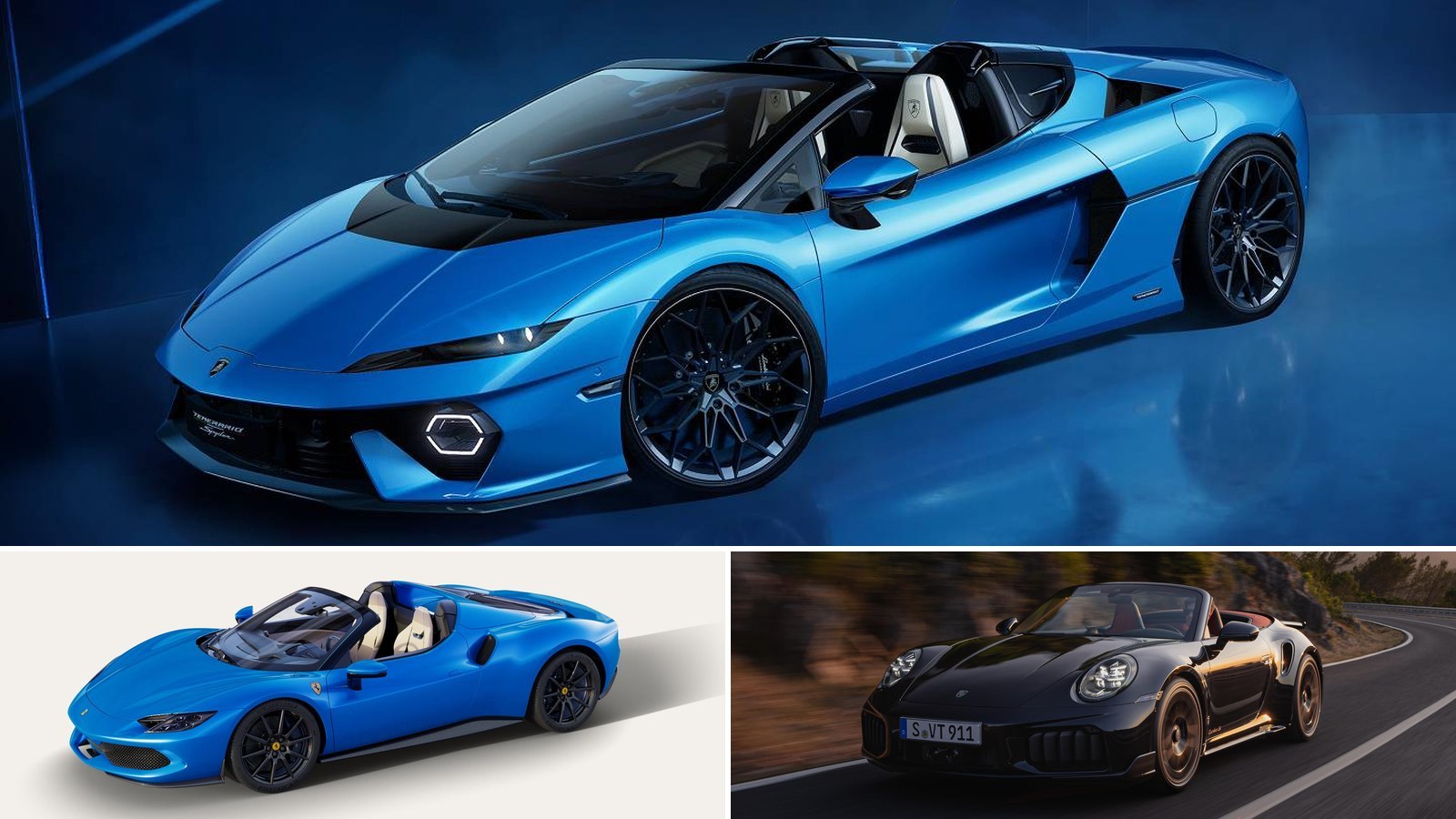
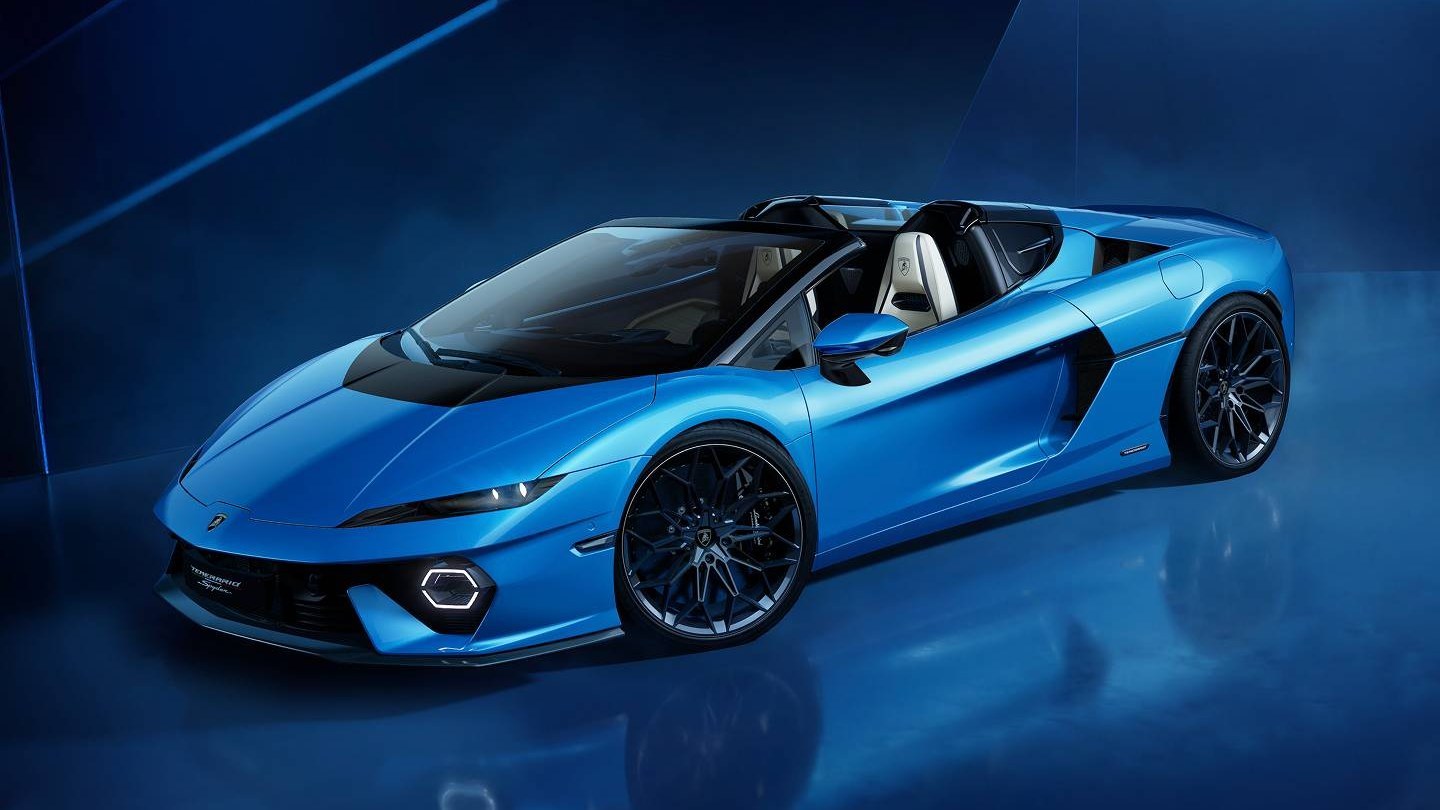
Lamborghini pulled the cover off the Temerario Spyder in Los Angeles on November 18, and the headline is the roof: a two-panel folding hardtop that the company calls the first in its history. Under it sits the coupe's 907-hp plug-in-hybrid V8. What Lamborghini did not bring to Los Angeles is a price.
That leaves buyers comparing a car they can't order yet with four they can: Ferrari's 296 GTS, McLaren's Artura Spider and 750S Spider — the latter in its last stretch, since 750S production ends in 2027 — and Porsche's 911 Turbo S Cabriolet. Here is how the factory numbers line up.
The numbers, side by side
Every figure below is a manufacturer claim unless marked otherwise. Two rows need care. Weights are quoted three different ways, so they are not directly comparable. And only Porsche publishes a US price; the Ferrari and McLaren figures come from pricing guides.
| Spec | Lamborghini Temerario Spyder | Ferrari 296 GTS | McLaren 750S Spider | McLaren Artura Spider | Porsche 911 Turbo S Cabriolet |
|---|---|---|---|---|---|
| US starting price | Not announced | $373,134 (KBB, 2026); Ferrari does not publish US pricing | $392,000 before destination (Cars.com, 2027) | $291,000 before destination (Edmunds, 2027) | $286,650 with $2,350 delivery fee (Porsche, 2027) |
| Powertrain | 4.0L twin-turbo V8 + three motors, plug-in hybrid | 3.0L twin-turbo V6 + one motor, plug-in hybrid | 4.0L twin-turbo V8, no hybrid | 3.0L twin-turbo V6 + one motor, plug-in hybrid | 3.6L twin-turbo flat-six T-Hybrid, not a plug-in |
| Drive | AWD (electric front axle) | RWD | RWD | RWD | AWD |
| Power | 907 hp (920 CV) | 819 hp (830 CV) | 740 hp (750 PS) | 690 hp (700 PS) | 701 hp |
| Torque | 538 lb-ft (730 Nm), V8 only | 546 lb-ft (740 Nm) | 590 lb-ft (800 Nm) | 531 lb-ft (720 Nm) | 590 lb-ft (800 Nm) |
| Weight (method) | 3,979 lb (1,805 kg), dry | 3,395 lb (1,540 kg), dry | 3,170 lb (1,438 kg), DIN; 2,923 lb lightest dry | 3,439 lb (1,560 kg), DIN; 3,212 lb lightest dry | 3,990 lb (1,810 kg), DIN |
| Acceleration | 0–62 mph (0–100 km/h): 2.8 s | 0–62 mph (0–100 km/h): 2.9 s | 0–60 mph: 2.7 s | 0–60 mph: 3.0 s | 0–60 mph: 2.5 s |
| Top speed | 213 mph (343 km/h) | Over 205 mph (330 km/h) | 206 mph | 205 mph | 200 mph |
| Roof | Two-panel folding hardtop | Folding hardtop | Folding hardtop | Folding hardtop | Fabric soft top |
| Roof time / max speed | 17 s to open / 31 mph (50 km/h) | 14 s / 28 mph (45 km/h) | 11 s / 31 mph | 11 s / 31 mph | About 12 s / 31 mph |
| Electric range | Not rated; coupe: 6 miles (EPA) | 7 miles (EPA, 2026) | None | 11 miles (EPA, per McLaren); 21 miles WLTP | None |
| Seats | 2 | 2 | 2 | 2 | 2+2 |
| Luggage | 4.0 cu ft (112 L) front | Front-trunk volume not listed; 1.7 cu ft (49 L) rear shelf | 5.3 cu ft (150 L) front + 2.0 cu ft (58 L) rear | 5.7 cu ft (160 L) front | 4.5 cu ft (128 L) front + 5.8 cu ft (163 L) behind the front seats |
What the Temerario's roof changes
Earlier open-top Lamborghinis relied on fabric roofs or removable panels. The Temerario's hardtop splits into two panels that stand vertically behind the seats, ahead of the engine, instead of lying flat over the rear deck. Ten electric actuators do the work, with no hydraulics. Lamborghini says the layout keeps the mass low and between the axles, and it leaves the V8 on display with the top down.
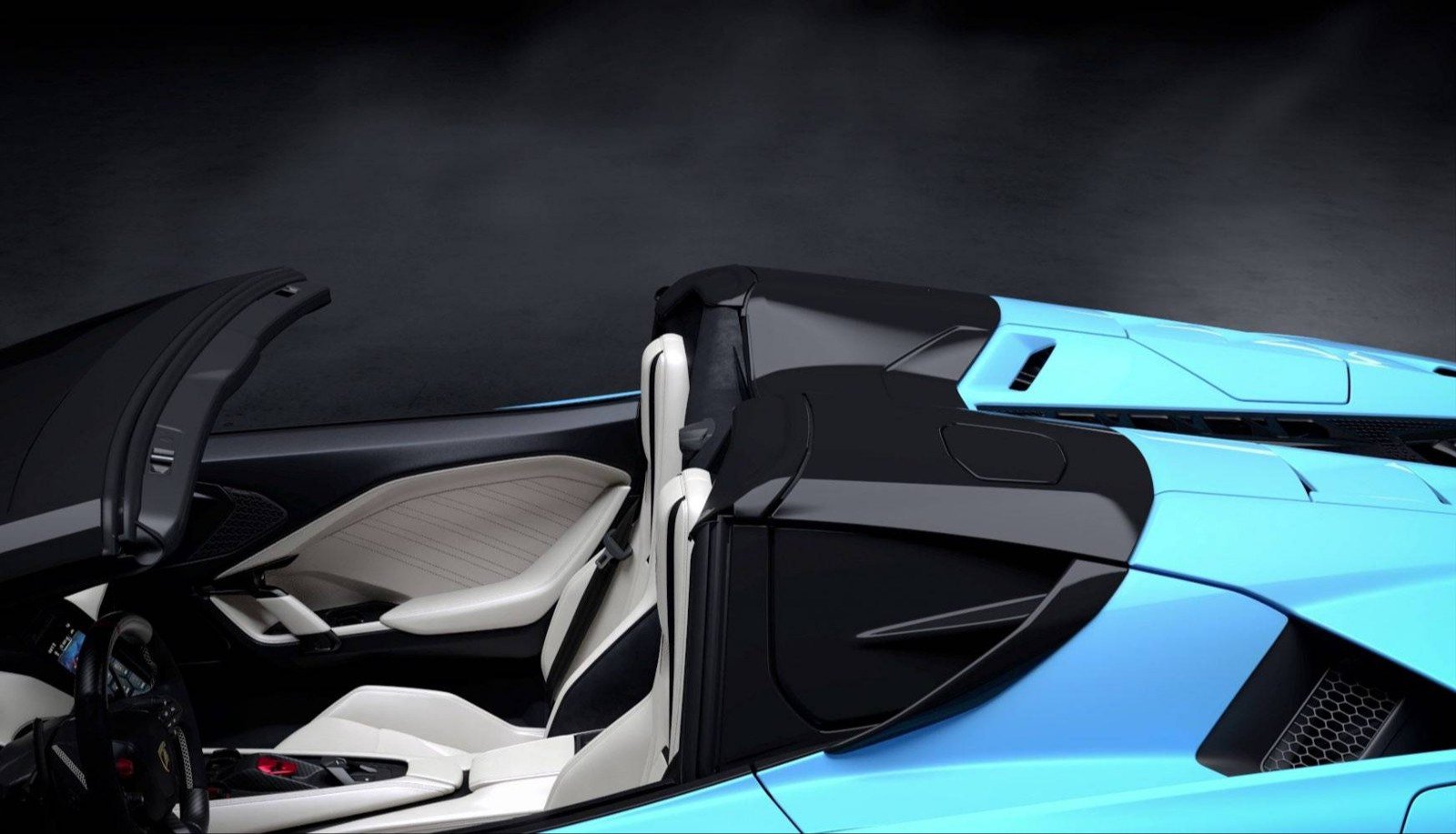
The cost is weight and time. At 3,979 pounds dry, the Spyder is 254 pounds (115 kg) heavier than the coupe's quoted figure, and its 17-second opening time is the slowest here. McLaren's hardtops need 11 seconds, Porsche's fabric top about 12, Ferrari's hardtop 14.
Performance barely moves. The Spyder gives up a tenth to 62 mph against the coupe and keeps the 213-mph top speed, the highest in this group.
Why the weight row is a trap
Lamborghini and Ferrari quote dry weight, with no fluids. Porsche quotes DIN curb weight, with fluids and a nearly full tank. McLaren gives both. Compare like with like and the picture is clearer: dry against dry, the Lamborghini carries 584 pounds more than the Ferrari and 1,056 pounds more than the lightest 750S Spider.
Power closes much of that gap, and all-wheel drive does the rest off the line. But the two lightest cars on dry figures, both McLarens, are also the two with the quickest roofs, and neither needs driven front wheels to hit its numbers.
Three plug-ins, two that never plug in
The Temerario, the 296 GTS, and the Artura are plug-in hybrids, though none goes far on electrons. The EPA rates the 2027 Temerario coupe at 6 miles of electric range and the 2026 296 GTS at 7; the Spyder has no rating yet. The agency also flags the Temerario coupe for the gas-guzzler tax, which it does not apply to the Ferrari or the Porsche.
The 911 is a hybrid of a different kind. Its 1.9-kWh battery feeds electric turbochargers and a motor in the gearbox and can't be charged from a wall, the same idea behind the T-Hybrid flat-six in the Carrera GTS. The 750S is the only car here with no electric assistance at all.
The price question
Porsche is the only brand in this group that posts a US price: $284,300 plus a $2,350 delivery fee, set at launch and unchanged in the 2027 configurator. That makes the quickest car to 60 mph here also the least expensive, if only by a few thousand dollars over the Artura.
For the Temerario there is little to go on. Lamborghini has not published a US MSRP for the Spyder, and its materials still say the car is not yet offered for sale. Kelley Blue Book lists the 2026 coupe at $386,649. In Canada, Lamborghini set the coupe at C$432,490 when it launched there in 2025. Expect the Spyder above both; how far above is the open question.
Which one fits which buyer
- Temerario Spyder: the most power, the highest top speed, a 10,000-rpm V8, and all-wheel drive. It is also the heaviest two-seater here, and the only car without a price or an EPA rating. It suits a buyer willing to wait.
- 296 GTS: 819 hp through the rear wheels at about 580 pounds less than the Lamborghini, dry. Its roof is three seconds quicker, though it only works below 28 mph.
- 750S Spider: the lightest car and the only non-hybrid. The clock is running, and the McL 820 is due in 2027.
- Artura Spider: the least powerful and the slowest to 60 mph by a few tenths, but the longest electric range, an 11-second roof, and a price roughly $100,000 below its bigger sibling.
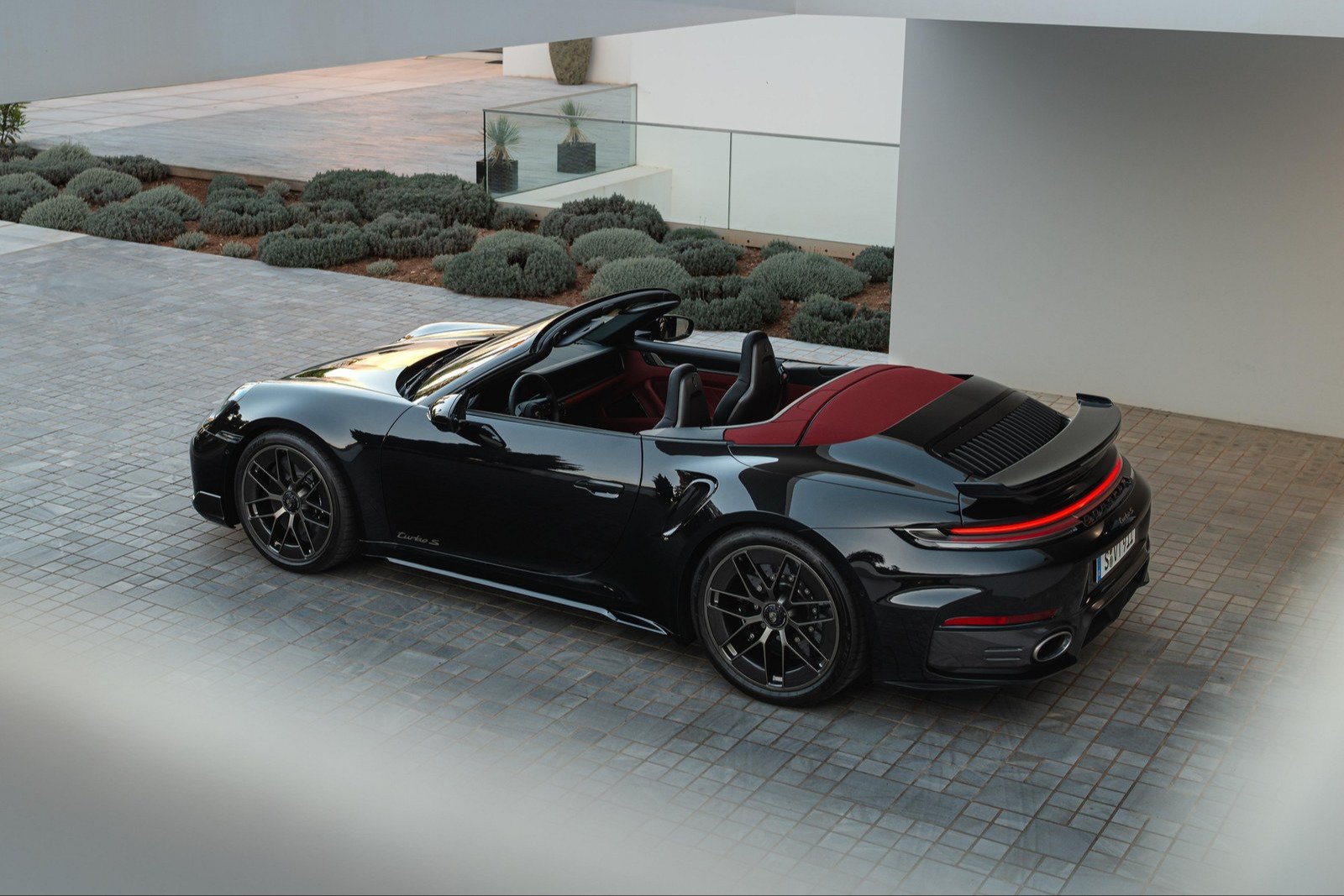
- 911 Turbo S Cabriolet: the quickest to 60 mph, the only one with rear seats, and the lowest price. It is also the only soft top, the only rear-engine car, and the slowest at the top end.
What we don't know yet
- US pricing, destination charge, and on-sale date for the Temerario Spyder. Jalopnik reports sales starting in 2027; Lamborghini has not confirmed timing.
- EPA fuel-economy and electric-range ratings for the Spyder. Lamborghini says the data are still in type approval.
- A combined torque figure. Lamborghini's spec sheet lists only the V8's 538 lb-ft.
- Whether the 296 GTS continues into the 2027 model year in the US. The EPA's 2027 Ferrari list does not include it so far.
A similar V8-plus-three-motor layout shows up under another badge in 2028, when the Audi Nuvolari reaches the US at $700,000. For the Spyder, the next number that matters is the one on the window sticker.