Was Autopilot On? How to Find Out What Your Tesla Recorded in a Crash
Every Tesla keeps three records of a crash. Only one is yours to read, and the one that would show whether the software was driving is the one Tesla blacks out.
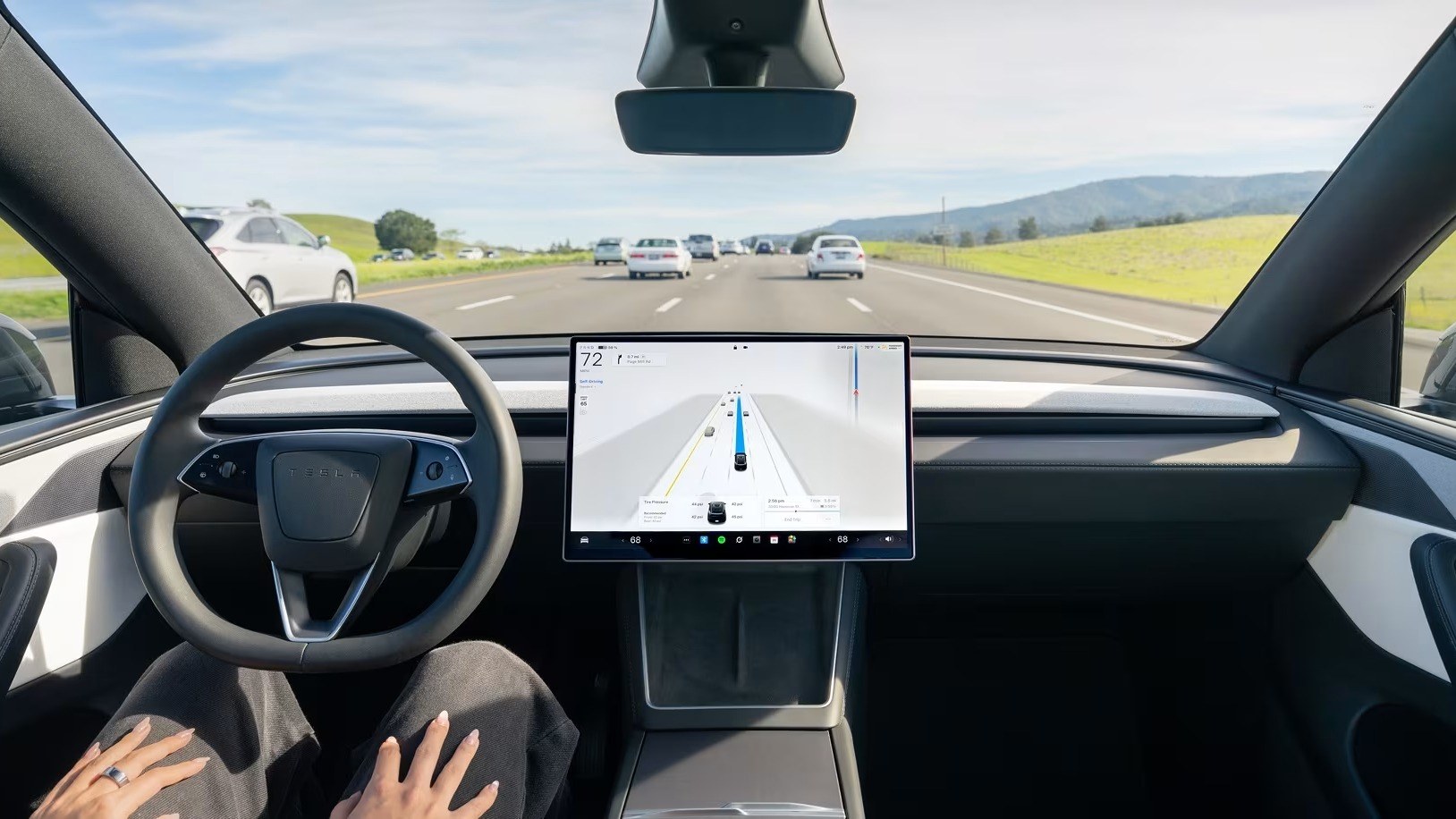
Six fatal crashes in six states, each reported by local police as an ordinary accident. According to Electrek's analysis of NHTSA crash data, Tesla's own filings for every one of them carry the same flag: driver-assist system "Verified Engaged." The latest, matched on September 7, is a 2019 Model 3 that failed to stop at a stop sign in Buena Vista Township, New Jersey, in July 2025 and hit a Honda Civic, killing its driver. Tesla logged a pre-crash speed of 4 mph and blacked out the narrative, the software version, and whether the road was inside the system's approved operating area.
Electrek does not claim the software caused any of these crashes, and neither do we. The narrower point: a Tesla records a great deal before an impact, and whether you ever see it depends on which of three records you ask for, and from whom.
Three records, three gatekeepers
The first is the event data recorder, or EDR, which captures roughly the last 30 seconds before an airbag deployment or similar event. The second is telematics, the stream of vehicle data that flows to Tesla's servers. The third is the federal report Tesla must file with NHTSA when a Level 2 system was engaged shortly before a serious crash. Only the first is designed for you to read yourself.
The EDR: the record you can pull yourself
Tesla's Model 3 owner's manual says the EDR logs how far the accelerator and brake pedals were pressed, vehicle speed, whether the front seat belts were buckled, and how the car's systems were operating. It records only in a non-trivial crash, stores no name, age, or location, and Tesla says it can read the module remotely in some crash circumstances.
Unlike most automakers, Tesla publishes its retrieval tool. At edr.tesla.com you can download the free Tesla EDR Retrieval Program (version 19.6.1 at this writing), order the cables, and turn the raw .edr file into a PDF report through a MyTesla account. The service manual lists the hardware: a Windows laptop, an OBD2 diagnostics cable, and a PCAN-USB adapter plugged into the car's OBD2 port.
Two caveats. You need physical access to the car, so a vehicle in a police impound is not yours to read until it is released. And Tesla's manual does not spell out whether the Autopilot or FSD engagement state is among the systems the EDR logs, so the report may not answer the headline question by itself.
Telematics: what Tesla holds, and when it shares
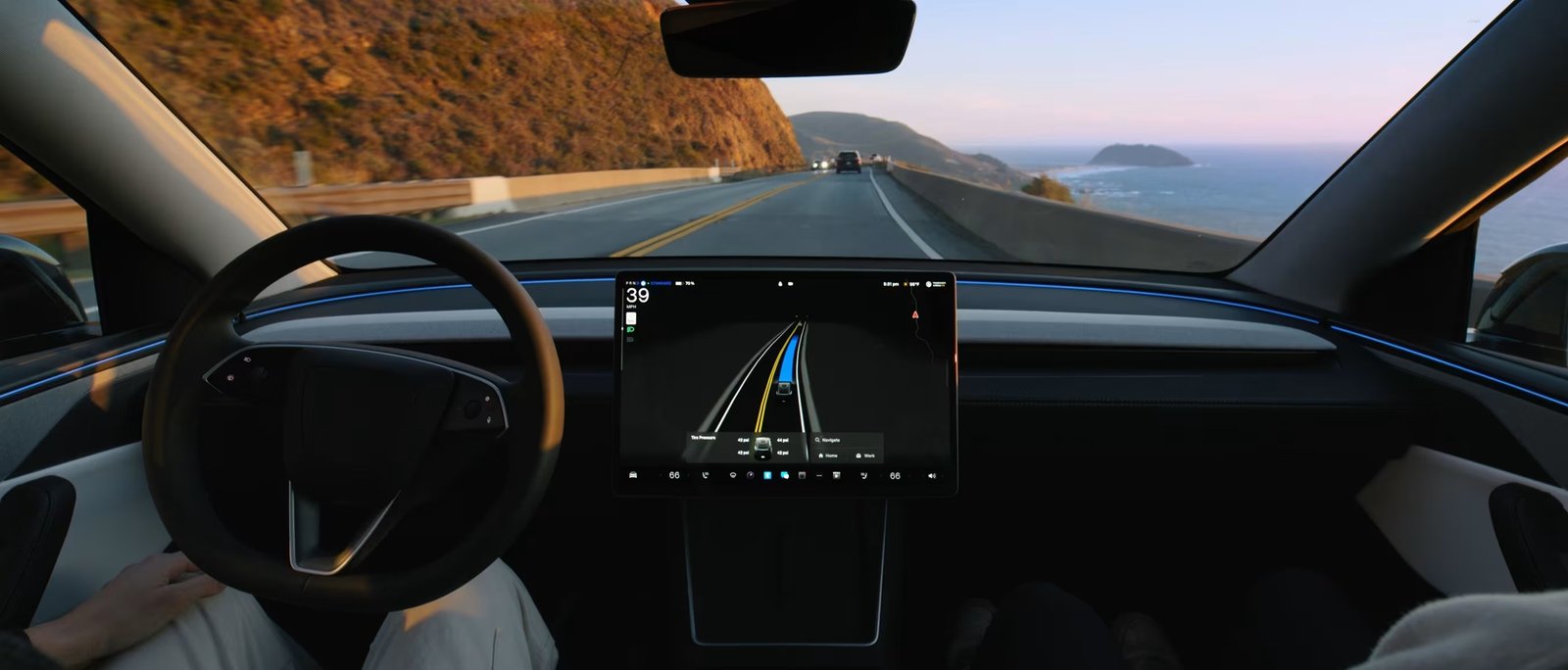
The richer record is the one you cannot download. The owner's manual describes modules that log braking, acceleration, speed, direction, location, diagnostic codes, and the enabling and disabling of various systems, transmitted to Tesla periodically. Tesla says it keeps no historical GPS tracks, with one exception: the location of a crash.
The manual also lists when Tesla will hand that data to a third party: with the owner's consent, on an official request from police or other authorities, under a court order, for anonymized research, and when "used as a defense for Tesla." The company that decides what the data means is also a potential defendant.
Owners do have a route in. Tesla's privacy page says any account holder can request a copy of the data tied to their account through a Data Privacy Request. What comes back, and how much of the crash window it covers, is Tesla's call.
The NHTSA report: public, with holes
Since 2021, NHTSA's Standing General Order 2021-01 has required automakers to report any crash in which a Level 2 driver-assist system was engaged within 30 seconds of impact and someone died, went to a hospital, an airbag deployed, or a pedestrian, cyclist, or motorcyclist was struck. Under the third amendment, in force since June 16, 2025, reports are due within five calendar days of the company learning of the crash, and NHTSA publishes them as CSV files refreshed monthly.
What you can see in a Tesla report: make, model, and model year; city, state, month, and year; the first 11 characters of the VIN; roadway type; pre-crash speed and movement; engagement status; the injury outcome; and whether Tesla holds EDR, telematics, or video. What you usually cannot: the narrative, the software version, and the operating-area field, the three fields NHTSA lets companies claim as confidential business information. According to Electrek's analysis, Tesla has claimed them on 99.9% of its Level 2 reports since 2019, while GM, Ford, Honda, and Toyota leave their narratives essentially open. Tesla did unredact its Robotaxi reports in May 2026, per Electrek, but not its consumer Autopilot and FSD filings.
The redactions are under review, slowly. Renewing the Order's data-collection approval in May, NHTSA said it would keep the Order as written, keep reviewing confidentiality claims to see whether more can be released, and plans a rulemaking to write the Order into regulation. Consumer Reports told the agency that the details of a crash on a public road should rarely, if ever, count as confidential. The final approval has not been announced.
What the matched crashes show, and don't
Electrek's method: take the unredacted fields, convert the UTC timestamp to local time, and line it up with police statements. In New Jersey, 22:54 UTC converts to 6:54 p.m., three minutes from the time state police gave. The six crashes, in Clute, Texas; Lake Mary, Florida; Mesa, Arizona; Batavia, Illinois; Moraine, Ohio; and Buena Vista Township, New Jersey, span pre-crash speeds from 0 to 104 mph and scenarios from a stopped car rear-ended on a freeway to a left turn across traffic.
What none of the reports settle: whether the system, the driver, or another vehicle caused the crash, because the narrative is sealed; whether it was Autopilot or FSD, because the version is sealed, although a stop sign or a left turn points to FSD, since basic Autopilot handles neither; and whether police received Tesla's raw telemetry or Tesla's interpretation of it. Electrek has filed records requests with the New Jersey State Police and the Kane County State's Attorney's Office in Illinois. Neither has answered yet.
What you can do with this
- Pull the EDR, yourself or through an independent crash-reconstruction specialist, with Tesla's published tool once you have access to the car.
- Submit a Data Privacy Request from your Tesla account for the days around the crash.
- Search NHTSA's Level 2 ADAS CSV for a report matching your vehicle, city, and month.
- Ask the investigating agency what Tesla provided: a raw data export, a summary, or a Tesla-written narrative.
What's next
NHTSA's engineering analysis EA26002, opened March 18, 2026, covers roughly 3.2 million FSD-equipped Teslas and is the stage that usually precedes a recall decision. A separate audit, AQ25002, opened in August 2025, is examining why Tesla filed some crash reports months late. Both remain open, and the reporting order's renewal is pending. For what a new Tesla ships with now that basic Autopilot has been dropped, see our guide to what you get instead; for the newest safety layer, read about Automatic Collision Evasion.