The Tundra's V6 Problem, Explained: Four Recalls, Two Defects, and What Owners Should Do
Toyota's twin-turbo V6 has drawn four recalls covering debris-damaged bearings and cracked camshafts. Owners of 2022–2023 trucks face an April 1 deadline for an automatic engine replacement.
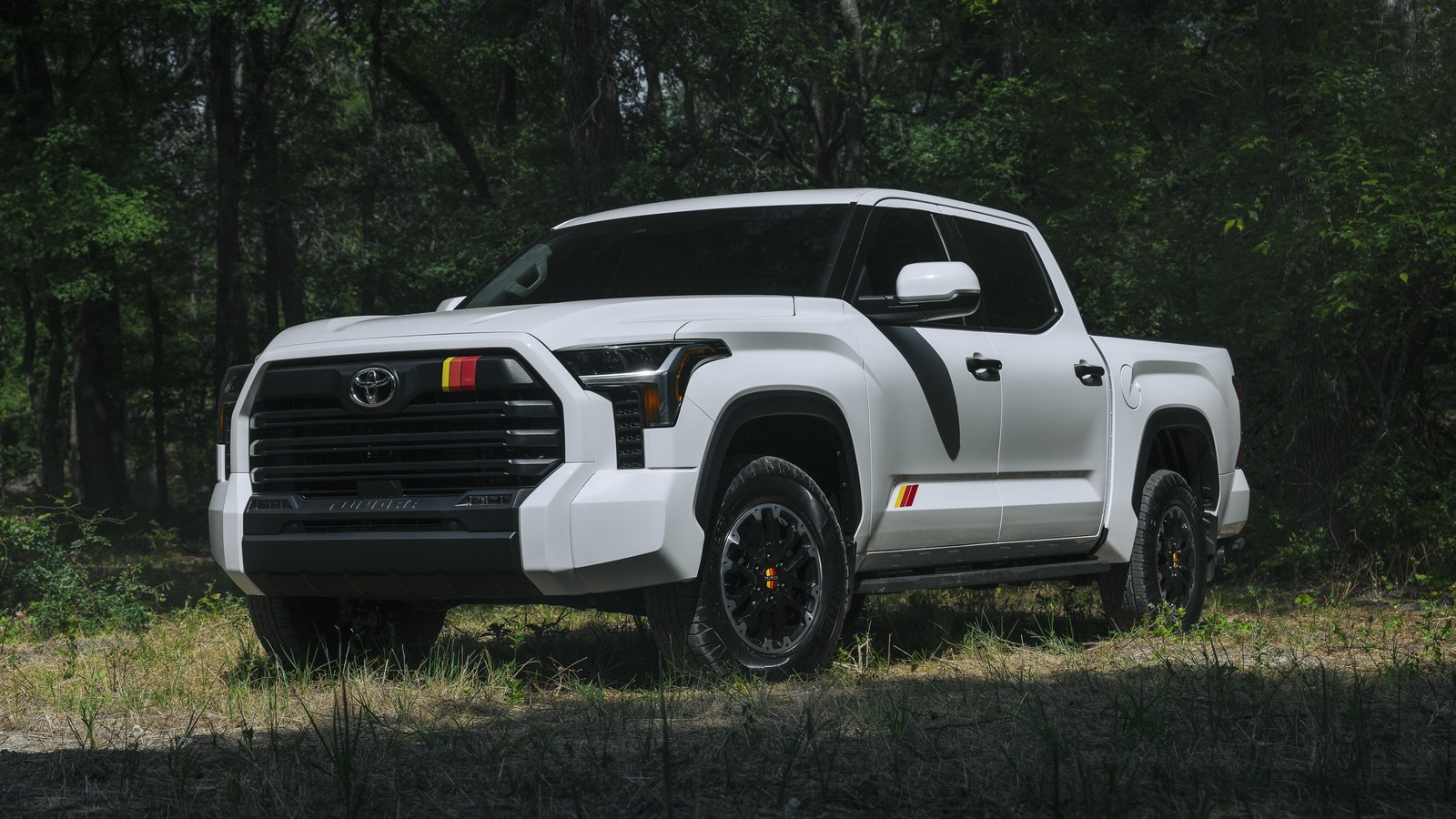
Toyota has filed four safety recalls since May 2024 over the twin-turbo 3.4-liter V6 in the current Tundra. Three of them describe one defect: machining debris that can wreck a crankshaft bearing. The fourth, filed on November 12, covers a separate batch of exhaust camshafts that can crack and snap.
The newest change is easy to miss. In a November 18 amendment to the first recall, Toyota told the National Highway Traffic Safety Administration (NHTSA) that 2022–2023 trucks get a new engine automatically only if they are brought in before April 1, 2027. After that date, dealers will inspect the engine first.
Which Tundras are covered
All four campaigns apply to gas-only trucks. Model year alone does not settle it, because each recall is tied to engine build dates, so the VIN is the only reliable check.
- 24V-381 (May 2024): 2022–2023 Tundra and Lexus LX 600, 102,092 vehicles, 98,568 of them Tundras built from November 2, 2021, to February 13, 2023. Defect: engine debris. Fix: a new engine, with the April 1, 2027, cutoff described above.
- 25V-767 (November 2025): 2022–2024 Tundra and Lexus LX, plus the 2024 Lexus GX, 126,691 vehicles, 113,079 of them Tundras. Same debris defect. Fix: a dealer inspection, then a new engine if the inspection cannot clear the bearing. Owner letters went out August 28, 2026.
- 26V-320 (May 2026): 43,566 Tundras from the 2024 model year, built from February 7 to August 5, 2024. Same defect and same inspection-first fix. Interim letters were mailed July 23, 2026.
- 26V-750 (November 2026): 62,490 Tundras from the 2022–2023 and 2025–2026 model years. Defect: exhaust camshaft. Fix: inspection, and a new camshaft if the part comes from the bad lot. Letters are due between December 28, 2026, and January 11, 2027.
The three debris filings add up to 272,349 vehicles, including 255,213 Tundras. Some may be counted twice, since the second filing also covers engines supplied as service parts.
Defect one: debris at the main bearing
Toyota's filings say metal left over from machining may not have been fully washed out of some V35A engines. If that debris sticks to a main bearing and the engine keeps working under high load, the bearing can fail. Owners may notice knocking, rough running or a no-start. The engine can also stall, which means a loss of drive power at speed.
The fix has changed over time. The first recall promised every owner a new engine. For the two later campaigns, dealers run inspection software on the No. 1 main bearing and pull the truck's drive data. If the software cannot confirm the bearing is free of abnormal wear, the engine is replaced.
Toyota's owner letter puts the inspection at about two hours. A replacement engine takes three to eight days to arrive and roughly two working days to install, with a loaner provided during the swap.
Progress differs sharply between campaigns. Toyota's latest quarterly report lists 82,217 of the 102,092 vehicles in the first recall as remedied, about 81%. For the second, the figure was 5,993 of 126,691 in the first report after letters went out.
Defect two: a bad lot of camshafts
The camshaft recall has a different cause. According to Toyota's recall notice and its NHTSA filing, a supplier added alloy additives twice to one 400-part lot. Parts from that lot can develop cracks that grow in use until the camshaft snaps. Warning signs are a check-engine light, rough running or a misfire.
Toyota estimates about 300 of the suspect camshafts reached trucks. It is recalling 62,490 to find them: 34,703 from 2026, 10,025 from 2025, 15,202 from 2022 and 2,560 from 2023. The older trucks are included only if they received an engine as a service part, in other words a replacement engine.
The company counted 31 field reports and 60 warranty claims that relate or may relate to the camshaft. Those are Toyota's own tallies of reports, not a failure rate, and recall totals are a poor measure of how often something breaks.
What about the hybrids
No Tundra Hybrid or Sequoia appears in any of the four campaigns. The first debris filing says hybrids use a different V35A configuration with different pressure on the main bearings. The camshaft filing says hybrids that could carry an affected part keep some motive power and warn the driver, and are not included.
Tundra Assistant Chief Engineer Rob Crawford confirmed to The Drive, in an interview published November 25, that the recalled engines are gas-only. Asked whether Toyota would replace a hybrid's failed engine the way it does a recalled one, he told The Drive that the dealer would inspect it and decide how to address it, and that owners could bring the truck in. He did not promise a replacement. Buyers weighing the hybrid can find the powertrain details in our Tundra Hybrid and F-150 PowerBoost comparison.
What owners should do
- Run the VIN at nhtsa.gov/recalls or toyota.com/recall.
- If a 2022–2023 truck is listed under 24V-381 and has not been repaired, book the dealer visit before April 1, 2027.
- If the truck falls under 25V-767 or 26V-320, schedule the inspection. NHTSA's summary for 26V-320 still lists only interim letters, so ask the dealer whether the inspection is available yet.
- If a 2022–2023 truck already has a replacement engine, check for 26V-750 as well.
- If the engine knocks, runs rough or will not start, do not drive it in. Toyota's letter says the dealer will arrange a pickup.
- If you already paid for a related repair, ask about reimbursement. Toyota's filings provide for it.
All recall work is free. Toyota's customer line is 1-800-331-4331.
What we still don't know
- How many engines Toyota has replaced in total. The quarterly reports count vehicles as remedied whether they were repaired or only inspected.
- Whether the later engines are in the clear. Toyota's May 2026 filing says engines built after the recalled period received an improved main bearing and that it continues to monitor how well that change works.
- Whether hybrids will ever be recalled. Nothing in the filings points either way.
The updated 2027 Tundra is now arriving at dealers, The Drive reports. We will update this page if Toyota files another recall or NHTSA opens an investigation into the engine.