U.S. EV Battery Plants After the Tax Credit: Who's Building, Pausing, Pivoting
The $7,500 EV credit is gone, but the factory credit survived. Here's which of 17 U.S. battery plants are making EV cells, storage cells, or nothing yet.
The federal $7,500 clean vehicle credit ended for cars acquired after September 30, 2025. The battery factories it was supposed to feed did not disappear with it. About a dozen big U.S. cell plants have opened, restarted, or changed owners since then, but a growing share of them now make cells for grid storage rather than for cars.
This week showed both sides. BMW confirmed that LG Energy Solution will supply cells for its U.S.-built EVs, while Honda's new $3 billion Ohio investment is aimed squarely at hybrids, as we covered in our report on Honda's fourth Ohio plant. Below is where every major project stands, using only company, state, and regulator statements, plus what the law now says about the credits behind them.
What the law changed, and what it kept
The One Big Beautiful Bill Act, signed July 4, 2025, ended three consumer and fleet credits for vehicles acquired after September 30, 2025: the new clean vehicle credit (30D), the used EV credit (25E), and the commercial clean vehicle credit (45W). Our look at the EV tax credit one year later covers what that did to sales and leases.
The factory-side credit, Section 45X, survived. According to the Congressional Research Service, battery cells still earn $35 per kilowatt-hour of capacity. The phase-down for battery components is unchanged: full value for goods sold before 2030, then 75 percent in 2030, 50 percent in 2031, 25 percent in 2032, and nothing from 2033.
What is new are "prohibited foreign entity" rules. For tax years beginning after July 4, 2025, a manufacturer can't claim 45X if it is a prohibited foreign entity, or if its components include too much "material assistance" from one. The law covers entities tied to China, Russia, Iran, and North Korea. Treasury owes safe-harbor tables for those calculations by December 31, 2026. The credit is paid on cells and modules, not on cars, which helps explain why so many plants have pivoted to storage. LG Energy Solution booked 416.9 billion won (about $310 million) of U.S. production incentives in the third quarter alone.
The tracker: U.S. battery plants as of November 14, 2026
| Plant (owner) | Location | Announced scale | Status | Chemistry / product | Latest official update |
|---|---|---|---|---|---|
| LG Energy Solution Arizona (LGES) | Queen Creek, AZ | $5.5B; 53 GWh (36 GWh cylindrical, 17 GWh LFP storage) | Building; EV cell output targeted by end-2026 | 46-Series cylindrical (Rivian R2); LFP storage line | LGES Q3 results, Nov. 2, 2026 |
| L-H Battery (LGES–Honda) | Jeffersonville, OH | $4.4B+; 2,200 jobs at full capacity | Producing since July 2026, storage cells first | Storage cells now; hybrid cells planned | L-H Battery, July 1, 2026 |
| AESC | Florence County, SC | $1.6B; 30 GWh; 1,600 jobs pledged | Paused since June 2025; no restart date | Cells for BMW (original plan) | AESC statement, June 2025 |
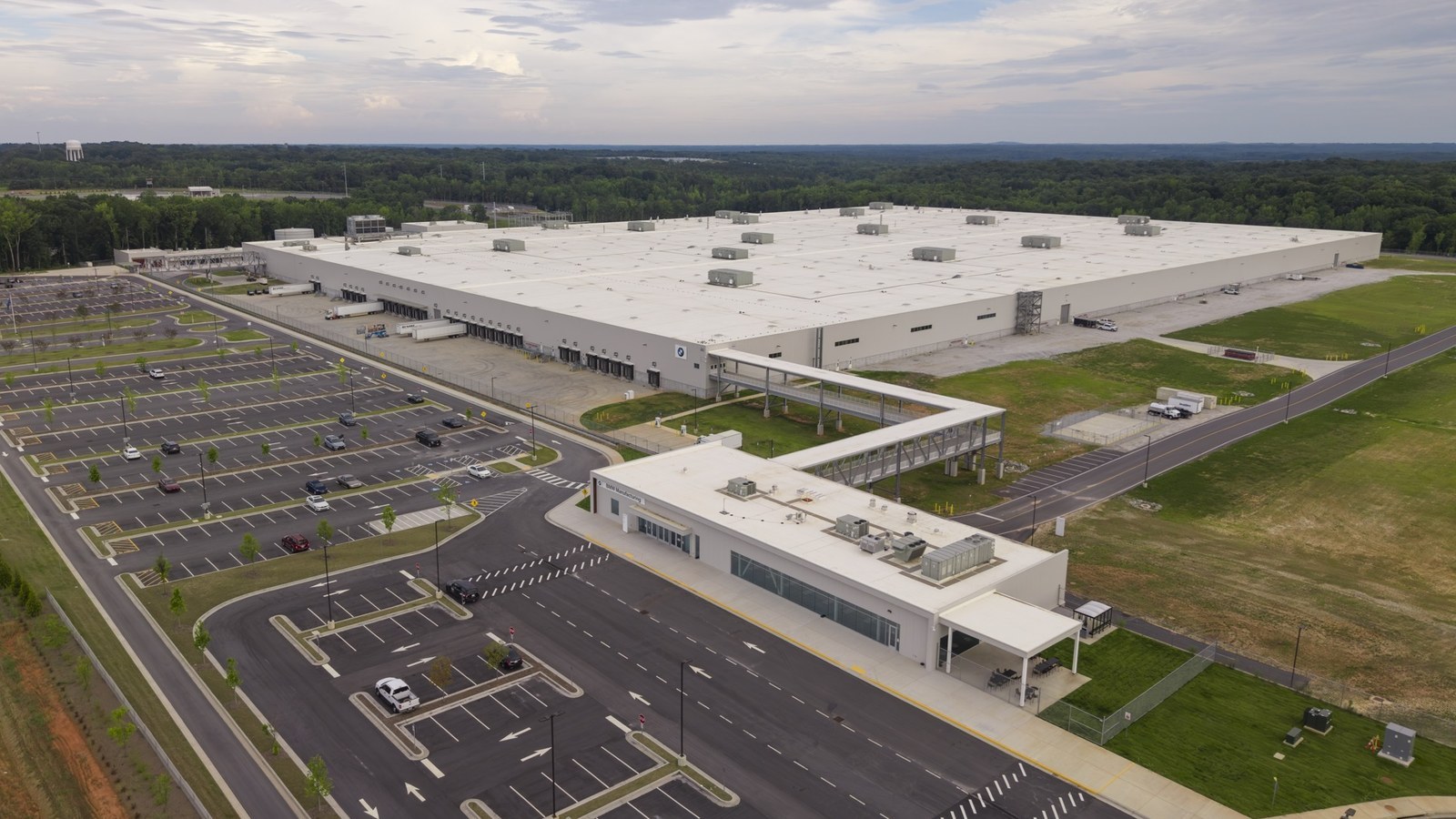
| BMW Plant Woodruff (pack assembly, not cells) | Woodruff, SC | $700M; 300+ employees | Series production due December 2026 | Gen6 packs for the iX5 | BMW, July 27, 2026 |
| Ford Energy (ex-BlueOval SK, two plants) | Glendale, KY | About $2B over two years; 20 GWh target | Converting from EV cells to storage | LFP prismatic cells, storage containers | Ford, Dec. 15, 2025 |
| SK On Tennessee (ex-BlueOval SK) | Stanton, TN | 4 million sq ft; 3,500 jobs projected | Built; mass production projected for 2028 | EV and storage cells | SK On, May 21, 2026 |
| BlueOval Battery Park Michigan (Ford) | Marshall, MI | Cut to 20 GWh (from 35 GWh); 1,700 jobs planned | Validation cells since June; launch-ready cells due by end-2026 | LFP prismatic, CATL-licensed technology | Ford, June 2026 |
| Ultium Cells (GM–LGES) | Warren, OH | About 1,400 workers after restart | Idled January 2026; restarted August 2026 | NCMA pouch cells for most GM EVs | Ultium Cells, August 2026 |
| Ultium Cells (GM–LGES) | Spring Hill, TN | $1B upgrade round; about 1,200 workers | Making storage cells; LMR conversion due 2028 | LFP storage now; LMR prismatic next | Ultium Cells, July and Sept. 2026 |
| LGES Michigan-Lansing (GM sold its stake) | Lansing, MI | $2B+; 35+ GWh; 1,700 jobs | Producing since Aug. 18, 2026 | LFP storage cells; NMC cells for Toyota | LGES, Aug. 18, 2026 |
| Samsung SDI (GM sold its 49.99% stake) | New Carlisle, IN | $3.5B; 27 GWh; 1,600 jobs (original plan) | Under construction; storage first | Storage cells; possible GM prismatic cells later | Samsung SDI, Aug. 11, 2026 |
| HSBMA (Hyundai–SK On) | Bartow County, GA | About $5B; 35 GWh; 3,500 workers | Commercial production since June 1, 2026 | EV cells for Hyundai, Kia, Genesis | HSBMA, July 20, 2026 |
| HL-GA Battery (Hyundai–LGES) | Ellabell, GA | $4.3B; 30 GWh | Opened April 2026 | EV cells for the Metaplant (Ioniq 5, Ioniq 9) | Hyundai, April 2026 |
| Panasonic Energy | De Soto, KS | About 30 GWh at full capacity | Four lines running; second wing adds lines in 2027 | Cylindrical EV cells; data-center cells from 2028–29 | Panasonic, June 2026 |
| Toyota Battery North Carolina | Liberty, NC | $13.9B; 30 GWh; 14 lines; 5,100 jobs | Producing; more lines by 2030 | Hybrid modules now; PHEV and EV batteries planned | Toyota, Nov. 12, 2025 |
| StarPlus Energy (Samsung SDI–Stellantis) | Kokomo, IN | Plant 1: 33 GWh; plant 2: 34 GWh (original plan) | Plant 1 producing; plant 2 and ownership TBA | NCA cells; storage orders added | Samsung SDI, Oct. 2026 |
| Tesla Gigafactory Nevada | Sparks, NV | 7 GWh LFP line | Early ramp | LFP cells for Megapack storage | Tesla Q3 Update, Oct. 21, 2026 |
Figures are as announced by the companies or states. Several plants were resized or repurposed after their original announcements, so job and capacity numbers may not reflect current plans. TBA marks items no company has confirmed.
Storage is soaking up EV capacity
The clearest pattern in the table is the move to energy storage. L-H Battery, the Honda joint venture built for Honda's EVs, started with storage cells after Honda shelved its North American EV program. Ultium Cells retooled Spring Hill for LFP storage cells in less than five months. Samsung SDI bought out GM in Indiana and plans to open the plant with storage batteries. Ford is turning its Kentucky plants into a storage business with shipments planned for 2027.
LG Energy Solution has gone furthest. Its Lansing plant, once the third Ultium site, started production in August with LFP cells for grid storage alongside NMC cells for Toyota. LGES now targets more than 70 GWh of North American storage capacity by the end of 2027. Even Panasonic, Tesla's main cell supplier, says it will build data-center battery cells in Kansas.
EV production hasn't vanished, though. Ultium's Ohio plant restarted in August after a seven-month shutdown, and the two Hyundai joint ventures in Georgia both came online this year.
LFP comes onshore, and hybrids get their own cells
Lithium iron phosphate, the low-cost chemistry Chinese suppliers dominate, is now being made in the U.S. at several sites. Ford's Marshall plant uses CATL-licensed technology but is fully owned and run by Ford; a Ford executive said the company has done that "free of foreign entity of concern." Tesla shipped its first Megapacks built only with its own Nevada LFP cells in the third quarter. GM, meanwhile, is betting on lithium manganese-rich cells, with Spring Hill set to make LMR cells by 2028.
Hybrid cells are the other growth area. Toyota's North Carolina plant ships hybrid modules to Toyota Kentucky and the Mazda Toyota plant in Alabama. L-H Battery says hybrid cells will join storage cells in Ohio. LGES plans tabless 2170 lines for hybrids starting in 2027.
Where BMW's Gen6 pack fits
BMW's Woodruff plant assembles packs rather than cells. It will start series production of the cylindrical-cell Gen6 battery for the iX5 in December. Its original cell source, AESC's Florence County plant, has been paused since June 2025. Until a local supplier is ready, a BMW production executive has said AESC will ship cells from its plants in China. BMW's November 9 announcement adds LGES as a U.S. cell supplier from the late 2020s, but doesn't name the plant. Korean reports point to Arizona; BMW hasn't confirmed that.
What we don't know yet
- When, or whether, AESC restarts construction in Florence County.
- Who will own StarPlus Energy. Stellantis was reported in February to be exploring an exit, and no decision has been announced.
- When Arizona's 46-Series line reaches volume, and which LGES plant will supply BMW.
- How Treasury's safe-harbor tables will treat licensed Chinese technology, such as Ford's CATL deal, under the foreign-entity rules.
- Whether the GM–Samsung SDI prismatic cell ever goes into production in New Carlisle.
What's next
BMW's Woodruff launch and LGES's Arizona start are both due by the end of the year, as are Ford's first launch-ready LFP cells in Marshall and Treasury's safe-harbor tables. In 2027, Ford plans its first storage shipments from Kentucky and its midsize electric pickup, Panasonic's second Kansas wing starts adding lines, and LGES begins hybrid cell lines. We'll update this tracker as each of those dates arrives.