Camry vs. Accord Hybrid: The $30,000 Answer to the $50,000 Car
With the average new car now over $50,000, America's two best-selling sedans still start in the low $30,000s. We priced both hybrids with destination, fuel at today's pump price, and a 7 percent loan.
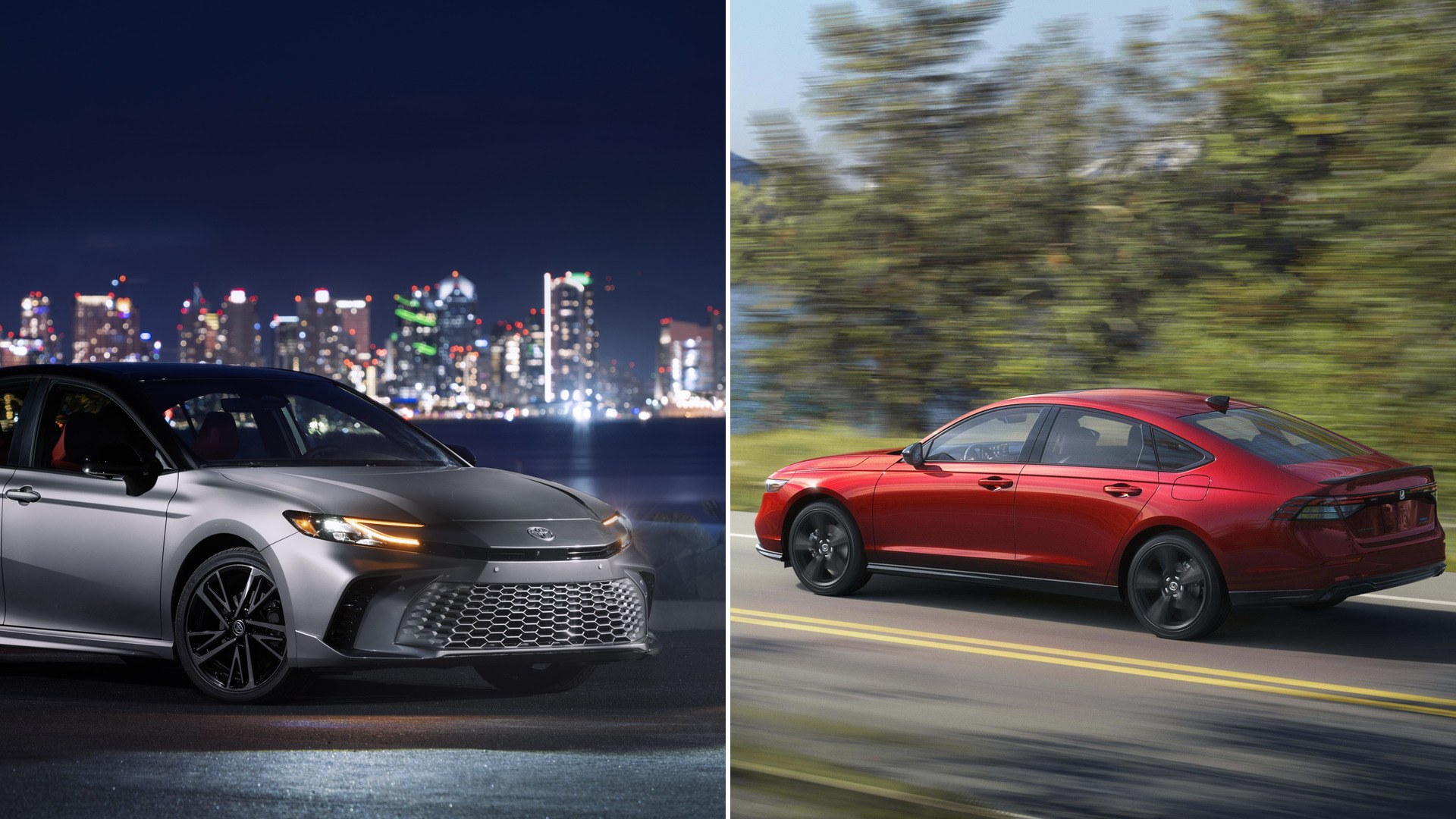
The average new vehicle sold in the United States in August changed hands for $50,089, according to Kelley Blue Book, and Edmunds says one in five buyers who financed a new car in the second quarter took on a payment of $1,000 or more. Against that backdrop, the two best-selling midsize sedans in the country still start in the low $30,000s with a hybrid drivetrain included. The question is no longer whether a sedan is the cheaper way out of the $50,000 car. It is which of these two.
This comparison uses manufacturer pricing with destination as listed on toyota.com and honda.com on Sept. 14, EPA ratings from fueleconomy.gov, and the AAA national average for regular gasoline on the same day, $4.32. The Camry here is the 2026 model dealers are selling now: Toyota has announced 2027 pricing at $100 more per trim, per Autoblog, but toyota.com still lists 2026 cars. Honda has not announced a 2027 Accord for the U.S.
Camry vs. Accord Hybrid: the numbers
| Criteria | 2026 Toyota Camry | 2026 Honda Accord Hybrid |
|---|---|---|
| Base hybrid, MSRP plus destination | LE FWD: $30,895 ($29,600 + $1,295) | Sport Hybrid: $35,090 ($33,795 + $1,295) |
| Top hybrid, MSRP plus destination | XSE AWD: $38,820 (includes $1,525 for AWD) | Touring Hybrid: $40,790 |
| Non-hybrid version | None; every Camry is a hybrid | LX 1.5T, $29,690 (32 mpg combined); SE 1.5T, $31,890 (31 mpg) |
| Powertrain | 2.5-liter four-cylinder plus two motors (a third on AWD); 225 hp FWD, 232 hp AWD; eCVT | 2.0-liter four-cylinder plus two motors; 204 hp; 247 lb-ft of motor torque; direct-drive unit |
| Drive | FWD standard; AWD available on every trim for $1,525 | FWD only |
| EPA combined | 51 mpg (LE FWD); 50 (LE AWD); 46 (SE, XLE, XSE FWD and SE, XLE AWD); 43 (XSE AWD) | 48 mpg (EX-L); 44 (Sport, Sport-L, Touring) |
| EPA total range on a tank | 663 miles (LE FWD) to 559 miles (XSE AWD) | 614 miles (EX-L); 563 miles (Sport, Sport-L, Touring) |
| Fuel per year, 15,000 miles at $4.32 | $1,271 (LE FWD) to $1,507 (XSE AWD) | $1,350 (EX-L); $1,473 (Sport, Sport-L, Touring) |
| Trunk | 15.1 cu ft | 16.7 cu ft |
| Rear legroom | 38.0 in | 40.8 in |
| Warranty | 3 yr/36,000 mi basic; 5/60,000 powertrain; 8/100,000 hybrid components; 10 yr/150,000 mi hybrid battery; 2 yr/25,000 mi scheduled maintenance included | 3 yr/36,000 mi basic; 5/60,000 powertrain; 8 yr/100,000 mi high-voltage battery; 1 yr/12,000 mi maintenance program |
| IIHS, 2026 | Top Safety Pick+ | Top Safety Pick |
| NHTSA overall | 5 stars | 5 stars |
| Illustrative payment: 7.0% APR, 60 months, no down payment, before tax and fees | $612 (LE FWD); $769 (XSE AWD) | $695 (Sport Hybrid); $808 (Touring Hybrid) |
| U.S. sales, first half of 2026 | 179,044 (No. 5 vehicle overall, No. 1 car) | 90,068 (GoodCarBadCar tally; Honda reports Accord up 32% year to date) |
The payment line is arithmetic on the sticker price, not a quote: it assumes nothing down, no trade-in, no incentives, and no sales tax or dealer fees, and it is not financial advice. Fuel figures are at 15,000 miles a year. At the $4.60 a gallon some forecasts used this summer, add roughly $80 to $100 a year to each car.
The price gap is real, but it narrows on the way up
On base stickers the Camry LE is $4,195 cheaper than the least expensive Accord Hybrid. Some of that gap is equipment. The LE rides on 16-inch wheels with cloth seats and an 8-inch screen; the Accord Sport Hybrid comes with 19-inch wheels, a moonroof, a power driver's seat, and a 12.3-inch screen. The closer like-for-like pairing is the Camry SE FWD at $33,395 against the Accord Sport Hybrid at $35,090, a $1,695 difference, or about $34 a month on the same loan terms.
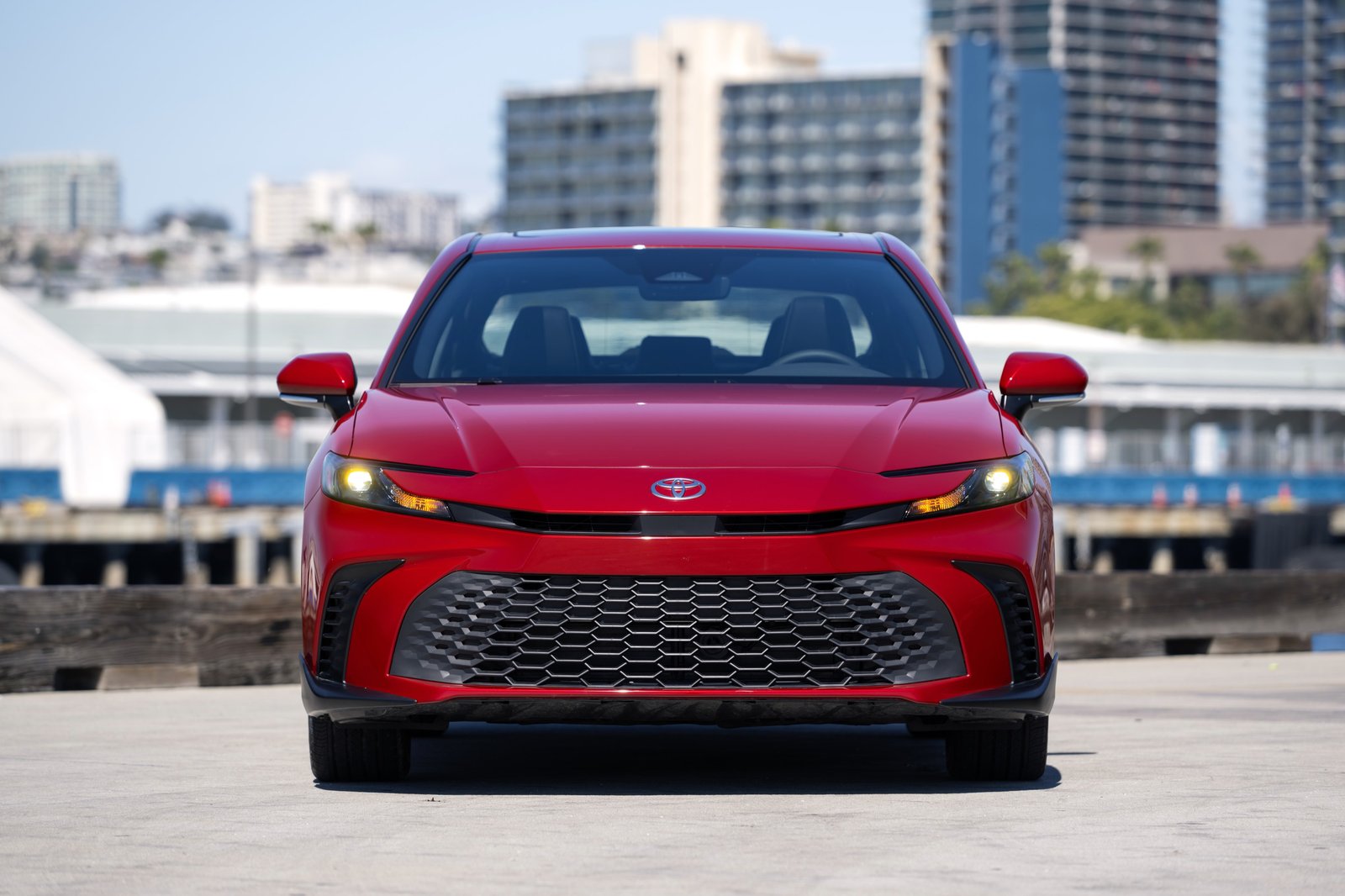
At the top of the range the gap is $1,970: a Camry XSE with all-wheel drive at $38,820 against an Accord Touring Hybrid at $40,790. The Touring answers with a head-up display, Bose audio, ventilated front seats, and Google built-in. What it cannot answer with is a driven rear axle, because no Accord offers one.
Fuel: the Camry wins by less than its badge suggests
The 51-mpg Camry LE against the 48-mpg Accord EX-L works out to $79 a year at today's pump price. Most of the Camry lineup is rated at 46 mpg and most of the Accord Hybrid lineup at 44, which is $64 a year. The EPA ratings that matter most are the ones people skip: the Camry XSE AWD at 43 mpg burns more fuel than any Accord Hybrid, and its EPA rating sits 8 mpg below the LE. All-wheel drive costs $1,525 up front and, against the front-drive version of the same trim, another $25 a year in gasoline on the LE and about $100 a year on the XSE.
Torque, space, and the option Toyota no longer sells
On paper the Camry has more horsepower. In traffic the Accord has more torque, 247 lb-ft from its drive motor, and its cabin is the bigger one: 40.8 inches of rear legroom against 38.0, and a 16.7-cubic-foot trunk against 15.1. The Accord Hybrid also uses a direct-drive hybrid unit rather than a CVT, and Honda's 2026 pricing release says hybrids were more than half of Accord sales last year.
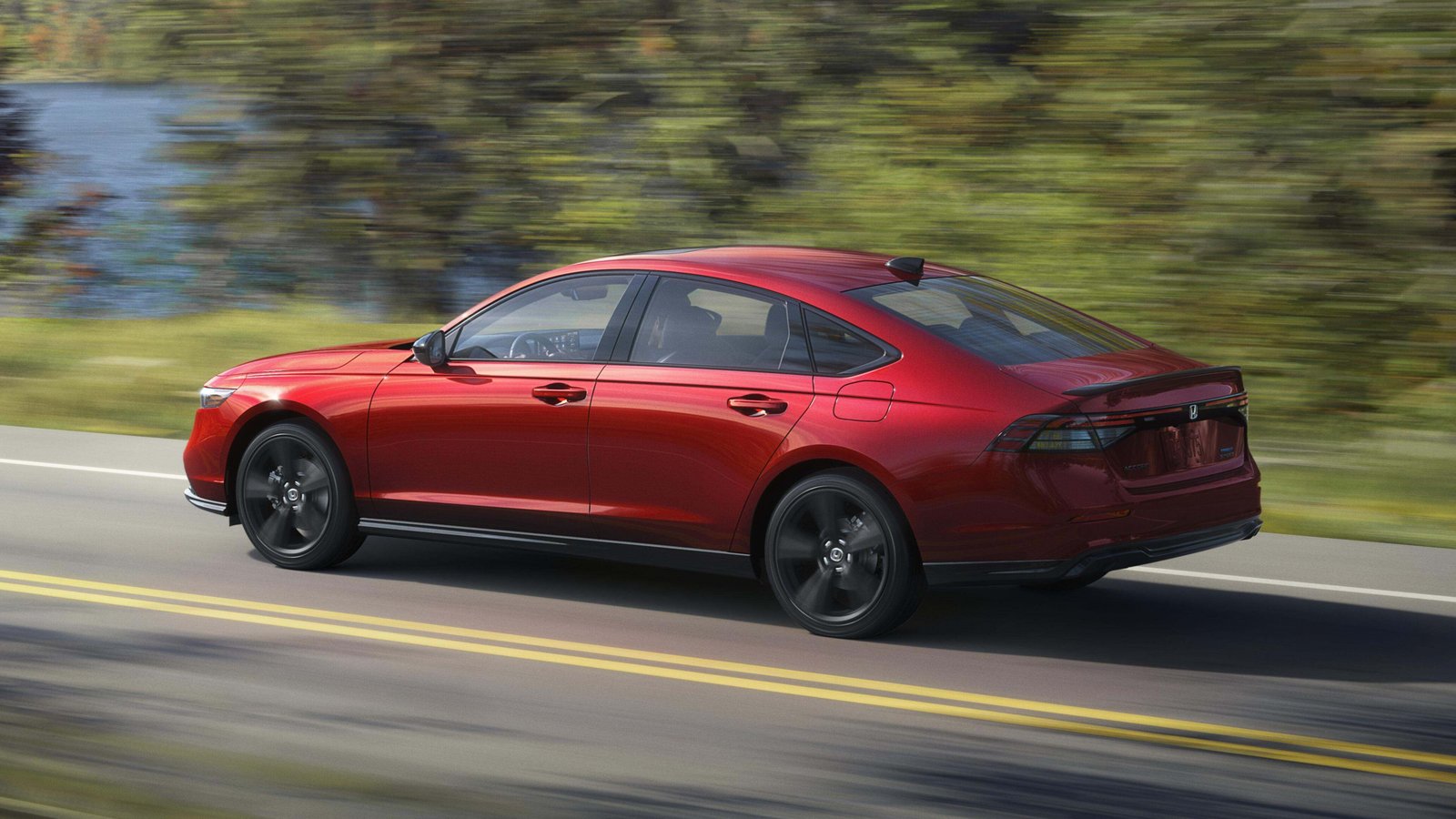
Honda still sells a gasoline-only Accord, and the LX at $29,690 with destination is the cheapest car in this story. It is also the most expensive one to run. At 32 mpg combined it uses about $754 more fuel a year than a Camry LE, so its $1,205 head start is gone in about 19 months. Over five years the turbo LX costs roughly $2,300 more than the Camry LE on sticker plus fuel plus loan interest, before insurance or resale.
The sedan versus the SUV parked next to it
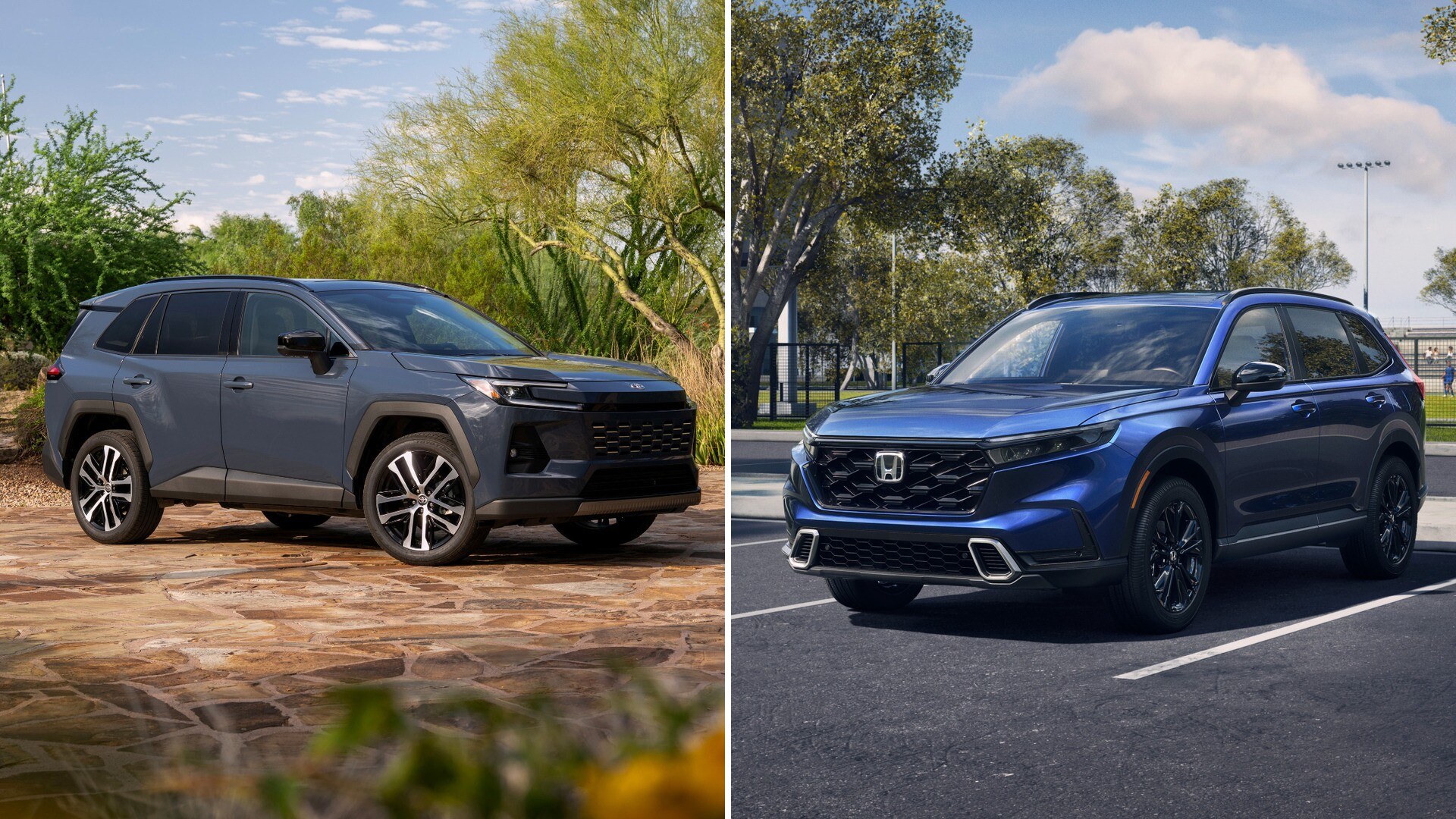
The cost advantage of a sedan over the compact SUV from the same showroom is smaller than the gap in segment transaction prices suggests. A 2026 RAV4 LE hybrid with front-wheel drive is $33,350 with its $1,450 destination charge, $2,455 more than a Camry LE, or $49 a month on the same 60-month loan. A 2027 CR-V Sport Hybrid with front-wheel drive is $37,580 with Honda's $1,550 destination charge, $2,490 more than an Accord Sport Hybrid, again $49 a month. Both SUVs carry lower EPA ratings than the sedans beside them, which widens the gap a little further, and the RAV4 remains hard to find, as our CR-V Hybrid vs. RAV4 Hybrid comparison covers.
The bigger number is the one against the market. On the same 7.0 percent, 60-month terms, the August average transaction price of $50,089 implies a payment of about $992 a month. A Camry LE implies $612, an Accord EX-L $721. The sedan-versus-SUV decision is worth about $50 a month; the sedan-versus-average-new-car decision is worth $270 to $380 a month.
Five years of ownership, on the numbers we have
Adding sticker price, 60 months of loan interest at 7.0 percent, and five years of fuel at $4.32 gives a Camry LE at about $43,100 and an Accord Sport Hybrid at about $49,100. Move up the ladder and the gap closes: an Accord EX-L, the most efficient Accord, and a Camry XLE with front-wheel drive both land within $100 of $50,000. At the top, a Camry XSE AWD comes to about $53,700 against about $55,800 for an Accord Touring. Toyota adds two years of scheduled maintenance and a longer battery warranty; Honda's 2026 spec sheet lists a one-year maintenance program. What this total leaves out is insurance, tires, repairs, taxes, and depreciation, and depreciation alone can outweigh the fuel line.
What we don't know
We do not know what buyers are actually paying for either car. Model-level transaction prices are published only by data services, and the one claim on record is Honda's own, that the average transaction price of a turbocharged 2026 Accord is below the industry average for a used vehicle. We do not know September dealer incentives, which vary by region; both automakers publish regional offers on their sites. And we do not know the destination charge Toyota will attach to the 2027 Camry, or whether Honda will move Accord pricing when its 2027 model arrives.
Which one should you buy
If the goal is the cheapest hybrid sedan to own, the Camry LE front-wheel drive is the answer, and the numbers are not close: about $6,000 less than an Accord Sport Hybrid over five years on sticker, interest, and fuel. If you need all-wheel drive, the Camry is the only choice, but buy it knowing the XSE AWD is the least efficient car in this comparison. The case for the Accord is the EX-L Hybrid: 48 mpg, leather, the larger back seat and trunk, and a five-year cost that matches a Camry XLE to the dollar with more room for the money. The Touring is the nicest car here and the most expensive to own, by a margin the head-up display does not close. The one to skip at 15,000 miles a year is the turbocharged Accord LX, which is cheap only until the first fill-up.