Civic vs. Corolla: What $25,000 Actually Buys You in 2026
America's two default first cars sit about 1,000 sales apart — and nearly $2,000 apart on price. Here's what each base car includes, and how the hybrid math shakes out.
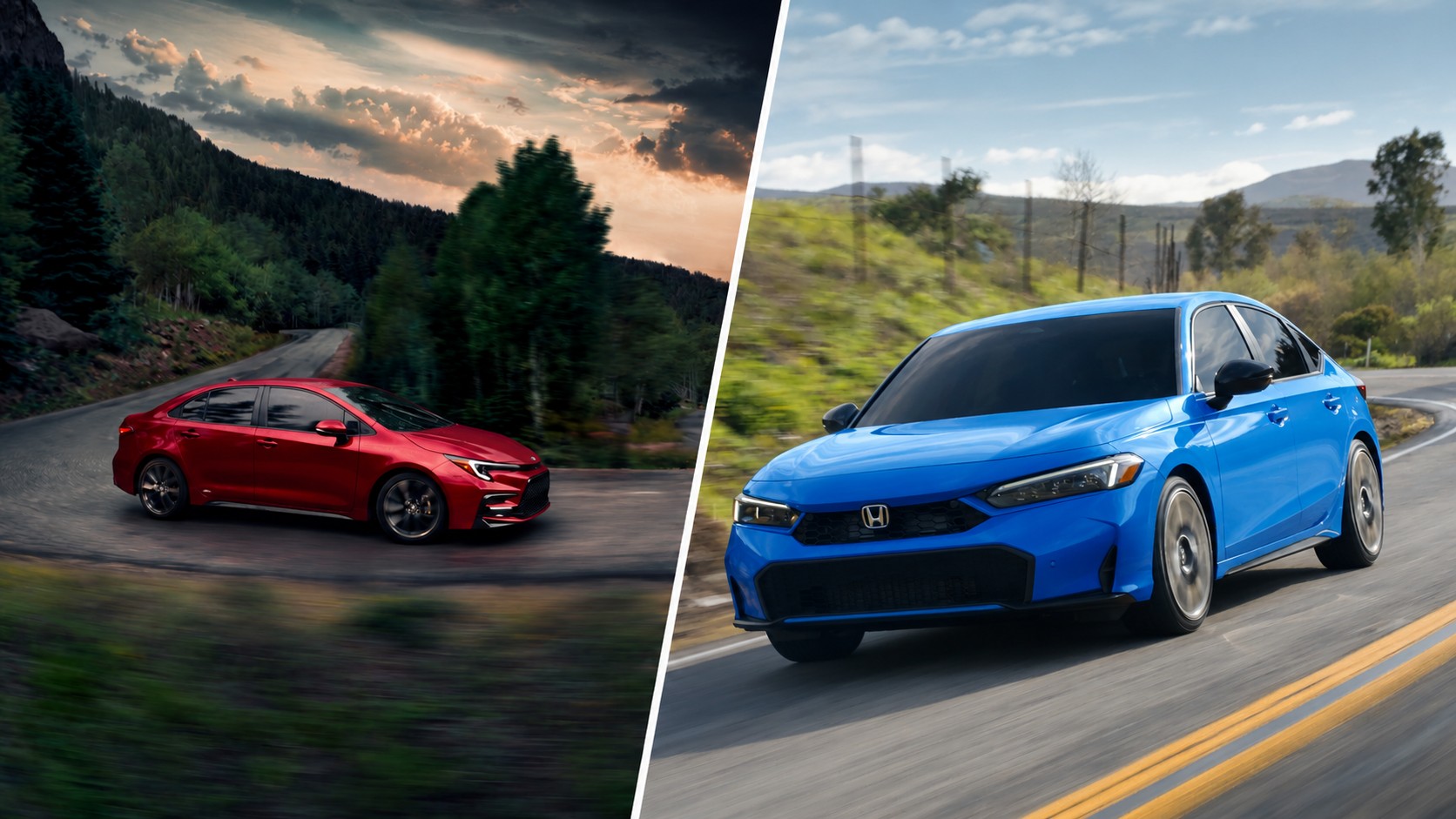
The Honda Civic and Toyota Corolla ended the first half of 2026 separated by roughly a thousand cars: 132,440 Civics against 131,403 Corollas, according to the automakers' sales reports. Only the Toyota Camry sold more among passenger cars. For a first-time buyer, the two are the default shortlist — and the differences between them come down to about $2,000 of sticker, one fuel-economy label, and some fine print worth reading before you sign anything.
The backdrop makes the segment matter more than it has in years. The average new-vehicle transaction hit $49,461 in April 2026, the average monthly payment stands at $757, and 19 percent of new-car loans now run past $1,000 a month, per Baum and Associates data. Hybrids, meanwhile, accounted for 15 percent of U.S. light-vehicle sales through May. Both of these cars start under $26,000 with destination, and both offer a hybrid. That combination is getting rare.
The numbers, side by side
All prices are 2026 model year MSRPs including destination, taken from Honda's and Toyota's official pricing. Fuel economy figures are EPA ratings from fueleconomy.gov.
| 2026 Honda Civic | 2026 Toyota Corolla | |
|---|---|---|
| Base MSRP with destination | $25,890 (LX) | $23,920 (LE) |
| Base hybrid MSRP with destination | $30,590 (Sport Hybrid) | $25,770 (Hybrid LE) |
| EPA combined, base engine | 36 mpg | 35 mpg |
| EPA combined, base hybrid | 49 mpg | 50 mpg (48 with AWD) |
| Power, gas / hybrid | 150 hp / 200 hp | 169 hp / 138 hp |
| Body styles | Sedan and hatchback, both available as hybrids | Sedan and hatchback; hybrid is sedan-only |
| All-wheel drive | Not available | Available on Hybrid LE and SE |
| Standard driver assistance | Honda Sensing on every trim | Toyota Safety Sense 3.0 on every trim |
| Base infotainment | 7-inch touchscreen, wired Apple CarPlay and Android Auto | Touchscreen with wireless Apple CarPlay and Android Auto |
| Warranty | 3 yr/36,000 mi basic; 5 yr/60,000 mi powertrain; 8 yr/100,000 mi hybrid battery | 3 yr/36,000 mi basic; 5 yr/60,000 mi powertrain; 10 yr/150,000 mi hybrid battery |
| No-cost maintenance | Honda Service Pass (term varies by model year — confirm at purchase) | ToyotaCare, 2 yr/25,000 mi on 2026 models |
| IIHS award status | Top Safety Pick (2026 award for the hatchback; the sedan's award applies to 2025–26 models) | Not on the 2026 award list |
| Est. annual fuel, gas / hybrid | $1,920 / $1,410 | $1,970 / $1,380 |
A note on those fuel figures: they assume 15,000 miles a year at $4.60 per gallon, slightly above the AAA national average of about $4.44 in mid-September — this August was the most expensive on record at the pump. A year ago the average was $3.21, so treat the dollar amounts as a snapshot that moves with prices, not a fixed cost.
Base vs. base: the Corolla is $1,970 cheaper and better connected
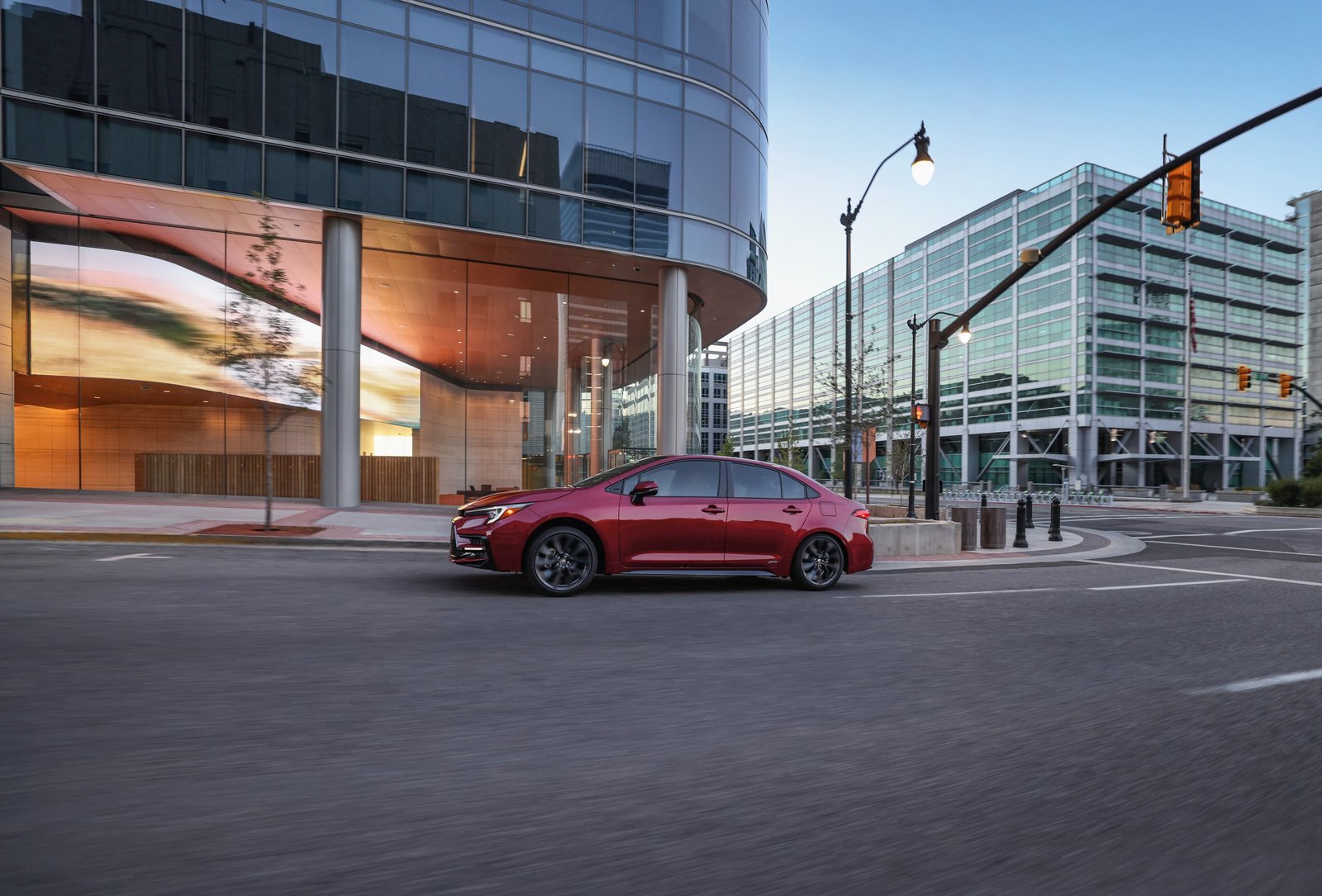
Out of the gate, the Corolla LE undercuts the Civic LX by $1,970 and gives you more standard tech for it: wireless phone mirroring against Honda's wired setup, plus a new-for-2026 7-inch digital gauge cluster. It also has the stronger base engine on paper, 169 hp to the Civic's 150, though neither car is quick and the Civic answers with a slightly better EPA combined rating.
Neither company gutted the base car this year. Honda carried the Civic sedan, hatchback, and Si into 2026 unchanged, with prices up at least $345 across the board; Toyota's only lineup cut was the retro-styled FX Edition, a mid-range trim, while base equipment actually grew. No content quietly disappeared from either entry model, which is not something every 2026 spec sheet can claim.
The hybrid math favors Toyota; the hybrid itself favors Honda
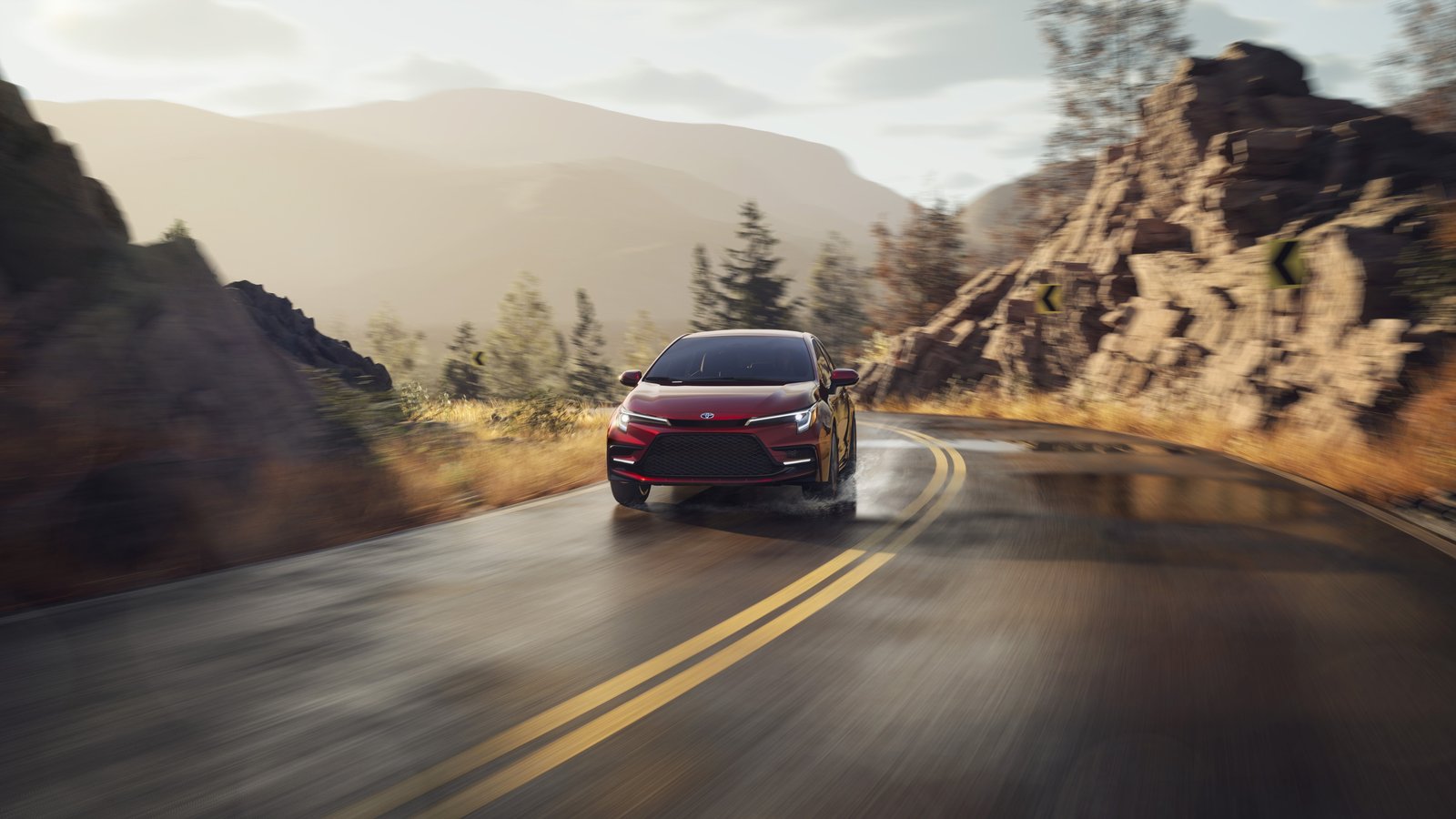
The Corolla Hybrid LE costs $1,850 more than the gas LE. At the fuel assumptions above it saves about $590 a year, which means the premium pays for itself in roughly three years — and it is the only car on this page available with all-wheel drive. The trade-off is 138 hp, the least power in this comparison by a wide margin.
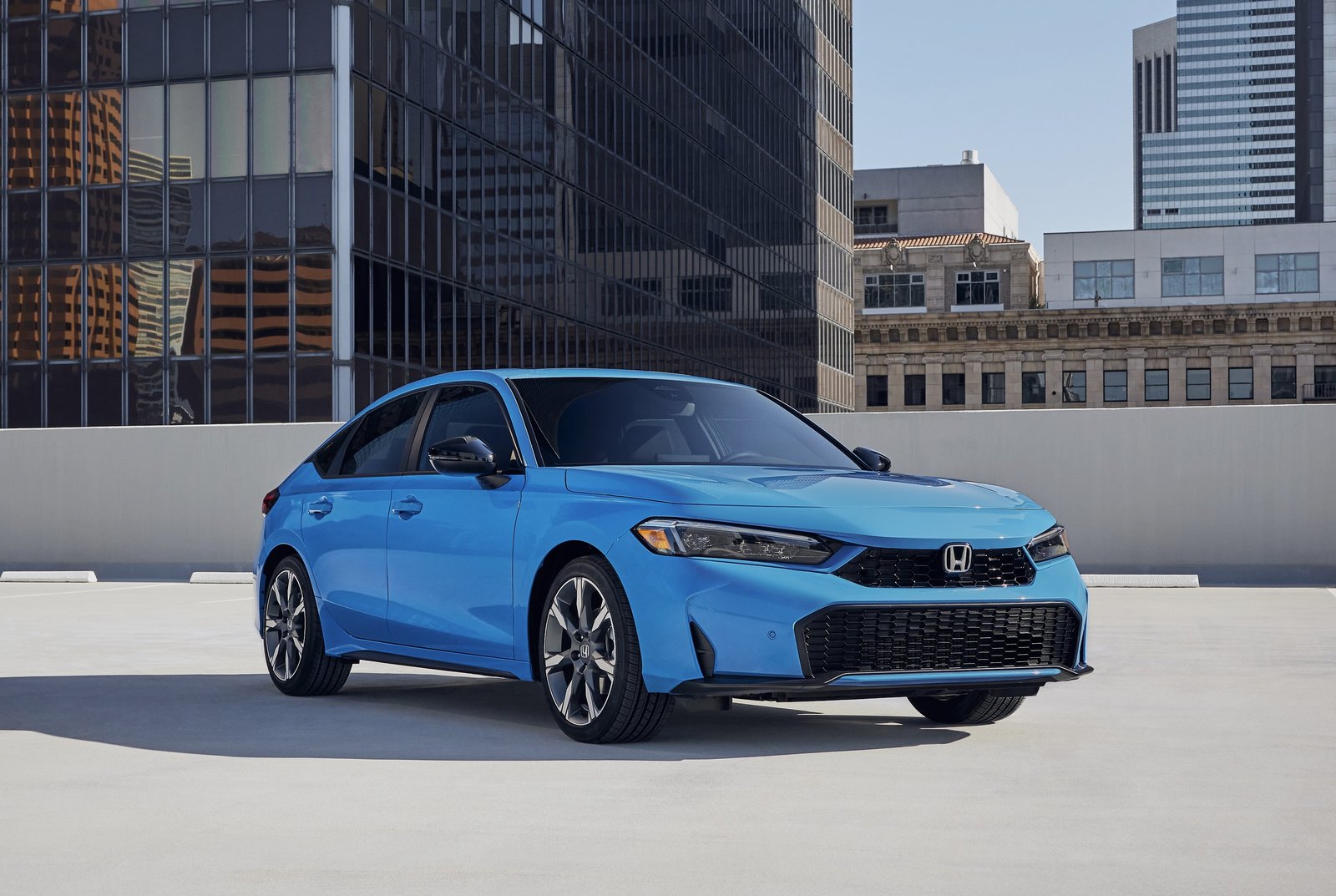
The Civic Sport Hybrid runs $4,700 over the LX, and on fuel savings alone that gap takes closer to nine years to close. But it is a different kind of upgrade: 200 hp instead of 150, so you are buying the quickest mainstream Civic and the most efficient one in a single box, in sedan or hatchback form. Think of the Corolla Hybrid as a fuel-cost decision and the Civic Hybrid as a better-car decision that happens to save fuel.
Safety awards and the fine print
Both cars come with their full driver-assistance suites standard, but the 2026 IIHS award list separates them: the Civic hatchback is a 2026 Top Safety Pick and the sedan carries a Top Safety Pick award covering 2025–26 models, while the Corolla does not appear on the institute's 2026 list, which uses stricter criteria than a year ago.
The ownership paperwork splits the other way. Basic and powertrain warranties are identical, but Toyota covers the hybrid battery for 10 years or 150,000 miles against Honda's 8 years or 100,000. Toyota also includes two years or 25,000 miles of no-cost maintenance on 2026 models — worth knowing before the 2027s arrive, because Toyota trims that plan to one year or 10,000 miles on newer model years. Honda's Service Pass maintenance plan launched as a two-year program, but dealer disclosures list shorter terms on recent model years, so confirm the coverage on the specific car you buy.
What we can't tell you
Two costs resist a national number. Out-the-door pricing depends on documentation fees, taxes, and dealer add-ons that vary by state and by store, so the destination-inclusive MSRPs here are the honest floor, not the final check. And insurance quotes swing more on your age, record, and ZIP code than on the badge; both cars sit in a segment that generally insures affordably, but the only useful comparison is two real quotes with your own details.
Buy the 2026 — and which one
The 2027 Corolla is arriving at dealers this fall costing $500 more all-in and otherwise unchanged, apart from a new paint color and a 2,500-unit 60th Anniversary Special Edition due in early 2027. That makes a discounted 2026 the same car for less money, with the longer free-maintenance plan on top. Honda has not published 2027 Civic pricing yet.
The pick depends on which dollar matters. If the budget is tight, the payment is the constraint, or you need all-wheel drive, the Corolla Hybrid LE is the strongest value on this page: 50 mpg, the longest battery warranty in the segment, and a price no hybrid Civic approaches. If you can stretch toward $30,000, the Civic Sport Hybrid is simply the better car — quicker, more engaging, nearly as efficient — and the base Civic makes sense over the base Corolla only if its extra polish is worth $1,970 to you. The Corolla wins the math; the Civic wins the drive.