CR-V Hybrid vs. RAV4 Hybrid: The One You Can Actually Buy This Fall
The RAV4 wins on paper and at the pump. The CR-V is the one sitting on dealer lots, already in 2027 form and selling below sticker. Here's what that gap is really worth.
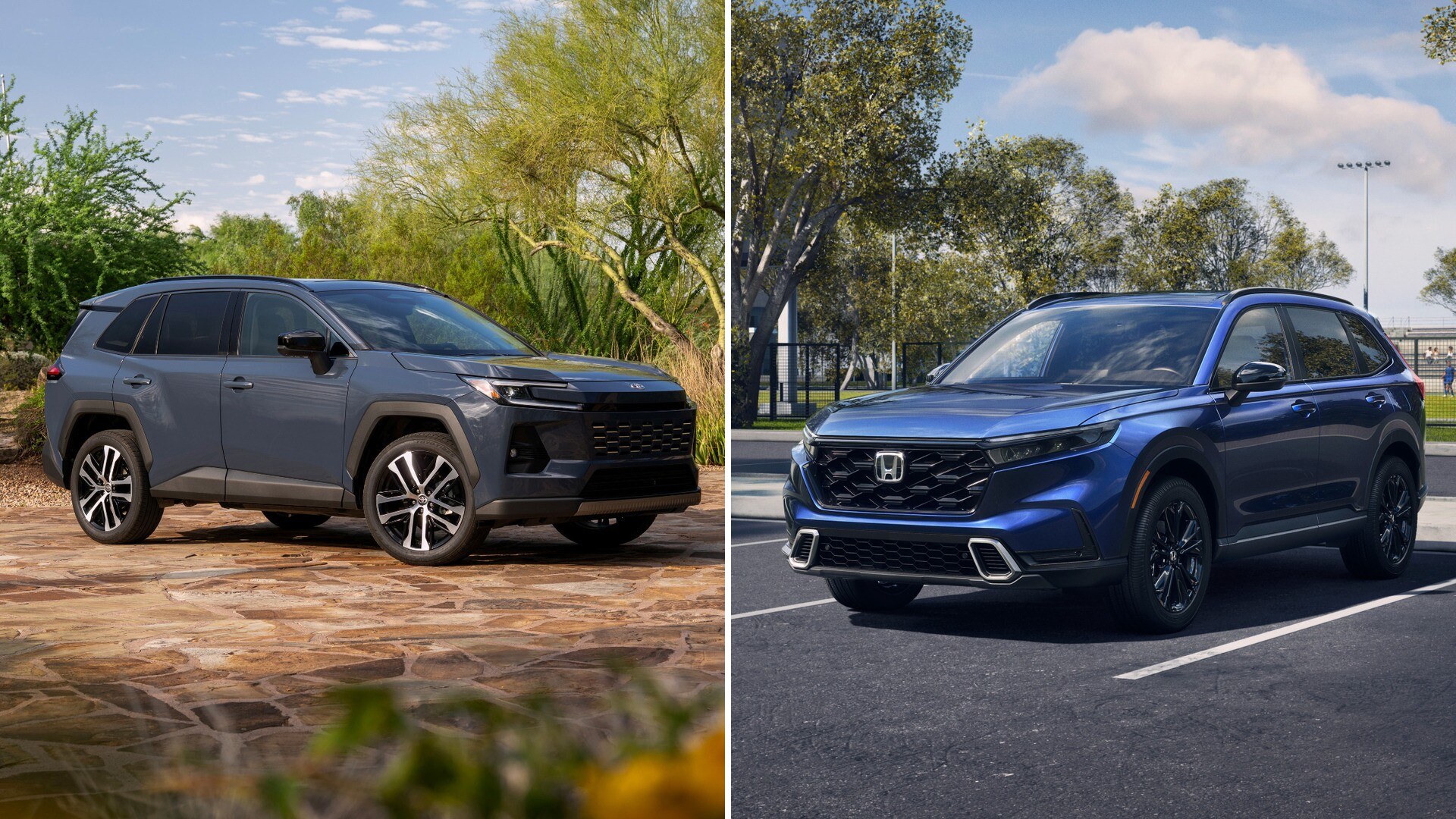
Walk into a Honda store this week and you will find the CR-V Hybrid on the lot, already wearing 2027 badges, with dealers taking money off the sticker. Walk into a Toyota store and you will most likely be handed an order form for a 2026 RAV4 and an estimate measured in weeks or months. That, not the spec sheet, is the real difference between these two right now.
The RAV4 is the better car on paper. It has more power, better EPA numbers, a bigger cargo hold, and a longer battery warranty. The question for a buyer in fall 2026, with gas back over $4 and loans near 7%, is how much those advantages are worth against a car you can drive home today.
The numbers, side by side
Prices are MSRP plus destination. Honda's website lists the 2027 CR-V with a $1,550 destination charge; Toyota's 2026 RAV4 carries a $1,450 fee. Fuel costs use EPA combined ratings, 15,000 miles a year, and the AAA national average of $4.28 a gallon on Sept. 10. Your mileage, and your local pump price, will differ.
| 2027 Honda CR-V Hybrid | 2026 Toyota RAV4 Hybrid | |
|---|---|---|
| Base hybrid, with destination | $37,580 (Sport Hybrid FWD) | $33,350 (LE FWD) |
| Cheapest AWD hybrid | $39,080 (Sport Hybrid AWD) | $34,750 (LE AWD) |
| Top hybrid, with destination | $44,500 (Sport Touring Hybrid AWD) | $44,750 (Limited AWD) |
| Power | 204 hp, 247 lb-ft | 226 hp (FWD), 236 hp (AWD) |
| Drive | FWD standard; AWD optional, standard on TrailSport and Sport Touring | FWD standard on LE, SE, XLE Premium; AWD optional there, standard on Woodland, XSE, Limited |
| EPA combined | 40 mpg FWD, 37 mpg AWD (35 TrailSport) | 43 mpg FWD, 41–42 mpg AWD (38 Woodland) |
| Fuel cost per year, base / top | $1,605 / $1,735 | $1,493 / $1,566 |
| Cargo, rear seats up / down | 36.3 cu ft (34.7 Sport Touring) / 76.5 cu ft | 37.8 cu ft / about 70 cu ft |
| Towing | 1,000 lb | 1,750 lb FWD and LE AWD; 3,500 lb other AWD |
| Powertrain warranty | 5 yr / 60,000 mi | 5 yr / 60,000 mi |
| Hybrid battery warranty | 8 yr / 100,000 mi | 10 yr / 150,000 mi (hybrid components 8 yr / 100,000 mi) |
| IIHS | No 2026 award; Poor in the updated moderate overlap test (rear passenger) | Not yet rated; testing underway, decision expected this fall |
| NHTSA | 5 stars overall (carryover platform) | Not yet published for the new generation |
| Availability | In stock; new hybrids averaged 47 days on lot in the Cars.com June report | Dealer-reported waits of weeks to months; no published model-level days' supply |
| Average price vs. sticker, Q2 (Edmunds) | $1,302 under | $329 under |
| Plug-in hybrid | None (the hydrogen CR-V e:FCEV is a California lease, not a substitute) | Yes, from $42,950 with destination, 324 hp |
Sticker vs. what you will actually pay
On the window, the RAV4 starts $4,230 lower than the CR-V Hybrid, and the AWD gap is similar. Toyota published its 2026 RAV4 grades from $31,900; Honda lists the 2027 CR-V Sport Hybrid at $36,030 before destination.
The lot tells a different story. According to Edmunds data cited by Autoblog, RAV4s changed hands an average of $329 under sticker in the second quarter, while CR-Vs went for $1,302 under. That alone closes roughly a thousand dollars of the gap, and leftover 2026 CR-Vs, listed by Honda from $37,080 with destination, are where the deepest discounts tend to sit as the 2027s arrive. We have not seen credible national data on RAV4 markups, and we are not treating forum reports as fact. If a dealer wants more than sticker for a RAV4, that is a local number, not a market one.
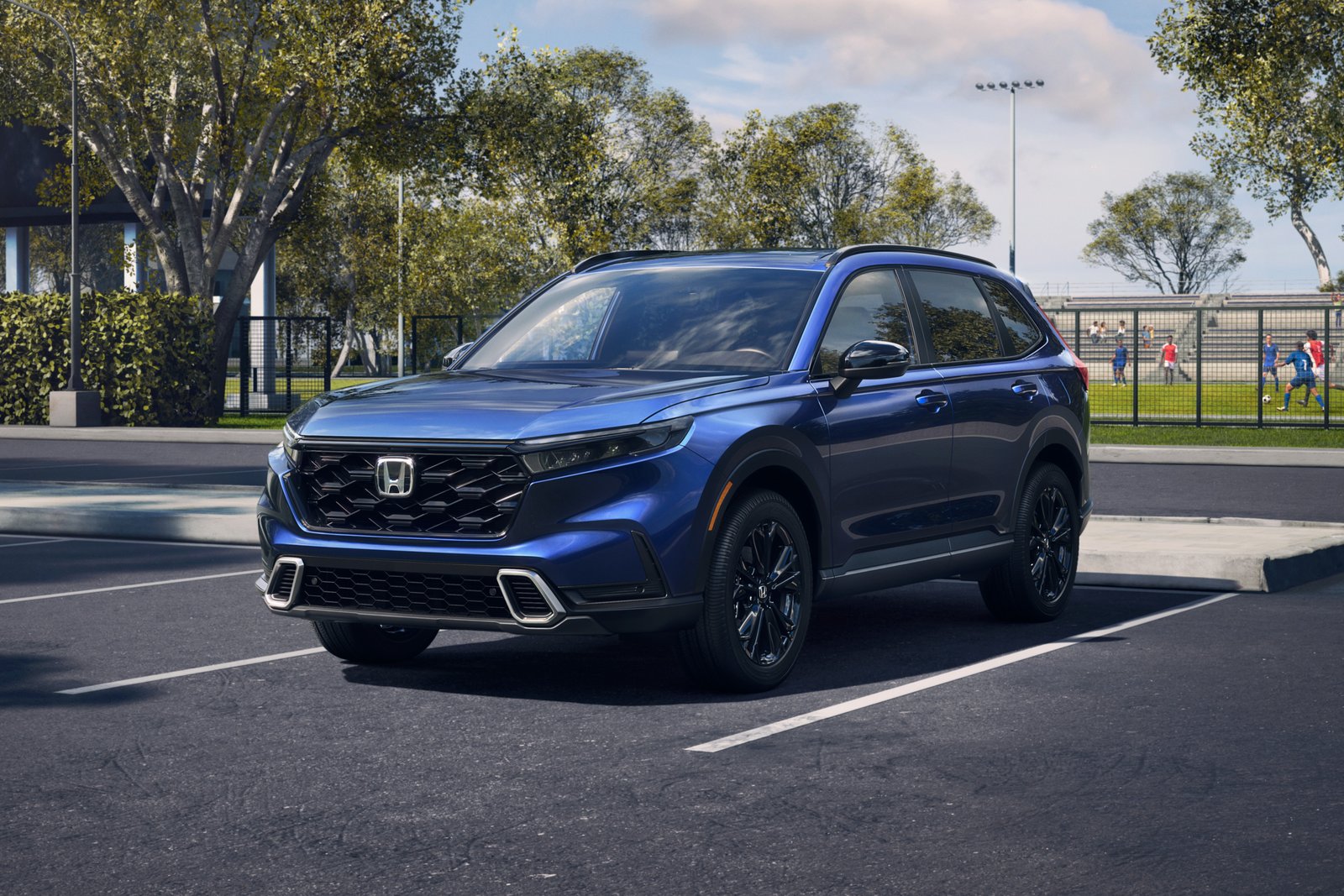
Financing changes the picture less than you would expect. At 7% over 60 months with nothing down, the base CR-V Hybrid works out to about $744 a month against $660 for the base RAV4, and about $790 more in total interest over the loan. At the top of the range the two are within five dollars a month of each other. Taxes, fees, and your credit tier will move these figures; the shape of the comparison will not.
Fuel: the RAV4 wins, by less than you think
The RAV4's EPA edge is real, and at $4.28 a gallon it saves the base-model owner about $112 a year over the CR-V, or $169 a year at the top of the range. At May's $4.61 peak the base-model saving grows to roughly $120. Over five years and 75,000 miles, that is $560 to $850 in the RAV4's favor.
Put that next to the purchase math and the order flips. The RAV4's lower sticker, lower interest, and lower fuel bill add up to roughly $5,600 less over a five-year loan on the base cars, and the CR-V's bigger discounts claw back only part of it. If you can get a RAV4 at sticker in a timeframe you can live with, it is the cheaper car to own. The fuel saving is the smallest piece of that advantage, not the biggest.
The cost of waiting
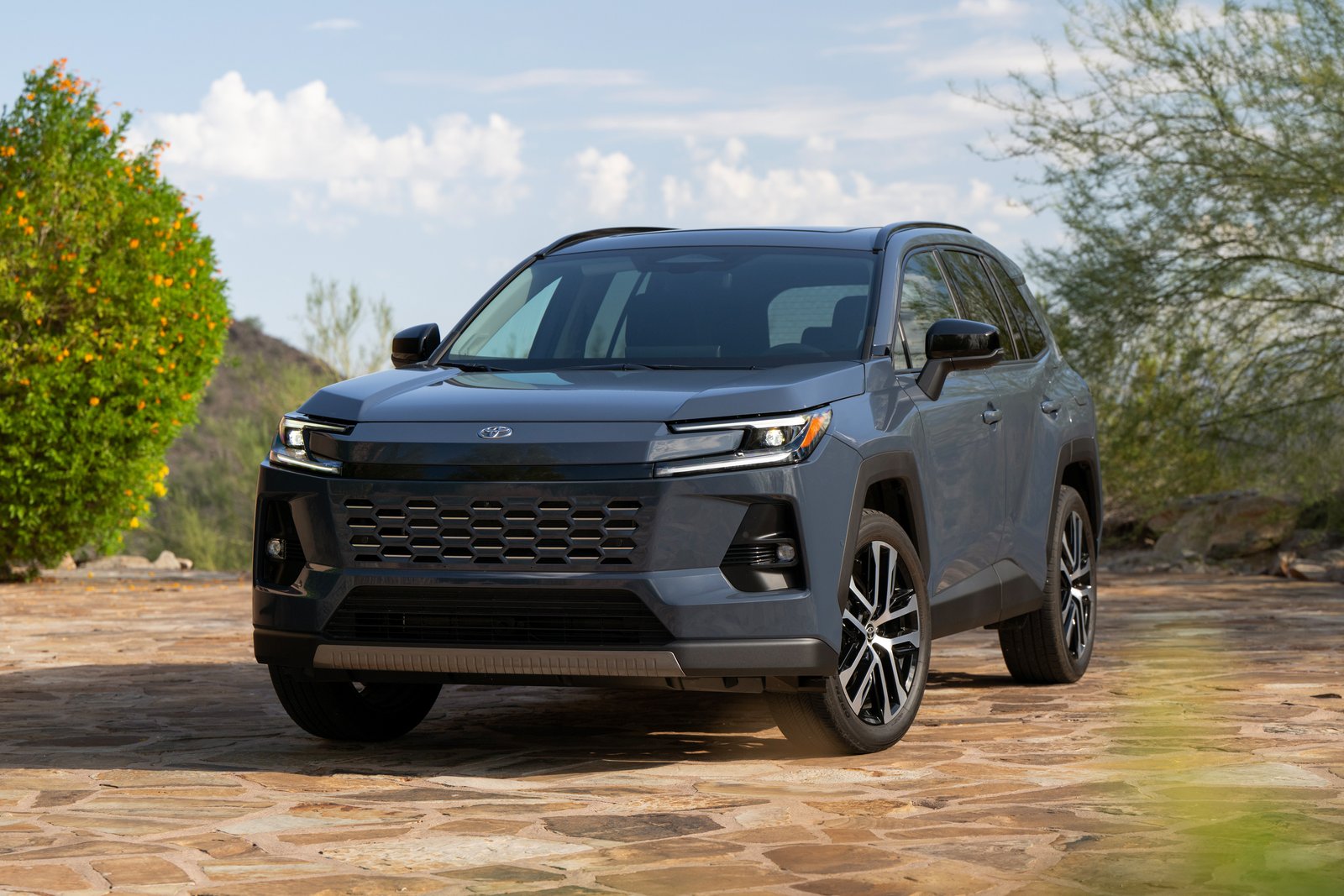
Toyota's problem is not demand. The sixth-generation RAV4 went hybrid-only just as U.S. hybrid demand peaked, and the plants that build it spent months retooling. Toyota has said the constrained launch will cost it about 55,000 U.S. sales this year, and August deliveries were still 19% below a year earlier. Kentucky production started in June, with a further expansion planned for 2027, but Toyota has not named a date for supply to normalize. We covered the real-world waits in our RAV4 shortage explainer, and nothing in the August numbers changes that picture.
Honda, meanwhile, moved 302,056 CR-Vs through August, up 8.3%, and the 2027 model is already on lots with the same powertrain and pricing structure as the 2026. The last time the CR-V outsold the RAV4 over a full year was 2016. It is on pace to do it again, not because it got better, but because it is there.
What waiting costs you depends on what you are driving now. If you are covering 1,250 miles a month in a 25-mpg car, every month at $4.28 gas is about $214 in fuel, versus roughly $125 in a RAV4 Hybrid. A six-month wait, the kind one Connecticut buyer described to CNBC, erases most of the first year's fuel advantage before the car arrives.
What we do not know
Three things stay open. Nobody has published model-level days' supply for either car since early summer; the CNBC report from Sept. 1 describes one Toyota store at roughly a third of its lot capacity, which is anecdote, not data. Toyota has not said when RAV4 output will meet demand beyond pointing to the 2027 Kentucky expansion. And IIHS has not finished testing the new RAV4, so the safety comparison is incomplete: the CR-V's rear-seat result in the updated moderate overlap test is a known weakness, and the RAV4 has not yet been put through the same test.
Which one should you buy this fall
Buy the RAV4 if you can place an order at sticker, you are not in a hurry, and you plan to keep the car past the five-year mark. The longer battery warranty, the extra towing, and the fuel economy all compound with time, and the order queue behind you only gets longer.
Buy the CR-V Hybrid if you need the car now, if you are trading out of something thirsty, or if the discount you are offered is real. It is the roomier car in the back seat, it is on the lot, and a 2026 leftover at a meaningful discount narrows the ownership gap to something the RAV4's fuel economy will take years to recover.
And if neither dealer will deal, the segment is deep. We have already put the Tucson Hybrid head-to-head with the RAV4, and Kia has priced the 2027 Sportage well under both. This fall, the best compact hybrid is the one you can buy at the number on the window.